

Banff National Park is one of those places that feels almost unfair to the rest of Canada's National Parks. Towering peaks, glacial water, and constantly changing light create an environment where even a casual shot can look incredible. For photographers willing to slow down, scout compositions, and work the light, Banff offers some truly special locations. If you are planning a trip, these five lakes are some of the most rewarding places to bring your camera. Each one has its own personality and each rewards a slightly different approach behind the lens.
Moraine Lake
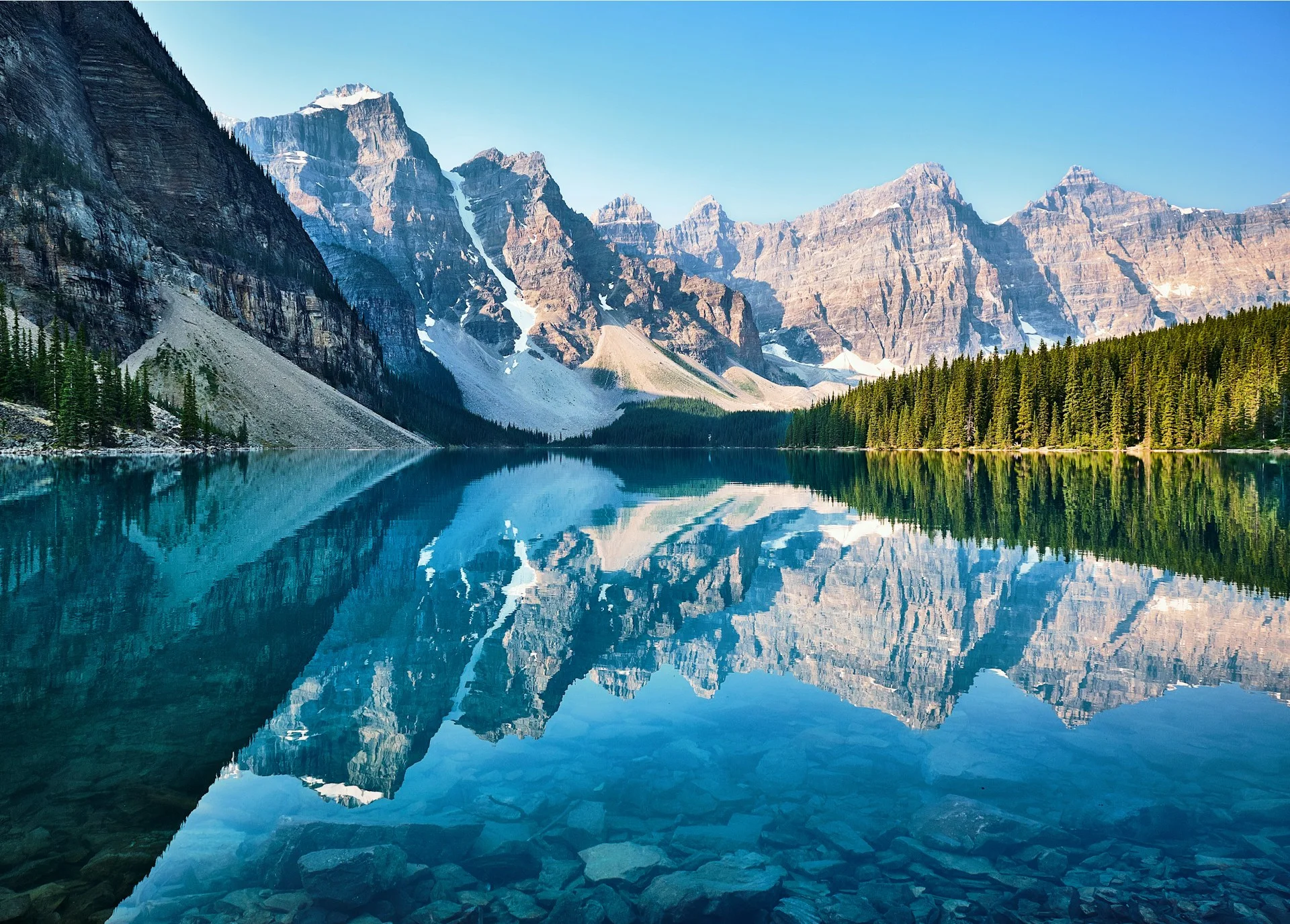
Moraine Lake is one of the most photographed locations in the park, known for its vivid turquoise water and the sharp peaks of the Valley of the Ten Peaks rising directly behind it. The setting feels compact and dramatic, with the mountains sitting close to the water filling the frame with very little effort. The Rockpile viewpoint is a strong starting point, especially at sunrise when the first light hits the upper peaks and reflects across the lake, but it is worth moving beyond it. Walking the shoreline opens up quieter angles where you can use foreground rocks, shallow water, and natural curves to guide the eye through the scene. The lake’s colour is strongest from mid to late summer once the ice has fully melted, giving it that deep blue tone, and while this is when it is busiest, arriving well before sunrise gives you the best chance to work the scene calmly and explore different compositions. Access can also be a challenge during peak season, as private vehicle access is restricted, so most visitors use the Parks Canada shuttle or Roam Transit system to reach the lake, which makes planning your timing in advance even more important if you want to shoot at sunrise or stay later into the evening.
📍 Explore on PIXEO Map →
Peyto Lake
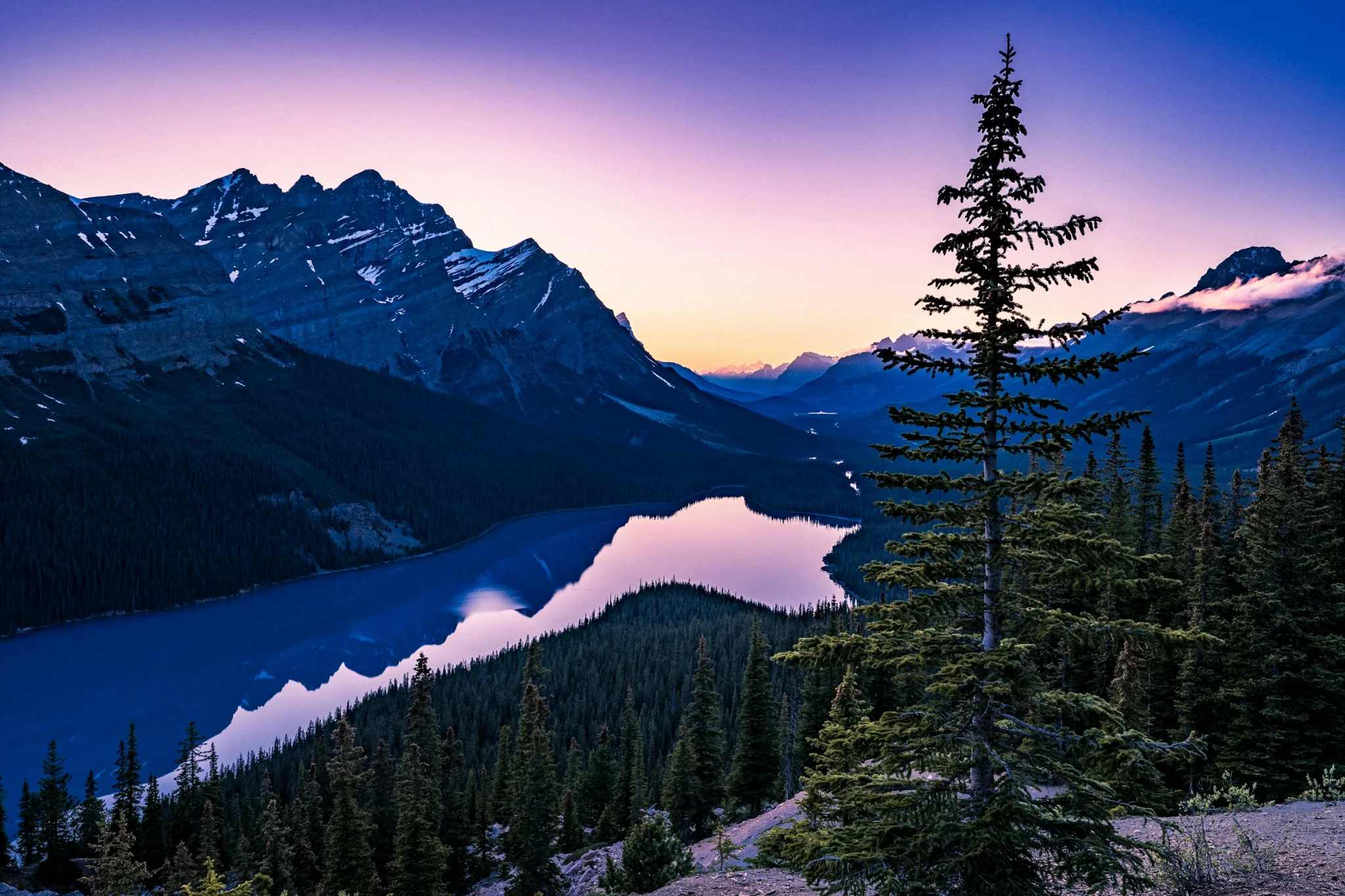
Peyto Lake stands out immediately, even among Banff’s many highlights, with its distinctive shape often compared to a wolf and best appreciated from the main elevated viewpoint along the Icefields Parkway. From this vantage point, the lake’s unique form and colour are easy to take in, with the surrounding peaks and forested slopes adding depth to the scene. It is a location that responds well to changing conditions, where low clouds, shifting fog, and evolving light can completely transform the mood, while clear days bring out a strong contrast between the turquoise water and the darker mountain ridges for a bold, graphic composition. A range of focal lengths works well here, with wide shots capturing the full shape of the lake and tighter crops allowing you to isolate patterns in the water, subtle tonal shifts, and the layered ridgelines beyond. Access is relatively straightforward, with a short paved walk from the parking area to the viewpoint, though the lot can fill quickly during peak summer hours, so arriving early or later in the day will give you a much smoother experience and more time to work the scene.
📍 Explore on PIXEO Map →
Vermilion Lakes
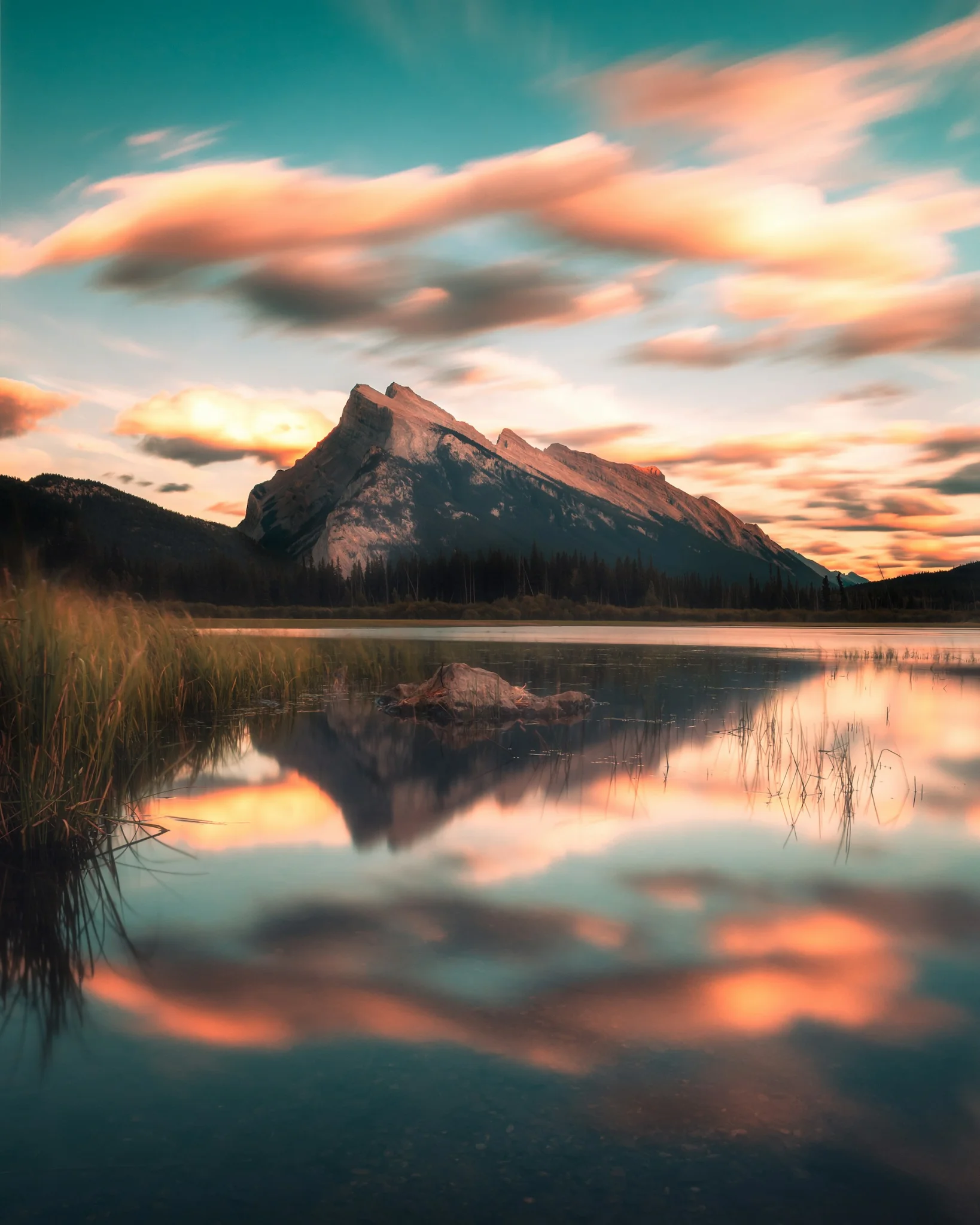
Just outside the town of Banff, Vermilion Lakes is one of the most accessible and reliable photography locations in the park, making it an easy stop whether you are heading out early or wrapping up a day of shooting. The main subject here is Mount Rundle, whose long, sloping profile aligns naturally with the water and creates a clean, balanced scene that works well in any season. Sunrise is especially strong, with soft light and frequent calm conditions that allow for clear reflections across the lakes. The marshy shoreline adds variety, giving you plenty of foreground options such as grasses, reeds, and small pockets of open water to build depth into your images. In colder months, mist and frost can settle across the surface, adding subtle layers and atmosphere that elevate what is already a very consistent and rewarding location to photograph. Access is simple, with multiple roadside pull offs along Vermilion Lakes Drive and little to no walking required, and while some areas can get busy around sunrise and sunset, there are enough viewpoints to easily find a quieter spot without much difficulty.
📍 Explore on PIXEO Map →
Two Jack Lake
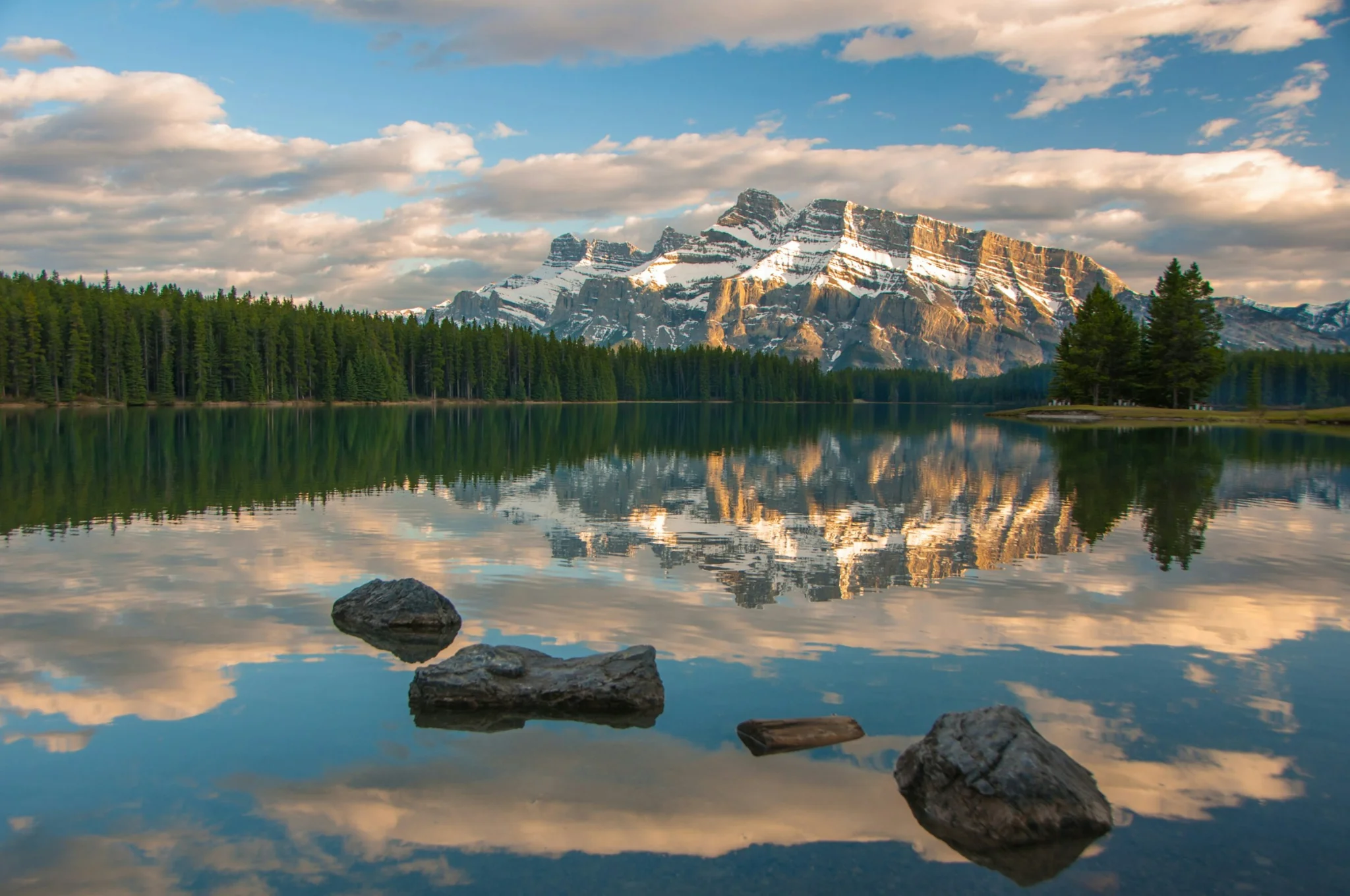
Two Jack Lake sits just outside the town of Banff but is often overlooked in favour of Vermilion Lakes, which makes it a great option if you are looking for a quieter shooting experience. It offers a clean, unobstructed view of Mount Rundle from a slightly different angle that feels less familiar, giving your images a bit more originality while still capturing one of the park’s most recognizable peaks. The shoreline is simple and uncluttered, making it easy to build strong compositions with reflections, subtle foreground elements, and balanced framing without a lot of visual distractions. This is also one of the better spots in the area for night photography, where the open sky and still water can create strong opportunities for capturing stars and even the Milky Way when conditions line up. Access is very easy, with parking close to the shoreline and no restrictions or shuttle requirements, and even during peak tourist season it tends to remain manageable compared to the park’s busier locations.
📍 Explore on PIXEO Map →
Herbert Lake
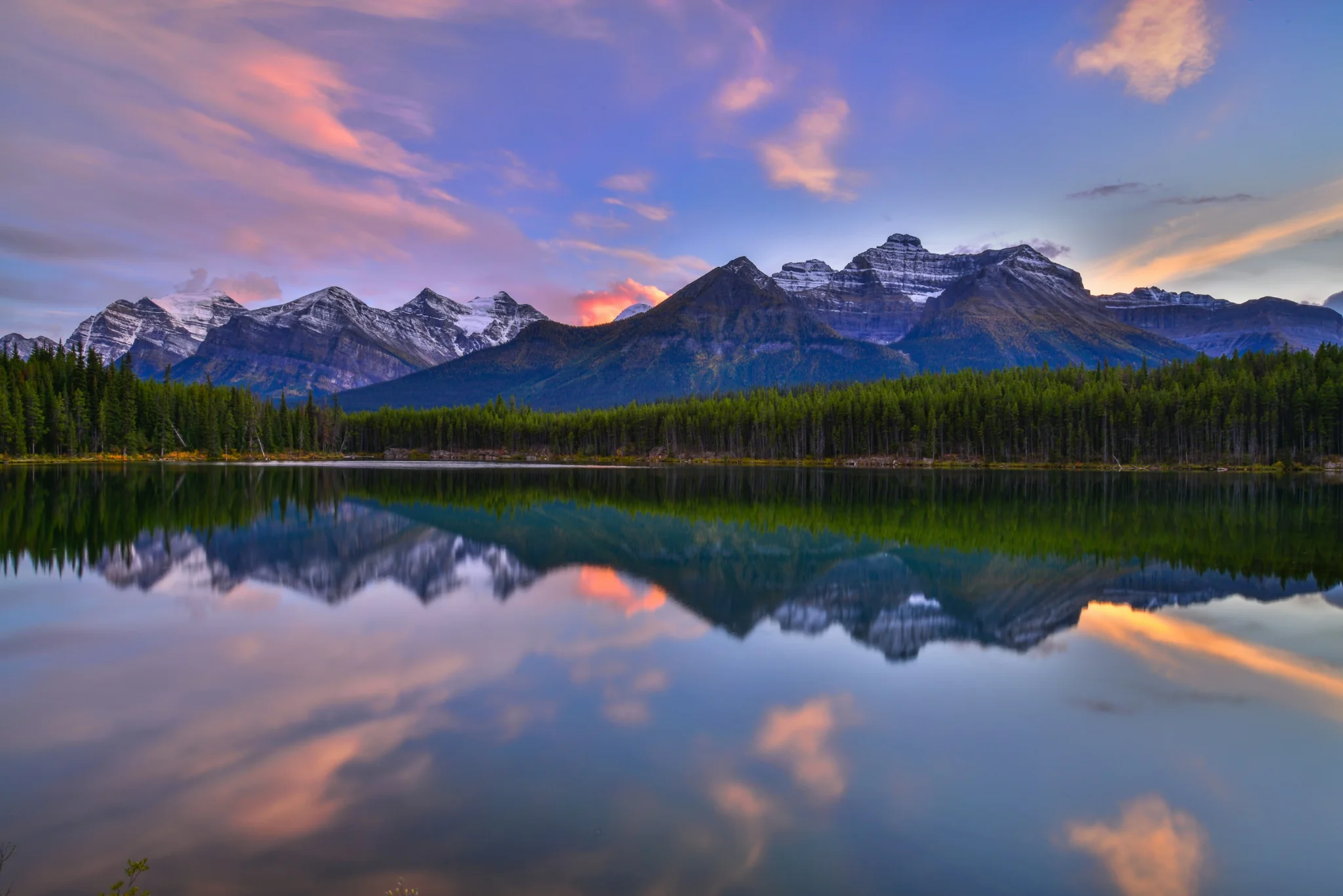
Herbert Lake sits right along the Icefields Parkway just before reaching Lake Louise, and it is one of those places that many people pass without a second glance, which is exactly what makes it so rewarding to photograph. On calm mornings, it becomes one of the best reflection lakes in Banff, with still water that mirrors the surrounding trees and mountains in a clean and understated way. The shoreline is low and easy to access, allowing you to get right down to the water and build compositions with simple foregrounds, soft symmetry, and subtle layers. It works especially well at sunrise when the light is gentle and the scene feels quiet and balanced. Because it is not built up or heavily structured like Lake Louise, you have the freedom to move around and experiment, whether you are shooting wide to capture the full scene or focusing on more minimal compositions that highlight colour transitions and small details. Access is very straightforward, with a small pull off directly off the parkway and no restrictions or shuttle systems, and even during peak tourist season it remains relatively easy to visit compared to the more well known lakes nearby.
📍 Explore on PIXEO Map →
Banff’s lakes each offer something a little different, and that is what makes exploring them so rewarding as a photographer. From the dramatic peaks and bold colour of Moraine Lake to the graphic overlook at Peyto Lake, and the quieter, more flexible scenes at places like Vermilion Lakes, Two Jack Lake, and Herbert Lake, there is no shortage of variety. Some locations are about timing and planning, while others give you the freedom to slow down and experiment without the same pressure. Taken together, they highlight just how diverse the landscape can be within a relatively small area. If you are willing to get out early, stay a little later, and move beyond the most obvious viewpoints, you will come away with a set of images that feel both personal and distinctly Banff.
Comments
Loading comments…