
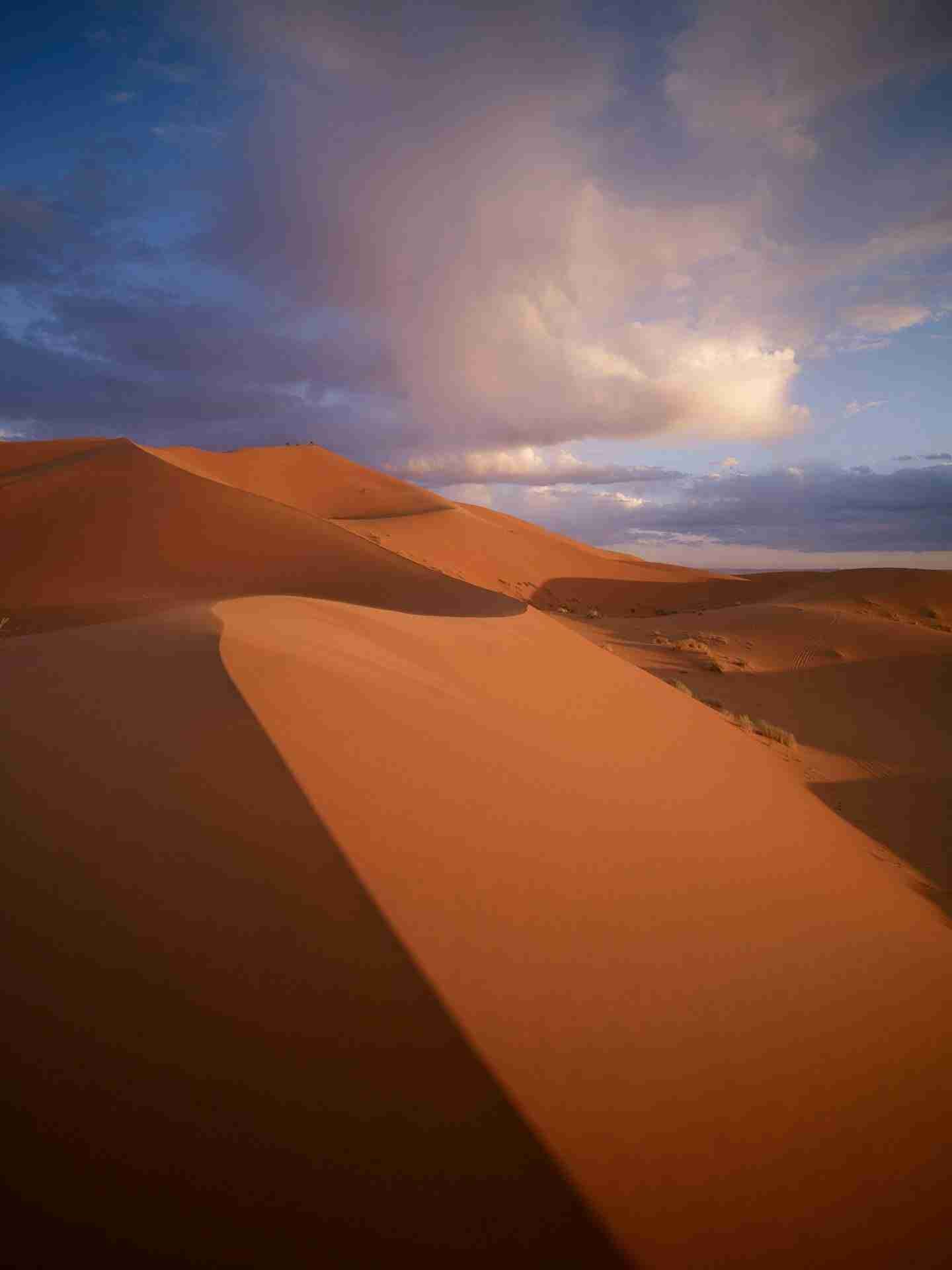
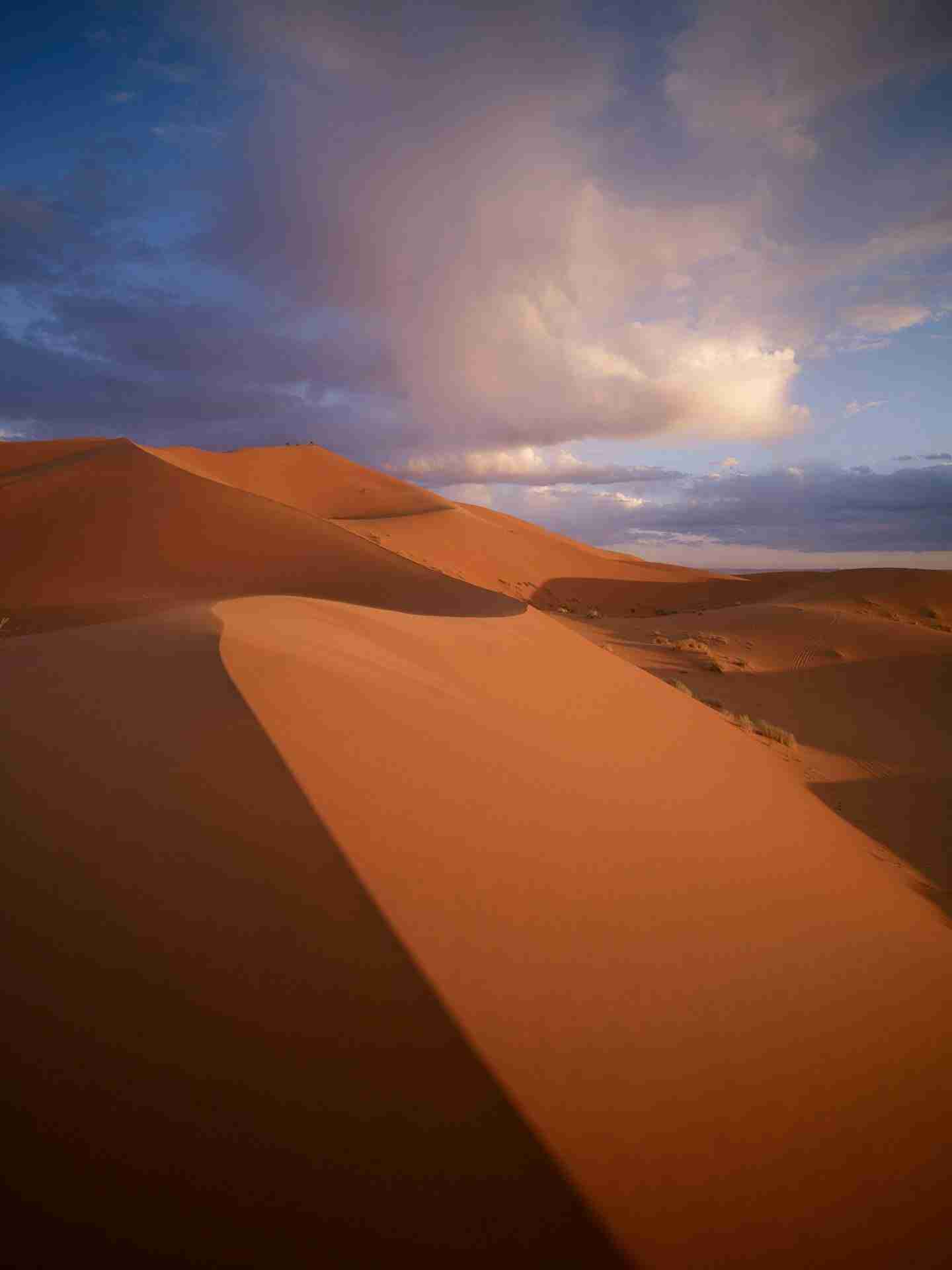
The Merzouga Desert, located in southeastern Morocco near the Algerian border, is a dreamlike expanse of rolling dunes, dramatic light, and endless photographic opportunities. Known for its towering Erg Chebbi dunes, which can reach up to 150 meters in height, this vast desert landscape offers a surreal combination of golden sands, star-studded skies, and Berber culture. Whether you are capturing the play of light at sunrise and sunset, the unique desert wildlife, or the nomadic lifestyle, Merzouga provides a wealth of inspiration for photographers seeking striking compositions.
Best Photography Opportunities
• Erg Chebbi Dunes
– These massive dunes, shaped by the wind, create ever-changing patterns of shadow and light, making them perfect for landscape photography. The soft, golden hues at dawn and dusk are particularly stunning, with long shadows accentuating the dunes' dramatic curves.
• Camel Caravans at Sunset
– One of the most iconic shots in the Merzouga Desert is the silhouette of a camel caravan moving across the dunes against the setting sun. The rich, warm tones of the golden hour create an unforgettable scene, while the leading lines of the footprints in the sand add depth to your composition.
• Star Trails and Milky Way Photography
– With minimal light pollution, Merzouga is an exceptional place for astrophotography. On clear nights, the Milky Way stretches vividly across the sky, making for breathtaking long-exposure shots. Using a wide-aperture lens and a sturdy tripod, you can capture mesmerizing star trails above the dunes.
• Desert Oasis and Nomadic Camps
– Small desert oases and nomadic Berber camps provide unique cultural and environmental contrasts to the endless sand dunes. These locations offer rich storytelling opportunities, with traditional tents, local people in vibrant attire, and camels resting under the sparse shade of palm trees.
• Sandstorm Drama
– While sandstorms can be challenging to work with, they provide an incredible opportunity for dramatic, moody desert photography. The swirling sand and diffused light create an ethereal, almost otherworldly atmosphere that adds a raw and dynamic element to your shots.
• Reflections at Lake Dayet Srij
– During the wet season, the temporary Lake Dayet Srij appears near Merzouga, attracting flamingos and other migratory birds. The still water provides stunning reflections of the sky, dunes, and wildlife, making it a fantastic spot for both landscape and wildlife photographers.
Best Time to Visit
The best time to visit Merzouga for photography is during the cooler months, from October to April, when temperatures are more manageable, and the lighting conditions are ideal. Winter months (December to February) offer crisp, clear skies for astrophotography, while spring (March and April) brings the occasional presence of the ephemeral Lake Dayet Srij, drawing flocks of birds.
Golden hour is particularly striking in the desert, with sunrise and sunset creating long, dramatic shadows and warm, golden hues that enhance the texture of the dunes. Midday, however, can be harsh due to the strong sunlight and high temperatures, which can reach extreme levels in the summer. For night photography, plan your visit around a new moon for optimal Milky Way visibility.
How to Get There
Merzouga is accessible via several routes, with the most common starting points being Marrakech, Fes, or Ouarzazate. From Marrakech, the drive takes around 9-10 hours, passing through the scenic High Atlas Mountains and the Dades or Todra Gorges. From Fes, the journey takes approximately 8 hours, traversing the Middle Atlas region and its lush cedar forests before entering the arid landscapes leading to the desert.
The nearest major town is Rissani, about 35 km from Merzouga, where you can find local markets and fuel stations. From Rissani, a paved road leads directly to Merzouga. If traveling by bus, Supratours operates direct routes from Marrakech and Fes. For those looking for a more adventurous approach, hiring a 4×4 allows access to off-the-beaten-path locations and remote dunes.
Exploring Merzouga and the Surrounding Area
Beyond the dunes of Erg Chebbi, Merzouga offers a variety of photographic gems. The village itself, with its traditional mud-brick buildings, provides an interesting contrast to the desert landscape. Nearby, the Khamlia village is famous for its Gnawa music performances, a unique cultural experience worth capturing. Just outside the dunes, fossil fields reveal ancient marine remnants, offering an intriguing subject for macro photography. Adventurous photographers can also visit the black volcanic desert of Hamada du Draa, where the stark terrain presents a striking contrast to the golden dunes.
Nearby Photography Locations
– Located a few hours from Merzouga, Todra Gorge features sheer rock walls that rise up to 160 meters high, creating a dramatic, narrow canyon perfect for landscape and adventure photography. The interplay of light and shadow on the red limestone cliffs is particularly striking in the morning and late afternoon.
– Known as the "Valley of a Thousand Kasbahs," this scenic region boasts rugged landscapes, winding roads, and traditional Berber architecture. The famous switchback road at the top of the gorge is a must-capture, offering a stunning composition of serpentine curves against the backdrop of the valley.
– This UNESCO-listed ksar, located between Merzouga and Marrakech, is one of Morocco's most photogenic sites. The ancient, fortified village with its earthen buildings looks especially magical at sunrise or sunset, when the golden light enhances its rich textures.
– As you approach Merzouga from the north, the Ziz Valley offers a lush contrast to the surrounding desert. The oasis, with its dense palm groves and traditional kasbahs, provides a refreshing change of scenery, perfect for wide-angle compositions capturing the green riverbanks against the barren mountains.
– Another gateway to the Sahara, this remote desert village offers a less-touristed alternative to Merzouga, with vast dunes, ancient petroglyphs, and authentic nomadic culture. The landscapes here are more rugged and untouched, providing excellent opportunities for intimate and dramatic desert shots.
Merzouga is a photographer's paradise, where every shift in light and weather transforms the landscape into something new. Whether capturing its ethereal dunes, vibrant cultural scenes, or endless night skies, this Moroccan desert rewards patience and creativity with breathtaking images.
Comments
Loading comments…