
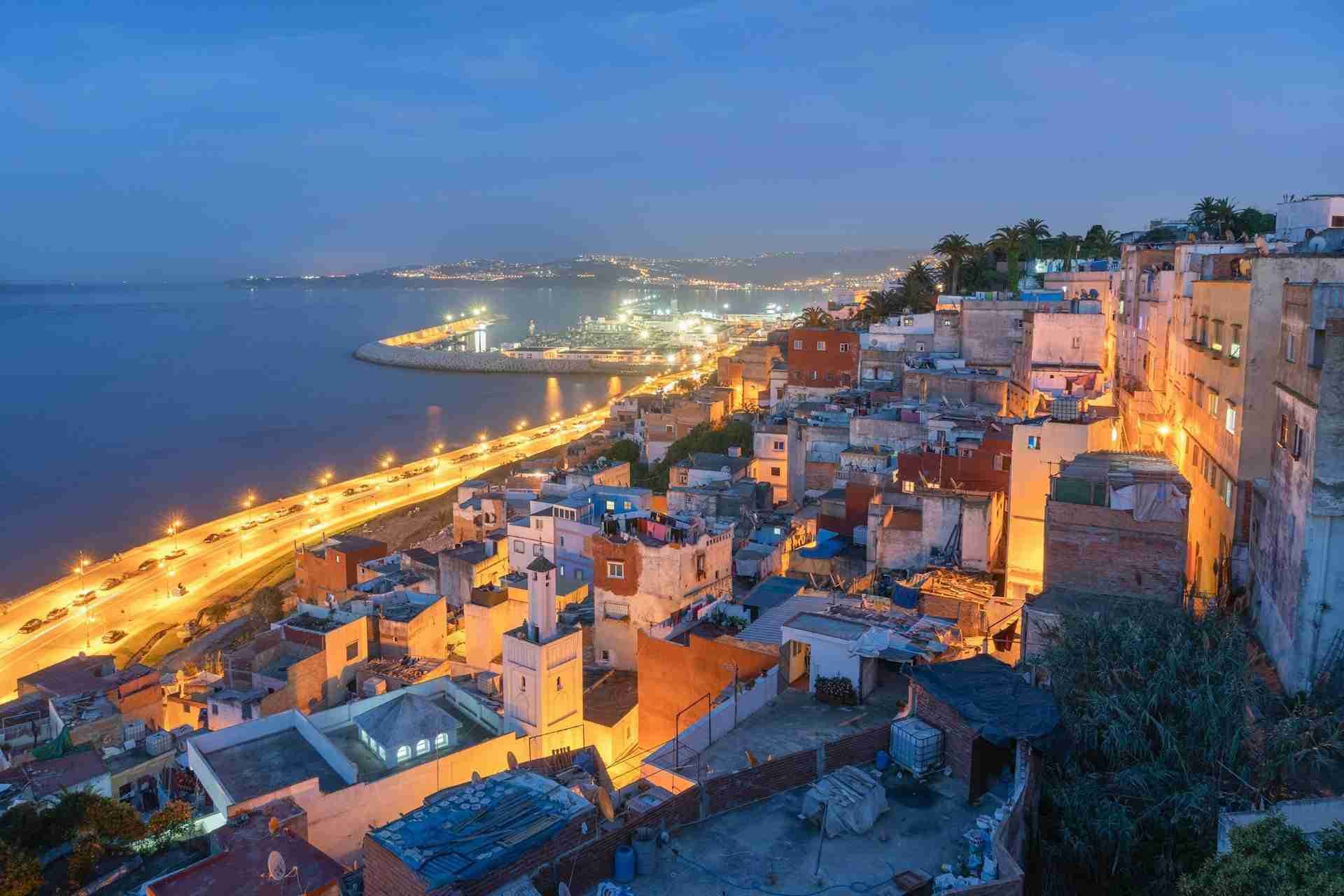
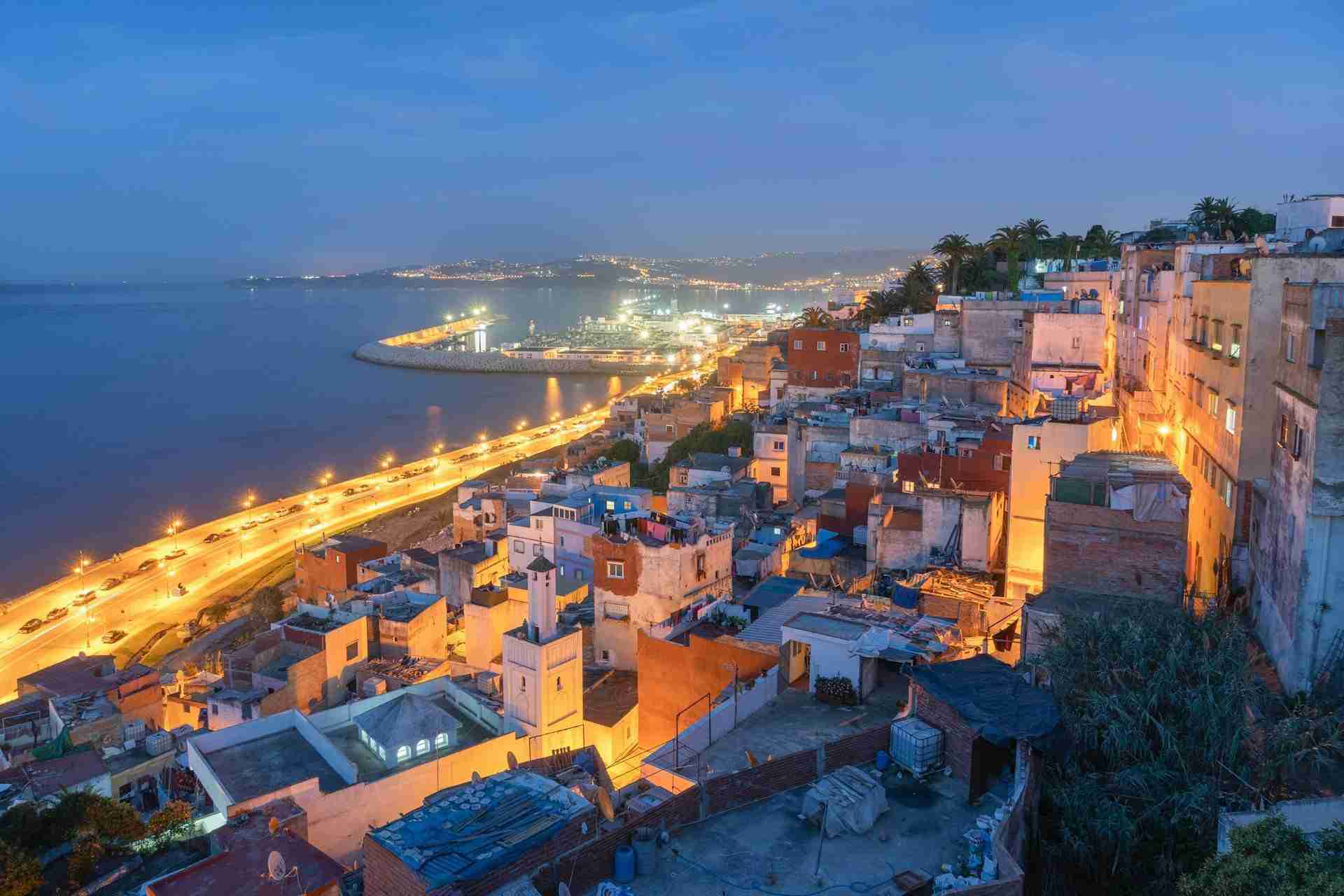
Poised on a breezy limestone bluff overlooking the Strait of Gibraltar, the Tombeaux Phéniciens Viewpoint offers photographers one of Tangier's most timeless and evocative perspectives. Situated in a small park near the ancient Phoenician tombs—simple stone-cut graves dating back over two millennia—this site seamlessly fuses archaeological intrigue with sweeping modern views. From here, Tangier unfurls in layers: whitewashed buildings cascading downhill toward the port, the curve of the old medina wall, and beyond it, the restless shimmer of the Atlantic where Morocco brushes the edge of Europe. Whether in soft morning haze or bathed in golden-hour glow, the scene from this quiet overlook offers an ever-changing interplay of light, history, and landscape.
Best Photography Opportunities
• Wide Panoramic Cityscapes at Sunset
: The primary draw at the Tombeaux Phéniciens Viewpoint is the grand city-wide view looking west toward the medina, harbor, and rolling Atlantic horizon. A wide-angle lens (16–35mm) lets you take in the entire sweep, especially during golden hour when the sun sets behind the hills and casts long shadows across Tangier's terraced rooftops. Use the stone wall of the overlook as a stabilizing surface or bring a tripod for slow shutter speeds and long exposures as lights begin to dot the cityscape.
• Foregrounding the Phoenician Tombs
: The stone-cut burial niches themselves offer a unique foreground for wide compositions. Carved directly into the cliff rock, these tombs provide a powerful textural contrast against the open sky and sea. Position them at the bottom third of your frame using a wide-to-standard lens (24–70mm) and shoot low to include the tombs' shape while maintaining depth to the sea beyond. Early morning light from the east enhances surface detail, while afternoon sidelight adds strong contour and drama.
• Atmospheric Views of the Strait of Gibraltar
: Looking northeast from the park's edge, the view across the strait can yield mesmerizing shots, particularly on hazy or fog-draped mornings when the coast of Spain appears and disappears in shifting light. A telephoto lens (70–200mm) allows you to compress this distance, emphasizing the interplay between sea, cloud, and silhouette. Boats traversing the channel can be used as scale elements, and cloud drama often enhances the mood in long exposures.
• Medina and Port Detail from Above
: With the medina spilling downhill just below the viewpoint, photographers can isolate architectural textures—minarets, satellite dishes, whitewashed facades, and narrow alleys—from above. A mid-range lens (35mm or 50mm) works well for tighter frames that tell the story of daily life in compressed layers. Capture the golden tones of evening light warming the stone and stucco while catching activity on the rooftops and below.
• Candid Human Moments and Environmental Portraits
: Though quiet, the viewpoint is frequented by locals and occasional vendors. This makes it a subtle location for capturing human scale against an expansive backdrop. Use a discreet lens (such as a compact 50mm or 85mm prime) to compose environmental portraits or candid interactions with the city and sea behind your subject. Overcast conditions can reduce glare and produce soft, even tones on skin and landscape alike.
Best Time to Visit
The Tombeaux Phéniciens Viewpoint is best photographed during the late afternoon into sunset, particularly from October through April when the sun sets at an angle that fully lights the old medina and creates long shadows across the water. Golden hour transforms the city's white buildings into warm ochre and amber, while the sea catches light in constantly shifting patterns.
Mornings can also be rewarding—especially in spring—when mist and atmospheric haze drift in from the Strait of Gibraltar, softening the landscape and providing subtle gradients ideal for more painterly compositions. This is also when you'll find the viewpoint at its quietest, with minimal human presence and cleaner air for long-distance visibility.
Midday is the least favorable time due to harsh overhead light, flat contrast on city textures, and potential glare off the water. However, on days with strong cloud cover, the changing light may still yield worthwhile moody frames.
How to Get There
The Tombeaux Phéniciens Viewpoint is located at the northern edge of Tangier's medina, just off Rue Portugal and a short walk uphill from the Bab Al Bahr gate. From the Petit Socco or Kasbah Museum, it's a 10–15 minute walk through narrow medina lanes that open out onto a small clifftop park with benches, palms, and the unmistakable rectangular tombs carved into the rock.
The site is open to the public and free of charge. No tickets or reservations are required, and there are no gates or opening hours, making it ideal for sunrise or sunset visits. While the area is generally safe and frequented by locals, exercise the usual caution when carrying camera gear in any urban environment. The park has stone ledges that can be used as impromptu tripods or framing tools.
Tripods and small setups are welcomed and commonly used by both locals and travelers. Drones, while technically allowed under Moroccan law with permit approval, are difficult to use legally in Tangier due to proximity to government buildings and airspace regulations—ground-based photography remains the best option here.
Recommended Gear and Shooting Tips
For maximum versatility, bring a wide-angle lens (16–35mm) for full cityscapes, a mid-range zoom (24–70mm) for capturing the balance between foreground and background elements, and a telephoto (70–200mm) for isolating ships, architectural details, or compressed strait views. A fast prime (35mm or 50mm) is ideal for low-light handheld shooting and unobtrusive people-focused frames.
A travel tripod will expand your options, especially for golden hour, long exposures, or twilight shots as city lights start to glow. A polarizer is useful for managing reflections on the sea and enhancing sky contrast, but use with caution at wider focal lengths to avoid uneven polarization across expansive skies.
Keep an eye on the horizon to ensure level framing—especially when shooting wide. Use focus stacking for maximum depth in compositions that include the tombs in the foreground and the city in the background. And always stay flexible: the clouds, mist, and ocean conditions can change dramatically within minutes, opening up entirely new lighting opportunities.
Nearby Photography Locations
: Just a few minutes uphill from the viewpoint, the Kasbah offers shaded streets, mosaic doorways, and an upper terrace with views to the sea and mountains. Best visited in early morning light for clean architectural compositions without heavy foot traffic.
• Port of Tangier and Avenue Mohammed VI
: A walk down toward the harbor yields strong urban geometry, reflective water scenes, and street photography potential as vendors, dockworkers, and tourists intersect. The golden light here reflects well off ships and port structures.
: A short taxi ride west, Cap Spartel overlooks the convergence of the Atlantic and Mediterranean. The cliffs, lighthouse, and rugged coastline make for excellent sunset compositions, with long-exposure potential and rich side lighting in the evening.
• The Marshan District and Villa de France Gardens
: This quieter residential area features leafy boulevards, French colonial architecture, and a view toward the bay that blends city and greenery. Especially photogenic in spring, when Jacaranda trees and bougainvillea bloom.
: A legendary sea cave west of Tangier, known for its mythological associations and naturally carved "Africa-shaped" sea window. Best visited at low tide, with long exposures transforming the crashing waves into mist beneath the ancient rock.
From stone-carved tombs to the meeting point of sea, sky, and city, the Tombeaux Phéniciens Viewpoint is a layered visual narrative waiting to be explored. It's a space where past and present share the same horizon, and where your lens can frame centuries of story with a single sweep. Whether you're drawn by architecture, atmosphere, or the shifting light of the Atlantic, this cliffside perch rewards every quiet moment of attention.
Comments
Loading comments…