
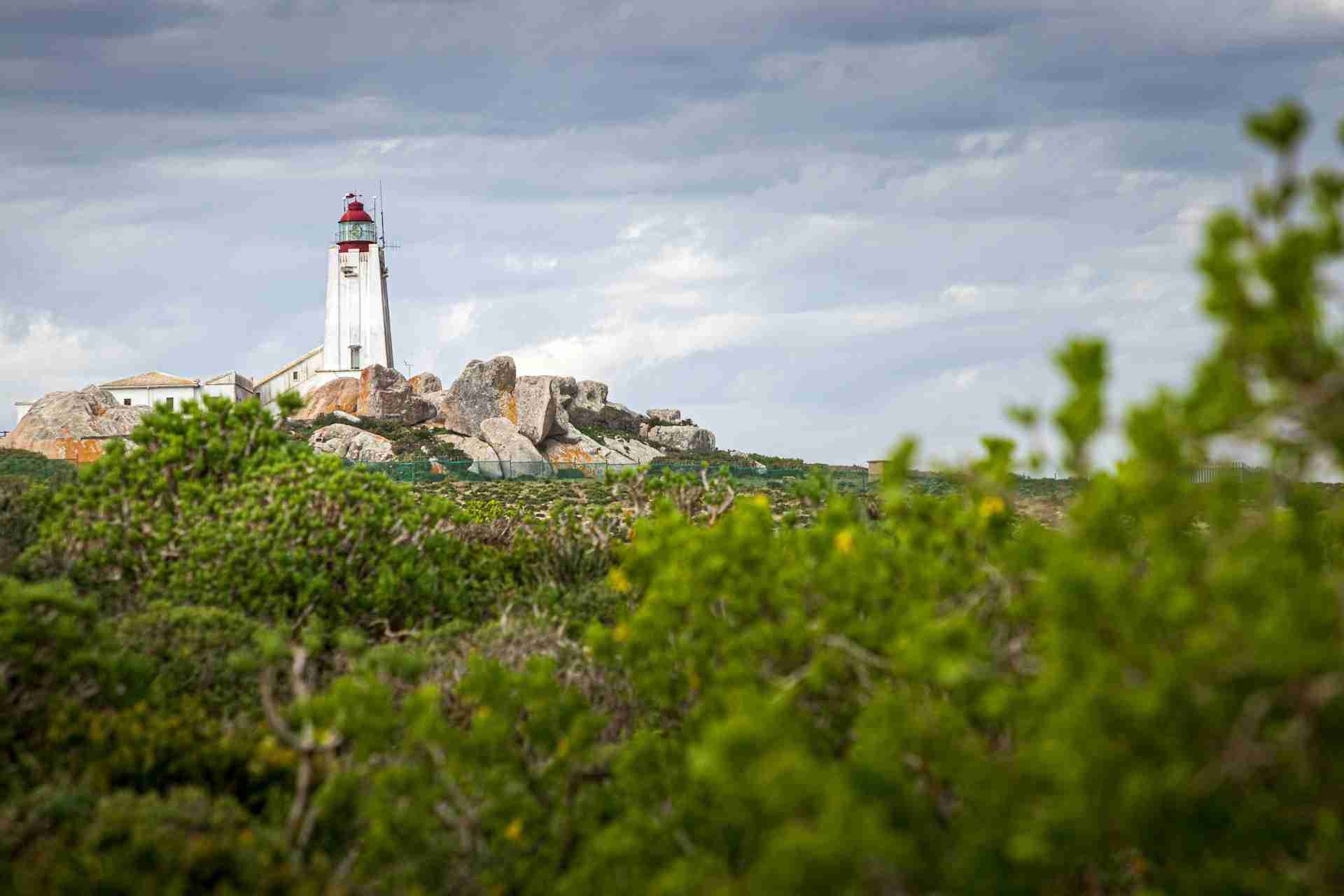
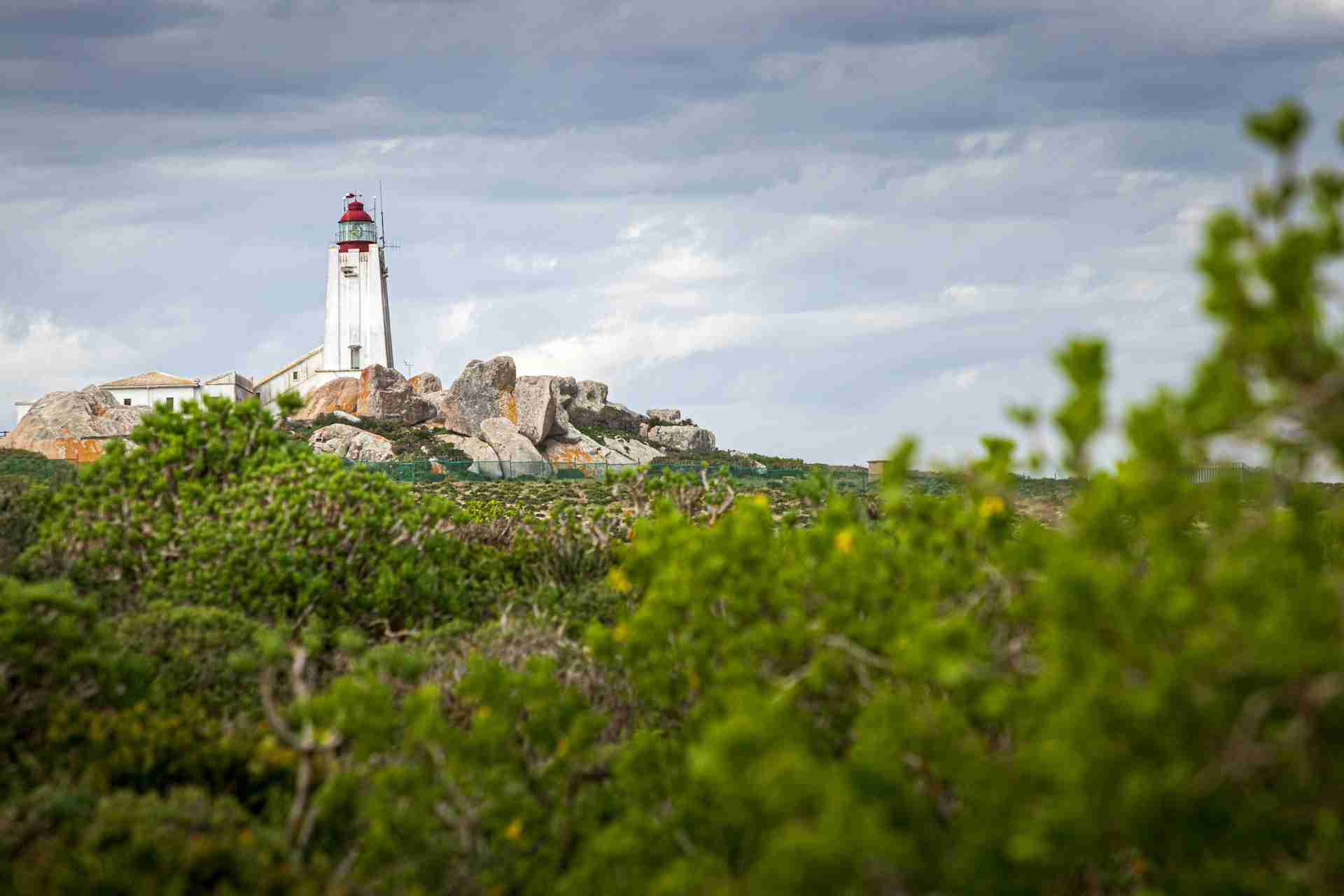
Perched on a rugged Atlantic coastline near the fishing village of Paternoster, the Cape Columbine Lighthouse stands as a bold white sentinel surrounded by granite boulders, scrub vegetation, and windswept ocean views. Built in 1936, this lighthouse is unique for being one of the last manned lighthouses in South Africa, and the first to feature a radio beacon. Its angular, almost industrial tower rises above a low-lying reserve that is both wild and peaceful, offering an inspiring contrast between human-made structure and natural chaos. The surrounding landscape is dotted with tidal pools, weathered stone, and wildflowers in spring, making it a location where clean architectural lines meet the unpredictability of the west coast environment. For photographers drawn to isolation, weather shifts, and minimalist design, Cape Columbine Lighthouse delivers both mood and clarity in equal measure.
Best Photography Opportunities
• Golden Hour Side Light on the Tower and Rocks
Late afternoon is ideal for photographing the lighthouse, when warm sunlight sweeps in from the west and skims across both the white tower and the rough granite landscape. This lighting adds dimensionality to the scene, casting soft shadows and revealing texture in both the concrete and surrounding rock formations. Position yourself southeast of the lighthouse to align it against the curve of the coastline and the shifting sky. Wide-angle compositions can include sweeping foregrounds of the rocky terrain, while a standard lens allows tighter framing of the structure itself with minimal distortion. In late winter and early spring, low sun angles enhance the earth tones and provide a warm counterbalance to the stark white of the tower.
• Moody Weather and Monochrome Studies
Cape Columbine is frequently touched by low clouds, sea mist, or coastal fog, all of which lend themselves well to dramatic, high-contrast black and white photography. The stark white tower cuts cleanly through greyscale skies, while the coarse boulders offer deep texture and tonal variation. Use a long lens to compress the elements and create a sense of scale between the lighthouse and the rocky outcroppings. Overcast light allows for more subtle gradients and soft transitions between light and shadow, making the scene less about color and more about structure. In these conditions, foreground details like puddles or windswept grass can add life to otherwise minimal compositions.
• Night Photography and the Beam in Motion
Because Cape Columbine remains operational and its beam is active, it is one of the few lighthouses in the region where you can photograph the rotating light as it sweeps through the night. A tripod and longer exposure are essential, as the light completes a full rotation every few seconds, creating arcing trails or subtle glows depending on your timing. Position yourself at a distance to include more of the night sky or foreground terrain, using wide apertures and high ISO settings to balance exposure. Clear nights are rare but rewarding, offering views of the Milky Way above the lighthouse in winter months. If the sky is cloudy or partially obscured, the moving beam can illuminate low mist or the surface of the rocks in surprisingly cinematic ways.
• Foreground Wildflowers and Spring Textures
In August and September, the reserve around the lighthouse bursts into bloom with a variety of west coast wildflowers. This seasonal transformation provides a softer visual language that contrasts with the stark geometry of the lighthouse. Using a low angle and a wide lens, place the wildflowers in the immediate foreground to create depth and draw the eye toward the structure in the background. Overcast or diffused light works best to preserve color saturation and detail in the blooms, while side lighting enhances contrast and shadow. These compositions benefit from careful focus stacking or narrow apertures to keep both foreground and background sharp.
• Textural Close-Ups of the Lighthouse and Grounds
Cape Columbine's surfaces tell stories of wind, salt, and time. The lighthouse base is weathered and textured, with patches of peeling paint, metal railings, and anchored cables providing strong visual material for detail studies. Isolating these features with a standard or short telephoto lens lets you explore the tactile reality of the site. Composing tight frames of rivets, rust, or engraved signage can function as abstract studies or complement wider shots in a photographic series. Look also to the interaction between light and surface—how shadows play along stairs, vents, or cable anchors—especially during early morning or late afternoon when directional light enhances shape.
Best Time to Visit
Cape Columbine is a rewarding location throughout the year, but seasonal and daily conditions strongly influence the type of photographs you will be able to capture. Spring, particularly August and September, is perhaps the most visually diverse season, as it combines flower bloom, pleasant weather, and long golden hours ideal for landscape and foreground work. This is also the calmest period for wind and fog, improving clarity and comfort while shooting.
Summer months from November through February offer clearer skies and high sun, which can be harsh but effective for graphic compositions and strong shadows. These midday hours are ideal for close-up studies, shadow patterns, and crisp sky-to-structure contrast. However, heat haze and wind are common later in the day, so plan accordingly if aiming for sharp detail in telephoto compositions.
Autumn and winter introduce more dramatic skies, cooler tones, and fog-laced mornings. These conditions create strong opportunities for black and white work, or wide compositions that balance softness and mood. Night photography is best attempted between May and August, when the Milky Way is most visible and the angle of the lighthouse beam cuts cleanly across the sky.
Wind is frequent at this exposed coastal point, so a sturdy tripod and solid footing are essential for long exposures. Mornings tend to be calmer than afternoons. Tide patterns also affect shoreline compositions. While the lighthouse itself is set back from the water, the surrounding boulders and tidal pools become more accessible during low tide, creating new angles and natural foregrounds.
How to Get There
Cape Columbine Lighthouse is located just outside the small town of Paternoster on South Africa's Western Cape. From Cape Town, the drive is approximately two and a half hours via the R27 west coast road. Once in Paternoster, follow signs to the Cape Columbine Nature Reserve. The lighthouse is situated within the reserve, which requires an entry fee per vehicle upon arrival.
The road through the reserve is unpaved but generally accessible with a standard vehicle. Drive slowly, especially after rain, as some areas can become soft or uneven. There is a designated parking area near the lighthouse, and the surrounding grounds are open for exploration on foot.
Tripods and camera equipment are permitted, and the area is rarely crowded, giving you freedom to work without interruption. However, there are no facilities on-site, so bring water, food, and any supplies you might need for several hours of shooting. The nature reserve is open during daylight hours, though night photography is possible with prior permission or by staying at nearby accommodations and walking in after dark. Drones are not permitted within the reserve without explicit written approval from the managing authority.
Recommended Photography Gear
Given the open terrain and range of potential compositions, a versatile kit will serve you best at Cape Columbine. A wide-angle lens in the 14 to 24 millimeter range is essential for landscape shots that include foreground rock formations or wildflowers. A 24 to 70 millimeter standard zoom is ideal for most compositions involving the lighthouse itself, offering enough range to adjust quickly as the light changes.
For distant perspectives, detail shots, or compression of the landscape, a 70 to 200 millimeter telephoto lens is extremely useful. If you are planning night photography, bring a fast prime lens with a wide aperture, such as f/1.8 or f/2.8, to capture low-light conditions cleanly. A full-frame camera with good high-ISO performance will give you the most flexibility when working in changing light or high contrast.
A sturdy tripod is essential, especially given the coastal wind. Use a remote trigger or timer to avoid vibration during long exposures. A circular polarizer is helpful in managing glare from wet rock or tidal pools, and an ND filter can extend exposure times during the day to add softness to ocean movement or passing clouds.
Pack extra batteries and a lens cloth, as sea air can quickly fog filters or glass surfaces. Because the site is remote and unshaded, bring a hat, sunscreen, and enough water for extended stays. Footwear with grip is important if you plan to climb or scramble over rocks for low-angle or elevated views.
Nearby Photography Locations
Just a few kilometers away, Paternoster offers quiet beach scenes, white-washed cottages, and colorful fishing boats. Early morning or evening walks through the village provide opportunities for documentary and seaside street photography.
Located within the same nature reserve as the lighthouse, Tietiesbaai features rocky inlets, coastal textures, and open beaches. Sunset here is particularly dramatic, with waves crashing against stone formations that catch golden light.
Outside of flower season, the reserve still offers low scrub vegetation and wide views over the ocean. It's a great spot for minimalist compositions or telephoto work that isolates plant life against open sky or crashing surf.
An hour south of Cape Columbine, this park is home to salt marshes, dunes, and birdlife, along with seasonal flower displays. The Langebaan Lagoon provides calm water for long exposures and reflective compositions.
A short drive north, this stretch of coastline is quieter and less rugged, with open sand and smoother rock formations that contrast with the granite chaos around the lighthouse. Ideal for sunrise or long-lens work across the waves.
Cape Columbine Lighthouse is a place where strong lines meet wild elements. It offers a disciplined subject in a chaotic environment, which invites photographers to balance structure with weather, light with texture, and permanence with motion. Whether you come for the isolation, the angles, or the feeling of standing alone above the sea, this lighthouse offers a visual honesty that is as timeless as the beam it casts over the Atlantic.
Comments
Loading comments…