
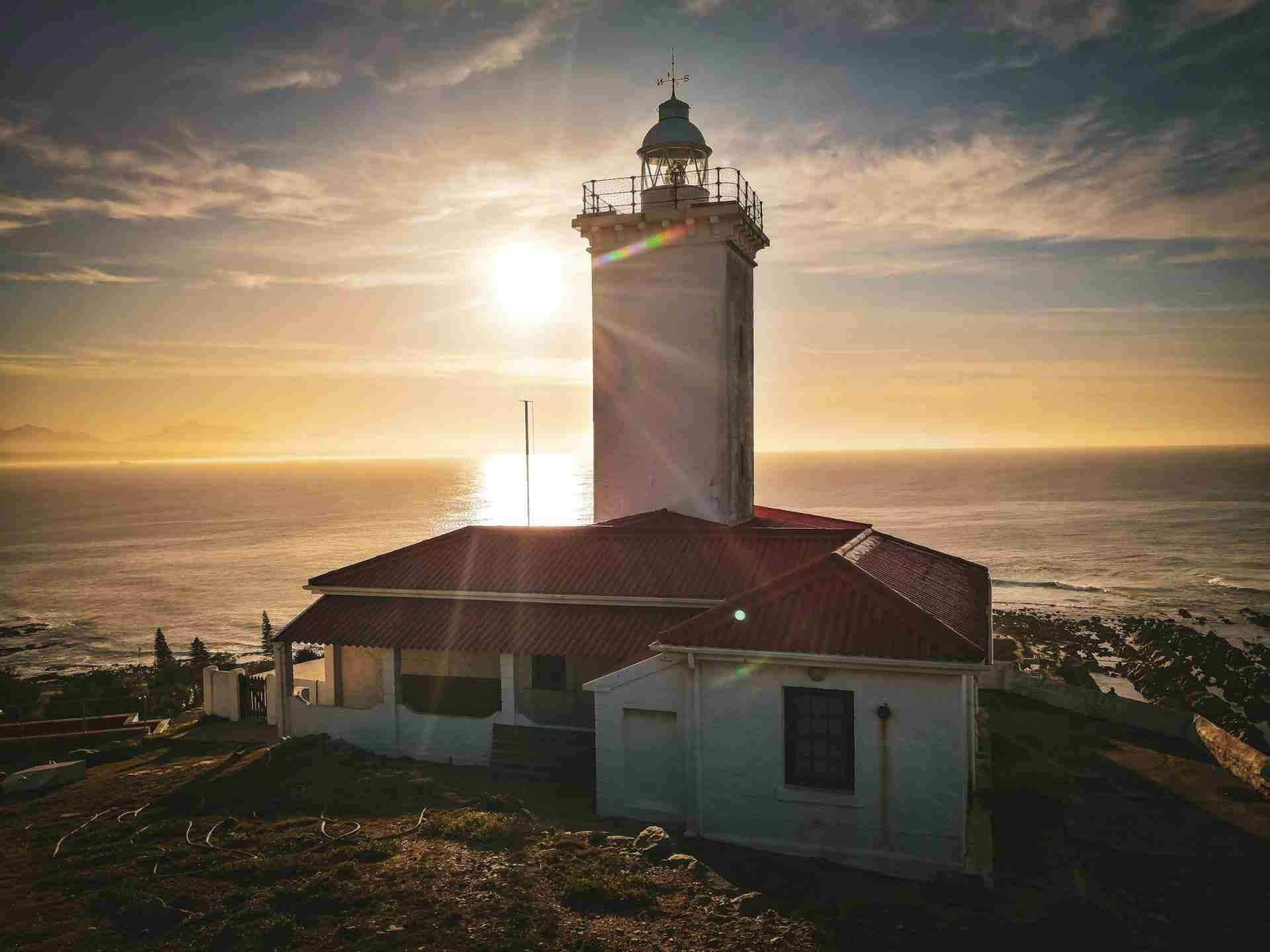
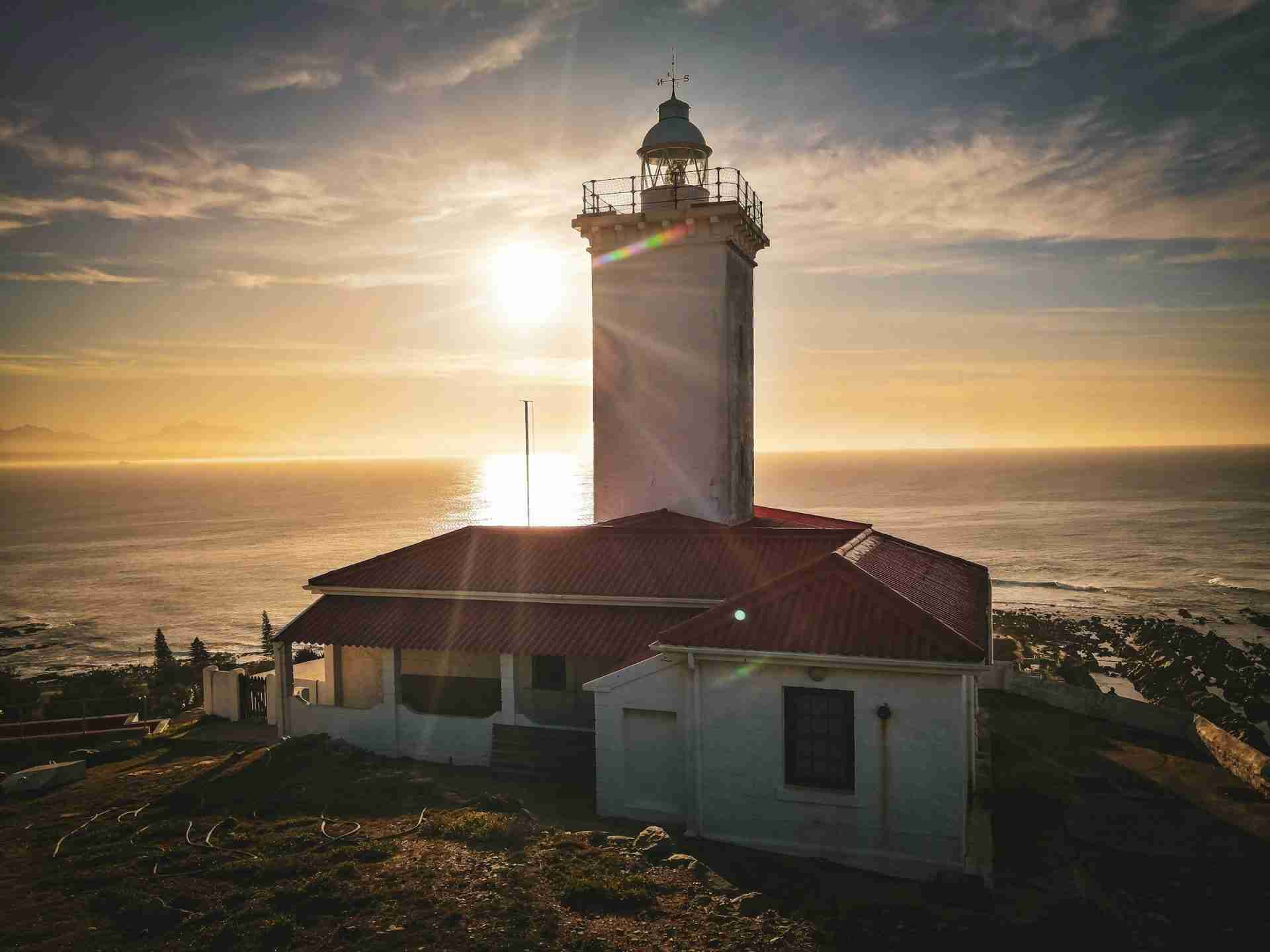
Cape St. Blaize Lighthouse Complex stands high above Mossel Bay on South Africa's Garden Route, watching over the Indian Ocean from a rugged sandstone headland. The lighthouse rises from windswept coastal terrain where steep cliffs drop into restless water. This is not a sheltered harbor scene but an exposed vantage point defined by elevation, distance, and scale. From the edge of the cliffs, the curve of Mossel Bay unfolds below, while inland ridge lines add subtle depth behind the shoreline. For photographers, the strength of this location lies in its combination of commanding views, changing sea conditions, and the clean vertical presence of the lighthouse itself. It rewards those who pay attention to light direction, tide movement, and how foreground cliff textures can anchor wide ocean compositions.
Best Photography Opportunities
• Lighthouse from the Cliff Path –
There are several natural angles along the path where you can frame the lighthouse against open sky. If you move slightly lower on the slope, the structure feels taller and more dominant in the frame. Stepping back allows you to include more of the surrounding headland, which helps place the lighthouse in context. Side light during early morning or late afternoon adds depth to the walls and prevents the building from looking flat. Take your time adjusting your position because even a small shift changes how the horizon line intersects with the structure.
• Wide Views Across Mossel Bay –
From the cliff edge, you get a broad view across Mossel Bay that works well with a wide lens. The curve of the shoreline gives you a natural leading line if you compose carefully. On clear days, you can capture layers of coastline fading into the distance, which adds depth without needing dramatic foreground elements. Including a bit of textured rock near your feet helps anchor the scene and prevents the image from feeling empty. This is a great setup for golden hour when the light softens and the water picks up subtle color.
• Wave Action Below the Cliffs –
Looking down from the headland, you can photograph waves breaking against the rock base far below. A longer lens helps isolate sections of surf and compress the scene. Faster shutter speeds freeze the water in mid crash, while slower speeds create a smoother, flowing look. Because you are shooting from above, pay attention to how the cliff line runs through your frame so it guides the eye instead of cutting awkwardly across it. Conditions change quickly here, so if the swell picks up, stay put and wait for stronger wave sets.
• Golden Hour on the Headland –
The path near the lighthouse is popular with walkers, which gives you an easy opportunity to include human scale in your images. When the sun is low, backlighting creates clean silhouettes against the sky and water. Position yourself so the figures are separated from the lighthouse rather than overlapping it. This keeps the composition simple and readable. Shooting slightly darker exposures preserves the color in the sky and keeps the silhouettes strong.
• Evening and Night Exposures –
After sunset, the area becomes much quieter and the lighthouse light stands out clearly. Long exposures can capture the beam as it rotates, adding a sense of motion to the frame. On clear nights, stars appear above the structure, giving you another creative option. Wind can still be an issue, so make sure your tripod is stable and weighted if necessary. Balancing the brightness of the lighthouse with the darker foreground takes a bit of experimentation, but it is worth staying after sunset to try.
Best Time to Visit
Summer generally offers more stable weather and longer evenings, which makes planning easier. Clear mornings provide the sharpest visibility across the bay. Spring and autumn often bring more cloud texture, which can improve sunrise and sunset images without needing storm conditions.
Winter can be more dramatic, with bigger swells and more active skies. The lower sun angle during winter also means you get directional light for longer periods of the day. Golden hour works well year round, especially when side light hits the cliffs. Always check the wind forecast, since strong gusts can make shooting on the edge less comfortable and affect tripod stability.
How to Get There
Cape St. Blaize Lighthouse Complex is located above Mossel Bay along the Garden Route. Most visitors reach Mossel Bay via the N2 highway and then follow signs toward the lighthouse and coastal viewpoints. Once you are close, signage is clear and easy to follow.
There is parking available near the lighthouse complex, followed by a short walk along maintained paths to the viewpoints. Depending on current management, there may be a small access or entrance fee to visit the lighthouse area, though policies can change. The paths are generally straightforward, but the cliffs are exposed, so keep an eye on your footing and your gear. Arriving early or late in the day helps you avoid harsh midday light and gives you better shooting conditions.
Recommended Photography Gear
A sturdy tripod is important here, especially with regular coastal wind and the potential for long exposures. A wide lens is ideal for big ocean views and including foreground rock. A mid range zoom works well for lighthouse portraits and balanced compositions. A telephoto lens is useful for isolating wave action or compressing distant coastline.
Neutral density filters can help you control shutter speed when working with surf. A polarizer may reduce glare on the water and add depth to the sky, but use it carefully to avoid uneven tones. Bring a microfiber cloth to deal with sea spray and salt in the air. Extra batteries are a good idea if you plan to stay through sunset or into the evening.
Nearby Photography Locations
is located along the same headland and offers dramatic cliff views along with cave interiors. You can combine coastal landscapes with textured rock studies in one visit. It is easy to pair with the lighthouse since they are close together.
provides a working waterfront setting with boats, docks, and everyday activity. It offers a different feel compared to the exposed cliffs above. Early morning light is especially good for reflections and quieter scenes.
• Diaz Beach
gives you a lower angle along the shoreline with rolling surf and open sand. It is a good contrast to the elevated lighthouse viewpoint. Sunrise and sunset both work well here depending on cloud cover.
features rugged coastal terrain and elevated viewpoints similar in scale to Cape St. Blaize. The rock formations differ enough to give you fresh compositions. Clear days provide sweeping views along the coastline.
offers dramatic cliffs and wide ocean panoramas. The hiking trails provide multiple viewpoints and varied angles. It is worth the drive if you want to expand your coastal portfolio beyond Mossel Bay.
Comments
Loading comments…