

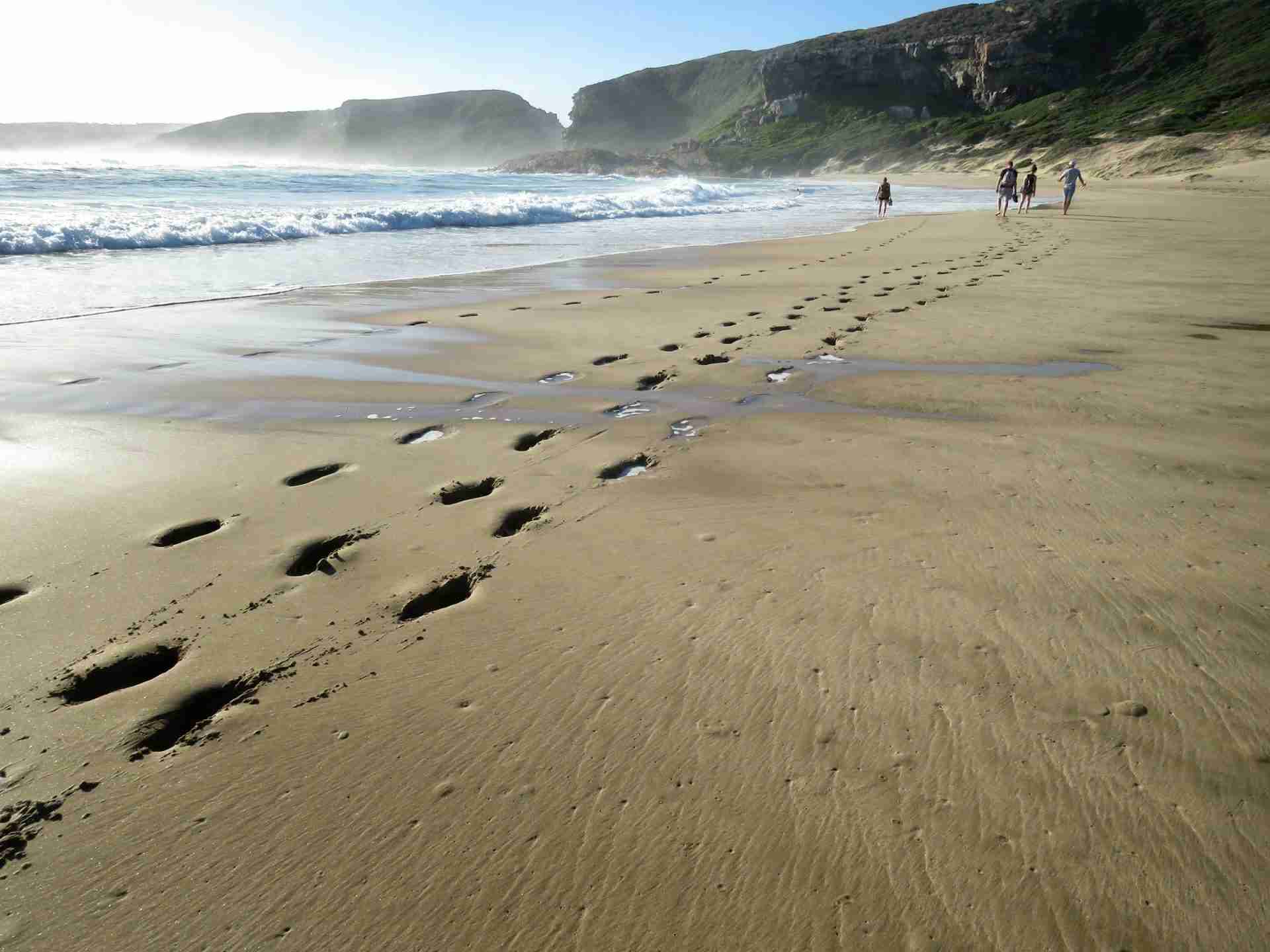
The Island Beach in Robberg Nature Reserve is one of those spots that feels a bit hidden even though it's part of a well known trail. You reach it by hiking along the Robberg Peninsula, and then suddenly the landscape opens up to this wide stretch of sand backed by steep cliffs and surrounded by ocean on both sides. It's a really satisfying place to photograph because it feels raw and open, without much getting in the way. The beach curves gently, waves roll in constantly, and the cliffs above give everything a strong sense of scale. It's the kind of location where you can slow down, walk the shoreline, and just see what catches your eye rather than forcing compositions.
Best Photography Opportunities
• Wide Beach and Cliff Composition
One of the strongest shots here is simply working with the full scene. The beach stretches out in a long curve with steep cliffs rising behind it, and that combination gives you a natural balance between foreground and background. Walking a bit along the sand helps you find a spot where the curve of the beach leads into the cliffs. Including some texture in the sand, like footprints or ripples, can help anchor the foreground. The cliffs add weight to the image and make the beach feel more dramatic. It's a great place to keep things simple and let the landscape do the work.
• Waves Rolling in
The constant movement of the ocean is a big part of what makes this place interesting to photograph. You can capture waves as they break along the shore to add energy and motion to your images. Shooting slightly down the beach rather than straight out to sea helps create a stronger composition. Timing your shot just as a wave rolls in can make a big difference in how the image feels. A slightly slower shutter speed can also soften the water and give it a smoother look. It's a good way to bring some life into the frame.
• Views From the Robberg Trail
Before you drop down onto the beach, the trail above gives you a really nice elevated perspective. From up there, you can see the full shape of the beach, the surrounding ocean, and how the cliffs wrap around the area. This is where you can capture the scale of the location in a way you can't from the sand. The higher angle also helps simplify the scene by removing some of the clutter you might get at ground level. It's worth stopping here for a few minutes before heading down. Some of the best shots actually come from this viewpoint.
• Cliff and Rock Formations
The cliffs backing the beach aren't just a background, they're a subject on their own. You can find interesting textures, layers, and small formations if you move closer and look around. Shooting tighter compositions here gives you something different from the wide beach scenes. The contrast between the rough rock and the smooth sand can work really well in a frame. These detail shots are easy to overlook, but they add variety to your set. It's worth spending a bit of time exploring the edges of the beach.
• People for Scale
Because the beach is so open and the cliffs are so large, including a person can really help show the scale of the place. A single person walking along the shoreline can become a strong focal point. The surrounding space makes them feel small in a way that adds to the image rather than distracting from it. It also helps give the scene a bit of life and movement. Since this is part of a hiking route, you'll usually have a chance to capture someone passing through. It's often just a matter of waiting for the right moment.
Best Time to Visit
Early morning is a great time to be here if you want softer light and fewer people. The beach feels more open and calm, and the light tends to be more even across the cliffs and sand. It's also easier to work without distractions when the area is quieter.
Late afternoon is another strong option, especially when the light starts to warm up and soften. The cliffs pick up more depth, and the ocean can reflect some of that light back into the scene. Sunset can be nice, but it depends on how the light lines up with the beach and surrounding cliffs.
Wind can play a big role here, so calmer days are usually better for photography. Conditions can change quickly along the coast, so it's worth being flexible.
How to Get There
The Island Beach is located within Robberg Nature Reserve near Plettenberg Bay. To reach it, you'll need to hike part of the Robberg Trail. The most direct route is along the circular trail, and the beach sits roughly along the middle section depending on which direction you walk.
There is an entrance gate to the reserve, and a conservation fee is required to access the area. Parking is available near the trailhead, and the path is well marked. The hike includes some uneven terrain and elevation changes, so it's worth wearing proper footwear and allowing enough time.
The descent to the beach is manageable, but you'll need to climb back up afterward, so it's something to keep in mind if you're carrying camera gear.
Recommended Photography Gear
A 24 to 70 millimeter lens works really well here for most situations. It gives you flexibility for wide beach scenes and mid range compositions without needing to switch lenses often.
A 70 to 200 millimeter lens is useful if you want to isolate waves, compress the cliffs, or pick out details in the landscape. It can also help simplify the scene when things feel too open.
A tripod can be helpful if you're planning to work with longer exposures for the waves, but it's not essential. Since you'll be hiking, keeping your gear light will make the whole experience more enjoyable.
Nearby Photography Locations
The rest of the peninsula offers a mix of coastal cliffs, rocky outcrops, and ocean viewpoints. As you continue along the trail, you'll find plenty of spots that give you different angles over the water. It's worth exploring beyond the beach to build a more complete set of images.
• The Gap at Robberg
This narrow section of the peninsula is one of the more dramatic parts of the trail. Waves crash against both sides, and the rock formations create strong lines and textures. It's a great place for more rugged coastal compositions.
Located nearby, Witsand Beach offers a long, open stretch of sand with softer, more minimal scenery. It's a nice contrast to the cliffs and rugged terrain of Robberg. Early morning works especially well here.
This area provides calm water, sandbanks, and reflections that feel very different from the open ocean. It's a good place for quieter compositions and softer light. The surrounding mountains add depth to the scene.
• Lookout Beach, Plettenberg Bay
Lookout Beach gives you a mix of ocean views, river mouth scenes, and distant mountains. It's an easy access location that offers a lot of variety in a small area. It's also a good option if you want something less demanding after hiking.
Comments
Loading comments…