
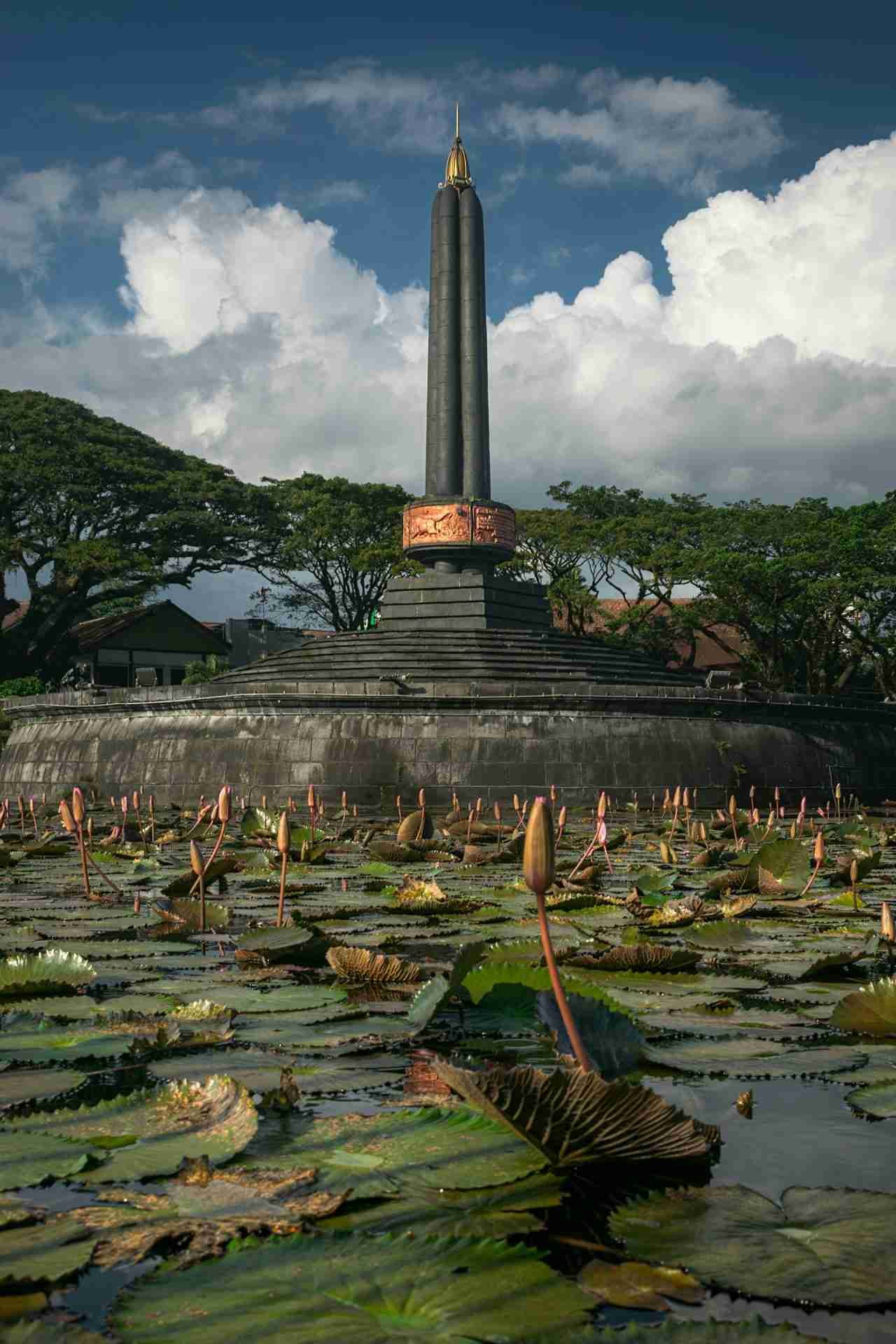
In the heart of Malang, East Java, Alun Alun Tugu brings together colonial architecture, bustling daily life, and a sense of calm that flows through its tree lined square. Photographers arriving here find a dynamic balance between heritage and motion, where formal compositions of old buildings meet spontaneous street interactions. The central monument rises above a water lily pond, circled by walking paths and shaded by broad trees, creating layers of depth that shift as light changes through the day. Alun Alun Tugu is not just a place to photograph a landmark, it is a space where light, people, and history interact in subtle and rewarding ways. For photographers who enjoy waiting for the right moment, this is a location that rewards patience and curiosity.
Best Photography Opportunities
• Tugu Monument Reflections
At the center of the square, the Tugu Monument stands surrounded by a pond filled with water lilies and seasonal blooms. The water here is often still, allowing for clean reflections of the monument, especially in the early morning when the breeze is minimal and the light softens the contrast. Composing low to the ground can create a strong symmetry between the structure and its reflection, while sidelong light adds texture to the stonework and vegetation. Photographers using a longer focal length can compress the layers, bringing the background architecture closer to the monument for a denser composition. This central element works as a visual anchor whether shooting wide or tight, grounding your compositions with stability and familiarity.
• Colonial Buildings Around the Square
The square is surrounded by buildings from the Dutch colonial era, many of which feature ornate windows, aging stucco, and clean architectural lines. These structures offer excellent opportunities for architectural photography, especially in the early morning or late afternoon when angled sunlight creates defined shadows and brings out surface detail. Framing passersby walking in front of the buildings adds scale and movement to an otherwise static scene. Photographers interested in geometry can find compositions by aligning windows, rooftops, and shadows to guide the viewer's eye. A tilt shift or perspective correcting lens will help keep lines straight and compositions sharp, particularly when shooting at street level.
• Banyan Trees and Natural Frames
The banyan trees that line the square offer more than just shelter from the sun. Their massive roots and layered branches create excellent natural frames and foreground texture for photographing scenes within the park. Composing with these trees in the foreground adds a grounded quality to your images, whether you're photographing the monument, passersby, or the park pathways. Early morning light through the canopy creates dappled highlights and shadows that add subtle interest without overpowering the subject. This area also lends itself well to quiet environmental portraits, where the trees help anchor the subject in a rich, context-driven background.
• Street Photography and Local Activity
Alun Alun Tugu has a steady rhythm throughout the day, filled with activity but never overwhelming. From children playing and locals exercising to vendors selling snacks or toys, there's no shortage of moments worth capturing. For candid work, you can blend in easily by walking the perimeter or sitting on a bench and observing patterns. Focus on hand gestures, interactions, and moments of stillness between motion. The openness of the space makes it easier to isolate subjects against the monument or surrounding architecture, especially with a longer lens or by stepping back to frame scenes from a distance.
• Night Photography
As daylight fades, the square shifts into a more reflective pace. Soft lighting illuminates the pathways, and the monument is subtly lit without overpowering glare. Using a tripod, photographers can experiment with longer exposures that capture the contrast between the stillness of the park and the flow of traffic just beyond it. Light trails from vehicles on the bordering roads can add motion to an otherwise still composition. Nearby buildings also offer interest after dark, with window light and signage revealing layers that go unnoticed during the day. For those who enjoy working with shadow, color temperature, and contrast, this is a rewarding time to shoot.
Best Time to Visit
Alun Alun Tugu is at its most photogenic in the early morning just after sunrise, when the square is peaceful and the light is soft. The monument and pond reflect beautifully in this light, and the low sun casts long shadows across the walking paths and garden areas. Morning is also when you'll find locals doing tai chi or setting up food carts, creating scenes full of quiet energy. Late afternoon brings warmer tones and golden light, which works especially well with the color and texture of the surrounding buildings. This is also a good time to photograph activity as families and students gather around the square.
During the dry season from May to September, you can expect more consistent sunlight and clear skies, making it easier to plan for architectural or reflective compositions. However, the rainy season between November and March adds a different mood to the park. Overcast skies create soft, even light for portraits and textures, while occasional breaks in the clouds can offer dramatic skies above the monument. Photographers visiting during this time should be prepared to work quickly between showers, but the rain often brings out deeper greens and cleaner reflections in the pond. Evening photography is possible year round, though dry season offers more comfortable temperatures and less haze after dark.
How to Get There
Alun Alun Tugu is centrally located in Malang, right across from the city hall and close to the main railway station. If you are arriving by train, it is just a ten to fifteen minute walk from Malang Kota Baru Station, which is served by frequent trains from Surabaya and other major cities. Motorbike taxis and ride hailing services are widely available and are a convenient option, especially during early morning or evening shoots. If you are arriving by car or motorbike, parking is available along Jalan Tugu and the surrounding streets, but be aware that spaces fill quickly on weekends and during public events.
There are no entrance fees to access the square or photograph in the area. The entire plaza is open to the public at all hours, and it is walkable from most points within Malang's city center. For those carrying gear, the paved walkways and benches make it easy to rest and review shots or wait for better light. Photographers planning an early start or late finish will find enough street lighting to move safely, and the area is generally considered secure throughout the day.
Recommended Photography Gear
A camera setup with a flexible range of focal lengths is ideal for this location. A wide lens in the 24mm to 35mm range is excellent for capturing the monument with its surrounding garden and reflections in the pond. For more detail and subject isolation, bring a 50mm or 85mm lens, which will allow you to work unobtrusively when photographing people, details in architecture, or street scenes. A medium zoom, such as a 24-70mm, can also be useful for covering a range of compositions without switching lenses frequently, especially if you're moving through crowds or working quickly.
A lightweight tripod is essential for low- ight situations in the morning or evening and for shooting longer exposures with smooth reflections or light trails. A circular polarizer can be helpful for managing glare on the water surface, especially on bright days. Neutral density filters can help you slow your shutter speed during the day if you're interested in capturing motion blur from people or traffic. It's also worth packing a small cloth to keep lenses clean, especially if you're working close to the pond or in light rain.
Nearby Photography Locations
Jodipan is a short walk or ride from Alun Alun Tugu and offers a completely different visual language, full of saturated color and bold patterns. The houses here have been painted in vibrant shades and the stairways and alleyways are filled with murals, making it ideal for abstract compositions, environmental portraits, and creative framing. Elevated viewpoints from bridges let you capture the whole village in layered perspective.
Stretching away from the square, Ijen Boulevard is one of the most photogenic streets in Malang. It is lined with historical buildings, churches, and formal gardens, and the mature trees along the sidewalks create rich shadows and directional light in the early morning. The slower pace of this area allows for patient architectural work and quieter street scenes that show a different rhythm of the city.
Pasar Oro-Oro Dowo
This traditional market is compact but visually dense, with tightly arranged stalls selling fresh produce, spices, and daily goods. The lighting is often soft and ambient, making it a great place to shoot handheld while still retaining detail and contrast. Interactions between sellers and buyers, the arrangement of goods, and handwritten signs all add character to this location.
Adjacent to Jodipan, Kampung Tridi focuses more on playful artwork, including sculptures and optical illusions painted onto walls and sidewalks. It's a space that invites creative experimentation, particularly for those shooting portraits or interested in playful angles. Arriving early lets you avoid crowds and take your time composing with the more unusual visual elements.
Alun Alun Tugu rewards the photographer who takes time to walk the perimeter, observe, and return as the light changes. It is a place that holds still just long enough for you to notice the moments worth capturing. Whether you are working on a project focused on city spaces or simply want to explore a new side of East Java, this square offers a grounded, approachable subject with plenty of depth.
Comments
Loading comments…