
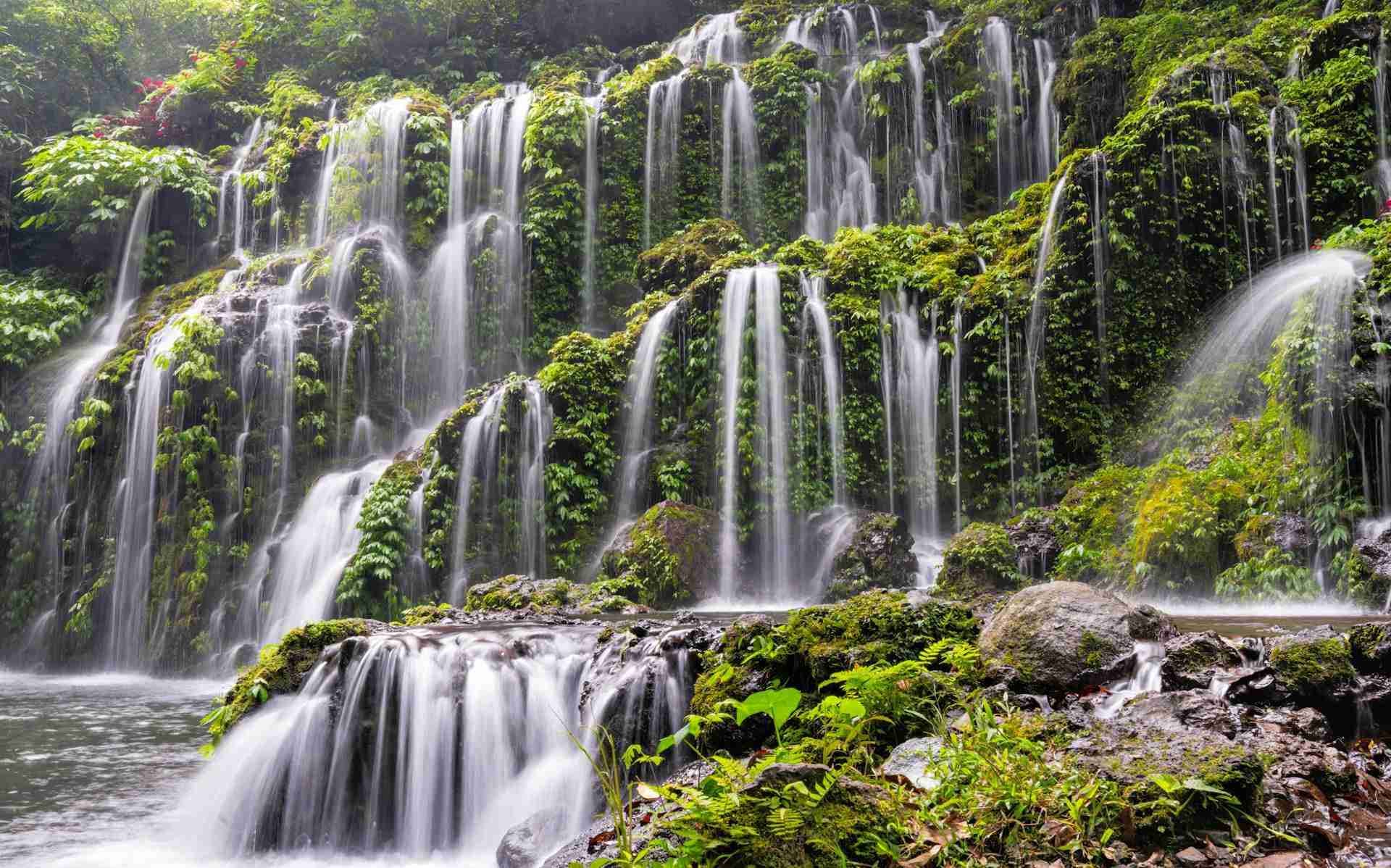
Hidden within the highland rainforests of Wanagiri in northern Bali, Banyu Wana Amertha Waterfall is a lush, multi-fall sanctuary that rewards photographers willing to step off the tourist path. Unlike more commercialized waterfalls in the region, this location offers a cluster of unique cascades rather than just a single drop. Each flow has its own character, some delicate and veiled, others forceful and sculptural, spilling over moss-covered rock walls and feeding into cool jungle pools below. The surrounding vegetation is dense and richly textured, with ferns, vines, and bamboo forming intricate layers around the water. For photographers, this location is a natural canvas for slow shutter creativity, composition studies, and working with filtered light. It is a place that demands thoughtful shooting and repays it with visual abundance.
Best Photography Opportunities
• The Main Veil Waterfall Near the Entrance
After a short trek into the preserve, the first major waterfall is a tall, narrow cascade that flows down a broad mossy wall, creating dozens of fine ribbons of water. This fall is best captured with a long exposure of one to two seconds to smooth the flow into silky threads, contrasting beautifully with the textured green backdrop. Compositions benefit from including elements like low-hanging vines or stepping stones in the foreground, adding depth and a sense of scale. A tripod is essential here, especially since light levels are low beneath the jungle canopy. Framing tight can emphasize the symmetry and detail in the falling water, while wider shots highlight the surrounding environment.
• Twin Streams Tucked Deeper into the Forest
Venture further along the path and you will find a pair of smaller waterfalls flowing side by side from different angles into the same rock-lined pool. These twin cascades offer opportunities for symmetry and mirror-like reflections if the pool is still. The site is often shaded by a high canopy, so early morning is a good time to catch mist lingering in the air. For compositions, consider placing the water source off-center and allowing jungle elements to lead into the frame naturally. This is an ideal location for vertical framing with a midrange zoom lens to isolate the twin falls within the surrounding greenery.
• Long Exposure Details of Moss and Flow
Banyu Wana Amertha is full of micro-scenes where small rivulets travel across mossy stones or trickle through root systems. These intimate views are well suited to long exposure work using a macro or telephoto lens. Focus on textures such as the contrast of slick wet rock against fine moss filaments, or the way a single stream curves around a foreground branch. These are not the obvious hero shots, but they round out a photographic set with quiet depth. They also provide opportunities to slow down and wait for the perfect light or subtle motion in the water.
• Backlit Jungle Scenes in Late Afternoon
Although much of the site remains shaded, there are moments in the late afternoon when filtered sunlight pierces the canopy and strikes the spray around the falls. These moments are short-lived but incredibly dynamic, casting light beams through the mist and illuminating leaves in golden contrast to the cool stone and water. Shooting into the light requires careful metering and thoughtful composition, but the results can be cinematic. Bring a lens hood and shoot bracketed exposures if needed to balance the highlights and shadows.
• Framing Visitors for Scale and Storytelling
While Banyu Wana Amertha rarely feels crowded, including a human figure in your shot can help convey the scale and serenity of the location. Whether it is a lone figure standing near the edge of a pool or someone carefully navigating the wet rocks, these moments add narrative context. Use a wider lens and compose with enough space around the subject to avoid clutter. Clothing in neutral or earthy tones tends to blend better with the environment and will not distract from the overall composition. Be mindful of shutter speed and try to keep your subject still if you are shooting long exposures in low light.
Best Time to Visit
The waterfalls at Banyu Wana Amertha flow year-round, but different seasons offer varied photographic conditions. The dry season, from April through October, is the best time to visit for predictable lighting, easier trail access, and clearer water. During this period, early morning offers the most consistent light quality with soft, diffused conditions and low contrast, which is ideal for long exposures and detail work. Mornings also bring cooler temperatures and reduced humidity, which helps minimize lens fog and moisture buildup on gear.
In the wet season, from November through March, water volume increases dramatically and the surrounding jungle becomes even more vibrant. However, trails can become slick and muddy, and heavy rains often lead to overly turbulent flow that can complicate composition. This season is best for those looking for more dramatic water movement and rich green tones in the foliage. Fog and mist are more common during and after rain, which can add mood and softness to jungle shots. Sunset light does not reach deep into the gorge, so late afternoon is only productive when soft ambient glow filters through the canopy. Plan your visit early in the day for maximum flexibility and avoid weekends for a quieter shooting environment.
How to Get There
Banyu Wana Amertha Waterfall is located in the Wanagiri area of northern Bali, roughly a 30-minute drive from Bedugul or about two hours from Ubud. The most direct route is via the main road that passes through Munduk and Wanagiri, with signage leading toward the parking area near the trailhead. The final approach involves navigating a narrow village road, so drive carefully, especially after rain.
Once at the parking area, a modest entrance fee is collected before a short hike begins. The trail to the falls is well maintained and clearly marked, descending gently through coffee plantations and secondary forest before reaching the first cascade. Most visitors can reach the main waterfall in about 15 minutes, but additional paths branch off toward the other falls within the complex. The trail network is not difficult, but it can be slippery in wet conditions, so proper footwear is essential. There are small stalls near the entrance selling drinks and snacks, but no services beyond the main gate, so come prepared with water and any gear you need for the duration of your shoot.
Recommended Photography Gear
Because the light at Banyu Wana Amertha is soft and filtered and the water flow varies across different falls, a versatile kit that handles low light and changing conditions is essential. A full-frame mirrorless or DSLR camera with strong dynamic range will help retain detail in shadow-heavy scenes. A wide-angle lens in the 14 to 24 millimeter or 16 to 35 millimeter range is ideal for capturing the full vertical structure of the falls along with the jungle surroundings. A midrange zoom like a 24 to 70 millimeter is perfect for tighter compositions and more narrative shots involving people or detail elements.
Tripods are necessary here, not only for long exposures but also because of the low light under canopy cover. A lightweight yet sturdy carbon fiber tripod will handle uneven ground without weighing you down. Circular polarizers are a must to reduce glare on wet rocks and enhance color saturation in foliage. ND filters, especially in the 6 to 10 stop range, will help slow your shutter speed and create silky water effects even during brighter periods. Bring lens cloths and a waterproof bag or rain cover because mist and spray are constant around many of the falls. If you are comfortable carrying a bit extra, a waterproof action camera or compact mirrorless with an underwater housing can be useful for low-angle shots at water level or in splash-prone zones.
Nearby Photography Locations
Just a short drive west of Banyu Wana Amertha, Munduk Waterfall is one of Bali's most photogenic single-drop falls, cascading through a narrow gorge into a lush pool below. The canyon walls naturally frame the flow, making it ideal for vertical compositions and long exposures that emphasize the motion and symmetry. Morning light often filters through the trees above, casting a soft glow over the water and highlighting the texture of the rock face.
High above the waterfalls, this ridge offers panoramic views of Lake Buyan and Lake Tamblingan, often layered with morning mist. This is a rewarding stop for wide-angle landscapes, particularly during sunrise when the sky turns gold and the valleys below remain cool and shaded. The depth and scale of the terrain are perfect for stitched panoramas or compositions that contrast lake reflections with distant volcanic peaks.
A short drive from Wanagiri, the traditional split gate at Handara Golf Resort has become a popular shooting spot, and with good reason. Its design, set against rolling hills and soft cloud banks, provides strong architectural symmetry and a cultural context that balances well with natural surroundings. Arriving early in the morning gives the best chance to shoot without crowds and to capture soft sidelight across the gate's carved surfaces.
These roadside platforms overlook Lake Buyan and offer strong vantage points during sunrise and sunset. While some areas include tourist props, careful framing allows for clean compositions of natural features like rolling hills, low-lying clouds, and light reflecting on the water. With a telephoto lens, you can isolate boats or distant ridge lines that break through layers of morning fog.
On the shores of Lake Tamblingan, a centuries-old Balinese temple sits close to the water and is often surrounded by mist in the early morning. Traditional wooden canoes and reflective lake surfaces combine to create quiet, balanced images rich in both cultural and natural elements. This location is ideal for soft light and slow-paced, tripod-based shooting in still conditions.
Banyu Wana Amertha is not just a waterfall. It is a layered environment where light, water, and vegetation interact from one moment to the next. For photographers willing to spend time exploring, responding to subtle shifts in light, and composing beyond the obvious, this location offers one of Bali's most rewarding natural experiences. The variety of falls, textures, and moods makes it a destination that is worth returning to again and again.
Comments
Loading comments…