
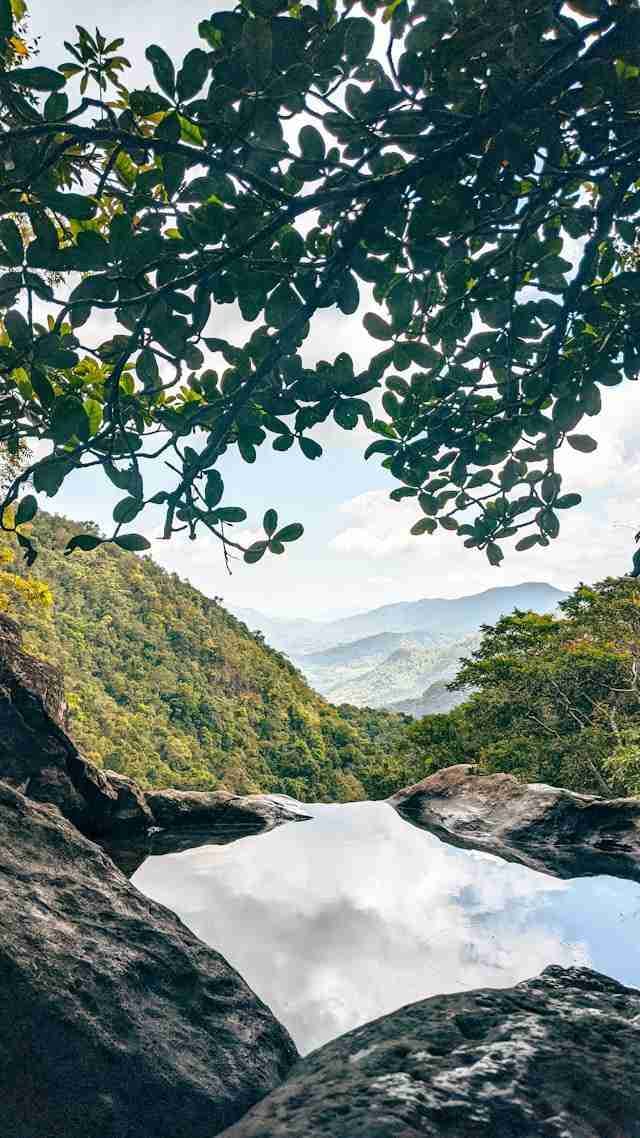
Cunca Plias is a tucked-away waterfall and natural lookout perched in the highlands of West Manggarai Regency, East Nusa Tenggara. What sets it apart is the striking visual contrast between close foreground rock, still surface water, and a panoramic backdrop of forested mountains fading into the haze. The waterfall itself isn't massive in volume but rather remarkable for how it merges into the edge of the landscape, offering photographers a rare chance to compose downward shots that include dramatic drop-offs, layered hills, and wide skies. This is a location for photographers who are comfortable working with strong natural light, elevation, and foreground-driven framing.
Best Photography Opportunities
• Infinity Pool View Over the Valley
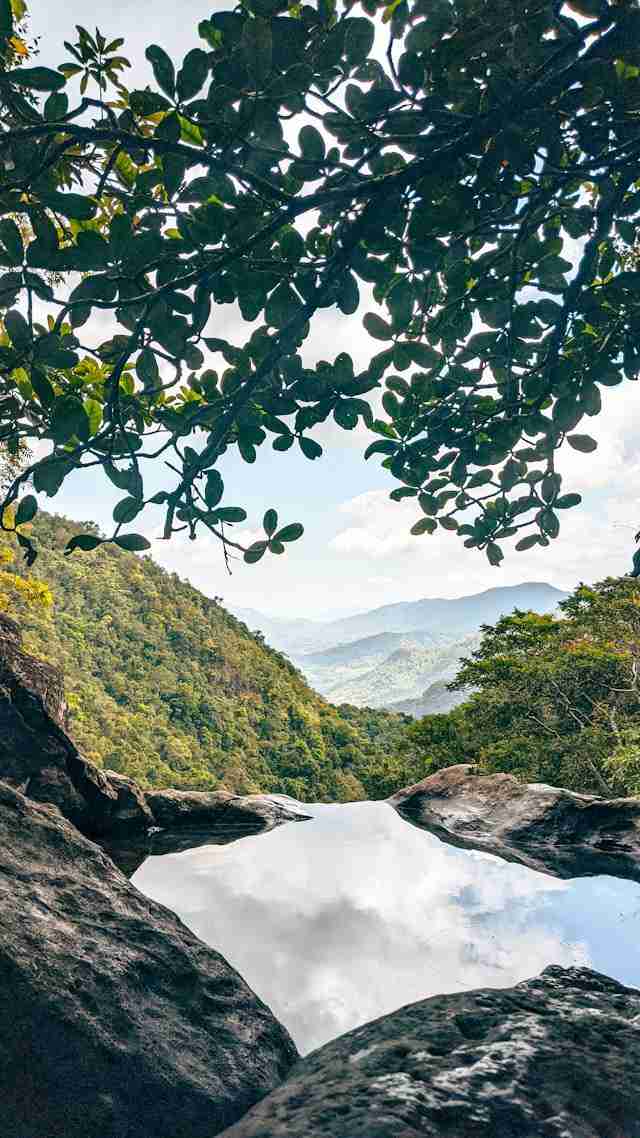
The natural rock basin at the edge of the falls forms a mirror-like surface that opens into a deep valley of forested hills. This is the most striking composition on-site, where the still water reflects sky and clouds while the terrain beyond drops into soft blue layers. Early morning light is ideal, creating soft reflections without glare and keeping contrast manageable between the shadowed rock and bright background. A wide-angle lens lets you include both the rock foreground and the expansive view while keeping your framing tight and impactful. A tripod adds stability for longer exposures, especially when trying to balance reflection and detail with a polarizer.
• Framing the Valley Through Canopy and Leaves
Branches and foliage above the basin can be used to create a natural frame around the valley beyond. Shooting through the leaves adds visual depth and helps control the brightness of the sky in the final image. Look for clean silhouettes or softly backlit leaves to keep the top of the frame from becoming cluttered. A standard zoom lens gives enough flexibility to adjust your distance without changing your location too drastically. This composition works best early or late in the day, when light moves across the treetops instead of dropping directly onto the water.
• Rock Texture and Minimal Detail Shots
The volcanic stone around the waterfall is full of interesting surface features, including erosion lines, moss, and small water channels that catch the light. These are great subjects for photographers interested in abstraction and texture, especially on days with soft, even lighting. A short telephoto or macro lens helps isolate shapes and patterns that often go unnoticed in the wider landscape. Try combining these details with subtle elements like leaf reflections or drops of water to give the image a sense of place. These shots often benefit from handheld shooting so you can move fluidly around the basin edges.
• Looking Back Toward the Basin from the Trail
After moving past the waterfall, turning back to view the basin from below offers a different perspective on the location. From this angle, you can see how the basin perches at the top of the hill and how it integrates with the surrounding jungle. This vantage point is strong for storytelling frames, especially if you include a person on the rocks for scale. A 24–70mm lens provides enough flexibility to adjust your composition around foliage, slope, and water. Use soft light or post-rain conditions to keep textures rich and shadows manageable.
• Panoramic Ridge and Sky Views from Nearby Rocks
Just beyond the waterfall, rocky ledges offer sweeping views of the surrounding mountains and rolling forest. These elevated spots are perfect for shooting wide landscape scenes during sunrise or golden hour, when the hills are bathed in warm side light. Including a foreground element like stone or branches helps ground the composition and adds a sense of scale to the vast background. A wide-angle lens or panoramic stitch can help capture the full reach of the scene. Use a tripod and graduated filter if the sky is bright relative to the shaded terrain below.
Best Time to Visit
Cunca Plias is best visited during the dry season, which runs from May through September. During these months, trails are safer and more stable, skies are clearer, and the reflective basin remains calm in the early morning. Morning is the most productive time for photography, offering gentle light that balances the contrast between the shaded rocks and the sunlit valley. The water at the top of the falls is usually at its most still, allowing for mirror-like reflections of the sky and leaves. Cooler morning air also makes hiking in and setting up gear much more comfortable.
In the wet season, from November to March, the waterfall can carry more volume, but the trail becomes slippery and access may be more difficult. While reflections may be disrupted, mist and fog sometimes roll through the valley and create a moody, diffused light that works well for atmospheric shooting. Cloudy skies can flatten contrast, making it easier to work with textures in the rock or distant hills. If you're shooting in the late afternoon, expect the foreground basin to fall into shadow while the distant hills catch the last golden light. Avoid midday, when overhead sun creates glare on the water and deep shadows that are hard to balance in a single exposure.
How to Get There
Cunca Plias is located in the mountainous interior of Flores Island, within the West Manggarai Regency. The most common access point is from Labuan Bajo, which serves as the regional hub with hotels, transport, and guides. From Labuan Bajo, the journey includes a drive along winding, partially paved roads that pass through small villages, followed by a short but uneven hike to the waterfall itself. The final section of the trail involves some light scrambling across rocks, so footwear with good grip is essential.
There is no formal entry fee, but small local contributions or guide arrangements may be requested depending on how you access the trail. Bringing a local guide is strongly encouraged, especially during the rainy season when trail conditions are unpredictable. The area is open year-round and receives only moderate foot traffic, making it a quiet and accessible location for photographers who prefer to work without distraction. Tripods, handheld setups, and drone use are all manageable on-site, but take care near the basin edge where footing is uneven and slippery.
Recommended Photography Gear
A wide-angle lens in the 16–35mm range is the most important tool for working the basin and the valley view into a single cohesive frame. This focal length allows you to exaggerate the distance between foreground and background and place sky reflections directly into the center of your composition. A standard zoom lens, such as a 24–70mm, gives you the flexibility to adjust for tighter compositions around the rocks, foliage, or returning down the trail. For isolating texture in the stone or compressing detail in the distant hills, a short telephoto lens or even a macro lens can open up more abstract and minimal work.
A sturdy but lightweight tripod is helpful for early morning or late evening shooting, especially if you're using filters or need longer exposures for smoothing water motion. A circular polarizer is useful for managing glare on wet rocks and controlling reflections on the basin surface, but use it with care to avoid darkening the sky unevenly in wide compositions. A microfiber cloth is essential for clearing mist and water from your lenses, particularly on humid days or when working close to the water. A weather-sealed camera or simple rain cover is highly recommended during the rainy season. Carry only what you need in a balanced hiking pack since the final approach involves some climbing and hands-free mobility is important.
Nearby Photography Locations
Larger and more powerful than Cunca Plias, Cunca Rami offers a dramatic vertical drop surrounded by dense jungle. The trail is longer but still accessible, and the site is well-suited to slow shutter waterfall photography and jungle compositions.
• Bukit Cinta Viewpoint
This ridge near Labuan Bajo offers open panoramic views over hills, rice fields, and scattered forest. Best during golden hour, it provides a good complement to the more enclosed compositions at Cunca Plias.
Famous for their geometric, radial layout, these rice fields are best photographed from the surrounding hills. Visit in the dry season when the patterns are most visible and the fields show strong contrast in color and line.
Located above the town of Ruteng, this church offers a clear lookout over patchwork farmland and distant mountains. Fog and low clouds are common in the morning and can add a soft, diffused quality to the scene.
• Labuan Bajo Waterfront
Ideal for sunset sessions, the waterfront in Labuan Bajo provides a wide-open composition of fishing boats, mountains, and open sea. It's a convenient stop to round out a day of inland photography.
Cunca Plias Waterfall is a place that rewards photographers who work with patience and subtlety. With its natural framing, still reflections, and wide-reaching views, it offers a range of possibilities from immersive landscape work to quiet minimal studies in rock and light. It is a location where a single hour of good light can deliver strong images, and where even overcast days can reveal small, lasting compositions that hold more than first meets the eye.
Comments
Loading comments…