

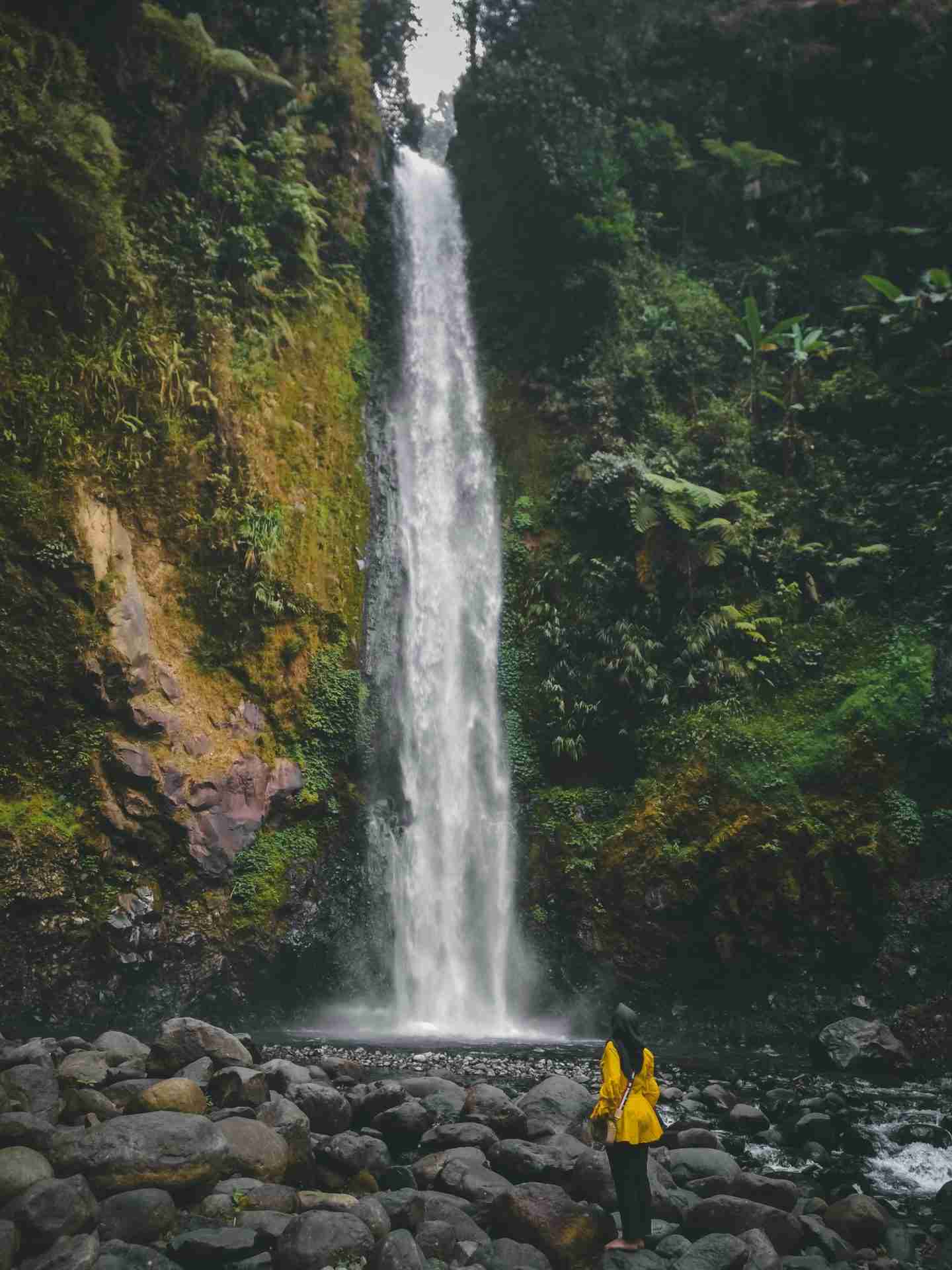
Curug Genting Blado Batang feels like one of those places you hear about from someone local rather than stumble across by accident. Tucked into the hills of Central Java, this waterfall drops through a narrow jungle setting with steep rock walls and thick greenery surrounding it. The walk in is part of the experience, and by the time you reach the falls, it feels properly removed from everything else. What makes it fun to photograph is how contained the scene is. You're not dealing with huge open landscapes, but instead a tighter space where water, rock, and vegetation all come together. It's the kind of place where you slow down, look around carefully, and start noticing small compositions instead of chasing big ones.
Best Photography Opportunities
• Main Waterfall View
The obvious starting point is the full view of the waterfall itself. The water drops down a tall rock face into a small pool, surrounded by dense greenery on all sides. It's a clean composition if you position yourself carefully and avoid clutter around the edges. A slightly lower angle can help emphasize the height of the falls and make the scene feel more dramatic. The flow of the water is usually strong enough to give you a nice sense of movement. This is the shot most people come for, but it still takes a bit of effort to get it right.
• Long Exposure Water Flow
This is a great spot to slow things down and work with longer exposures. The falling water softens nicely when you drop your shutter speed, which gives the scene a calmer feel. The surrounding rock and greenery stay sharp, which helps balance the image. Even a slight adjustment in shutter speed can change the look quite a bit. It's worth taking a few variations rather than settling on one. If the light is bright, you may need to adjust your settings to get the effect you want.
• Foreground Rocks and Pool
The rocks around the base of the waterfall are really useful for building stronger compositions. Including them in the foreground helps anchor the image and adds depth. You can use them to lead the viewer's eye toward the waterfall rather than just pointing straight at it. The small pool also reflects a bit of light and movement, which adds another layer to the frame. Moving a few steps in different directions can completely change how the foreground lines up. It's a simple adjustment that makes a big difference.
• Jungle Framing
The vegetation around the waterfall can be used to frame your shot instead of trying to avoid it. Leaves, branches, and vines along the edges of the scene can help guide the viewer's eye toward the center. This works especially well if you shoot from slightly off to the side rather than straight on. It also helps give the image more depth and a stronger sense of place. The key is keeping the frame clean so it doesn't feel messy. A little bit of framing goes a long way here.
• Close Up Water and Texture
There's a lot going on in the smaller details if you take the time to look. The way water runs over the rock, the texture of the cliff face, and the patterns in the wet surfaces all make for good close up shots. These are easy to overlook if you're focused on the full waterfall. A tighter frame can give you something completely different from the typical wide shot. It's also a good way to add variety to your photos without needing to move far. Sometimes these end up being the most interesting images from the visit.
Best Time to Visit
Early morning is usually the best time to photograph Curug Genting. The light is softer, and the area tends to be quieter, which makes it easier to work without distractions. The softer light also helps keep the contrast under control, especially with water and dark rock.
Overcast days are actually ideal here. The diffused light spreads evenly across the scene and helps bring out the details in both the water and the surrounding greenery. Harsh sunlight can create strong highlights on the water and deep shadows around the rocks, which can be harder to manage.
After rainfall can also be a good time to visit since the waterfall will be flowing more strongly. Just keep in mind that the trail may be more slippery.
How to Get There
Curug Genting Blado Batang is located in the Batang region of Central Java, Indonesia. The easiest way to reach it is by motorbike or car, as public transport options are limited in this area. From the parking area, there is a short walk down to the waterfall. The path can be uneven and a bit slippery in places, especially after rain, so it's worth taking your time. The access is relatively straightforward, but it still feels tucked away once you're down there. There is usually a small entrance fee to access the site, which goes toward local maintenance. Facilities are basic, so it's best to come prepared.
Recommended Photography Gear
A 24 to 70 millimeter lens works really well here and covers most situations. It gives you flexibility for both wide shots of the waterfall and tighter compositions.
A tripod is highly recommended, especially if you want to shoot longer exposures of the water. It also helps when you're working in lower light conditions under the forest canopy.
A polarizing filter can be very useful for reducing glare on wet rocks and water. It also helps bring out the deeper greens in the surrounding vegetation.
Since the access involves a short walk, keeping your gear light will make things more comfortable.
Nearby Photography Locations
• Curug Sibedil
Another waterfall in the Batang area, Curug Sibedil offers a slightly different setting with a wider drop and more open space around it. It's a good option if you want to photograph multiple waterfalls in one trip. The surrounding greenery gives it a similar jungle feel, but the composition opportunities are a bit different.
Curug Gombong is a smaller and quieter waterfall nearby that works well for more intimate compositions. The setting is more enclosed, which makes it easier to focus on details and textures. It's a nice contrast to larger waterfall scenes.
This area offers rolling hills covered in tea fields, which is completely different from the jungle waterfall environment. The repeating patterns of the tea plants create strong leading lines and textures. It's a great place for landscape photography, especially in soft morning light.
A bit farther away but still reachable, Dieng Plateau offers volcanic landscapes, temples, and high elevation views. The scenery is much more open compared to the dense forest around the waterfall. It's a good way to add variety to your trip.
• Curug Sijeglong
This waterfall features a taller drop with a more rugged rock face. It's a bit less visited, which makes it a good option if you want a quieter shooting experience. The vertical composition works especially well here.
Comments
Loading comments…