
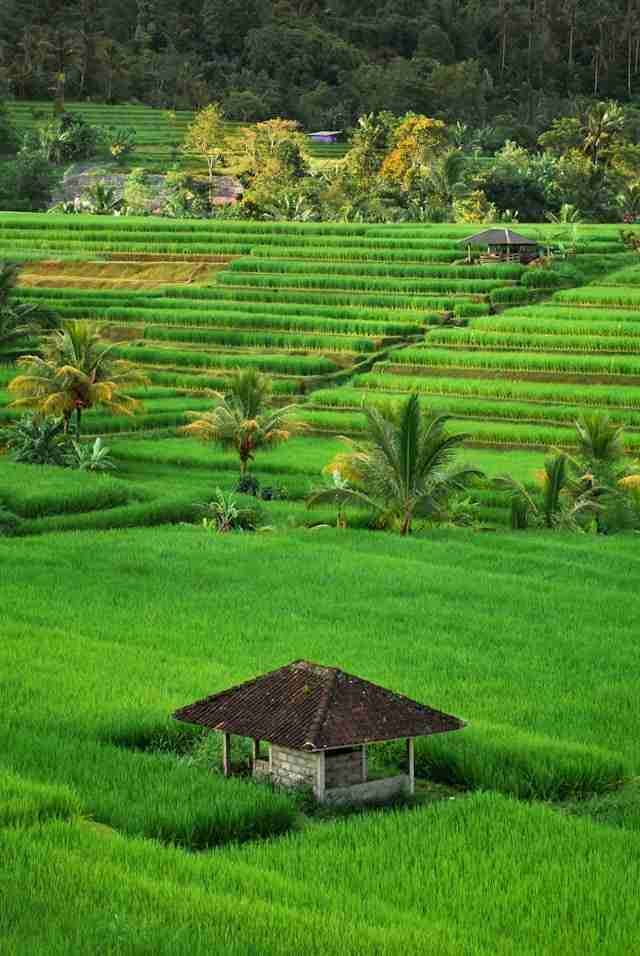
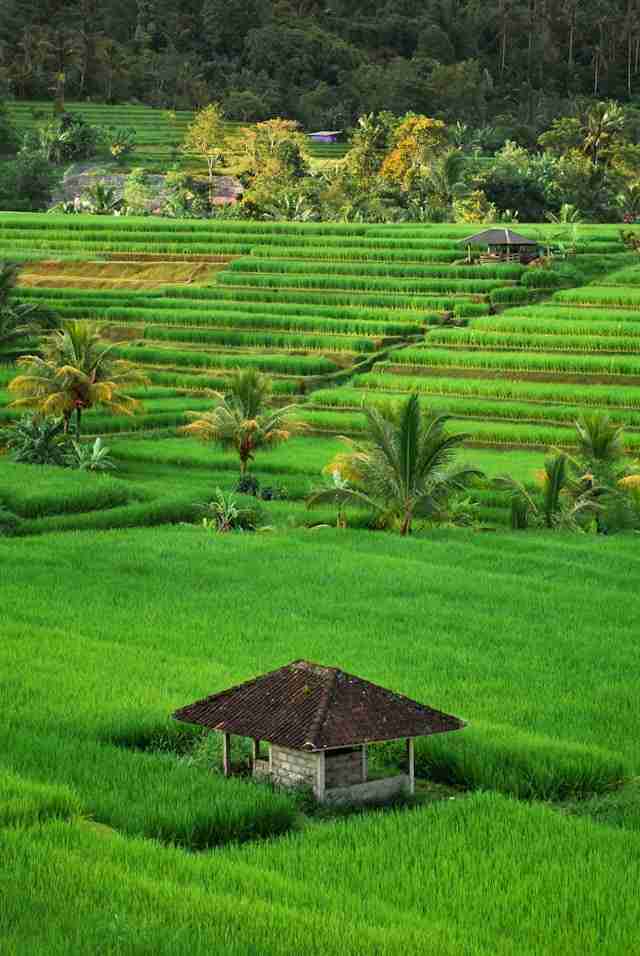
Set in the foothills of Mount Batukaru in central Bali, the Jatiluwih Rice Terraces stretch across the landscape in long, curving patterns of cultivated green. Protected as a UNESCO World Heritage Site, the terraces are part of Bali's traditional subak irrigation system, a centuries-old method that continues to shape both the land and local culture. For photographers, Jatiluwih offers visual depth, strong natural lines, and shifting textures that change with light, season, and crop cycle. The fields are carved into undulating hillsides, creating a patchwork of color and form that is most striking in early morning or late afternoon. Away from the busier regions of the island, the setting feels quiet and expansive, ideal for landscape photographers looking for scale, rhythm, and structure in the natural environment.
Best Photography Opportunities
• Wide-Angle Views of Terraced Patterns
From elevated points along the walking trails, you can capture sweeping views of the terraces cascading down the hills. A wide-angle lens works well here, especially in soft early morning light when mist clings to the valleys and the curves of the fields are clearly defined. Frame your composition to include multiple terraces to emphasize repetition and scale. Layers of green reflect the current growth stage, ranging from vivid sprouts to golden harvest tones, giving you options for both color and contrast. Including small paths or farmers in the frame adds scale and a sense of human presence.
• Low-Angle Shots with Leading Lines
Getting closer to the ground and shooting along the edge of a terrace allows you to use the irrigation channels and planted rows as strong leading lines. These compositions benefit from morning sidelight, which helps define texture in the soil and crops. Use a mid-range zoom to compress lines into deeper perspective and keep the horizon clean. Overcast days can also be productive, especially when you're focused on the detail and form of the foreground rather than distant views. Be cautious not to step into the fields, and respect the local farmers and their workspaces.
• Close-Ups of Water Channels and Reflections
The subak irrigation system is visible throughout the terraces in the form of narrow channels that wind between plots. These provide opportunities for close-up shots that include reflections of the sky, nearby palms, or crops. A standard lens or short telephoto lets you isolate these scenes without distortion. Look for still water at the start or end of the day, when surface movement is minimal and the light is low. Subtle ripples and layering in the water can add a sense of movement without losing the clarity of your reflections.
• Human Element in the Landscape
Farmers working in the fields, often wearing traditional hats or carrying tools, bring movement and storytelling into your compositions. Use a longer lens to photograph from a respectful distance and allow the landscape to remain dominant in the frame. Backlighting in the early morning creates a gentle rim light around figures, while side light brings out their gesture and posture. Be mindful not to interrupt or overly direct anyone working, and always ask permission when taking close-up portraits. These human elements provide valuable contrast to the patterned structure of the terraces.
• Golden Hour Silhouettes with Mount Batukaru
In clear weather, Mount Batukaru forms a dramatic backdrop to the terraces, especially in the golden hour before sunset. Silhouettes of palm trees, workers, or field edges against the warm sky can create striking compositions. Use a small aperture to maintain foreground sharpness while allowing the mountain to anchor the frame in the distance. These images are strongest when you position yourself to capture the alignment between terrace curves and mountain ridgelines. On misty evenings, the mountain may fade softly into the sky, creating a quieter mood for layered compositions.
Best Time to Visit
Jatiluwih is accessible year-round, but conditions vary by season and time of day. The months between March and June are ideal for photographing bright green terraces as the rice plants grow in full density. July through September often brings golden tones as the fields approach harvest, offering deeper shadows and more textural contrast. Late autumn and winter may see some fields fallow or recently harvested, but the structure of the terraces remains photogenic regardless of planting stage.
Morning is the best time for photography, with low light creating long shadows and mist often hanging in the valleys. The light is softest before 9 AM, and there are fewer visitors on the walking trails. Late afternoon offers warmer tones, especially on clear days when the mountain is visible. Avoid mid-day hours if possible, as overhead light flattens detail and can introduce haze in distant views.
Rain is common in the wet season from November through February, but the terraces remain lush and dramatic. Overcast skies create even light that works well for close-up and texture-focused images. Always bring rain protection for both yourself and your gear during these months.
How to Get There
Jatiluwih is located about two hours north of Ubud by car or motorbike. The most common route follows the road through Tabanan and climbs into the central highlands, passing through small villages and farm roads. Road conditions are good, though the final stretch includes some narrow bends and steep climbs.
Private drivers and guided tours are available from most major areas of Bali, or you can self-drive with a rental car or motorbike. Once at the site, there is a designated entrance and parking area near the main viewpoint. An entry fee is collected for site maintenance, and access is allowed from early morning through sunset.
A network of paved and dirt walking paths winds through the terraces, allowing photographers to explore from different elevations and angles. Wear sturdy shoes, especially after rain, as the paths can be slick or muddy in places. There are warungs and small rest areas near the entrance, but services are minimal deeper into the terraces. Mobile service is limited in parts of the valley, so download maps and plan routes in advance.
Recommended Photography Gear
A wide-angle lens is essential for capturing the sweeping scale of the terraces and their curving lines. A mid-range zoom such as a 24 to 70 millimeter lens offers the flexibility needed for scenes with both human and environmental elements. A telephoto lens is useful for compressing layers or isolating figures from a distance, especially when photographing workers or mountain silhouettes.
A tripod is helpful for early morning low-light conditions and for precise framing of long exposure shots or bracketed images. A circular polarizer can deepen sky tones and reduce glare on wet foliage and water surfaces. A microfiber cloth is necessary to keep lenses clear of humidity or fog, particularly after sunrise.
Lightweight clothing, waterproof shoes, and a weather-sealed camera bag are recommended due to variable trail conditions and frequent moisture. Extra batteries and memory cards are important if you plan to walk the full trail network, which can take several hours to explore thoroughly. A compact rain cover for your gear is essential during the wet season.
Nearby Photography Locations
Located at the base of the mountain, this jungle-covered temple is set in cool misty forest and features stone shrines surrounded by dense foliage. The mood here is quiet and perfect for moody, detail-driven compositions in soft light.
Just outside Jatiluwih, this small traditional village features quiet roads, tropical gardens, and scenic views of the surrounding farmland. It's ideal for photographing local architecture and cultural scenes in natural morning light.
Further northeast, this iconic water temple sits on the edge of Lake Beratan and reflects beautifully in calm conditions. Best photographed at sunrise when crowds are minimal and mist often rises from the lake's surface.
• Sang Giri Lookout Point
This high viewpoint offers a panoramic look back across the Jatiluwih valley and terraces. It's most effective in the afternoon when light falls across the landscape and creates long shadows between the layers.
Located lower in the valley, this riverside location includes jungle foliage, bamboo bridges, and tropical riverbanks that make a nice change from the open rice terraces. It's best explored in the morning with soft diffused light.
Jatiluwih invites photographers to slow down, walk the ridgelines, and watch how light and form reveal themselves across the land. Every shift in sun, season, or weather creates a new way to see the landscape, making it a place worth visiting more than once with a fresh eye each time.
Comments
Loading comments…