
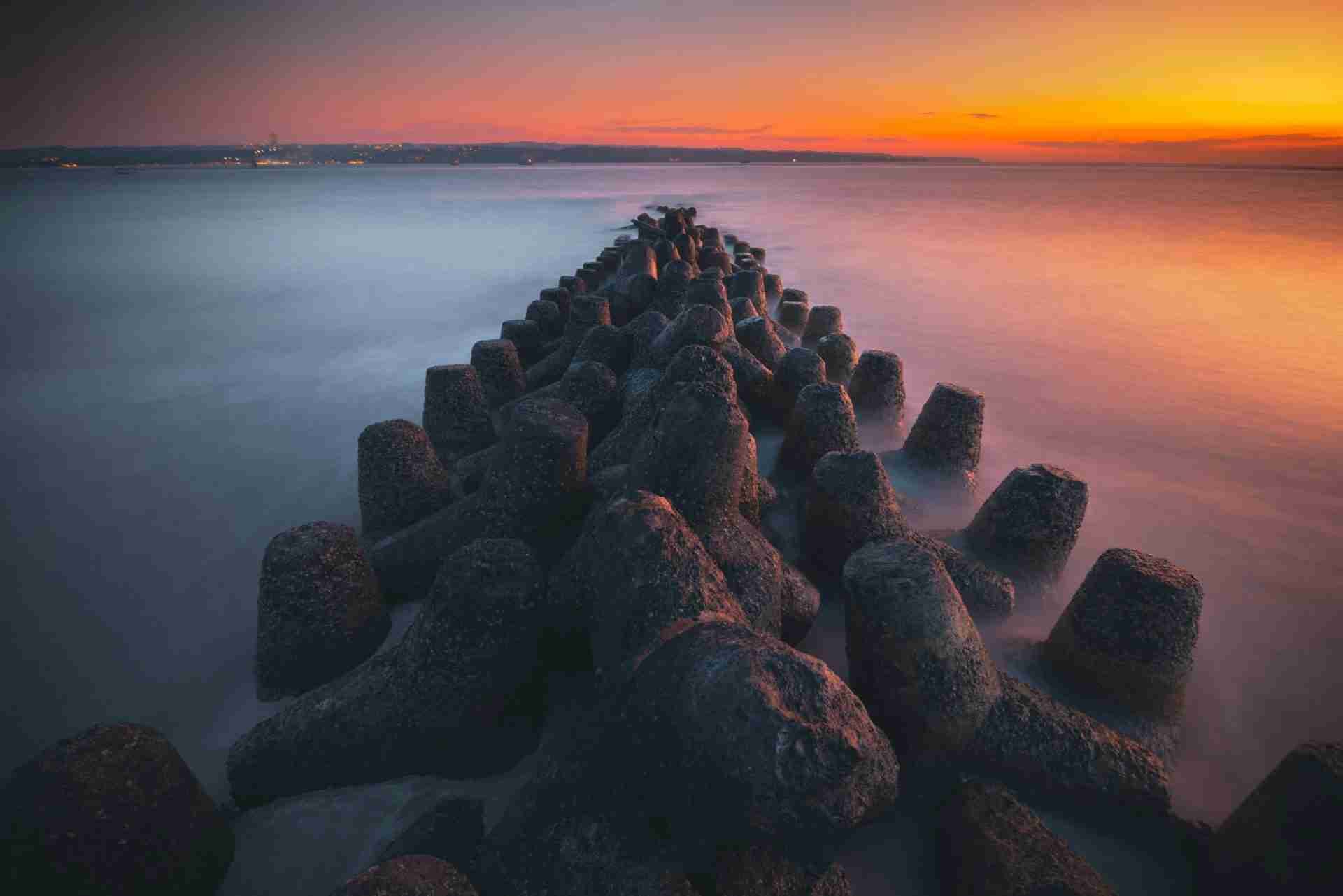
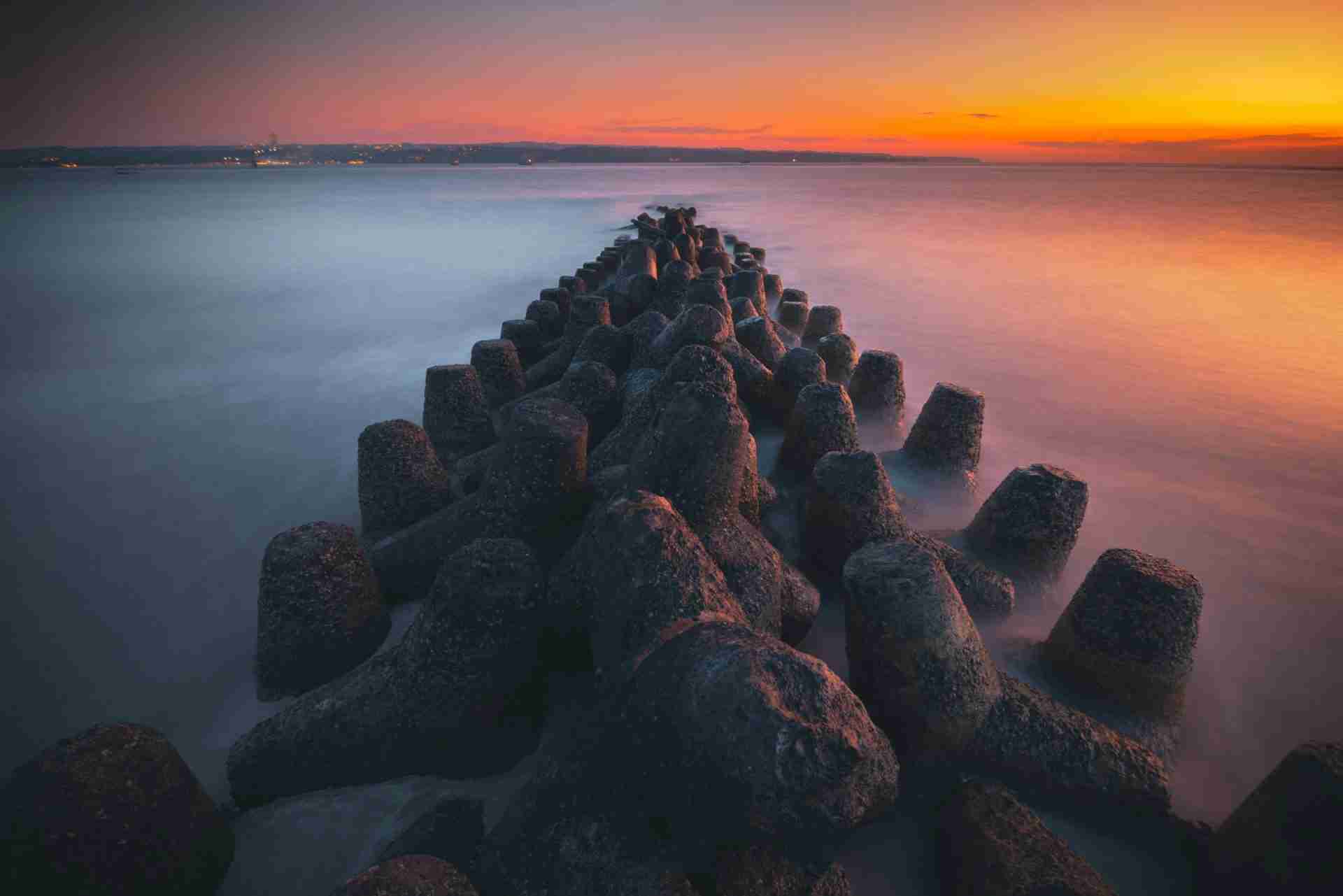
Kelan Beach (Pantai Kelan) sits on the southern edge of Bali near the airport runway and the fishing village of Kelan. Unlike the more crowded stretches of sand elsewhere on the island, this beach maintains a working coastal rhythm with a unique mix of fishing boats, tidal flats, and aircraft low over the shoreline. The combination of traditional maritime life and modern aviation creates a rare visual contrast that few coastal locations can match. Wide open views across Jimbaran Bay provide expansive horizons, while low tide reveals textured sand and shallow pools that respond beautifully to shifting light. For photographers, Kelan Beach is less about dramatic views and more about subtle layers, motion, and the interaction between people, sea, and sky.
Best Photography Opportunities
• Low Tide Reflections –
Low tide transforms Kelan Beach into a broad expanse of reflective sand and shallow pools. These surfaces act as natural mirrors, doubling the sky and creating strong symmetry when composed carefully. By positioning yourself low to the ground, you can exaggerate reflections and emphasize foreground texture in the rippled sand. Soft cloud cover enhances color transitions during sunset, allowing warm tones to blend smoothly into cooler blues. Patience is important here, as subtle shifts in water depth and light intensity can significantly alter the balance of the frame within minutes.
• Aircraft Over the Shorelin e-
One of the most distinctive features of Kelan Beach is its proximity to Ngurah Rai International Airport. Aircraft on final approach descend visibly over the water before touching down, offering dynamic subject matter against the open sky. A longer lens allows you to compress the scene and align the plane with the horizon or silhouetted figures along the beach. Timing is critical, as you will need to anticipate flight paths and position yourself accordingly. Shooting during golden hour adds warmth to the shot, creating a compelling blend of industrial precision and coastal calm.
• Traditional Fishing Boats –
Colorful wooden fishing boats are often pulled up onto the sand or anchored just offshore. These boats introduce strong visual anchors in otherwise open compositions and provide insight into the local fishing community. Early morning is particularly productive, as fishermen prepare nets and sort their catch, adding authentic human elements to the frame. Mid range focal lengths work well for capturing both environmental context and detail without intruding. By observing interactions rather than staging them, you can create images that feel grounded and honest.
• Sunset Silhouettes –
Facing west across Jimbaran Bay, Kelan Beach is well positioned for sunset photography. As the sun drops toward the horizon, figures walking along the shoreline become clean silhouettes against glowing water. The gradual slope of the beach allows you to adjust your elevation easily and refine composition as the light changes. When thin clouds are present, the sky can develop layered color that enhances depth without overpowering the scene. Shooting slightly underexposed helps preserve detail in the highlights while maintaining rich tones in the silhouettes.
• Night Photography –
After sunset, the beach takes on a quieter mood as runway lights begin to glow in the distance. Long exposures can capture streaks of aircraft lights as planes approach or depart, adding motion to an otherwise still scene. Including boats or textured sand in the foreground provides scale and context for the distant airport activity. A stable tripod and careful exposure management are essential to balance artificial light with the remaining ambient glow in the sky. This approach offers a more experimental angle for photographers looking to expand beyond standard sunset imagery.
Best Time to Visit
Dry season, generally from May through October, offers more consistent skies and reduced rainfall, making it easier to plan sunrise or sunset sessions. Humidity is often lower during this period, which can improve clarity across the bay. Wet season months bring more dramatic cloud formations, which can enhance sunset color but also increase the likelihood of sudden rain showers.
Low tide is a key factor regardless of season, as it exposes reflective sand and textured patterns that significantly strengthen compositions. Sunset is the most popular and often the most visually rewarding time, especially for silhouettes and aircraft shots. Early morning provides softer light and a more active fishing scene, with fewer visitors on the beach. Monitoring tide charts and flight activity can help you align natural and human elements for more compelling results.
How to Get There
Kelan Beach is located near the fishing village of Kelan, just south of Ngurah Rai International Airport in Bali. From popular areas such as Kuta, Jimbaran, or Seminyak, the drive is relatively short and follows main coastal roads toward the airport area. Signage for Pantai Kelan becomes clearer as you approach the village.
There are informal parking areas near the beach, typically managed by local attendants who collect a small parking fee. Access to the sand itself is straightforward and does not require a long walk, making it convenient for carrying camera gear. The beach is generally easy to navigate, though sections can become muddy during very low tide or after rainfall. Arriving at least an hour before sunset allows time to scout foreground elements and anticipate aircraft paths.
Recommended Photography Gear
A wide lens is useful for capturing expansive sunset skies and reflective tidal flats. A mid range zoom provides flexibility for framing boats, people, and environmental details without changing position constantly. For aircraft photography, a telephoto lens in the two hundred millimeter range or longer helps isolate planes against the sky and compress perspective.
A sturdy tripod is essential for low light and night exposures, particularly when working with runway lights and long shutter speeds. Neutral density filters can assist in controlling exposure during bright sunsets, especially if you want to smooth water movement. A polarizer may help reduce glare on wet sand during daylight hours. Because of salt air and blowing sand, basic weather protection for your gear is advisable, along with a microfiber cloth for cleaning lenses.
Nearby Photography Locations
lies just north of Kelan and offers a longer stretch of sand with a clear view across the bay. It is well known for its fishing boats and evening activity, which creates opportunities for layered sunset compositions. The broader shoreline provides space to experiment with different angles without crowding other photographers.
is home to a towering statue and expansive grounds that are easily searchable and well marked. Elevated viewpoints within the park offer sweeping perspectives across southern Bali, particularly compelling in late afternoon light. The combination of large scale sculpture and open sky provides a very different subject compared to the coastal environment of Kelan.
features dramatic cliffs and surf breaks that contrast with the flatter profile of Kelan. Photographers can work from elevated positions above the shoreline to create layered compositions of waves and rock formations. Sunrise and sunset both produce strong directional light that highlights texture in the cliffs.
is perched on a high cliff overlooking the Indian Ocean providing sweeping coastal views and cultural context. The cliff edge allows for dramatic compositions that incorporate sea, sky, and temple structures in a single frame. Late afternoon light enhances depth in the rock formations and can produce strong silhouettes.
is known for its rocky shoreline and natural pools that fill during high tide. These pools create reflective surfaces similar to Kelan but in a more rugged setting. Sunset light often interacts beautifully with the uneven rock, offering opportunities for both wide landscapes and intimate detail shots.
Comments
Loading comments…