
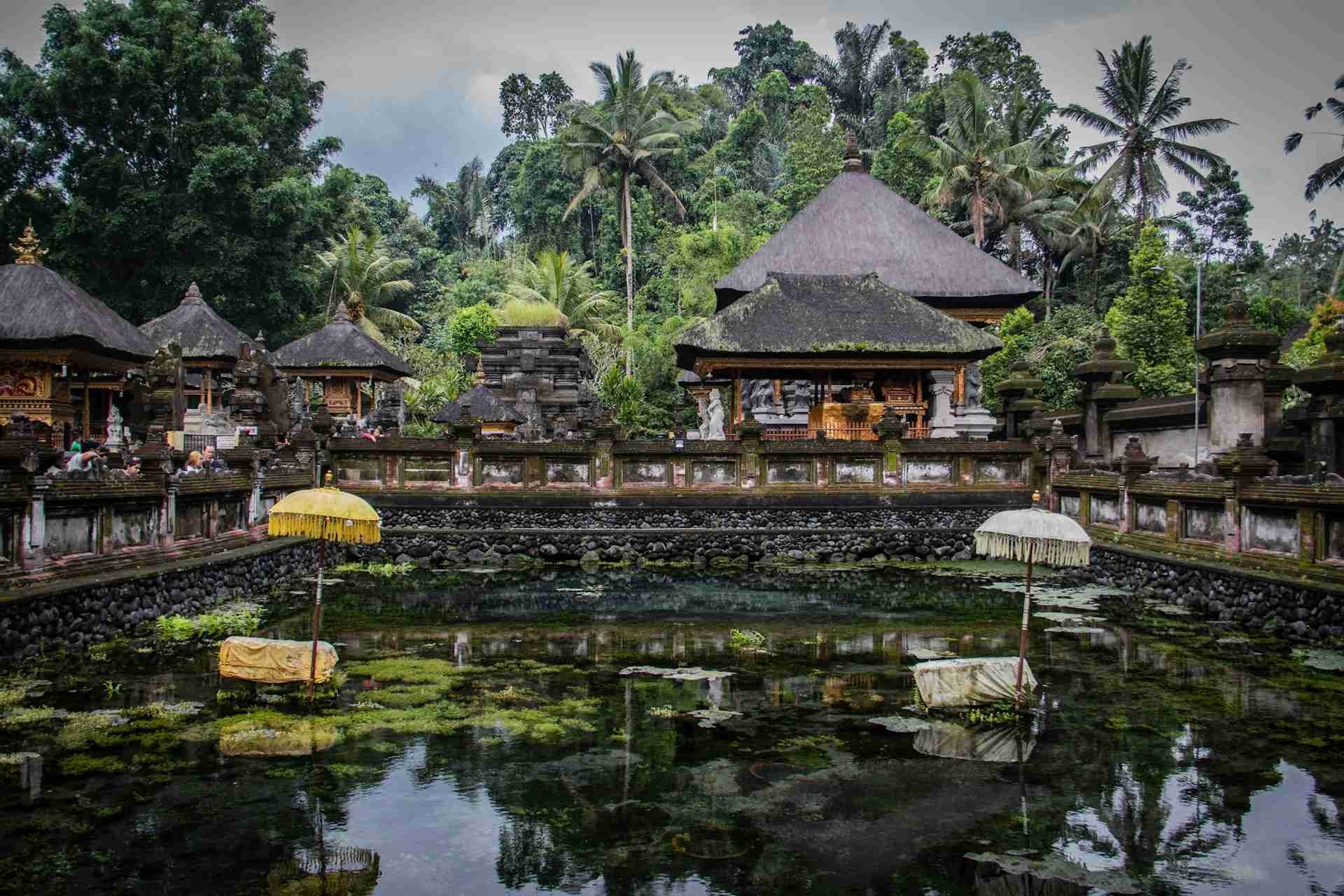
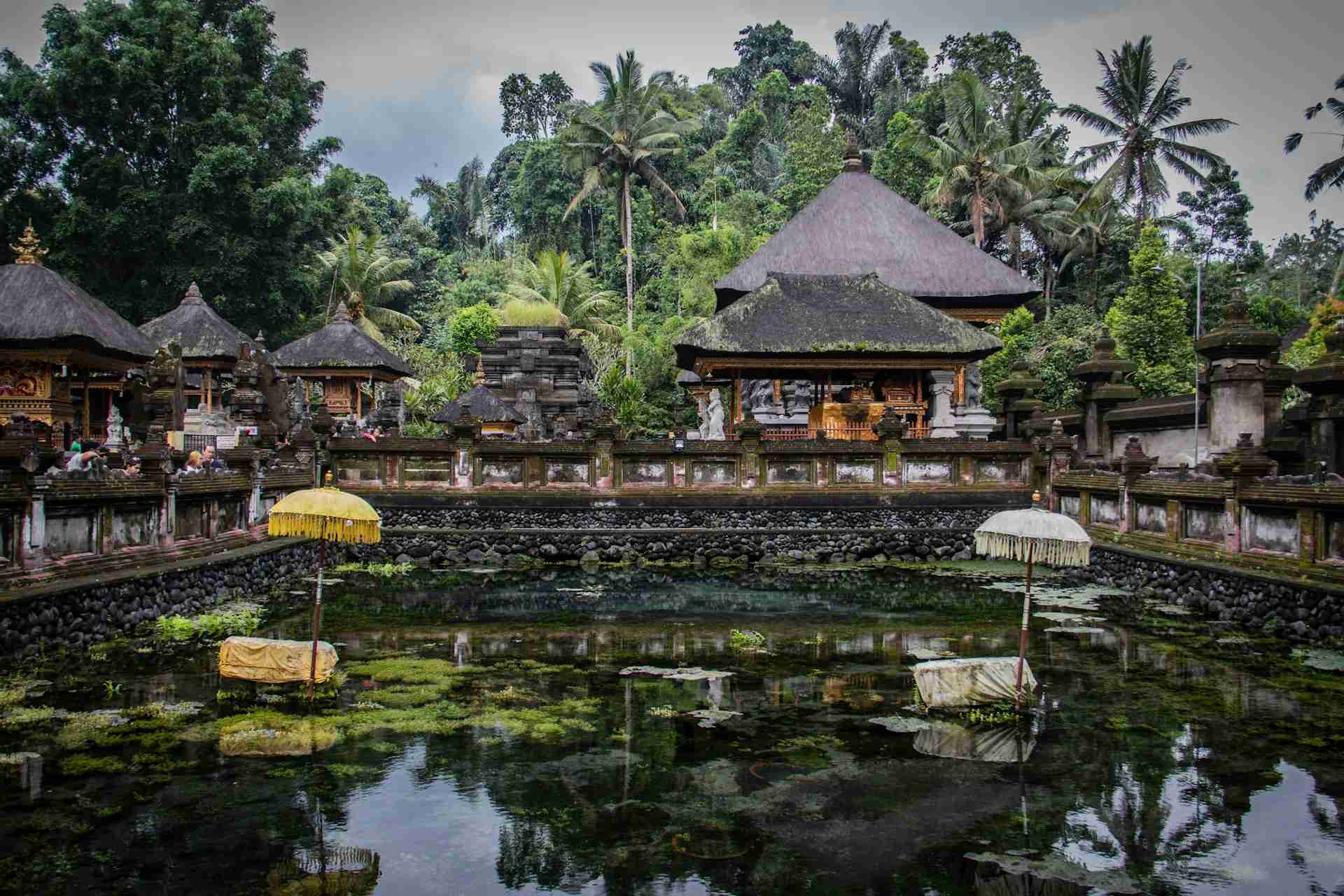
Pura Tirta Empul in Tampaksiring is one of Bali's most photographed and spiritually significant temple complexes. Built around a natural spring that feeds a series of purification pools, the site combines carved stone shrines, flowing water, moss covered walls, and active ritual practice in a compact but layered setting. The temple is not a static monument. It is a working religious space where Balinese Hindus come daily to perform water purification ceremonies beneath rows of stone spouts. For photographers, this creates both opportunity and responsibility. The visual strength here lies in repetition, movement, texture, and atmosphere, but timing and respect are critical. Light filtering through courtyards, water cascading from carved outlets, and offerings placed along stone edges all contribute to compositions that feel alive rather than staged.
Best Photography Opportunities
• Purification Pools and Water Spouts –
The most recognizable scene at Pura Tirta Empul is the long rectangular pool lined with evenly spaced stone fountains. Each spout pours fresh spring water into the basin, creating rhythmic repetition and constant motion. Shooting from a slightly elevated angle allows you to capture multiple fountains in alignment, strengthening the pattern. Early morning works best if you want softer light and fewer visitors in the water. A moderate wide lens helps include both the carved stone heads and the bathers below without excessive distortion. If you choose to photograph people participating in rituals, maintain respectful distance and avoid interrupting the flow of ceremony. The visual strength comes from repetition, water movement, and subtle expressions rather than dramatic poses.
• Carved Stone and Flowing Water –
The carved stone faces that release the spring water offer strong detail opportunities. Moss, mineral stains, and age marks give the stone depth and texture. A mid range zoom or short telephoto works well to isolate a single spout while softening the background. Side lighting enhances surface detail and brings out subtle tonal variation. Slower shutter speeds can soften the falling water slightly while keeping the stone sharp. These tighter compositions provide balance to wider ritual scenes.
• Courtyard Atmosphere –
Beyond the pools, temple courtyards feature shrines, offerings, and incense smoke rising gently into the air. Early in the day, light filtering into the courtyard creates layered beams that interact with smoke and stone. Position yourself so the smoke catches the light without overpowering the frame. A mid range focal length allows you to balance shrine structures with open space. This is where the temple feels most atmospheric and grounded in daily practice. Patience is key, as the strongest moments often happen quietly between larger rituals.
• Reflections in Still Water-
While the main pools are active, certain calmer corners of the complex offer reflective surfaces. These smaller water areas can mirror shrines and temple structures when wind is minimal. Shooting low strengthens reflections and emphasizes symmetry. Overcast light works well here, as it keeps contrast manageable. This approach provides a quieter interpretation of the site compared to the dynamic purification pools.
• Elevated Perspectives of the Pool Layout –
If the viewing areas are open, elevated angles reveal the geometric layout of the purification pools. From above, the arrangement of fountains and bathers becomes more structured and graphic. A moderate focal length helps maintain clarity without compressing the scene excessively. Midday light can work from this perspective because shadows define the edges of the pool and walkway. This angle highlights design and spatial organization rather than individual detail.
Best Time to Visit
Arriving early in the morning is strongly recommended. The light is softer, temperatures are more comfortable, and the temple is less crowded. This makes it easier to compose respectfully and move without interfering with worshippers.
Midday brings harsher light and heavier visitor numbers, which can make the pools feel visually cluttered. However, if you focus on details or courtyard areas, workable compositions are still possible. Late afternoon light can soften again, though crowds may remain steady. The temple is active year round, but visiting outside peak tourist seasons provides a calmer experience.
Always remember this is a sacred site. Dress appropriately according to temple guidelines and move with awareness.
How to Get There
Pura Tirta Empul is located in Tampaksiring in Gianyar Regency, Bali, Indonesia. It is approximately a 30 to 40 minute drive from Ubud by car or motorbike, depending on traffic conditions. The temple is well signposted and commonly included in cultural tours.
Parking is available near the entrance, followed by a short walk through market stalls leading to the temple complex. An entrance fee is required, and sarongs are typically provided or required for proper dress. Photography is allowed, but always follow posted rules and respect worshippers.
Recommended Photography Gear
A wide lens is useful for capturing the full purification pools and courtyard spaces. A mid range zoom offers flexibility when switching between environmental shots and closer detail work. A short telephoto lens is helpful for isolating carved elements or candid moments without intruding.
A tripod is generally not practical due to crowds and limited space. Instead, rely on steady hand holding technique and moderate ISO settings. A polarizer can help manage glare on water surfaces, but be careful not to eliminate reflections entirely. Because humidity can be high, keep lens cloths handy to manage moisture.
Nearby Photography Locations
features ancient rock cut shrines carved directly into cliff faces. The stepped approach through rice terraces adds strong landscape context. Early morning light enhances texture in the stone carvings.
offer layered rice paddies with sweeping curves and irrigation channels. Morning light works best to avoid harsh contrast. It provides a strong natural landscape contrast to the structured temple environment.
also known as Elephant Cave, combines carved stone entrances and jungle surroundings. The compact site allows for focused architectural compositions. Overcast conditions help balance shadow and highlight in the cave entrance.
provides rolling hill views and expansive sky compositions. Sunrise is particularly strong when light spreads across the grass and valley. It offers a quiet counterpoint to busy temple sites.
features lotus ponds and ornate gateways. Reflections in the water create symmetrical compositions. Evening light can produce balanced exposures when crowds thin slightly.
Comments
Loading comments…