
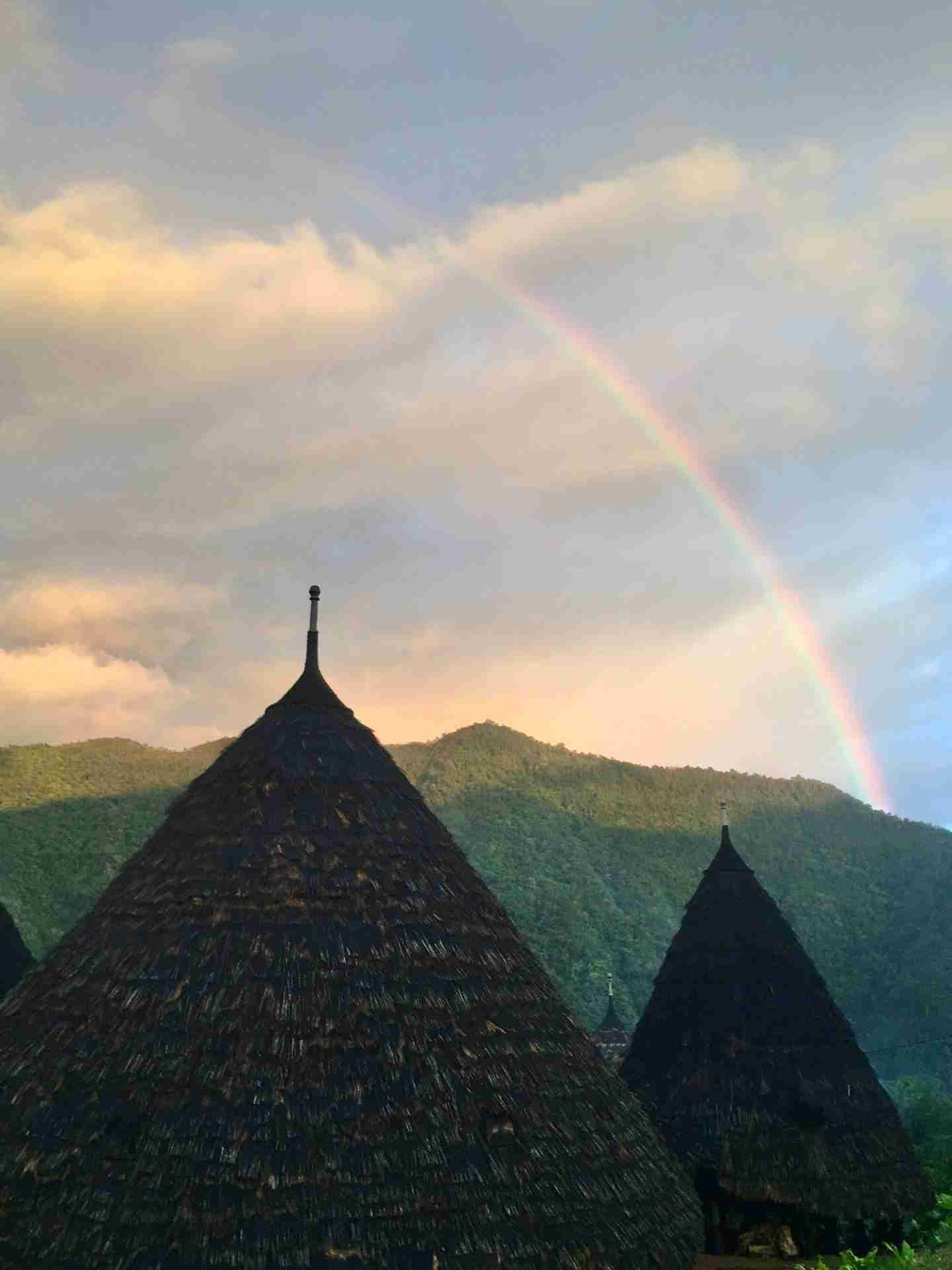
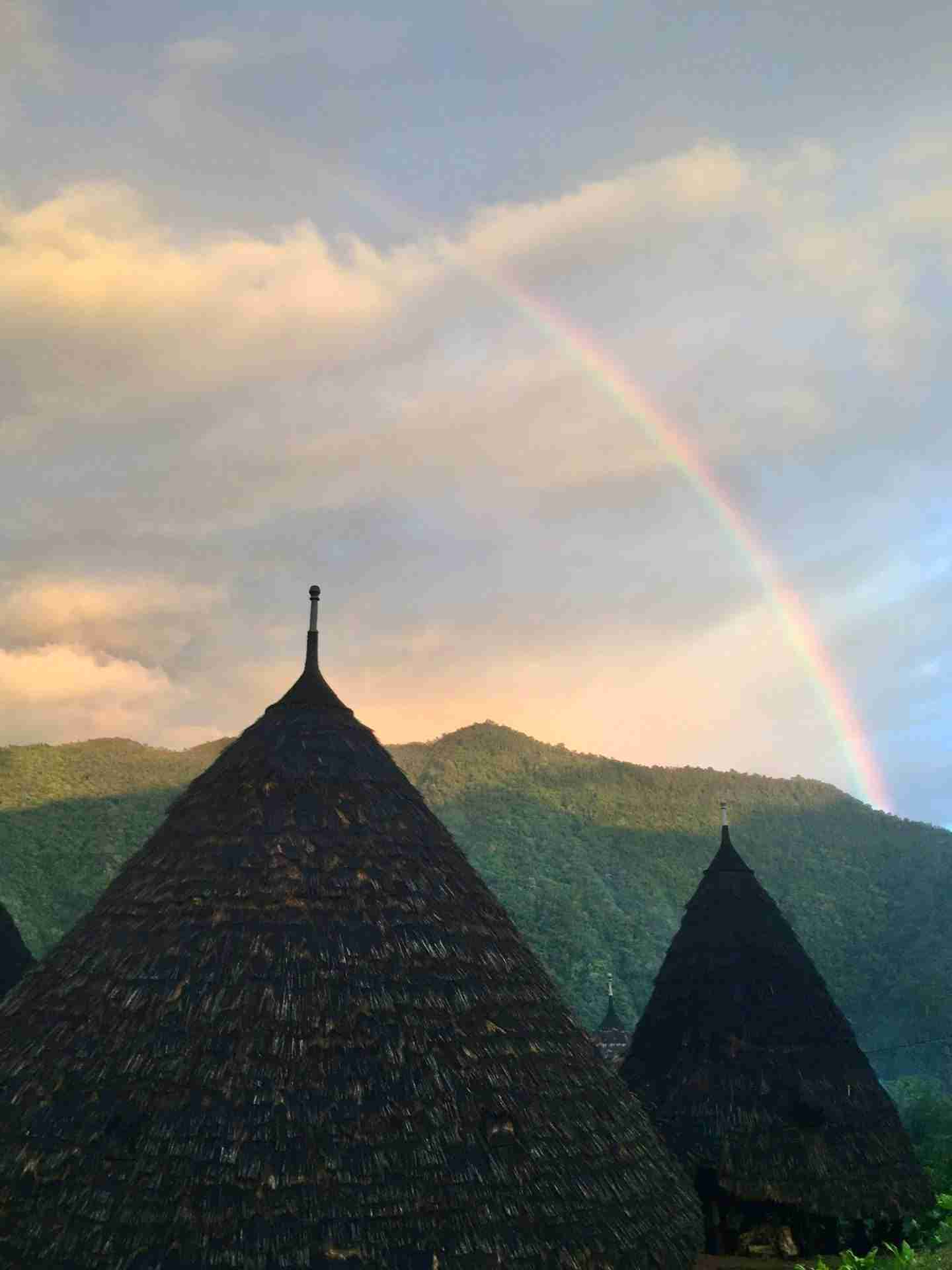
Wae Rebo Village is a remote and traditional settlement perched high in the mountains of Manggarai Regency on the island of Flores. Famous for its distinctive Mbaru Niang houses, circular structures with high conical roofs, this living heritage site offers an immersive cultural and photographic experience. Surrounded by misty peaks and dense tropical forest, the village is reached by a steep jungle trek, giving it a sense of seclusion and stillness. For photographers interested in cultural storytelling, environmental portraits, and mist-wrapped architecture, Wae Rebo is a landscape full of visual and emotional depth.
Best Photography Opportunities
The Mbaru Niang Houses in Mist and Morning Light
At the center of Wae Rebo lie the iconic conical homes, each constructed entirely from bamboo, wood, and palm fiber, rising steeply from the earth like great forest spires. These seven traditional structures form a circle around a ceremonial field and are best photographed at dawn when the rising sun filters through lingering mountain mist. A wide-angle lens allows you to include both the symmetrical placement of the homes and the enclosing forested ridges. The interplay of soft morning light and dew-laden grass creates a luminous ground plane that reflects delicate golden tones back onto the thatch roofs. Shooting from a low angle amplifies the height of the buildings, while early light brings out the textures in woven walls and the subtle contours of the surrounding slopes.
Arrival Path and Village Framing from Forest Trails
The journey into Wae Rebo is visually rich, especially near the final descent into the village. The forest clears just enough to reveal the village below, nestled like a time capsule in a natural amphitheater. From these vantage points along the approach trail, photographers can capture sweeping views of the village in context, with mist-draped ridges and cloud-filtered sunlight forming dramatic backgrounds. This is an ideal spot to use a mid-telephoto lens to compress the layers of forest, field, and architecture into a unified composition. Including the winding trail in the frame adds narrative momentum to the shot and invites the viewer to imagine the journey inward.
Daily Life in the Central Courtyard
The heart of Wae Rebo's social and ceremonial life is the open space at the center of the village. Here, elders meet, children play, and meals are prepared over wood fires. With a standard zoom or prime lens in the 35mm to 50mm range, photographers can capture candid scenes without intrusion, using natural light to emphasize human connection and tradition. Golden hour produces soft, directional light that skims across the circular field and highlights both people and structure. Shadows from the tall Mbaru Niang roofs fall across the earth in elegant arcs, creating patterns that shift minute by minute. Patience and sensitivity are essential, but this is where visual stories are built—images that blend cultural preservation, architecture, and community.
Sunset Silhouettes and Mountain Ridges
As the day ends, the western-facing hills catch the last light, and the sharply angled rooftops of the village begin to silhouette against the dimming sky. From the periphery of the village, photographers can frame these conical homes in front of layered ridgelines that stretch west toward the sea. A tripod and telephoto lens allow for long exposures that capture the ambient light after sunset, with glowing house windows or communal fires providing warm highlights against the deepening blue. These scenes are minimal but emotionally potent, ideal for telling stories of remoteness, resilience, and the relationship between built space and natural setting.
Architectural and Craft Detail
For a deeper narrative thread, detail-focused photography is essential. The Mbaru Niang are marvels of vernacular architecture, with overlapping woven bamboo walls, tightly bound roof seams, and wooden joints that speak of centuries-old techniques. Use a macro or short telephoto lens to isolate these textures, particularly in side light, which brings out the grain of bamboo and the frayed edges of hand-tied thatch. Documenting local artisans as they mend roofs, weave mats, or carve beams adds human dimension to these images. Even the interior spaces of the homes, dimly lit by small openings, provide opportunities to capture texture and mood with careful control of exposure and contrast.
Best Time to Visit
Wae Rebo offers year-round photographic interest, but conditions vary dramatically with the seasons. The dry season from April to October is the most practical and visually rewarding time to visit. During these months, the forest trails leading to the village are more accessible, and skies are clearer, providing clean light and reduced haze. Early mornings are the most atmospheric. Mist often lingers until mid-morning, wrapping the village in a gauzy veil that softens edges and diffuses sunlight into a silvery glow. This period is ideal for wide landscapes and environmental portraits.
Midday brings brighter light that penetrates the forest canopy and highlights the natural colors of bamboo, stone, and surrounding foliage. Shadows become more defined, and while the light can be harsher, it works well for textural detail and for isolating foreground subjects against darker backgrounds. In the late afternoon, the light warms significantly, bathing the village in golden tones that bring out the organic richness of thatch and timber. Sunset is particularly beautiful from the outer edges of the village where rooftops align with the ridges and the light fades in successive layers.
The rainy season from November through March poses challenges. Trails become slippery and more treacherous, and cloud cover often obscures distant ridges. However, the rains also bring increased mist and lush foliage, which intensify the sense of atmosphere and contrast. Photographers seeking mood and narrative in less-than-perfect weather will find this season offers dramatic lighting, especially during breaks in cloud cover when sun pierces through low mist. Whether you prioritize clear light or shifting fog, timing your shoot for sunrise and sunset maximizes your opportunity for dynamic compositions.
How to Get There
Reaching Wae Rebo involves a multi-stage journey that begins in the coastal town of Labuan Bajo, the main gateway for travelers arriving in western Flores. From Labuan Bajo, it is a three- to four-hour drive east via the Trans-Flores Highway toward the town of Ruteng. Along the way, you pass through mountainous terrain and small villages until reaching the trailhead near the village of Denge or, more precisely, Satar Lenda. This final stretch of road is unpaved and bumpy, particularly in the wet season, so hiring a 4WD vehicle or experienced driver is highly recommended.
From the trailhead, reaching the village requires a demanding three- to four-hour uphill hike through thick forest. The trail gains considerable elevation, and although it is well-marked, it requires good fitness and weather-appropriate gear. Along the way, hikers pass small streams, cultivated plots of taro and cassava, and highland viewpoints that foreshadow the landscape around Wae Rebo. Local guides are available and encouraged, both for safety and cultural liaison, especially if you're planning to stay overnight.
Access to the village requires a small entry donation that contributes to local conservation and supports the community's cultural preservation. No formal photography permit is required for still images, but as a guest in a living community, respect and discretion are essential. Overnight stays are arranged through the village's communal guest system, and visitors are usually accommodated in one of the traditional houses. Meals are provided, and basic amenities are available. Staying the night allows photographers to capture both early morning and late evening light, and to engage with village life in a more respectful and rewarding way.
Essential Photography Gear for Wae Rebo
Photographing Wae Rebo demands a setup that balances portability, versatility, and resilience in the face of high humidity and rugged conditions. A lightweight yet weather-sealed camera body is essential, capable of high dynamic range capture to handle the contrast between misty skylines and shaded courtyards. A wide-angle zoom, typically in the 16–35mm range, is necessary for capturing the full sweep of the village circle and its mountainous enclosure. For environmental portraits and scenes of daily life, a standard zoom like a 24–70mm offers the flexibility to adapt quickly to shifting compositions and varying light.
A 70–200mm telephoto lens will prove invaluable for isolating architectural details, capturing distant figures framed by the landscape, and compressing the visual layers of mountains and clouds. Macro capabilities or extension tubes are recommended for documenting the intricate craftsmanship in bamboo, thatch, and ceremonial tools. Because lighting is often soft and variable, a lightweight travel tripod is essential for longer exposures, particularly at dawn and dusk. A remote shutter release allows for hands-free shooting and reduces camera shake in low light.
Filters are crucial. A circular polarizer enhances sky contrast and foliage color while minimizing unwanted reflections. A graduated neutral density filter helps manage exposures when photographing buildings against bright misty skies. For extended exposures during brighter hours, a 6-stop or 10-stop ND filter is useful to capture slow motion of cloud movement or people in ceremony.
Protective gear is a must. Use dry bags or rain covers for all equipment, especially during the hike. Microfiber cloths should be kept readily accessible to manage condensation or lens misting. Batteries drain quickly in the cold mountain air, so spares should be packed in insulated pouches. A headlamp and power bank round out the kit for pre-dawn set-up and overnight recharging. A weatherproof backpack with supportive straps will make the ascent manageable while keeping your kit accessible on the trail.
Nearby Photography Locations
Cancar Spider Web Rice Fields
Located near Ruteng, these uniquely patterned rice fields resemble a spider's web when viewed from surrounding hilltops. Early morning is ideal when long shadows enhance the radial geometry, and fog often clings to the low fields. A drone or telephoto lens from high ground provides the best vantage point for showcasing their full symmetry.
Ruteng Village Streets and Markets
The small highland town of Ruteng offers colorful street scenes and traditional Manggarai architecture, with bustling local markets and colonial-era churches. Portrait opportunities abound among vendors and craftspeople, especially during morning trade when light streams through tarp-covered stalls and illuminates vibrant produce and handmade goods.
Tucked within a limestone canyon, this waterfall offers jungle seclusion and striking geology. The narrow gorge creates opportunities for abstract compositions and long-exposure water studies. Side trails lead to overlooks where the interplay of rock, water, and dense vegetation creates scenes rich in both movement and texture.
This large volcanic lake offers a complete contrast to Wae Rebo's built environment. Set within undisturbed forest, the lake's mirror-like surface captures dawn reflections of ridges and low clouds. It is particularly suited to minimalist compositions and wide environmental portraits of isolated fishermen or birdlife.
A less-visited but culturally significant village near Ruteng, Todo features ceremonial stones and traditional Manggarai structures. It offers a quieter, more contemplative atmosphere with strong potential for architectural photography and quiet cultural moments. The surrounding hills provide scenic context and soft light throughout the day.
Wae Rebo Village is not only a rare architectural treasure but a living, breathing cultural ecosystem. Its elevation, isolation, and historical continuity offer photographers an unparalleled setting where tradition and nature meet. Whether you are working with fog, firelight, or woven bamboo, Wae Rebo reveals itself slowly, demanding patience and presence to truly capture what makes it so unforgettable.
Comments
Loading comments…