
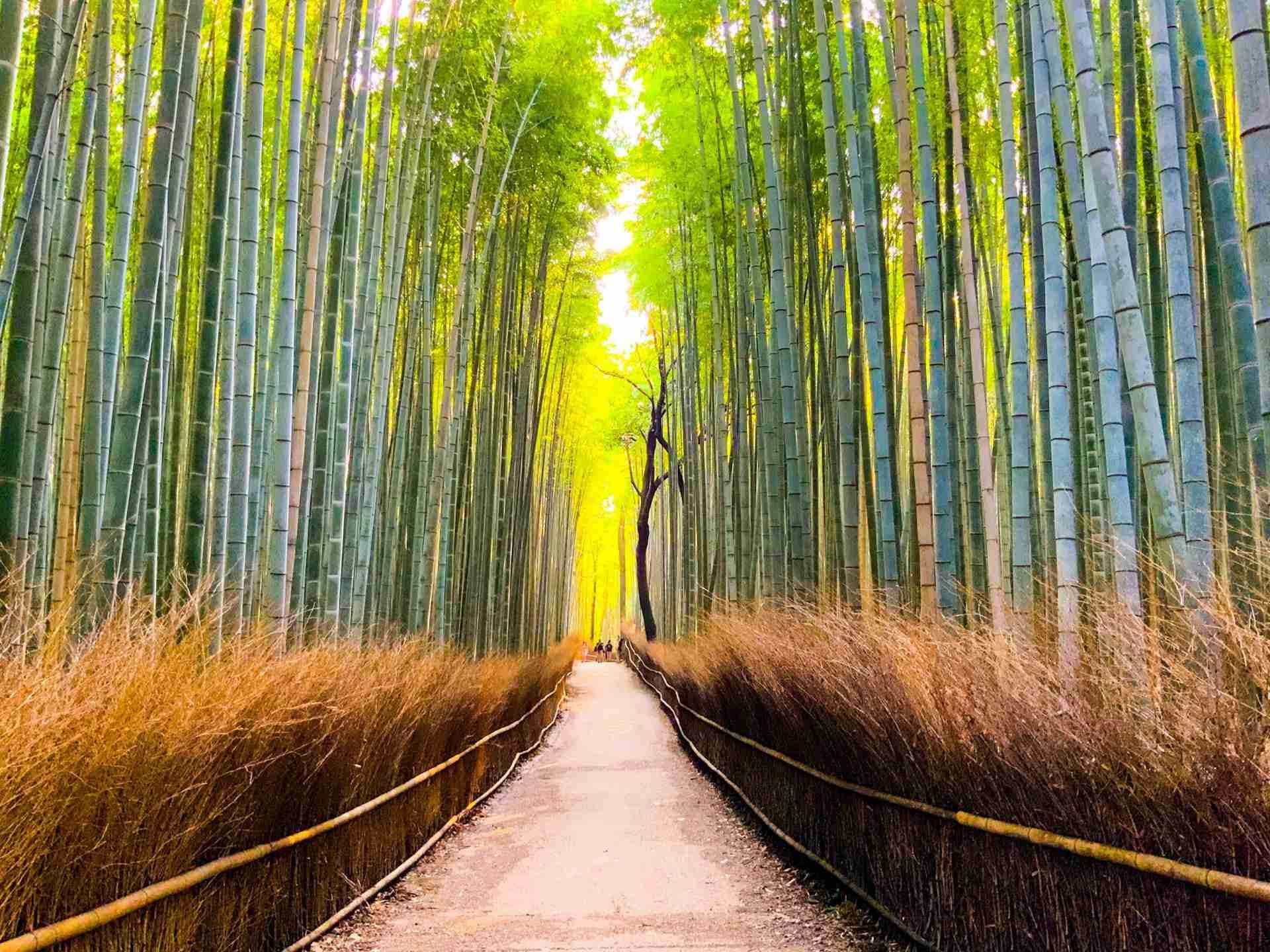
Tucked into the western hills of Kyoto, the Arashiyama Bamboo Forest is one of Japan's most distinctive and photogenic natural spaces. Walking its narrow paths, surrounded by towering stalks of green bamboo that sway with the wind and filter soft light from above, feels more like entering a living corridor than a woodland. The density and height of the bamboo create an immersive vertical world, full of shifting lines, texture, and rhythmic repetition. Though often busy with visitors, the forest rewards photographers who approach it with patience and intention. From abstract studies of form to meditative compositions of light and movement, the Arashiyama Bamboo Forest offers a location that balances beauty with serenity.
Best Photography Opportunities
• Main Path Through the Forest
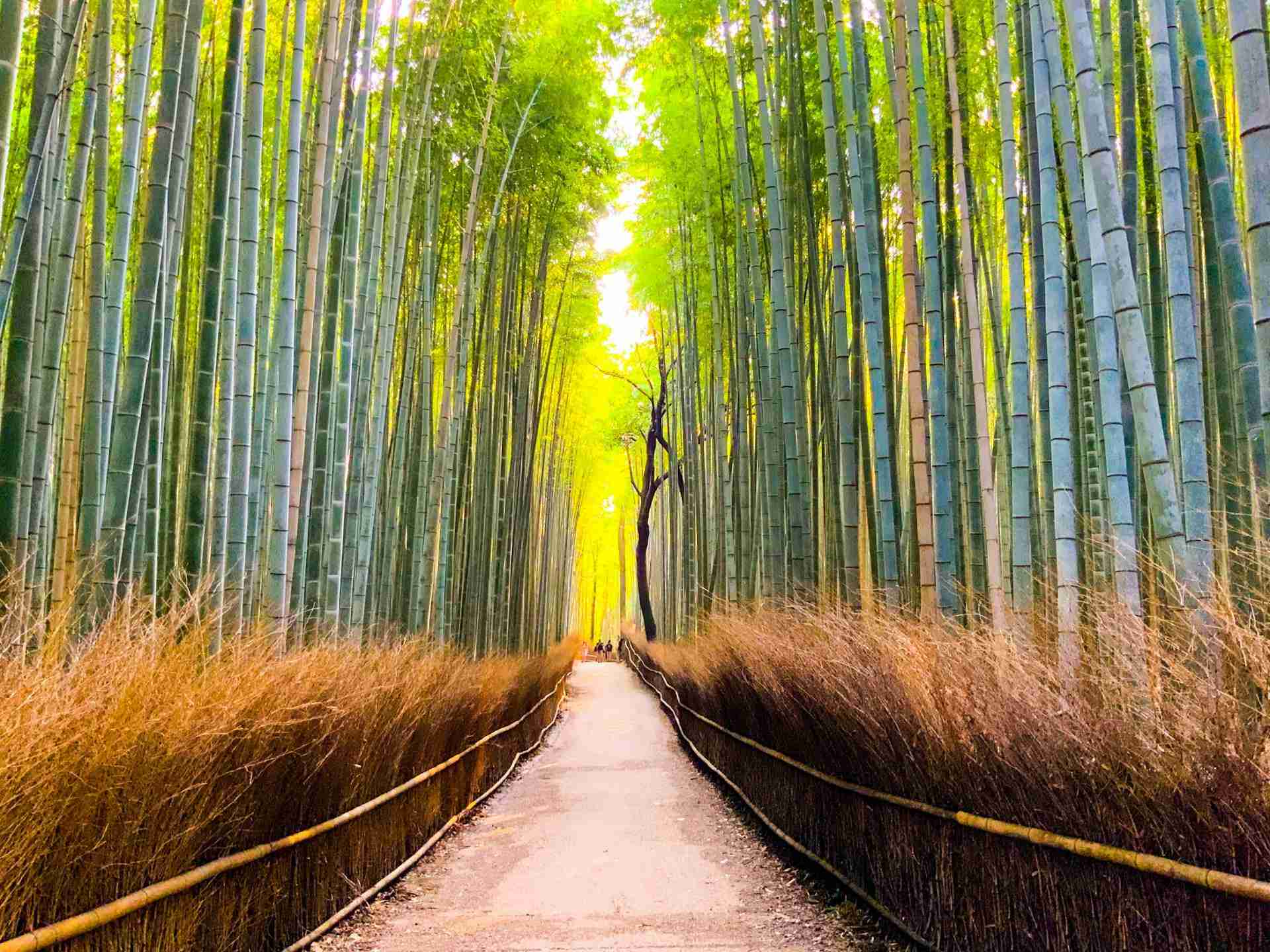
The primary walking path cuts through the center of the grove, flanked on both sides by tightly spaced bamboo stalks that rise straight into the sky. This scene works especially well with a wide angle lens to exaggerate the verticality and lead the viewer's eye into the distance. Early morning is the best time for this shot, when the path is empty and the light is soft enough to avoid blown highlights. Composing symmetrically from the center of the path emphasizes the repeating lines and calming geometry. For variety, try shooting from ground level looking upward, capturing the way the green canopy shifts with the breeze and refracts the ambient light.
• Light Filtering Through the Bamboo Canopy
One of the subtle highlights of Arashiyama is the way light moves through the bamboo leaves, casting dappled patterns on the forest floor and glowing softly against the green trunks. These moments are fleeting and often hard to plan, but they offer some of the forest's most poetic frames. Using a fast lens and a wider aperture helps isolate these highlights and play with contrast. This kind of scene works well in both color and monochrome, depending on whether you want to emphasize the green tones or the interplay of light and shadow. Overcast days are also effective here, softening contrast and bringing out the depth in the canopy without harsh flare.
• Detail Compositions of Bamboo Texture
Beyond the sweeping views, there is beauty in the smaller patterns within the grove. Close ups of the bamboo stalks reveal delicate banding, subtle scars, and tonal shifts from pale green to muted blue. Use a short telephoto or macro lens to explore these details, especially in corners where light rakes across the surface. These images can stand alone or serve as supporting elements in a series focused on the broader forest. Consider shooting across the grain of the stalks to capture overlapping rhythms and textures that suggest motion and stillness at once.
• Side Paths and Angled Views
While the main trail is the most well known, smaller offshoots and side paths offer more irregular, less symmetrical compositions. These areas allow for wider environmental shots where the bamboo is more dispersed and the undergrowth is more visible. This change in spacing adds complexity and layering to your images. Shooting at an angle through the bamboo, rather than straight on, helps capture the sense of depth and vertical flow. These less structured scenes are ideal for handheld shooting and respond well to natural movement in the foliage.
• Human Scale Within the Grove
Photographers interested in street photography will find unique opportunities to capture visitors as they explore the bamboo forest. The height and repetition of the bamboo create a natural backdrop that draws attention to human figures without overwhelming them. Use a moderate focal length and wide aperture to isolate your subject against the vertical lines of the stalks. Morning and late afternoon offer the best directional light for softly lighting faces while maintaining detail in the background. Keep compositions clean, with careful placement of limbs and faces between the bamboo to avoid visual clutter. Be sure to be respectful when including visitors in your compositions.
Best Time to Visit
Early morning is essential for serious photography in the Arashiyama Bamboo Forest. Arriving shortly after sunrise gives you the best chance of finding the path free from crowds and bathed in soft, directional light. In spring and early summer, the bamboo leaves are freshest and the tones are most vibrant, while autumn brings a subtle golden tint to the grove as the light changes angle and warmth. Winter has its own appeal, with fewer visitors and cooler air that adds clarity to the scene, though snow is rare. The monsoon season in June and early July adds moisture and a richer green tone to the forest, but it also brings increased humidity and less reliable light. No matter the season, the key is timing it is essential to avoid midday crowds and harsh overhead light.
How to Get There
The Arashiyama Bamboo Forest is located in the Arashiyama district of western Kyoto, easily accessible by train, bus, or bicycle. From Kyoto Station, the fastest route is via the JR Sagano Line to Saga-Arashiyama Station, a journey of about 20 minutes. From the station, it's a ten minute walk to the north entrance of the grove. The paths through the forest are free to enter and open to the public at all hours, though early morning visits are strongly recommended for photographers. Tripods are allowed but should be used with courtesy and awareness, as the area can become crowded quickly, especially on weekends and holidays. There are no fees to photograph the grove, and the paths are flat and accessible, making it suitable for carrying a full kit if desired.
Recommended Photography Gear
A wide angle lens is essential for capturing the height and repetition of the bamboo in tight quarters. A 24 millimeter prime or a 16 to 35 millimeter zoom will cover most needs for both path shots and canopy work. A mid-range telephoto, such as a 70 to 200 millimeter, is excellent for compressing layers of bamboo and isolating detail without distortion. A fast prime in the 35 to 85 millimeter range is useful for portraits or handheld work in low light. A tripod is highly recommended for early morning or longer exposures, though it's best used quickly and respectfully due to the flow of pedestrian traffic. A polarizer can help cut glare on the bamboo and deepen green tones, while a lens cloth is handy for managing condensation during humid conditions. Avoid changing lenses too often in the forest, as dust and fine debris can accumulate in the air during dry seasons.
Nearby Photography Locations
Located right at the edge of the bamboo forest, Tenryu-ji offers traditional Japanese architecture, reflecting ponds, and carefully arranged gardens. Its formal design and seasonal plantings provide a counterpoint to the natural repetition of the bamboo grove. Visit in spring for cherry blossoms or in autumn when the maples turn bright red and orange.
Spanning the Katsura River just south of the grove, this low, wooden bridge is one of Arashiyama's most recognizable landmarks. It's a strong subject for early morning or sunset photography when light reflects off the river and the surrounding mountains begin to glow. The bridge also frames human activity well, making it a good spot for slow shutter work.
A short climb from the forest path, this historic villa and garden complex offers elevated views of the city and surrounding hills. The carefully maintained grounds provide a peaceful backdrop for shooting architectural elements, garden paths, and views that include layers of forest, rooftops, and sky. The site charges an entrance fee but includes matcha tea with admission.
For a different perspective, the Sagano Scenic Railway runs through the Hozugawa gorge just west of the bamboo forest. From select points, you can capture train cars winding through forested hills, especially effective during spring bloom or autumn foliage. Shooting from elevated trails or bridges nearby allows for more dynamic compositions.
Tucked into the hillside above Arashiyama, this lesser-known temple offers stone steps, mossy grounds, and pagoda views surrounded by forest. It's a particularly strong location in autumn when the surrounding trees turn deep red and gold. The quiet setting and slow pace make it a great place to work through detailed compositions without rush.
Arashiyama Bamboo Forest asks you to slow down. Though it's a short walk from end to end, its best images come not from racing through the grove but from watching how light touches the trunks, how the breeze moves the leaves, and how space shifts as you change your position. It's not a place for fast shooting or heavy post-processing. It rewards clarity, patience, and the photographer who chooses to listen before clicking the shutter.
Comments
Loading comments…