
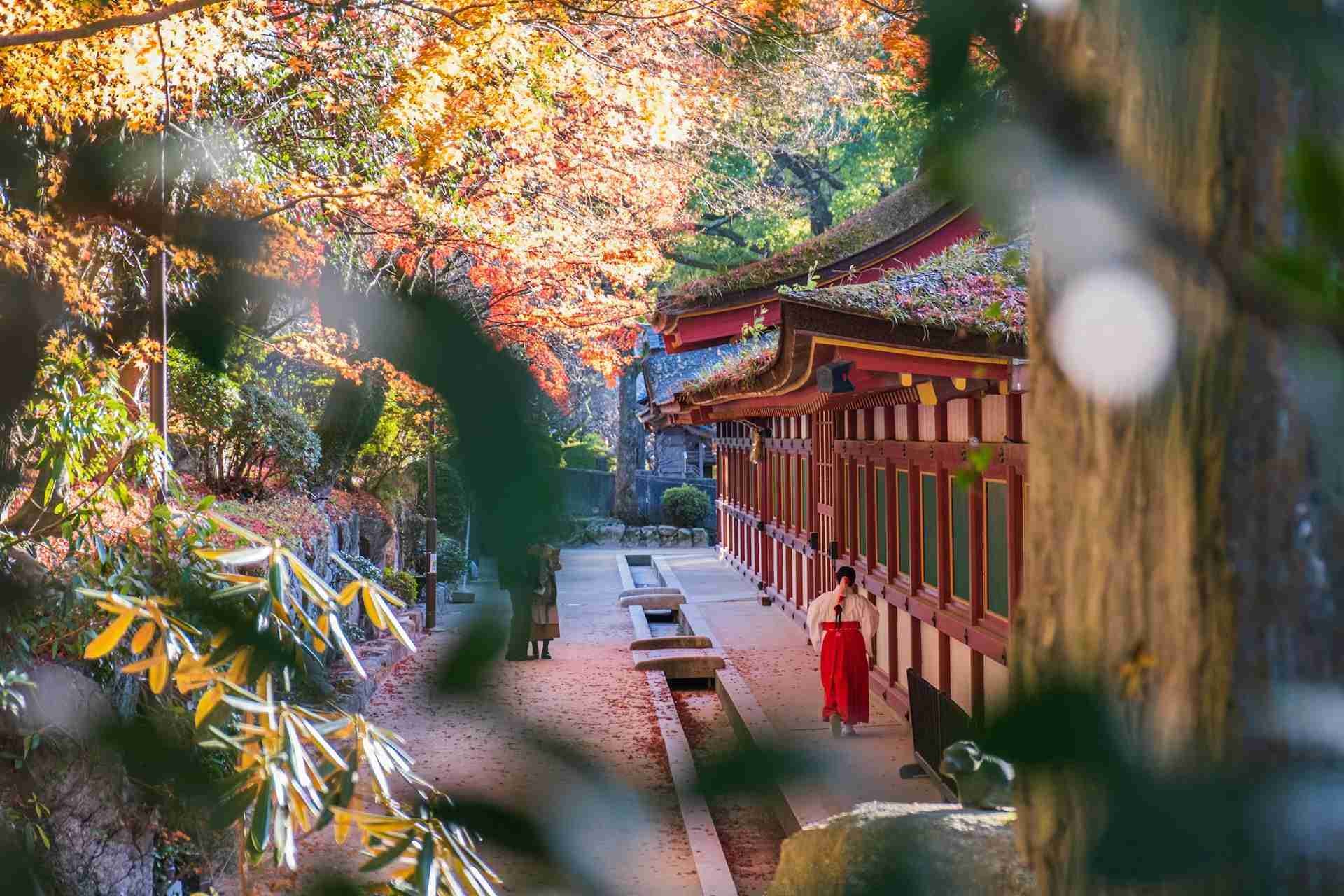
Nestled within forested hills just outside Fukuoka City, Dazaifu Tenmangu Shrine is a layered and deeply photogenic site that rewards both documentary and creative styles of photography. Dedicated to the deified spirit of Sugawara no Michizane, a revered scholar and poet, the shrine draws both pilgrims and tourists, especially students hoping for academic success. But beyond its cultural relevance, Dazaifu Tenmangu offers photographers a carefully choreographed visual journey through gates, bridges, ponds, and quiet wooded trails. From the rhythmic approach lined with stone lanterns to the bold crimson of its torii gates and the sinuous lines of its arched bridge, this is a place where history, craftsmanship, and nature converge. It is a site best explored on foot, slowly, with attention to seasonal change and the ever-shifting quality of light filtering through the trees.
Best Photography Opportunities
• Taiko-bashi Arched Bridge Over Shinji Pond
The series of arched bridges leading across Shinji Pond is one of the shrine's most iconic views, offering strong leading lines and high visual contrast, especially when reflected in still water. The central bridge's deep red hue stands out brilliantly against the green foliage or pale mist, depending on season and time of day. A wide-angle lens from the water's edge captures both symmetry and setting, while a telephoto lens allows for tighter framing of figures crossing the bridge or the reflection beneath. Early morning provides soft light and fewer visitors, perfect for long exposure or slow shutter work to smooth the water.
• Main Shrine Building and Copper Roof Details
The honden, or main shrine hall, is rich in surface texture, from its vermillion woodwork to the patina of its sweeping copper roof. Shoot during mid-morning when side light accentuates depth and wood grain, or during cloudy conditions when even light helps preserve tonal range. A 24–70mm lens is ideal here, giving you flexibility to switch between full compositions and smaller architectural studies. Focusing on details like wooden carvings, ropes, or aged joinery helps tell a quieter visual story. Look for moments when worshippers pause or move through the space to add a layer of human connection.
• Camphor Trees and Forested Pathways
The grounds are dotted with massive camphor trees, some centuries old, with gnarled roots and canopies that filter light across stone paths. These trees frame the shrine complex and add vertical scale to the more controlled geometry of the buildings. A standard or slightly wide lens helps emphasize the spatial relationship between nature and architecture. This area is especially photogenic in soft rain or fog when moss, bark, and leaves appear more saturated and tactile. Consider photographing low to the ground to emphasize texture, depth, and the curve of the pathway.
• Torii Gates and Lantern-lined Approach
The approach to the shrine is lined with stone lanterns and a series of torii gates, offering repetition and framing opportunities ideal for mid-range lenses. This path is best captured in the soft light of early morning or after rain, when the stone darkens and color contrast becomes more pronounced. Use a shallow depth of field to separate foreground torii from those deeper in frame. Including a visitor dressed in traditional attire, if the opportunity arises, can enhance the sense of place and cultural context. Framing the gates slightly off-center adds dynamism while preserving rhythm.
• Seasonal Gardens and Plum Blossoms in Early Spring
Dazaifu is particularly famous for its plum trees, which bloom in profusion from late February into March. These blossoms create soft, layered backgrounds and fleeting foreground interest for any architectural or landscape composition. A short telephoto lens helps compress the scene and emphasize color relationships. Mornings with soft light or misty conditions are best, particularly when photographing from within the grove looking outward toward the shrine. This is also a great opportunity to work handheld, moving through the garden for candid shots of visitors interacting with the blossoms.
Best Time to Visit
Dazaifu Tenmangu is photogenic year-round, but each season dramatically changes the visual language of the site. Early spring is one of the most popular times, when over 6,000 plum trees bloom in soft pinks and whites, filling the grounds with texture and pastel color. Mornings during this season provide the most flattering light, often accompanied by light mist or still ponds. Summer brings dense green foliage and dappled light through the tree canopy, especially strong in late afternoon as the sun drops behind the hills.
Autumn offers crisp air and brilliant reds and oranges from the maple trees along the paths and pond, often reflected in the water and framed by shrine structures. Golden hour here adds warmth to the wooden architecture and richness to the surrounding landscape. Winter is quiet and understated, but ideal for capturing clean lines, bare branches, and the subtle patina of the buildings. Overcast days and early mornings tend to bring fewer visitors, allowing for uninterrupted compositions and careful studies of structure and space.
How to Get There
Dazaifu Tenmangu Shrine is located in the city of Dazaifu, approximately 40 minutes from central Fukuoka. From Fukuoka's Tenjin Station, take the Nishitetsu Line to Dazaifu Station, which requires a change at Futsukaichi. The shrine is a short five-minute walk from Dazaifu Station, and the route is clearly marked through a charming shopping street lined with traditional sweets shops and cafés.
The grounds are open year-round with no entrance fee for general access. Tripods are discouraged during peak hours or major events but can usually be used in quieter parts of the grounds, especially early in the morning. Some inner sanctums or museum spaces have photography restrictions, so always check signage. The paths are well-maintained, with stone paving and gentle slopes, making it easy to carry and reposition gear as you work through the site. Drones are not permitted due to the shrine's cultural and religious significance and proximity to pedestrian traffic.
Recommended Photography Gear
A 24–70mm lens offers strong versatility throughout the shrine complex, from bridge and building scenes to tighter studies of architectural detail. A wide-angle lens in the 16–35mm range is helpful for capturing the scale of the main structures, camphor trees, and bridge reflections without having to step too far back. A short telephoto, such as an 85mm or 105mm, is ideal for isolating seasonal elements like plum blossoms, lanterns, and repeating architectural motifs.
While handheld shooting works well in much of the complex, a travel tripod allows for greater control during long exposure work over the pond or in low light beneath the trees. A polarizer helps manage reflections off the water and intensifies foliage color, especially in spring and autumn. In rainy or humid conditions, lens cloths and basic weather protection for gear are recommended. A compact shoulder bag or backpack will help you move easily between narrow paths, bridges, and forested walkways without breaking your rhythm.
Nearby Photography Locations
Located a short walk from Dazaifu Tenmangu, this Zen temple is known for its moss-covered rock garden and delicate maples. The contrast between carefully raked gravel and wild seasonal color makes it an ideal location for quiet, contemplative compositions.
Just behind the shrine, this museum's dramatic curved glass facade and elevated walkway provide a strong modern architectural counterpoint to the historic shrine. Visit at dusk for reflections in the glass and long views through the surrounding trees.
A quieter alternative to Dazaifu, this nearby shrine complex is surrounded by forest and features wide, mossy paths and a serene main hall. It is a perfect spot for moody, low-light photography with a more solitary atmosphere.
These remnants of a once-grand temple complex offer open stone foundations and weathered statuary that contrast beautifully with the surrounding forest. Ideal for detail-oriented shooting and environmental texture studies.
If you are returning through Fukuoka, this large city park offers wide pond views, modern footbridges, and seasonal garden areas. It is well suited to late afternoon landscape work or relaxed architectural framing around the tea house and museum.
Dazaifu Tenmangu is more than a religious site or historical landmark. It is a living space where time, tradition, and natural rhythms converge. For photographers, it offers the chance to tell a layered story through form, light, and subtle change. Whether your focus is architectural study, cultural storytelling, or seasonal landscape, this shrine rewards close attention and quiet observation.
Comments
Loading comments…