
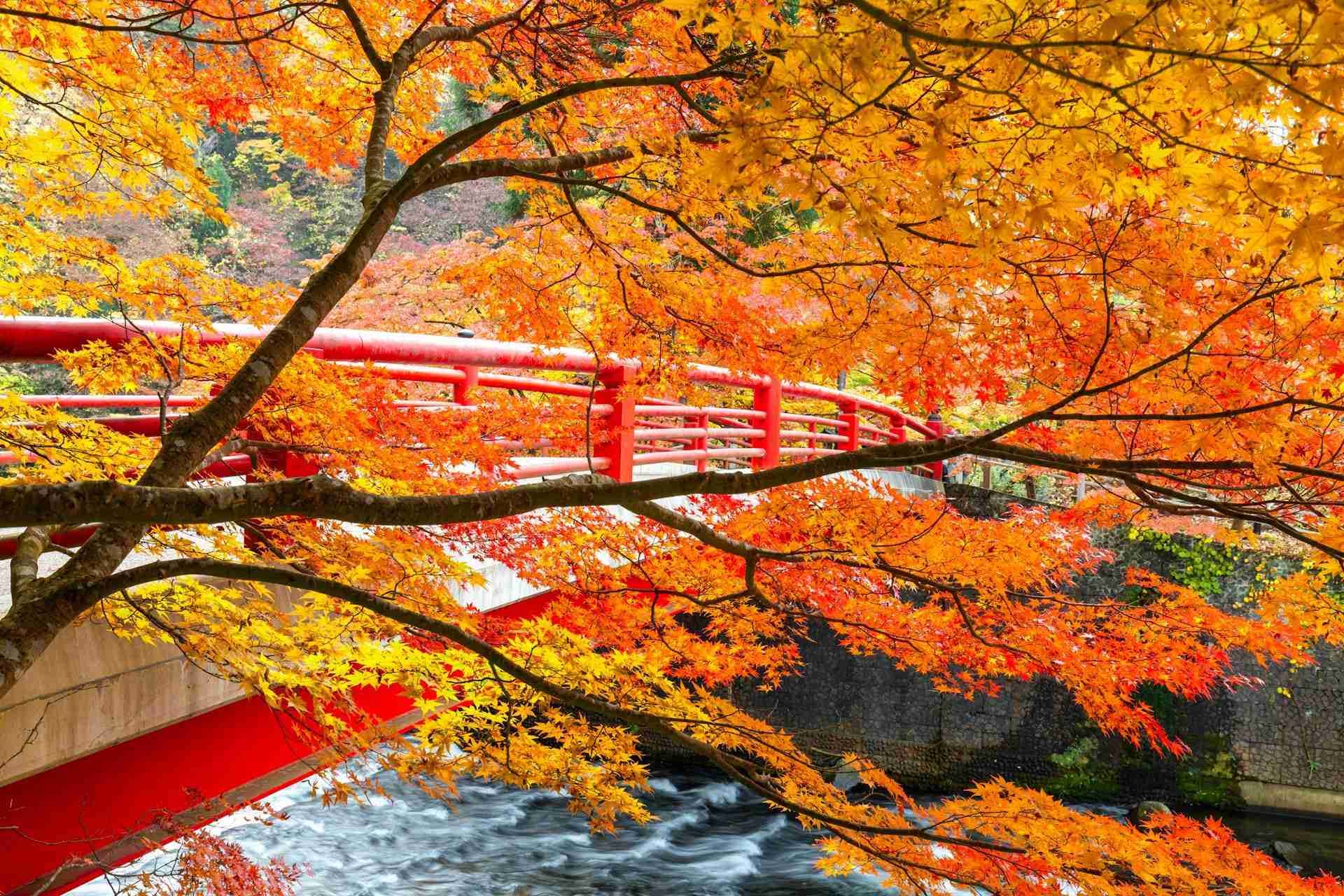
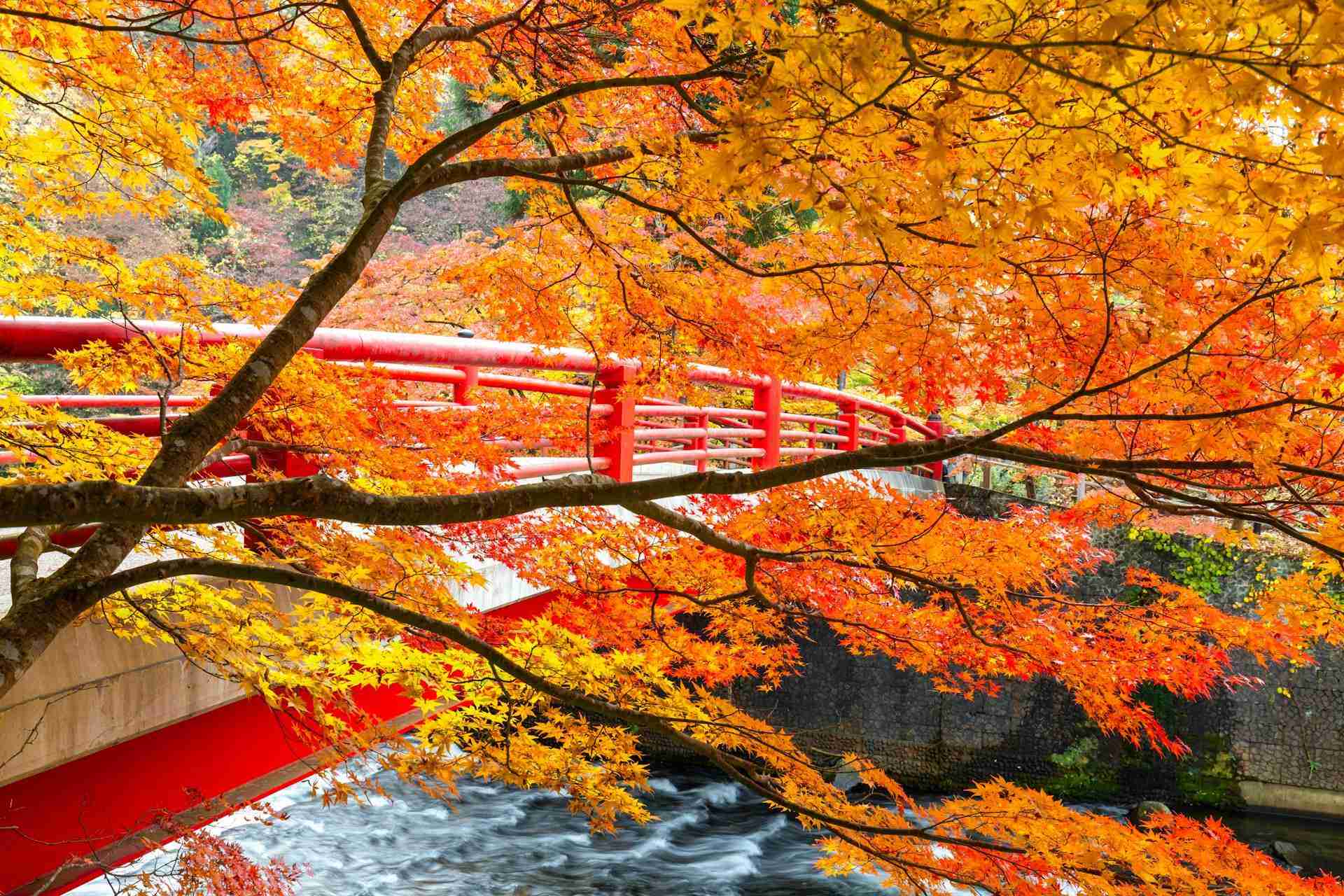
Tucked into the hills of Kuroishi, Nakano Momiji Yama is a compact forest park best known for its brilliant autumn color and peaceful walking paths. The site surrounds Nakano Shrine and follows a small stream that winds past the Fudo Bridge, and Fudo waterfall, all framed by Japanese maples that turn deep red, orange, and gold in late October. The area is easy to access and very photogenic, with carefully maintained paths that make it simple to scout angles and move between compositions. For photographers, it offers a chance to work with saturated color, balanced compositions, and soft filtered light that passes through the leaves. It is a quiet place that rewards attention to detail and patience with light and timing.
Best Photography Opportunities
• Fudo Bridge
Fudo Bridge is a strong anchor point for shooting both the stream and the surrounding forest. Its curved shape and stone structure work well in wide frames, especially when autumn color surrounds the riverbanks. Early morning fog or low clouds often move through the trees behind the bridge, creating depth and soft contrast. You can shoot from below the bridge for a clear view of the arch and the water beneath, or from the trail above to include background cliffs and tree layers. Reflections in the calm parts of the river can also add symmetry when conditions are right.
• Fudo-no-Taki Waterfall
This broad, low waterfall is located just below Fudo Bridge and is well suited for long exposure photography. The water flows over a wide, even shelf of dark rock, often dotted with leaves in peak season. Its size makes it easy to work with from close range without distortion, and the surrounding stones and moss add structure to the frame. The area stays shaded for most of the day, which allows for slow shutter speeds even in mid morning light. Tripods are useful here, and low angle compositions give the best sense of scale.
• Nakano Momiji Yama Maples
A short walk upstream leads to the dense grove of Japanese maple trees that surrounds Nakano Shrine. In late October, the leaves create a canopy of saturated color, and the soft light passing through the trees helps fill your frame without heavy contrast. Shooting directly up into the canopy with a wide lens can produce graphic, layered images, especially on overcast days. Paths through the area offer a variety of angles, from simple close-ups of leaves to wider compositions with bridges, lanterns, and the shrine buildings framed by color.
• Shrine Grounds and Stone Details
Nakano Shrine itself is small, but the combination of traditional architecture and forest background creates strong compositions. Torii gates, stone lanterns, wooden handrails, and moss-covered steps provide plenty of material for detail work. A medium telephoto lens is helpful for compressing layers and isolating small subjects like inscriptions or water basins. Early morning is best for calm light on the shrine and fewer visitors on the grounds. Color in the trees builds visual contrast against the neutral tones of the buildings.
• Woodland and River Path Textures
The trails connecting the shrine and Fudo Bridge wind through shaded forest with patches of open light and detailed undergrowth. These areas are excellent for quiet compositions that focus on natural lines, repeated forms, or light falling on bark and leaves. A polarizer is useful for cutting glare off wet leaves or stones, especially after rain. You may also find small pools along the stream with floating leaves or reflections that work well in tighter frames. These scenes benefit from a slow approach and careful framing.
Best Time to Visit
Late October is by far the best time to visit Kuroishi's valley for photography. The maple leaves across Nakano Momiji Yama typically reach peak color between the 20th and 30th of the month, depending on temperature and rainfall patterns. During this window, the entire area takes on a rich palette of red, orange, and yellow, with fallen leaves adding texture to the paths and riverbanks. The light during this time is often soft and angled, especially in the morning when the sun is filtered through low clouds or mist in the trees. This gentle light helps preserve highlight detail and keeps color contrast manageable, which is important when working with red leaves that easily blow out in direct sunlight.
Early mornings are the best time to catch fog or low mist that clings to the valley floor, especially near Fudo Bridge and the stream. These conditions also tend to keep crowds low, giving you time to compose more carefully and shoot long exposures without interruption. Midday can still work, especially in overcast conditions that help maintain color saturation, but expect more visitors on weekends. The valley is also illuminated at night for a short time during peak season. This lighting is warm and directional, designed to highlight the maples and shrine buildings, and can be photographed with a tripod and slower shutter speeds.
Winter, spring, and summer bring fewer visitors, but also fewer photographic elements. In spring, soft greens begin to return to the forest, and the stream runs higher with snowmelt. Summer is dense and humid, with thick green undergrowth and filtered light. Winter can bring snow, and though the site remains accessible, the trails can be icy or partially closed. For most photographers, autumn provides the strongest combination of color, light, and shooting conditions.
How to Get There
The Nakano Momiji Yama area, including Fudo Bridge and Fudo-no-Taki, is located about 20 minutes by car from Kuroishi Station in Aomori Prefecture. During the autumn season, shuttle buses may run from the station and local hotels. If you are driving, parking is available near the entrance, though it fills quickly on weekends in late October. Once on site, everything is within walking distance. The trails are well maintained and mostly flat, with stone steps and gravel paths connecting the main areas. No entry fee is required for the park or the bridge. Tripods are allowed, and there is enough space along the trails and riverbank to set up without blocking access. Facilities include restrooms and vending machines at the entrance, but there are no shops or restaurants inside the park itself.
Recommended Photography Gear
Because this location combines waterfall photography, dense forest scenes, and color-focused compositions, a flexible kit is key. A wide angle lens in the 16 to 24 millimeter range is essential for shooting tree canopies, the bridge, and shrine views in tighter spaces. For more selective framing or layered compositions, a 50 to 100 millimeter lens is extremely useful. This focal range helps compress scenes with bridges, lanterns, and forest lines while keeping natural depth. If you are working with details like leaves, moss, or stone, a short telephoto or macro lens can isolate small textures with precision.
A tripod is a must for long exposure work at Fudo-no-Taki, especially if you want motion blur in the waterfall or reflections in the stream. It also helps in low light under the tree canopy or during the night light-up events. A circular polarizer will improve image quality by cutting surface reflections on wet leaves, darkening skies, and bringing out natural color in high humidity. If you want to shoot long exposures during daylight, bring a neutral density filter, especially 6 or 10 stop, to manage shutter speed without overexposing.
Nearby Photography Locations
• Kuroishi Komise Street
This traditional covered shopping street features wooden storefronts and old sake breweries under a tiled roof arcade. The soft light here is great for casual shooting during midday, and the textures of aged wood and stone give a completely different feel from the forest nearby.
About an hour's drive north, this tall bridge spans a deep forest canyon that turns vivid in autumn. From the bridge, you can shoot wide views across layers of colored forest, or explore nearby trails to get closer to the river below. It is a good spot for big landscape shots with long lenses.
Less visited and more rugged, this narrow valley near Kuroishi is filled with creeks, natural springs, and quiet forest scenes. It is ideal for more intimate work in low light or misty weather and offers a calm contrast to the more popular sites nearby.
This range offers high elevation trails, panoramic views, and volcanic terrain that shifts with the seasons. In autumn, you can photograph wide ridgelines with changing trees and low cloud cover. In winter, the area transforms into a snow-covered landscape ideal for cold weather photography.
While farther south, Oirase is one of Japan's most well-known autumn stream valleys, with clear water, dozens of waterfalls, and forest trails that are ideal for full day shooting. It is best visited early in the morning to avoid crowds and catch soft light through the canopy.
Together, Nakano Momiji Yama and Fudo Bridge offer a dense, walkable landscape filled with strong subjects, natural color, and consistent light. This area is easy to explore in a single visit but rewards time spent slowly, especially if you enjoy working with composition, subtle atmosphere, and forest texture. For anyone photographing autumn in northern Japan, this valley in Kuroishi delivers a complete scene in a very manageable space.
Comments
Loading comments…