
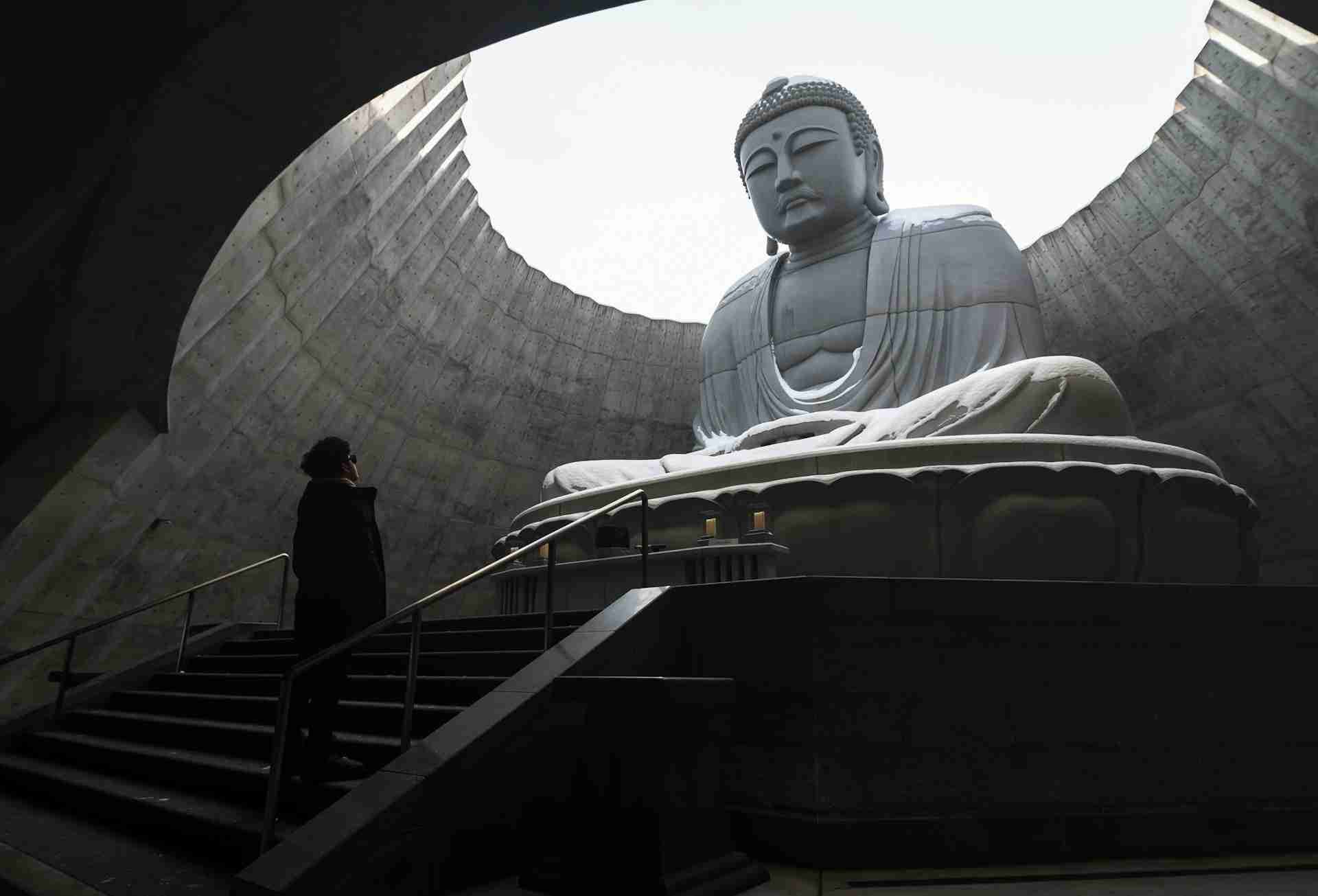
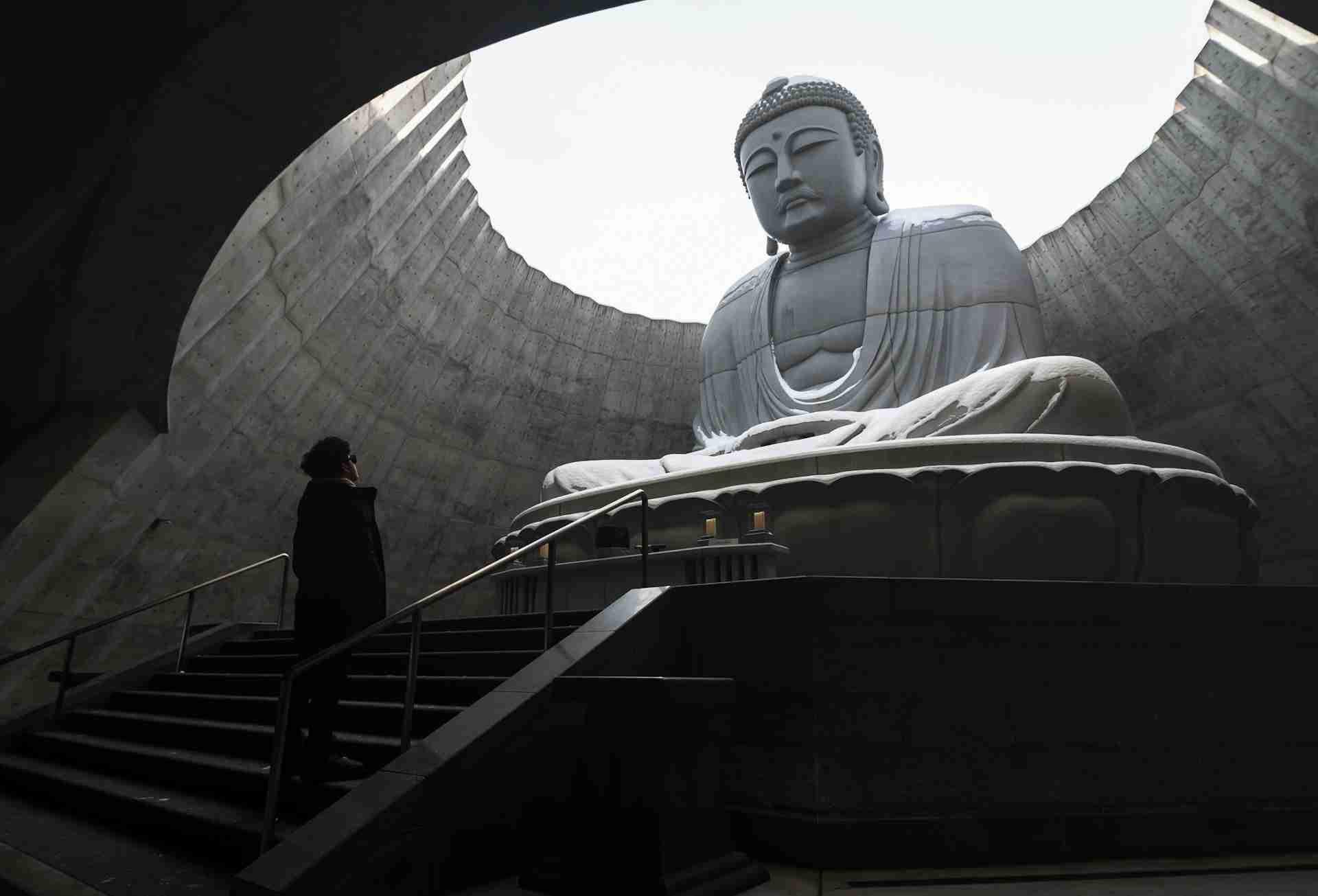
Rising quietly from a circular field of lavender on the southern edge of Sapporo, the Hill of the Buddha blends architecture, sculpture, and landscape into a seamless photographic experience. Designed by architect Tadao Ando, the site features a towering stone Buddha partially concealed within a manmade hill. Visitors enter through a long tunnel and emerge into a sunken courtyard where the statue is revealed beneath an open sky. This setting turns a simple visit into a cinematic transition from darkness to light. For photographers, every element is intentional. The raw concrete surfaces, the seasonal color of the hill, and the oculus above the statue all work together to frame light in surprising ways.
Best Photography Opportunities
• Emerging View from the Oculus Opening
The central chamber's oculus is the most visually commanding feature of the site. As you exit the tunnel, the Buddha is revealed through this circular opening to the sky, framed by sloping concrete walls that make the statue feel both grounded and elevated. The lighting changes dramatically depending on the time of day, with morning light gently highlighting the contours of the face and late afternoon casting longer shadows across the shoulders. This composition is strongest when the sky is dynamic, so watch for shifting clouds or low sun angles that add variation to the light above. A 35mm or 50mm lens works well here to capture the geometry without distortion and helps maintain a human sense of scale in the final frame.
• Approach from Within the Tunnel
The tunnel leading to the chamber offers a strong visual narrative for photographers who enjoy leading lines and high-contrast scenes. Shooting from inside the tunnel toward the brightly lit Buddha creates a deep, symmetrical composition with a natural vignette. The gradual curve of the tunnel adds a sense of movement and anticipation, especially when the stone statue is partially illuminated by spillover light from the opening. This is an ideal place to use a wide-angle lens and shoot low to the ground for extra depth. To maintain clean exposures, consider bracketing shots or using manual metering to handle the exposure differences between tunnel shadow and courtyard light.
• Hill of Lavender During Summer Bloom
From July into early August, the surrounding hill becomes a vibrant sea of lavender, wrapping the statue in a soft layer of color. This seasonal transformation creates a beautiful contrast between the gray concrete and the natural richness of the field. Shooting from a low angle with lavender in the foreground can help create a layered composition that leads the eye toward the Buddha. A telephoto lens is also effective for compressing the layers of color and simplifying the background. For the best color saturation and detail, plan your shots for early morning or just before sunset, when the light is softer and the flowers are backlit.
• Rear and Side Views from the Perimeter Path
Many visitors overlook the outer edges of the hill, but this area offers unique angles of the statue and its surrounding form. From the back or side, you can photograph the curvature of the earthworks and the slope of the concrete wall as they rise behind the Buddha. These views are particularly striking in winter, when snow covers the landscape and leaves only the top of the statue visible, creating a subtle composition of shape and tone. Light during these months tends to be softer and more directional, making it easier to highlight texture and depth. A mid-range zoom allows you to frame both full-body views of the statue and tighter shots of architectural interplay between the hill and the sky.
• Abstract Textures and Architectural Details
The Hill of the Buddha offers excellent opportunities for minimalist and detail-oriented photography. The concrete surfaces are smooth and slightly curved, with small lines and seams that become visible when hit by side light. Shadows move slowly across these surfaces throughout the day, giving you time to work with subtle contrasts and layered compositions. Close-ups of the concrete or stone, especially where moss or snow gathers, provide clean, abstract images that contrast well with wide scenic shots. Use a fast prime lens to isolate texture, and shoot during the early or late hours when light adds the most dimension without introducing harsh glare.
Best Time to Visit
The Hill of the Buddha offers a dramatically different experience in each season, and selecting the right time to visit depends on your photographic goals. Summer is the most vibrant season, especially from late July through early August when the lavender surrounding the statue is in full bloom. The early morning light during this period is soft and warm, giving the purple tones greater saturation while casting clean shadows along the concrete. Sunrise provides the added benefit of fewer visitors, allowing for careful compositions without crowd interference. Late afternoon is also favorable, particularly on clear days when the low sun passes through the open oculus and creates directional light on the face of the statue.
Autumn brings deeper contrast and cooler tones as the surrounding cemetery and tree-lined paths shift into subtle reds and yellows. While the lavender has faded by this time, the structure takes on a starker presence that pairs well with cloud cover and low-angle sun. Winter transforms the entire site into a minimalist scene of snow, concrete, and sky. The simplicity of the landscape allows for black and white photography, texture studies, and clean compositions where shadow becomes a primary subject. Overcast skies help soften the already muted palette, while moments of clear light during early morning or late afternoon can bring out hidden details in both the statue and the architectural forms. Spring, though less visually dramatic, offers strong visibility, crisp light, and easy access, making it an ideal time for scouting compositions or working with slower-paced imagery.
The best time of day year-round is early morning, both for quality of light and reduced visitor numbers. Light is often low and directional, perfect for working with the curved surfaces and vertical lines throughout the structure. Cloudy days are not a disadvantage here, as soft light enhances texture on concrete and removes distracting highlights. Calm weather, particularly during the lavender bloom, helps preserve clean reflections and minimizes movement in the foreground when shooting at slower shutter speeds.
How to Get There
The Hill of the Buddha is located within the Makomanai Takino Cemetery in southern Sapporo, on Japan's northern island of Hokkaido. From Sapporo Station, the site is best accessed by car in about 30 to 40 minutes depending on traffic. Public transit is also possible, using a combination of subway lines and local buses followed by a walk through the cemetery grounds. Signs are posted in both Japanese and English, and the site is well known by local taxi drivers. Parking is available near the entrance. Entry to the Buddha is free and open during daylight hours, though hours may vary slightly by season. Tripods are permitted outdoors but should be used with consideration for other visitors. The site is fully paved, and the incline is gentle, making it easy to carry gear throughout the visit.
Recommended Photography Gear
The Hill of the Buddha is a location that rewards a versatile but intentional approach to gear. A 24–70mm zoom lens is the most useful tool throughout the site, allowing you to compose both wide and mid-range shots without frequent lens changes. It performs well for tunnel scenes, courtyard views, and most of the lavender hill perspectives. For compositions that emphasize spatial distortion or geometry, a wide-angle zoom such as a 16–35mm is essential. This lens is particularly helpful inside the approach tunnel and around the circular walls, where the architecture invites experimentation with depth and perspective.
A short telephoto lens, ideally in the 70–200mm range, is excellent for compressing foreground elements like lavender or snow against the base of the statue. It also works well for isolating patterns and light across the outer hill, especially during seasonal transitions. For photographers who enjoy texture and detail work, a fast prime lens between 35mm and 85mm can be used to capture the tactile quality of concrete, subtle architectural seams, or snow-covered surfaces. A circular polarizer is highly recommended, especially in summer, to enhance sky contrast and control reflections off the stone and lavender petals. On overcast days, this filter also helps manage the sheen on wet concrete.
Tripods are allowed in the outdoor areas but should be used with respect for the quiet atmosphere and other visitors. A lightweight tripod or travel monopod is ideal for working in lower light or when framing precisely within the tunnel and courtyard. In winter, batteries can deplete more quickly, so it is wise to carry extras in a warm pocket. A microfiber cloth and basic weather protection for your camera are useful in any season, as conditions in Hokkaido can shift quickly between clear skies, mist, and light snow. Since the walk from the entrance to the statue is short but exposed, pack lightly and organize gear for quick access, allowing you to react quickly to changing light and visitor movement.
Nearby Photography Locations
Located just beyond the cemetery grounds, this large public park includes waterfalls, forest trails, and open fields. In autumn, the area is rich in color and offers wide landscape compositions as well as close-ups of seasonal change. The soft contours of the land contrast nicely with the precision of the Buddha site.
Designed by sculptor Isamu Noguchi, this expansive park in eastern Sapporo features modern landscape design, geometric earthworks, and reflective water features. It is a clean and abstract counterpoint to the Hill of the Buddha and an excellent place for architectural and minimalist photography.
• Hōheikyō Dam and Jōzankei Valley
A short drive southwest of Sapporo, this mountainous area provides natural scenes of cliffs, rivers, and dynamic lighting. In autumn, the valley is a palette of warm colors. Fog and changing weather often create conditions ideal for moody landscape photography.
Located south of the city, this open-air art museum blends sculpture with wooded trails and landscaped gardens. It offers a quieter atmosphere with diverse subject matter, including abstract forms, woodland compositions, and seasonal textures.
For sweeping views of the Sapporo skyline and beyond, Mount Moiwa is an excellent stop before or after visiting the Buddha. Sunset here is particularly rewarding, with city lights beginning to glow beneath a fading sky. It is a strong choice for panoramic and twilight work.
The Hill of the Buddha offers a rare blend of controlled space, seasonal beauty, and structural clarity. Whether you are drawn to architecture, landscape, or the quiet rhythm of minimal compositions, this location allows you to work slowly and deliberately with every frame. From morning shadow to winter snow, it is a space where light does most of the storytelling.
Comments
Loading comments…