
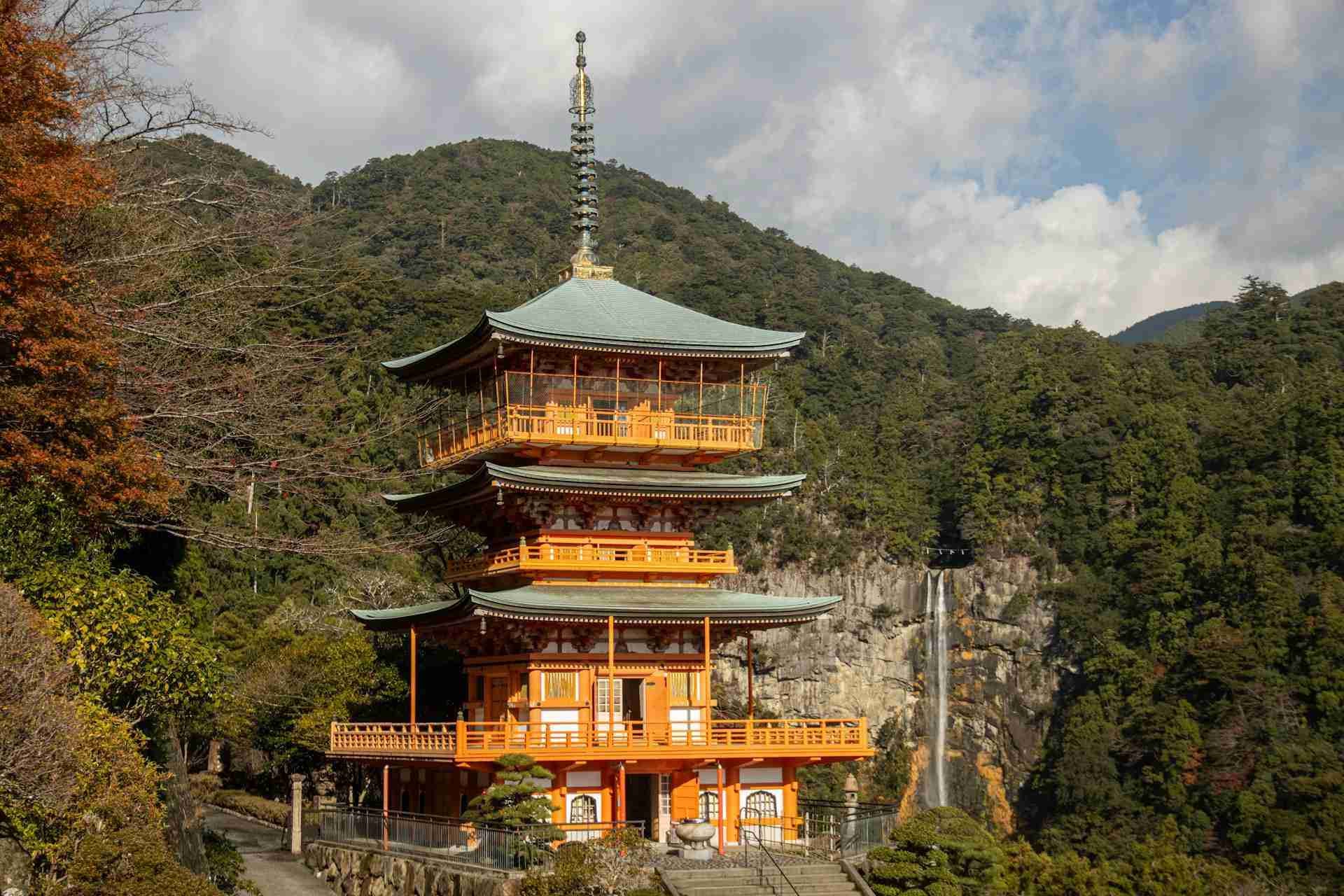
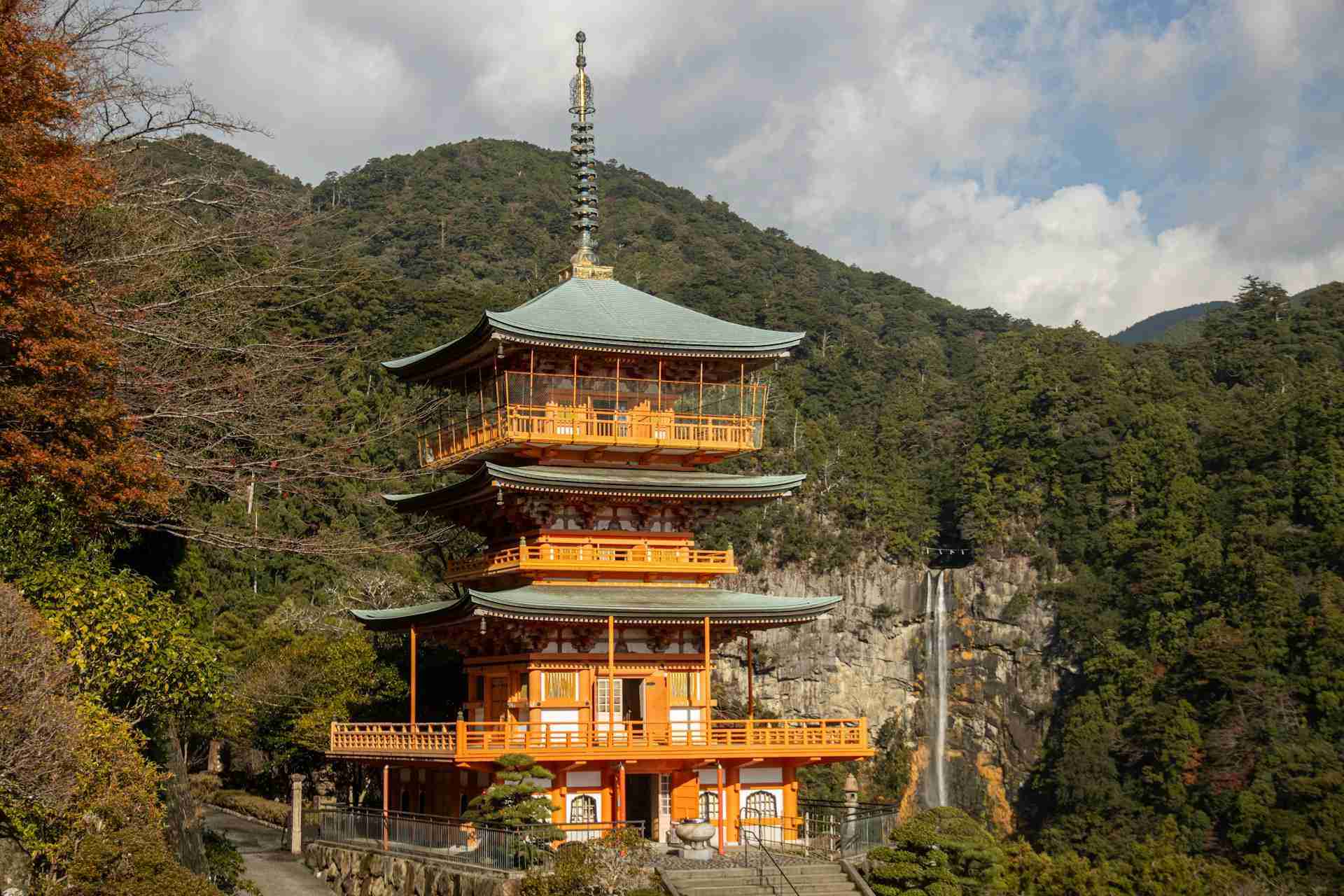
Set high in the forested mountains of Wakayama Prefecture, Hiro Shrine and the nearby Nachi Waterfall form one of Japan's most breathtaking sacred landscapes. The vibrant vermilion of the shrine's buildings contrasts with the deep greens of the surrounding trees and the constant white rush of Nachi, Japan's tallest single drop waterfall. This area is part of the UNESCO listed Kumano Sanzan, a trio of ancient pilgrimage sites, and still carries a quiet reverence that informs every part of the experience. For photographers, it offers a rare combination of natural spectacle and refined spiritual architecture, balanced in a landscape where composition, light, and history come together in perfect harmony.
Best Photography Opportunities
Nachi Waterfall From the Pagoda Terrace
One of the most iconic compositions in Japan can be found from the viewing platform beside the Seigantoji pagoda, where the waterfall cascades in the background behind the shrine's vivid orange tiers. From this position, you can build layered compositions that include the pagoda, the mountainside forest, and the full vertical drop of the waterfall in a single frame. The best time to shoot this angle is in the morning when the sunlight illuminates the face of the waterfall and bathes the pagoda in warm directional light. Overcast conditions are also excellent here, as they help prevent glare and preserve saturation in both the painted surfaces and surrounding foliage. A mid-range zoom lens is ideal to give yourself flexibility in how you balance shrine detail with the scale of the natural surroundings.
Architectural Details Within Hiro Shrine
Inside Hiro Shrine, there are dozens of small visual stories to capture in close compositions. Wooden carvings, aged steps, moss-covered lanterns, and torii gates provide ample material for architectural and texture-focused shots. These scenes benefit from directional side light in the morning, which enhances surface details and gives subtle contrast without overpowering the shadows. A fast prime or short zoom lens allows you to move quietly through the space and respond quickly to changing light angles as you explore. This type of imagery helps balance the larger landscapes by drawing attention to the craftsmanship and design embedded within the site.
Framing the Waterfall From Forest Paths
Several trails wind through the forest near the pagoda and shrine, offering alternate views of Nachi Waterfall framed by cedar trees and leafy branches. These compositions feel more secluded and emphasize the natural setting surrounding the waterfall. Shooting through foreground leaves or trunks allows you to create layered depth and place the waterfall within a more intimate, organic context. A wide or standard lens works well here, particularly when shooting handheld on uneven ground. These perspectives also allow you to avoid crowds at the main viewing terrace while still working with strong angles and leading lines.
Long Exposure From the Waterfall Base
Getting close to the base of the waterfall allows for long exposure work that smooths out the flow and adds a sense of serenity to the otherwise intense sound and movement of the falling water. Using a neutral density filter helps extend your shutter speed in brighter conditions, creating soft textures in the water that contrast with the rough surfaces of the surrounding rock. Including mossy stones or worn trail edges in the foreground builds strong compositions with anchored depth. This area is best visited early in the day or on cloudy afternoons when lighting is more manageable. A tripod is essential for stability on the uneven paths that lead to these lower angles.
Pilgrimage Trail and Approach Path Scenes
The ancient Kumano Kodo trails that approach Hiro Shrine provide an entirely different photographic rhythm, focused more on the journey than the destination. Stone stairways, cedar lined passages, and mossy walls help you build quiet, contemplative images that reflect the site's spiritual heritage. Including a lone figure walking the trail, whether a pilgrim or a visitor, adds scale and a human element without distracting from the natural surroundings. Morning is the best time for this type of work, as light filtering through the trees casts long shadows and highlights the textures in the stone and bark. These scenes work especially well when composed from a low angle, using steps or forest edges as natural leading lines.
Best Time to Visit
Hiro Shrine and Nachi Waterfall can be photographed year round, but spring and autumn provide the most consistently productive conditions. In spring, fresh green foliage fills the hillsides and brings life to the forest trails and shrine surroundings. Cherry blossoms bloom at lower elevations in early April and can occasionally be included in wide compositions near the approach to the site. Summer offers lush greenery and rising morning mist, creating depth in forest scenes and atmosphere around the waterfall. Though temperatures and humidity rise, the mountain location often remains more temperate than surrounding coastal areas.
Autumn brings dramatic color changes to the trees surrounding the shrine and trails. In late October and early November, you can frame the pagoda and waterfall with golden and red leaves, giving your compositions a seasonal accent that contrasts well with the painted wood of the shrine. Winter is quieter and more minimal, with fewer leaves and crisper air, allowing for unobstructed views of the architecture and rock formations. Snowfall is light but possible, and even a trace adds strong visual contrast to the tiled roofs and cedar trunks.
Early morning is the best time of day to photograph most of the site. Light enters the valley from the east, illuminating the waterfall and softening as it passes through tree cover. By mid morning, shadows shorten and the color balance shifts toward cooler tones. Overcast skies are especially useful here, softening highlights and helping keep color rich without excessive contrast. Visitors tend to arrive in larger numbers later in the morning, so sunrise sessions allow for cleaner frames and a more peaceful pace of shooting.
How to Get There
Hiro Shrine and Nachi Waterfall are located in Nachikatsuura, a town on the southeastern edge of Wakayama Prefecture. The nearest train station is Kii-Katsuura, accessible via the JR Kisei Line from major cities like Osaka or Nagoya, though the journey involves multiple hours and transfers. From Kii-Katsuura Station, local buses run regularly to the Nachi area, with stops at both Daimonzaka and the shrine entrance. The ride takes around thirty minutes and passes through scenic countryside as it climbs toward the mountain.
For those driving, paid parking is available near the base of the hill, with walking paths and shuttle buses that bring visitors up to the pagoda and shrine complex. The site is well signed and very walkable, though the climb from lower parking areas to the upper terraces includes multiple sets of stone stairs. Most of the paths are paved or carefully maintained, and facilities are available at key points. While some viewing platforms or shrine areas may charge a small entrance fee, photography from public access areas is unrestricted. The site is open throughout the year and can be visited during early morning hours for best light and access.
Recommended Photography Gear
To take full advantage of the variety of compositions at Hiro Shrine and Nachi Waterfall, it is worth bringing a range of lenses that cover both architectural and landscape needs. A 24 to 70 millimeter lens will handle most general compositions including the iconic pagoda and waterfall view, forest trail shots, and shrine interiors. A 16 to 35 millimeter wide lens is helpful when space is tight or when you want to exaggerate scale and include more sky or foreground elements. This lens also helps when shooting the shrine from lower angles or placing visitors in environmental portraits along the approach paths.
A 70 to 200 millimeter telephoto lens is useful for isolating specific features of the shrine or waterfall, compressing distance between the pagoda and background trees, or pulling in textures from across the site. If long exposure is part of your plan, a sturdy but lightweight tripod is essential for navigating stairs and uneven terrain. Neutral density filters allow for water smoothing and motion blur during bright daylight. A circular polarizer is also valuable for removing glare from wet stone, enhancing sky contrast, and deepening greens in the surrounding foliage.
This location rewards flexibility and observation, so gear that supports both spontaneous and deliberate shooting will give you the most satisfying results.
Nearby Photography Locations
Directly connected to Hiro Shrine, this sacred Shinto site includes larger buildings, shaded pathways, and stairways that frame traditional structures against the forested mountain. The rich architectural detail and natural light create strong scenes for both wide and close compositions. It is especially productive in the early morning when crowds are minimal.
This historic pilgrimage path leads to the shrine through towering trees and stone steps that are often covered in moss. The path itself provides a visual narrative of arrival and transition. Morning fog or filtered light enhances texture and mood, and the framing possibilities along the route make it a rewarding secondary location.
Nachi River and Valley Views
Farther downhill, the Nachi River flows through quieter sections of forest with smaller waterfalls, wooden bridges, and scenic bends. These areas allow for calmer compositions that contrast with the energy of the main falls. Long exposures work well here and the light tends to be more diffused.
Shingu is home to another of the Kumano Sanzan sacred sites and offers a change in scale and layout. Its riverside location and more open spaces create compositions built around sky and water rather than vertical forest. It pairs well with Nachi for photographers building a story around spiritual landscapes.
Katsuura Fishing Port
Near the train station, this working harbor provides strong contrast with the sacred mountain sites. Boats, weathered nets, and waterfront structures are ideal for detail shots or broader maritime scenes. Sunrise here is especially beautiful as the light reflects across the water and catches the lines of the fishing vessels.
Photographing Hiro Shrine and Nachi Waterfall is a blend of timing, sensitivity, and attention to light. The setting offers a balance between cultural heritage and natural force, creating images that feel layered with meaning as well as beauty. With thoughtful gear choices and a willingness to explore beyond the main viewpoint, this location rewards careful composition and an appreciation for both scale and subtlety.
Comments
Loading comments…