
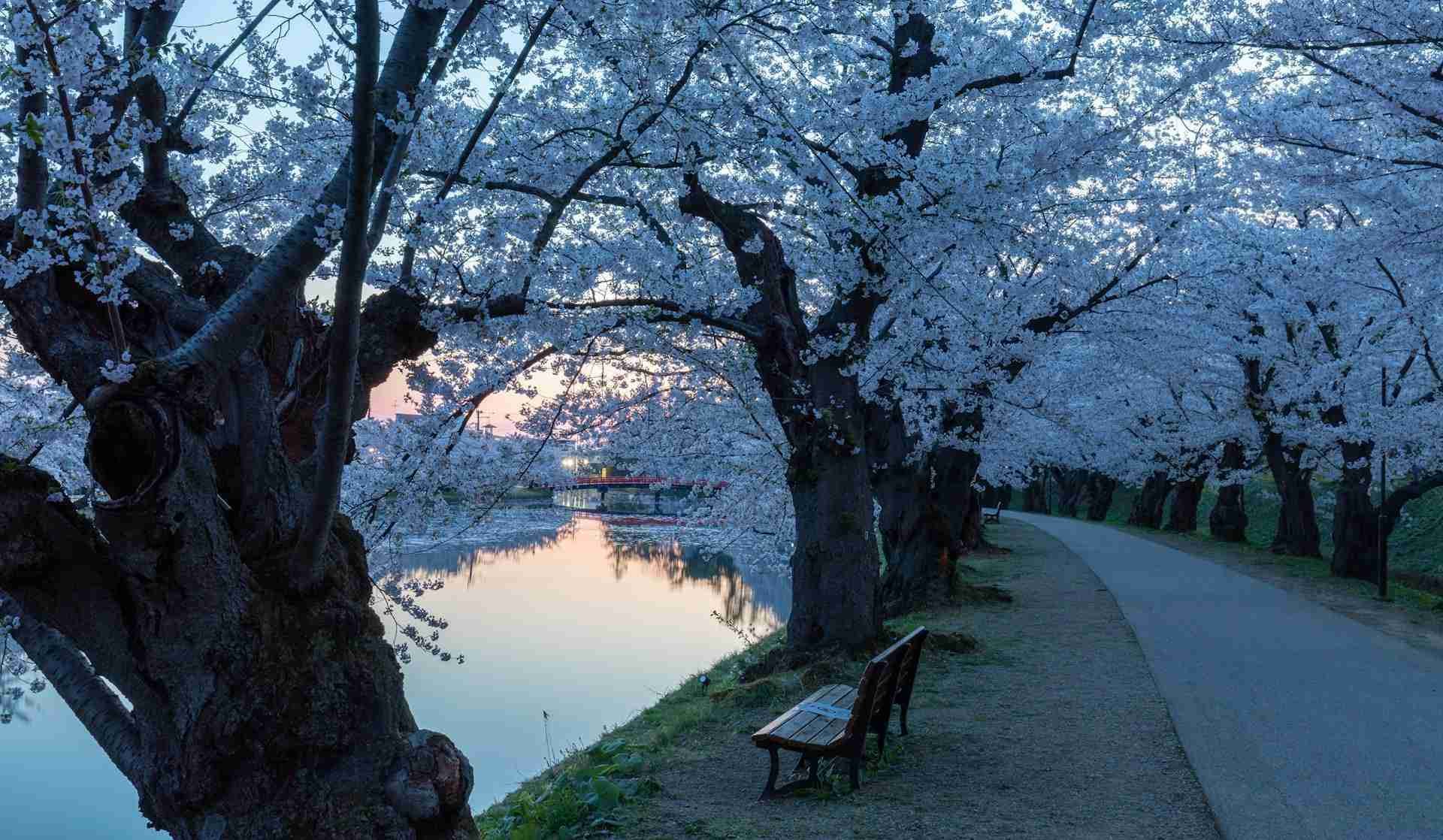
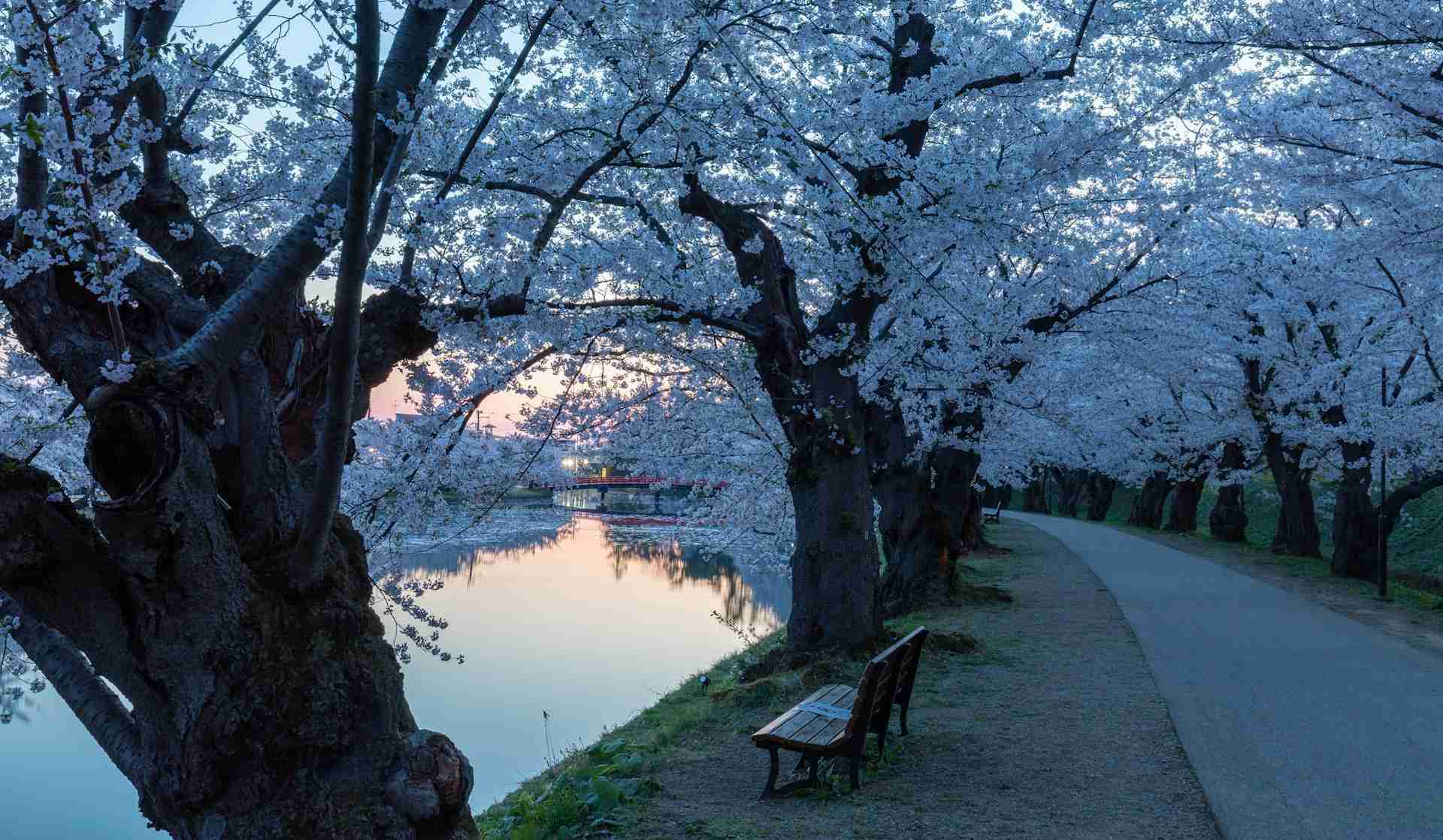
Hirosaki Park, located in Aomori Prefecture at the northern tip of Japan's main island, is one of the most photogenic public parks in the country. Best known for the elegant Hirosaki Castle and its vast moat system, the park is a showcase of seasonal transitions that offer vastly different photographic moods throughout the year. Whether blanketed in cherry blossoms, glowing with autumn foliage, or covered in deep winter snow, Hirosaki Park blends architectural charm with refined natural scenery. For photographers seeking variety, access, and cultural texture, this site offers consistent rewards and unexpected compositions in every direction.
Best Photography Opportunities
• Cherry Blossom Tunnel over the West Moat
In late April, the park becomes one of Japan's most celebrated cherry blossom destinations. One of the best compositions during this time is along the West Moat, where arching sakura trees line both sides of the water. As the petals begin to fall, the surface becomes coated in soft pink, creating a mirrored tunnel of blossom and reflection. A wide-angle lens allows you to frame the moat from ground level, capturing both the blossoms above and their mirrored forms below. Try visiting early in the morning to avoid the crowds and capture still water before wind disturbs the surface. Overcast days can be ideal for even tones and soft contrast in this already delicate scene.
• Hirosaki Castle Framed by Seasonal Color
Hirosaki Castle, a compact three-story keep with curved roofs and wooden detailing, offers a strong architectural anchor in nearly every season. During cherry blossom season, it is framed by pink branches and lanterns; in autumn, by deep red and yellow foliage; and in winter, by pristine snow piles. Use a standard zoom lens to frame the castle symmetrically through torii gates or branches, or step back with a wider focal length to include the stone base and moats. A polarizing filter helps with glare off the water and enhances color saturation in the foliage or blossoms. Blue hour adds drama to the keep's white walls and tiled roof, especially when ambient lanterns begin to glow along the paths.
• Night Photography During the Sakura Festival
The Hirosaki Cherry Blossom Festival includes nightly illumination of the trees, moats, and castle, creating opportunities for soft-glow night photography that blends warm artificial light with the cool hues of twilight. Bring a tripod and walk slowly along the south and west moats, where the lanterns cast light onto the blossoms and water. A slower shutter speed allows for smooth reflections and deeper color contrast. Shoot just after sunset to balance the remaining sky light with the artificial glow. Light fog or mist enhances the dreamlike quality of these scenes and adds depth to tree branches and architectural features.
• Snow Lantern Festival and Winter Compositions
In February, Hirosaki Park hosts the Snow Lantern Festival, transforming the grounds into a white-on-white canvas dotted with glowing lanterns, snow sculptures, and candlelight paths. Photograph the castle or trees framed by these soft light sources, using long exposures to pull out shadow detail and contrast. Snowy conditions offer excellent opportunities for black-and-white conversions or minimal color palettes. Use manual exposure compensation to avoid underexposing the snow, and consider a telephoto lens for isolating architectural elements against the surrounding white space. Winter also allows for compositions that are less cluttered by foliage, giving you more geometric precision around the castle structure.
• Autumn Foliage Along the Moat Paths
By late October, the park's maple and ginkgo trees explode into bright oranges, reds, and yellows, offering strong color blocks for composing around the moats and castle. Fallen leaves line the stone paths and float in eddies along the water, adding texture to your foreground. Look for opportunities to shoot through low branches or include people in traditional dress for scale and context. Golden hour light filters warmly through the thinner canopy, adding rich tones to both foliage and castle walls. Shooting handheld is possible in these conditions, allowing you to work freely from shifting angles and along busy paths.
Best Time to Visit
Hirosaki Park's photographic value changes distinctly with the seasons, making it a rare location where multiple visits in a single year can yield entirely different portfolios. Cherry blossom season is the most famous, typically peaking between April 20 and April 30, depending on the year. During this period, both day and night photography are rewarding, and early mornings are key for crowd-free images.
Autumn is equally rewarding, with peak foliage usually arriving in the last two weeks of October. The clear, dry air of autumn improves visibility, and soft golden light at sunrise and sunset adds richness to the color palette. The changing leaves provide strong contrast against the gray stone of the moats and the clean lines of the castle keep.
Winter is quieter but offers some of the most serene compositions, especially during or after fresh snowfall. The Snow Lantern Festival, held in February, is an ideal time for capturing unique light and white-on-white textures. Low sun angles and soft ambient light make this season easier to meter and frame, especially with reflective snow.
Summer sees less photographic interest due to heavy green foliage and flat light under humid skies, but stormy weather or post-rain glow can still offer dramatic compositions. Sunset is best during this time, when warm light filters through the tree canopy and casts directional highlights across the castle grounds.
How to Get There
Hirosaki Park is located in the city of Hirosaki, in Aomori Prefecture. From Tokyo, take the Tohoku Shinkansen to Shin-Aomori Station, then transfer to the JR Ou Line to Hirosaki Station. From there, it is a ten-minute bus or taxi ride to the park entrance. The site is well-marked in both Japanese and English, and visitors can enter from several gates depending on the direction of arrival.
If you are traveling by car, parking is available in designated lots around the park, though it can be limited during peak sakura season. Walking and cycling are ideal ways to explore the park's interior, and most paths are paved or well-maintained gravel. The main photography viewpoints around the castle and moats are accessible without needing to climb, although winter conditions can make walkways slippery.
There is no fee to enter the park grounds, though access to the interior of Hirosaki Castle may require a ticket. Tripods are allowed throughout the park, but be mindful of foot traffic and festival crowds, especially when setting up near moats or walkways. Drones are not permitted due to the presence of historical structures and safety policies enforced by park officials.
Recommended Photography Gear
A camera with strong dynamic range and good low-light performance is helpful for handling night festival lighting, snowy conditions, and moody cloud cover. A standard zoom lens (24 to 70 millimeters) is useful for capturing most scenes, while a wide-angle lens helps frame cherry blossom tunnels or include reflections from the moats. A fast prime lens can help isolate blossoms or architectural details, especially in low light.
A tripod is essential for night and long-exposure work, particularly during the sakura illumination and snow lantern festivals. A polarizing filter will help reduce reflections off wet surfaces and enhance saturation in foliage and sky. ND filters can be useful around the moat when experimenting with water blur, though shutter speeds should be adjusted carefully to preserve detail in petal-covered water or leaf movement.
Bring a lens cloth or two for clearing mist or light rain from front elements, especially during spring and fall. A weather-resistant bag or cover is useful during winter sessions. Extra batteries and memory cards are advisable if you plan to shoot both day and night, especially when bracketing exposures or experimenting with slow shutter techniques. A remote shutter or timer will help reduce vibration during low-light tripod work.
Nearby Photography Locations
Located just south of the park, this traditional garden features tiered landscaping, small ponds, and footpaths that frame Mount Iwaki in the distance. It's particularly effective during autumn and offers quiet corners for more intimate compositions.
Visible from Hirosaki Park, this dormant volcano provides a dramatic mountain backdrop. A short drive brings you to various viewpoints along the surrounding roads, ideal for wide-angle landscapes or layered compositions during sunrise.
This nearby temple features a five-story wooden pagoda, one of the oldest in the region. It photographs well in soft light or framed through seasonal trees, adding historical context to a Hirosaki visit.
Tucked within the park complex, this area offers curated seasonal plants and unique flowers that change throughout the year. Macro and detail work thrives here, especially in spring and early summer.
A cultural museum dedicated to Hirosaki's Neputa Festival, this site features traditional floats, crafts, and paper lanterns. It offers indoor photography opportunities and strong color and pattern contrasts for still life and documentary-style shooting.
Hirosaki Park rewards photographers who are willing to revisit familiar structures in changing conditions. From soft pink spring mornings to winter nights lit by candle lanterns, every season here brings a new version of the same historic landscape. With thoughtful framing and attention to light, even the most iconic views become fresh again, making this park a lasting destination in any serious Japan photography itinerary.
Comments
Loading comments…