
Facing the calm waters of Osaka Bay, the Hyogo Prefectural Museum of Art in Kobe is a masterclass in modern design and a rich subject for photographers seeking structured compositions shaped by light, line, and reflection. Designed by Tadao Ando and opened in 2002, the museum balances monumental concrete with intimate spatial movement. Its clean geometry, long corridors, and minimalist water features offer countless opportunities for photographers who understand how to read architecture through shifting light and shadow. Set against the maritime backdrop of the Rokko Island shoreline, the museum invites exploration not only for the art it holds but for the precision with which it has been placed into its environment. It is a location where silence, surface, and form become part of the visual language.
Best Photography Opportunities
• Main Staircase and Central Atrium
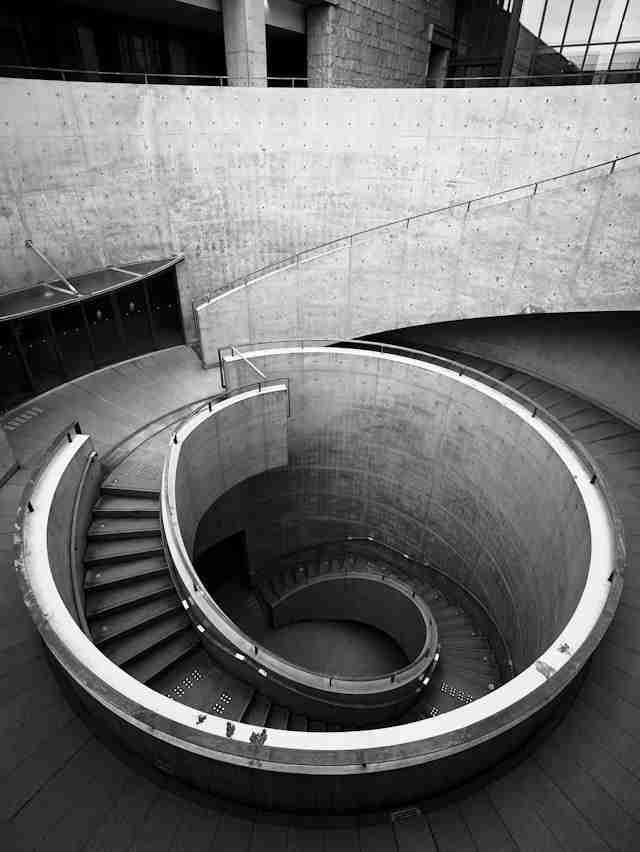
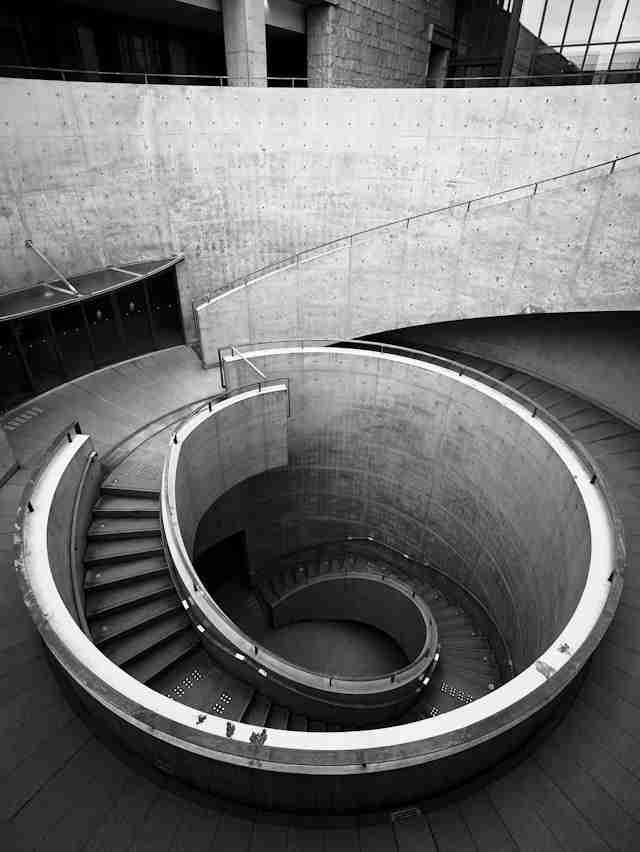
The concrete staircase inside the atrium is a central visual element and perhaps the most photographed feature of the museum. The clean curve of the handrail, the absence of visual clutter, and the natural light that filters in from above create a space of tension and quiet. A wide-angle lens reveals the full shape and spatial balance of the staircase, especially when shot from below with vertical lines carefully aligned. Diffused morning light works well for softening shadows without flattening texture. Consider using a prime lens to isolate elements of the stairs or to compose a tighter image focused on line and tone. Waiting for a single person to walk through the frame can provide useful scale and rhythm.
• Exterior Reflecting Pool and Open Plaza
The plaza on the sea-facing side of the museum features an understated water feature and a wide open concrete terrace. This area works well in both color and monochrome. Overcast days reduce contrast and allow for delicate tonal studies of water and stone. A standard zoom lens helps balance the scale of the space and integrate the sea and horizon when included in frame. Look for reflections in the water to double elements of the building or to balance minimalist compositions with negative space. Subtle changes in light across the stone surface can completely alter the mood of a composition here.
• Sea-facing Passageways and Vertical Columns
Along the eastern edge of the museum are narrow walkways framed by tall vertical supports. These areas are ideal for working with repetition, symmetry, and disappearing lines. Late afternoon light casts long, clean shadows through the columns, which accentuate the rhythm of the architecture. Use a tripod to compose carefully and experiment with symmetry versus asymmetry. A 35mm lens allows for natural perspective without distortion. This space can also be photographed during twilight, when artificial lighting creates a secondary pattern over the stone and steel.
• Upper Level Windows and Framed Views of the Inland Sea
The upper corridors feature long window panels that frame small slices of sky and water. These subtle framed views create opportunities for minimal compositions that contrast the hardness of concrete with the softness of distant light. Use a short telephoto lens to compress the background and isolate a portion of the view, especially when the water is textured by wind or colored by sunrise. These images are best when quiet and balanced. Pay close attention to horizon placement and the tension between elements.
• Detail Studies of Texture and Joinery in Concrete
Tadao Ando's signature style is evident in every corner of the structure, with sharp edges, smooth concrete panels, and careful joinery. Bring a macro or telephoto lens to isolate small architectural details. Early or late light across the surface reveals imperfections and hand-crafted precision in the material. These studies work particularly well in black and white. Focus on intersections, edges, and shadows where subtle gradations of tone can define depth and dimension. These images can serve as abstract stand-alone shots or as connective tissue in a broader photographic series.
Best Time to Visit
The museum is open year-round, but the quality of light and the interaction of architectural elements with the environment shift subtly from season to season. Spring and autumn offer the most balanced conditions, with softer morning light and comfortable temperatures for long shooting sessions. In spring, cool tones dominate the sea and sky, creating clear reflections and crisp shadows. Autumn brings warmer hues and angled light that grazes the building's eastern corridors beautifully, especially in the late afternoon.
Summer days are long and often harsh at midday, but early morning and golden hour bring sharp contrast and potential for graphic shadow work. Reflections off the water become stronger during these hours, and the light from the bay can act as a fill across shaded concrete surfaces. Winter is quieter and more subdued. Overcast skies provide ideal conditions for capturing the building's form without deep shadow, allowing tonal range to become the focus. Blue hour and twilight are particularly strong for exterior compositions with artificial lighting that glows softly against the neutral stonework.
How to Get There
The Hyogo Prefectural Museum of Art is located in the HAT Kobe area along the waterfront. From central Kobe, take the Hanshin Main Line to Iwaya Station or use the JR Kobe Line to Nada Station. From either station, it is about a ten-minute walk to the museum. Clear signage and paved pedestrian routes make access straightforward. The area is safe and designed for foot traffic, with clean sightlines for scouting compositions ahead of time.
There is a small public parking area nearby, but train and foot access are generally easier, especially during weekends when the area draws more visitors. Entry to the museum is ticketed, but access to many of the exterior spaces, including the reflecting pool, sea-facing walkways, and plaza, is free and open to the public throughout the day. Tripods are generally not permitted inside the museum galleries, but can be used discreetly in the public outdoor areas. Always check current photography policies before entering. Drones are not permitted near the building due to its proximity to pedestrian walkways and institutional boundaries.
Recommended Photography Gear
A wide-angle lens in the 16–35mm range is essential for working inside the building and along the columns and passageways. A standard zoom such as a 24–70mm lens offers excellent flexibility when moving between wide exterior shots and more contained interior views. A short telephoto lens or prime in the 85mm to 105mm range is ideal for isolating architectural elements or framing views of the water through the windows. For detail studies, a macro or telephoto zoom allows you to explore material quality and textural contrasts.
A lightweight tripod is helpful for working outdoors during golden hour and blue hour. ND filters are not strictly necessary but can be used to control exposure on brighter days, especially when working with reflective surfaces. A circular polarizer helps manage glare from the reflecting pool and distant water. If you plan to shoot in low light conditions around dusk or before opening hours, carry a remote shutter or use your camera's self-timer for stability. A compact shoulder bag or backpack makes it easy to move between the museum and nearby shoreline areas without interrupting your flow.
Nearby Photography Locations
Just a short train ride from the museum, Meriken Park offers contemporary structures, maritime vessels, and wide waterfront views. The Kobe Maritime Museum's angular roofline is excellent for architectural framing, especially during sunset when light reflects off the harbor.
• Kobe Port Tower and Harborwalk
The tower's red steel lattice and spiral form create a striking vertical contrast against the flat planes of the Hyogo Museum. Shoot from the harborwalk at blue hour to include reflections in the water and active city light.
• Ikuta Shrine and Sannomiya District
This historical Shinto shrine offers a traditional architectural contrast to the museum's modernism. Wooden textures, layered roofs, and shifting shadow patterns make it an excellent companion location for photographers interested in the dialogue between old and new.
• Rokko Island Waterfront Promenade
Located just east of the museum, this quiet shoreline promenade gives open views across Osaka Bay with minimal visual clutter. It is ideal for long exposures of ships and water during dawn or dusk, particularly with a telephoto lens.
Set on the slopes behind Kobe, this location offers elevated views of the city and harbor. It is especially effective in the late afternoon when the museum and port structures are bathed in warm, directional light.
The Hyogo Prefectural Museum of Art is not just a structure to be photographed. It is a space for reading the interaction between form and atmosphere. Every shift in light creates a new composition, and every corridor reveals another way to see the relationship between people, place, and design. For photographers who appreciate silence, subtlety, and control, this is one of the most rewarding locations in modern Japan.
Comments
Loading comments…