
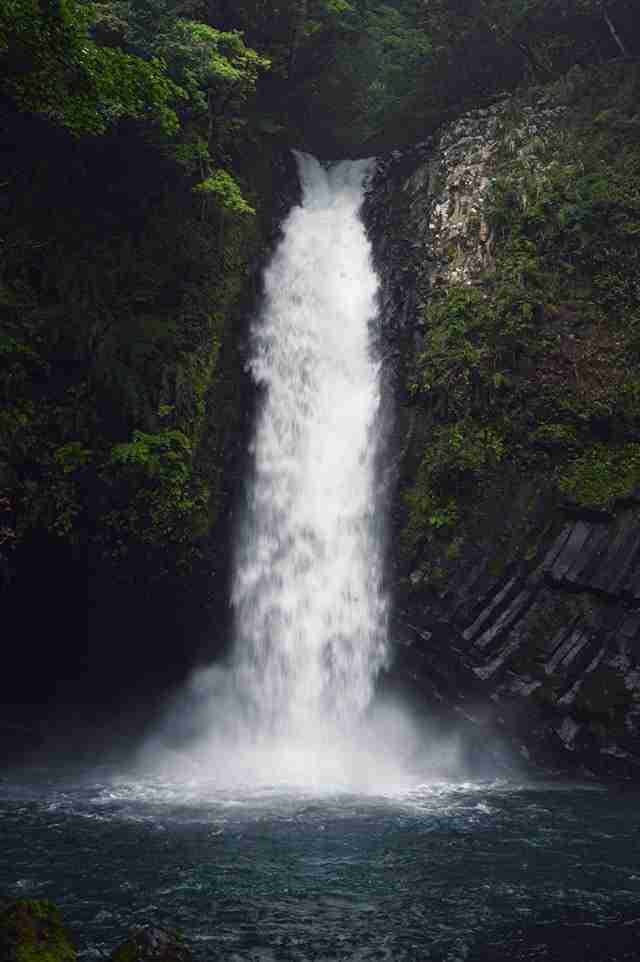
Tucked into the forested heart of the Izu Peninsula, Jōren Falls is one of Japan's most graceful and accessible waterfalls. Dropping 25 meters into a basalt-walled basin, the waterfall is framed by dense woodland and mossy stone, creating a scene that feels timeless and naturally composed. Located in the Yugashima district of Izu, Shizuoka Prefecture, Jōren Falls is steeped in local folklore and seasonal beauty. Its consistent flow, deep blue plunge pool, and filtered forest light make it especially suited for long exposure and color-focused photography. Whether you're capturing the subtle interplay of water and stone or the vibrant hues of spring and autumn foliage, Jōren Falls offers photographers a concentrated and serene environment with countless variations in mood and composition.
Best Photography Opportunities
• Long Exposure of the Main Cascade
The waterfall's single, vertical drop is clean and symmetrical, making it an ideal subject for long exposure photography. Shooting from the designated viewing platform provides a straight-on perspective, allowing the curtain of water to form soft vertical streaks against the dark, volcanic rock face. Using a six- to ten-stop neutral density filter enables shutter speeds long enough to create smooth flow even in bright conditions. Framing the falls tightly emphasizes the clarity and motion of the water, while wider compositions can include the pool below and mossy rocks that reflect subtle greens and browns. Morning light filtering through the trees adds additional softness to the scene.
• Reflections and Pool Details
At the base of the falls, a clear plunge pool collects water into a round, shaded basin. On calm days, the pool's surface reflects the surrounding cliffs and vegetation, creating an opportunity for balanced compositions that include both motion and mirror. The rocks in and around the water offer strong leading lines toward the cascade, especially when shot from a low angle with a wide-angle lens. During autumn, fallen leaves float across the surface and gather along the edges, introducing a warm contrast to the cool blue tones of the water.
• Seasonal Color Framing
The forest surrounding Jōren Falls changes dramatically throughout the year. In spring, fresh green maple leaves form a luminous canopy above the falls, catching backlight and framing the scene with delicate color. During autumn, the same trees turn shades of gold, amber, and red, offering vibrant natural framing for the waterfall. Using a telephoto lens, photographers can compress colorful leaves in the foreground with the white of the cascade behind, resulting in layered compositions that blend texture and tone. This style works particularly well in diffused light or under thin cloud cover.
• Details in Moss and Basalt Columns
The walls surrounding the falls are composed of basalt, and their natural hexagonal patterns add structure and rhythm to close-up images. Moss grows thickly on the rocks near the water's edge, especially on the shaded sides of the pool and along the outflow stream. These elements are excellent subjects for detail shots and macro photography. Working with a short telephoto lens or a macro setup, photographers can explore the textures of wet stone, water droplets on moss, and the way light grazes across uneven surfaces. Overcast days are best for these types of images, as they eliminate glare and reduce harsh shadows.
• Upstream and Downstream Compositions
While the main waterfall is the obvious focal point, both upstream and downstream areas of the river offer quieter compositions. Small cascades, boulders, and forest reflections line the stream leading away from the falls. These locations are ideal for slow-paced shooting, especially when the main viewpoint is crowded. Using a tripod and neutral density filter, you can turn the soft movement of water into a silken pathway through moss-covered stones. These scenes work well as complementary shots to a series, adding narrative and variety to the main subject.
Best Time to Visit
Jōren Falls is accessible year-round, but seasonal changes dramatically affect its photographic potential. Spring and autumn are the most rewarding periods. In spring, vibrant green foliage frames the waterfall with fresh color and soft backlight, particularly in the early morning. In autumn, the surrounding maple and beech trees turn vivid shades of red, orange, and gold, making the waterfall a strong focal point amid warm seasonal tones.
Winter sees fewer visitors and often brings mist or frost to the surrounding vegetation, which enhances mood and texture in tight compositions. Summer offers lush greens and a steady flow of water, but high sun angles and occasional harsh light make timing more critical. The best times of day for photography are early morning and late afternoon, when light filters gently through the trees and minimizes glare on the water. After a light rain, the rocks glisten, and water volume increases slightly, enhancing the falls without muddying the water.
How to Get There
Jōren Falls is located in the Yugashima district of Izu City, within Shizuoka Prefecture. The site is accessible by road and public transportation. From Tokyo, take the Tokaido Shinkansen to Mishima Station, then transfer to the Izu Hakone Railway bound for Shuzenji Station. From Shuzenji, local buses run regularly toward Yugashima, with a stop at Jōren-no-Taki. The bus ride takes approximately forty minutes.
For those traveling by car, the falls are about a one-hour drive from central Izu City, with parking available near the entrance. A short, paved path leads from the lot to the viewing platform and streamside walkways. The path is well-maintained and suitable for tripods and gear transport. There is no additional fee to access the waterfall beyond the general parking cost, and signage is available in Japanese and English. The site includes small shops and restrooms, making it an easy half-day destination for photographers of all experience levels.
Recommended Photography Gear
A small but flexible kit is best for Jōren Falls. A wide-angle lens in the 16 to 35 millimeter range is ideal for capturing the full height of the waterfall and its surrounding forest. A mid-range zoom such as a 24 to 70 millimeter lens allows for tighter framing of the cascade and surrounding rocks without sacrificing depth or image quality. A compact telephoto lens between 70 and 200 millimeters is useful for isolating seasonal foliage, cliff textures, and compressed compositions of water flow through narrow passages.
A lightweight tripod is essential for long exposures and early morning shoots. Bring a six- or ten-stop neutral density filter for motion blur control, and a circular polarizer to reduce reflections on wet rock and enhance foliage contrast. A lens cloth or blower is useful for keeping water spray off your glass when shooting from close to the falls. Footwear with good traction is recommended, especially for stepping along the damp stone paths near the river. A weather-resistant camera bag and quick-dry microfiber towel can help protect your gear during sudden changes in weather.
Nearby Photography Locations
Located southeast of Jōren Falls, this series of seven waterfalls along the Kawazu River provides multiple perspectives and trail access for photographing moving water in different environments. Each waterfall has its own unique flow and rock formations, making it ideal for extended landscape studies.
Just north of the falls, Mount Amagi is covered in dense forest and offers excellent opportunities for forest photography, particularly in misty conditions. The hiking trails pass through thick cedar groves and fern-covered hillsides that are ideal for moody compositions.
Located near the Shuzenji train station, this historic temple complex includes stone bridges, koi ponds, and a tranquil bamboo walkway. The soft, filtered light here is ideal for texture-focused photography and detail shots of architecture in a natural setting.
• Matsuzaki Coastline
A one-hour drive to the west, this rugged stretch of coast offers sea stacks, black volcanic rock formations, and views of the Pacific Ocean. Sunset here often casts warm light across the angular shoreline, contrasting with the soft, green interior of the peninsula.
A lesser-known but photogenic waterfall located deeper in the Izu mountains, this narrow cascade cuts through a shaded gorge surrounded by forest. The approach is quieter and offers excellent close-up opportunities with fewer visitors.
Jōren Falls is a place where light, water, and forest meet in quiet harmony. Whether you're capturing the silk-like motion of the cascade, the color shift of maple leaves in fall, or the subtle textures of wet stone and moss, this location rewards careful observation and creative patience. Its manageable size and compositional clarity make it a perfect setting for photographers who appreciate simplicity and seasonal transformation.
Comments
Loading comments…