
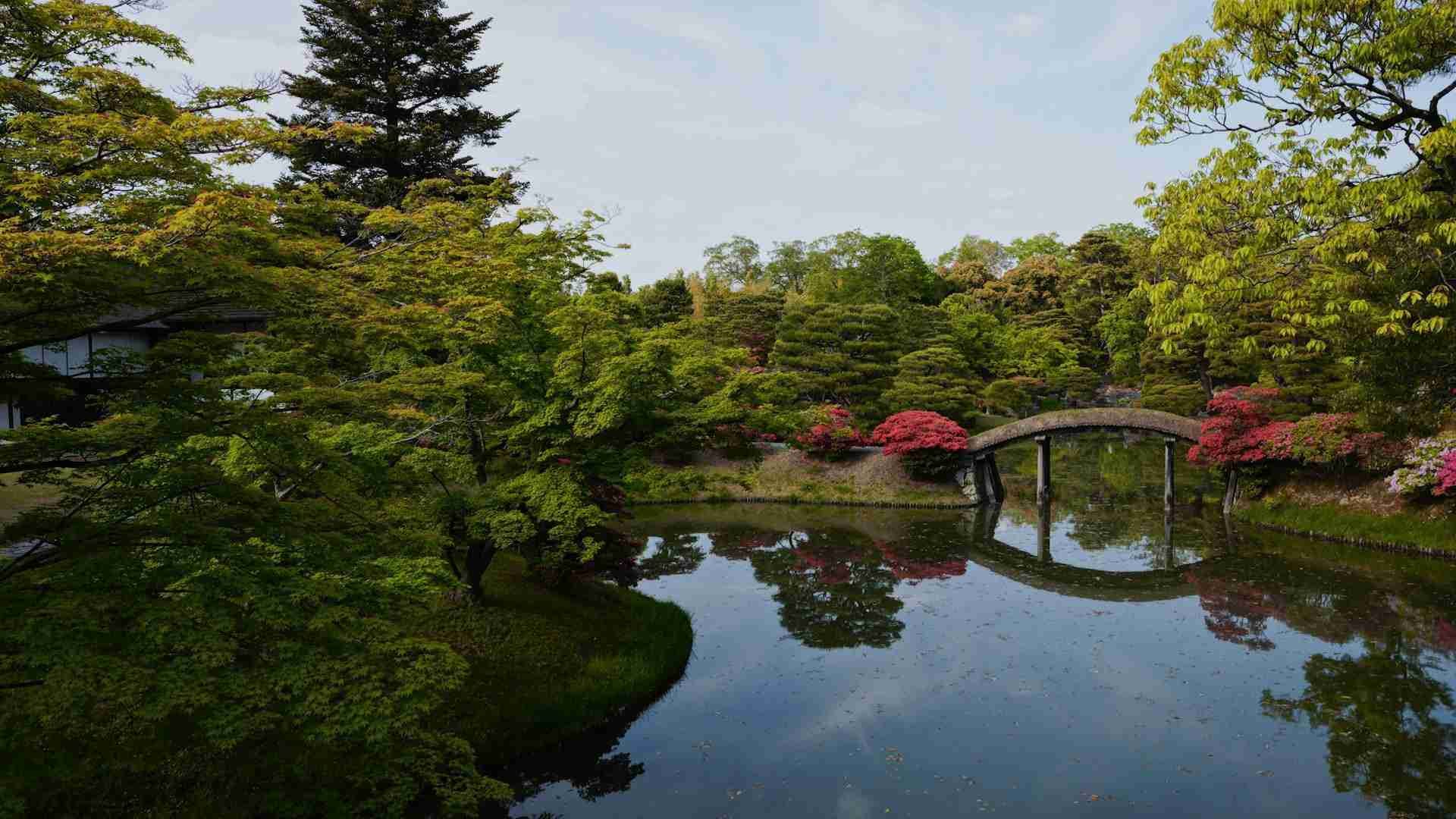
Katsura Imperial Villa in Nishikyo-ku, Kyoto, is a place where every detail has been shaped by centuries of aesthetic thought, making it one of the most refined photographic locations in Japan. Completed in the 17th century as a retreat for the Imperial Family, the villa is not only a masterpiece of classical Japanese architecture but also a landscape design that embodies harmony between structure, space, and nature. Photographers visiting Katsura will find an unparalleled opportunity to work with intentionality. Every stone path, every branch of pine, and every angle of a tea house roof contributes to a visual rhythm built on restraint and balance. It is a setting that rewards deliberate framing, patient observation, and a deep appreciation for light in its subtlest forms.
Best Photography Opportunities
• The Central Pond and Its Reflections
The centerpiece of Katsura's garden is a large, carefully designed pond surrounded by tea houses, footpaths, and groves of manicured trees. Shooting across the water in the early morning allows you to work with crisp reflections of the pavilions and their overhanging roofs. Use a standard zoom or a short telephoto lens to frame compositions where the water's mirror captures architectural symmetry. The light here is soft and diffused, particularly in autumn or spring, and the reflection of maples, pines, and stone bridges adds quiet complexity to the frame. Still water and the lack of artificial intrusion make it ideal for long exposures as well.
• Teahouse Architecture and Framing Devices
Katsura's buildings are a study in proportion, texture, and spatial awareness. The tea houses, including Shokin-tei and Shoiken, are constructed from natural materials and feature exposed wood, reed matting, and shoji screens that interact with light and shadow throughout the day. Photographing from the pathways outside the structures, you can use the framing devices of doorways, porches, and eaves to compose layered images that pull the eye through space. Focus on how light falls across surfaces rather than just the buildings themselves. Wide apertures can isolate texture, while smaller apertures enhance depth and symmetry.
• Stepping Stones and Stone Lanterns Along the Path
The villa's walking path winds around the pond in a circuit that slowly reveals curated views of the garden and architecture. Along the way, carefully placed stepping stones, mossy embankments, and traditional stone lanterns offer subjects for detail work. Macro and mid-telephoto lenses are useful here. Pay attention to patterns of moss, leaf litter, and the negative space between stones. These compositions speak to Katsura's philosophy of asymmetry and controlled imperfection. Rainy or overcast conditions enhance surface texture and color without casting harsh shadows.
• Seasonal Foliage and Garden Composition
Spring and autumn bring out Katsura's most colorful expressions. In spring, blooming azaleas and young green leaves introduce softness to the garden's form. Autumn transforms the garden into a field of rust and gold, especially around the pond's edges and in the groves of Japanese maples. The key to photographing seasonal foliage here is to use restraint. The color should accent the composition, not dominate it. Framing a tea house through a window of foliage or capturing the glow of reflected color on water is more aligned with the site's spirit than chasing bright leaves.
• Textures and Shadows in Wooden Structures
The architecture at Katsura relies on the interplay between structure and light. Wooden slats, weathered posts, and open verandas allow sunlight to filter through in stripes and soft gradients. Early morning and late afternoon bring warm directional light that defines these textures beautifully. Use a fast lens to work handheld in low light and explore the rhythm of shadows across wooden beams and floorboards. Monochrome treatments can emphasize the simplicity of line and tone, especially in interior views or shaded corners of the compound.
Best Time to Visit
The most rewarding time to photograph Katsura Imperial Villa is during the spring and autumn months when the garden's foliage is at its most expressive and the light is softest throughout the day. In spring, from late March through April, fresh greens and blooming flowers offer delicate color contrasts that reflect softly in the central pond. This season provides the clearest light, often with dry air and minimal haze, which enhances textures in architecture and garden elements.
Autumn, particularly from late October through mid-November, is the most sought-after season for photography. The maple trees turn deep red and gold, and the entire garden becomes a layered gradient of warm tones. Morning and late afternoon light accentuate the color without overpowering the muted tones of wood and stone. Reflections during this time are especially crisp and colorful, making it ideal for photographing from across the pond or down the pathways that lead toward tea houses and small bridges.
Summer offers longer shooting windows but requires careful timing. Early mornings are best, as the midday sun tends to flatten tonal contrast and wash out detail in the bright gravel paths and walls. In late summer, humidity can soften light and introduce haze, which works well for atmospheric shots but may require post-processing to bring clarity to distant elements.
Winter has its own appeal, especially after fresh snow, which simplifies the visual field and introduces a minimalistic palette of white, brown, and grey. Low sun angles in winter cast long shadows, emphasizing texture and space in compositions with stone lanterns, tree trunks, and woodwork. Fewer visitors in winter also mean more opportunities to work undisturbed, although snow is not guaranteed every year.
Regardless of season, early access is essential. The light is most flattering within two hours after sunrise and again just before sunset. Midday sessions can still be productive in shaded areas or when working with indirect light, especially under overcast skies. Rainy days are highly recommended, as moisture deepens tones in the wooden structures, enhances moss texture, and removes glare from stone surfaces.
How to Get There
Katsura Imperial Villa is located in Nishikyo-ku, a quiet district on the western side of Kyoto. Access is restricted and by reservation only through the Imperial Household Agency, which offers limited guided tours. Photographers must apply for permission well in advance, and photo use is restricted to personal and non-commercial purposes. You must remain with the group at all times, which limits free movement but still allows ample opportunity to photograph major garden views and architectural elements.
To reach Katsura, take the Hankyu Kyoto Line to Katsura Station, which is about fifteen minutes from downtown Kyoto. From there, the villa is a twenty-minute walk or a short taxi ride. Local buses also serve the area, although timing can be less predictable. There is no public parking on-site, so use of public transport is strongly encouraged.
Entry to the villa is only possible on a scheduled tour with a designated start time, and you must bring identification matching your reservation. Tripods, monopods, and large camera bags are not permitted. Handheld shooting only is allowed, and visitors are expected to move quietly and respect the tranquil nature of the site. Photography inside buildings is typically prohibited, but there are numerous vantage points along the exterior paths and across the pond that provide excellent compositions. Dress comfortably and expect a walk of about one hour along gravel and stone paths.
Recommended Photography Gear
Because movement within Katsura Imperial Villa is limited to guided paths and group pacing, it is important to work efficiently with a lightweight, versatile kit. A standard zoom lens such as a 24 to 70 millimeter is the most useful option for the majority of compositions, from framing garden views across the pond to isolating architectural elements. If your system supports it, a compact 35 millimeter or 50 millimeter prime is a strong choice for low-light detail work and for photographing texture in wood, stone, and foliage.
A longer zoom lens in the 70 to 200 millimeter range can be useful for isolating specific elements in the landscape or compressing layers of architecture and foliage, but due to restrictions on bulky equipment and limited shooting time, many photographers opt to leave longer glass at home. Image stabilization becomes particularly important when shooting handheld at slower shutter speeds in shaded areas.
Because tripods and monopods are not allowed, be prepared to shoot at higher ISO values when working in low light. Choose a camera with good noise handling and dynamic range to preserve detail in both shadow and highlight areas. Lens hoods are recommended to manage flare from strong sunlight reflecting off gravel or pond surfaces.
A polarizing filter is helpful in managing reflections on water and reducing glare on wet stone or foliage, especially after rain. However, filter changes must be done quickly and discreetly to keep pace with the group. Bring a lens cloth or small towel to handle moisture on rainy days, and pack your gear in a compact, silent bag that allows for fast access without disrupting the tour.
Because access is limited and cannot be repeated without reapplying for a permit, preparation is critical. Pre-visualize potential shots, research the garden layout, and plan to work within a narrow time window. Every detail at Katsura offers a potential composition, and the more you know before you arrive, the more meaningful and efficient your work on-site will be.
Nearby Photography Locations
A short ride west of Katsura, Arashiyama offers an entirely different mood, with towering stalks of bamboo filtering light in vertical rhythm. Best visited at sunrise to avoid crowds, the grove offers abstract opportunities in both color and monochrome and pairs well with the refinement of Katsura's visual language.
Known as the Moss Temple, Saiho-ji is one of Kyoto's most immersive natural settings, filled with over one hundred species of moss. Access requires advance reservation, but the layered greens, shaded ponds, and aged stone paths are ideal for subtle, texture-rich photography.
Southeast of Katsura, Toji Temple features Kyoto's tallest pagoda and spacious grounds filled with seasonal trees and reflective ponds. Its mix of vertical architecture and garden space allows for compositions that contrast well with Katsura's horizontal elegance.
Closer to central Kyoto, this expansive park offers free movement and diverse photographic subjects, including tree-lined walkways, wide gravel paths, and traditional buildings. Morning light creates long shadows across the walkways, and seasonal transitions make it a worthwhile visit throughout the year.
• Uji River and Byodo-in
Located a little further south, Uji offers serene riverside photography and the beautifully symmetrical Byodo-in Temple, a UNESCO World Heritage Site. The temple's reflection in the pond, especially at sunrise, creates a strong visual counterpart to Katsura's more intimate garden architecture.
Katsura Imperial Villa is not a place for rushed shooting or casual snapshots. It is a location that asks for thought, patience, and quiet attention to detail. Every corner of its garden and structure is shaped by centuries of design philosophy, and it rewards photographers who are willing to slow down and photograph with intention. In a city filled with temples, shrines, and historic streets, Katsura remains one of the purest places to study form, light, and the beauty of space itself.
Comments
Loading comments…