
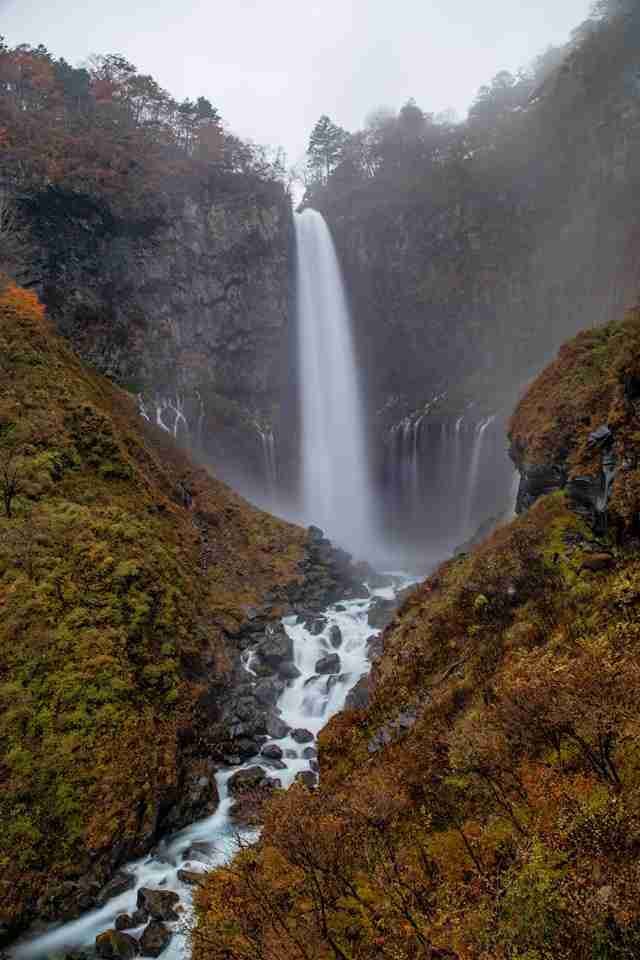
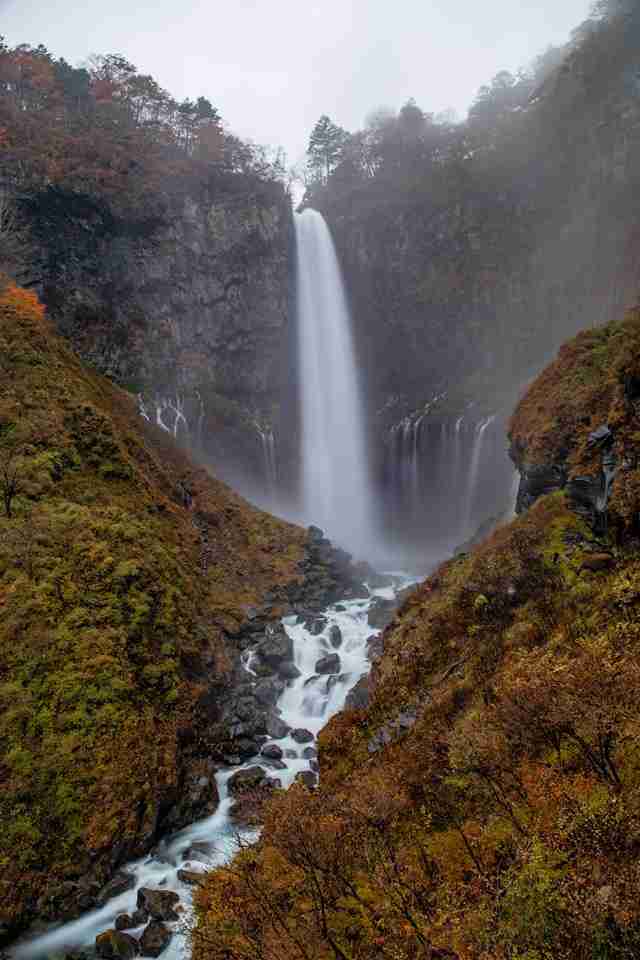
Kegon Falls is one of Japan's most celebrated waterfalls, plunging 97 meters from Lake Chuzenji into a rocky gorge below. Tucked into the mountainous terrain of Nikko National Park, this cascade is not only a visual marvel but also an ideal subject for photographers seeking contrast, motion, and changing seasonal character. Surrounded by dense forests, jagged cliffs, and shifting mist, Kegon Falls creates layered compositions that blend raw natural power with quiet atmospheric depth. Whether framed in the riot of autumn color, cloaked in winter snow, or caught in the haze of summer heat, this waterfall offers a refined study in vertical composition and tonal control.
Best Photography Opportunities
• Main Observation Deck Framing
The most accessible view of Kegon Falls is from the main observation platform, reached by elevator. From here, you get a direct, frontal composition of the full cascade, from the crest where water exits Lake Chuzenji to the base where mist churns at the rocks. A medium telephoto lens allows for tight framing of the waterfall's vertical shape, while a wider focal length around 24 millimeters can capture the surrounding forest and cliff faces. Use a tripod and slower shutter speeds to soften the water's movement into streaks of white, contrasting with the hard surfaces of the gorge. Overcast days help manage highlights and shadows, keeping detail in both the falling water and the textured stone.
• Autumn Color with Waterfall Contrast
Kegon Falls is particularly famous for its autumn display, when the surrounding foliage shifts to deep crimson, orange, and gold. During mid to late October, the forest around the gorge provides a vibrant frame that enhances the white ribbon of falling water. From the upper viewpoint, you can shoot diagonally across the canyon, allowing the trees to occupy the upper and lower thirds of the image, bracketing the waterfall in color. A polarizing filter helps manage glare and deepen saturation, especially when photographing midday. This is also the busiest time of year, so arrive early to set up and secure a clean, uninterrupted vantage point.
• Long Exposure from Lower Angles
By moving slightly away from the main deck or exploring lower angles along the surrounding trail areas, you can experiment with long exposures that incorporate foreground rock formations, branches, or mist. A sturdy tripod and a 10-stop ND filter will allow for exposures up to 30 seconds, smoothing the water into a continuous column. This technique emphasizes the waterfall's verticality and creates a serene, almost abstract effect. Including the river spray or foreground boulders helps ground the image and adds scale. These compositions work well in low light or under heavy cloud, which are common in this region.
• Winter Snow and Ice Detail
In winter, Kegon Falls transforms into a monochrome study of ice and snow, with portions of the cascade freezing into icy drapes while the surrounding gorge takes on a textured coat of white. Use a telephoto lens to isolate sections of the fall where ice and water interact, capturing contrasts in texture and temperature. Exposure compensation is often necessary to prevent underexposing snow, and manual focus may be more reliable due to low contrast in the scene. Early morning light tends to be soft and directional, casting gentle shadows that define cliff contours and highlight the frozen surfaces. This season offers a quieter, more contemplative atmosphere with fewer visitors.
• Mist and Atmospheric Layers in Summer
During Japan's humid summer season, mist often rises from the gorge and clings to the forest canopy, adding a diffused softness to the scene. This natural haze can be used to your advantage by shooting into the mist and letting background elements fade gently into abstraction. These conditions work well with wide apertures and backlighting, which illuminate the mist while separating the waterfall's bright tones from the muted background. This is also a great time to shoot handheld with lighter gear, as the light levels are generally higher and compositions benefit from spontaneity. Look for breaks in the mist to reveal layers of trees, rocks, and water for added depth.
Best Time to Visit
The visual impact of Kegon Falls varies dramatically with the seasons. Autumn is the most popular and arguably the most photogenic time to visit, as the fall foliage adds warmth and contrast to the scene. The colors peak in mid to late October, and early morning is the best time to avoid crowds and catch soft, angled light across the gorge.
Winter provides a stark, sculptural view of the waterfall with frozen sections, snow-covered trees, and a limited but powerful color palette. January and February are the most consistent months for snow, and windless mornings are best for capturing crisp detail.
Spring brings fresh greenery and high water flow from snowmelt, with May offering the best light and balanced conditions. In summer, the falls run strong, and frequent mist adds a sense of mystery and depth. Cloudy days are excellent for managing the dynamic range and producing clean long exposures.
Lighting changes quickly due to the surrounding cliffs, so pay attention to how sunlight enters the gorge. Midday light can be harsh and flatten detail, while early and late light offers more structure, direction, and subtle color transitions. Mist, cloud cover, and seasonal humidity all play roles in the mood of the final image, so plan multiple visits if possible to capture the full range of conditions.
How to Get There
Kegon Falls is located in the town of Nikko, within the mountainous region of Tochigi Prefecture. From Tokyo, take the Tobu Railway to Tobu-Nikko Station, followed by a 40-minute bus ride up the Irohazaka Winding Road to Chuzenji Onsen. The falls are just a short walk from the bus stop. The area is well-marked with signage, and the main observation platform is reached via an elevator that descends into the gorge.
There is a small entrance fee to use the elevator and access the lower deck, while the upper viewing platform is free. If you are driving, parking is available near Lake Chuzenji, with a short walk to the viewpoints. The roads can be narrow and winding, especially during winter or peak autumn, so plan accordingly.
Tripods are allowed on the viewing platforms, but space may be limited during busy periods, especially in October. Arrive early for a prime spot and bring a compact setup if shooting during peak tourism hours. Drones are not permitted in this area due to proximity to the national park and wildlife zones. Be prepared for variable weather, and dress accordingly if you plan to stay through shifting light conditions or seasonal rain.
Recommended Photography Gear
A full-frame camera with strong dynamic range is ideal for handling the wide exposure differences between white water and deep shadows in the gorge. A standard zoom lens (24 to 70 millimeters) covers most compositions, while a wide-angle lens helps frame the full height of the falls and surrounding cliffs. A 70 to 200 millimeter telephoto is useful for isolating textures, winter ice detail, or mist layering.
A stable tripod is essential for long exposure work, especially when shooting from the lower deck or at twilight. Neutral density filters in the 6- or 10-stop range are recommended for daylight exposures of more than one second. A polarizer helps reduce glare from wet rocks and foliage and enhances the contrast between water and background.
Weather protection is important year-round. A lens hood will reduce flare on sunny days, while microfiber cloths are useful for clearing mist from lens surfaces. If visiting in winter or spring, bring gloves with tactile fingertips and warm layers that still allow mobility. A small towel or mat can be helpful for stabilizing gear on uneven or damp surfaces near the edge of trails. Bring extra batteries and memory cards, as long exposures and bracketing will use more resources than standard shooting.
Nearby Photography Locations
Just upstream from the falls, this expansive lake offers reflections, dock scenes, and mountain backdrops. Early morning light is best here, especially when the water is still and the mountains catch the first warm tones of the day.
A short drive or bus ride from Kegon Falls, this elevated viewpoint offers a wider perspective of the falls, the gorge, and Lake Chuzenji. It is especially strong during autumn and at sunset when the distant layers gain color and contrast.
Located further along the Yukawa River, Ryuzu Falls is smaller but offers a more intimate, stepped waterfall surrounded by forest. It is an excellent location for close-up compositions and detailed textures during leaf season.
This highland plateau area features open landscapes, river paths, and dramatic skies, particularly effective for wide-angle photography. It contrasts nicely with the vertical compositions at Kegon Falls and adds diversity to a Nikko shoot.
Located closer to central Nikko, this bright red arched bridge is a standout photographic subject. It pairs well with water motion in long exposures and offers strong contrast when framed against natural backdrops or soft lighting.
Photographing Kegon Falls is about working with both power and nuance. Whether you are drawn to the kinetic motion of the waterfall, the changing character of the surrounding forest, or the moody weather that often defines this region, the falls reward patience, planning, and adaptability. Few natural landmarks in Japan combine such accessibility with so much visual variation, making it a destination worth returning to in every season.
Comments
Loading comments…