
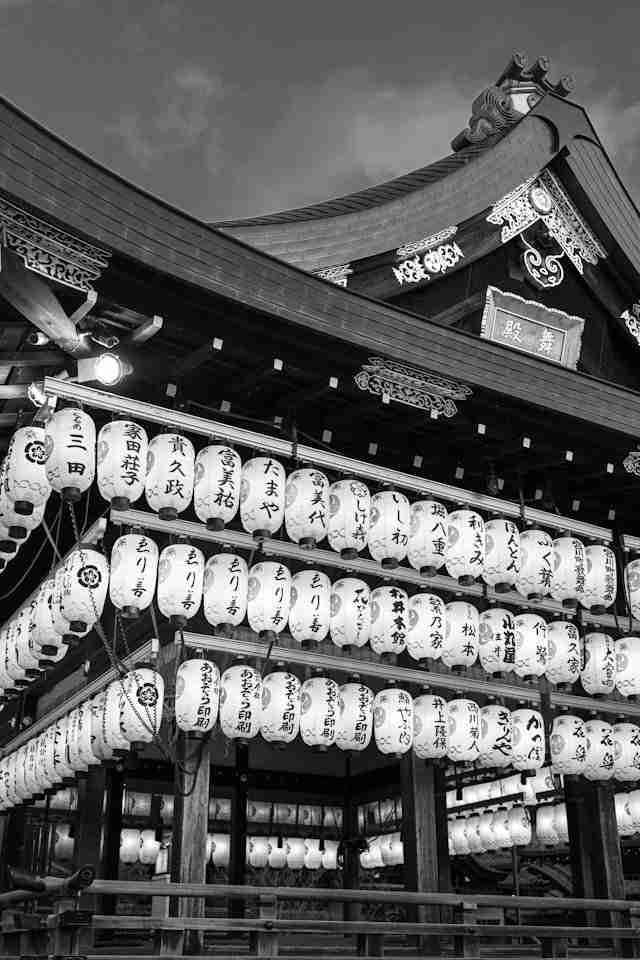
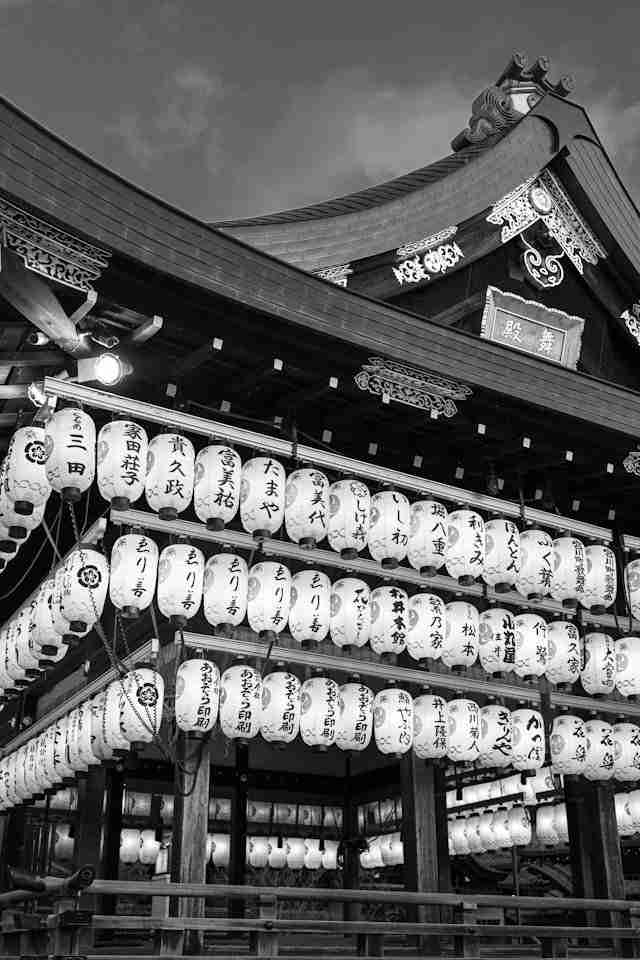
The Maidono of Yasaka Shrine, located in Kyoto's historic Gion district, is a striking architectural centerpiece that offers photographers a rich blend of tradition, culture, and seasonal beauty. This raised stage, used for ceremonies and performances, is set against the shrine's vivid vermillion structures and intricate wooden craftsmanship. The shrine's location at the heart of one of Kyoto's most atmospheric neighborhoods ensures a dynamic backdrop of lantern-lit streets, kimono-clad visitors, and the changing seasons, making it a must-visit for photographers seeking to capture Japan's timeless elegance.
Best Photography Opportunities
• Maidono's Architectural Details
– The stage itself features a gracefully sloped roof, traditional wooden beams, and an elevated platform that is beautifully illuminated in the evening. Capturing the interplay of light and shadow on the structure during golden hour enhances the textures and intricate details.
• Lantern-Lit Atmosphere at Night
– Yasaka Shrine is particularly famous for its glowing lanterns that encircle the Maidono. Long-exposure shots can emphasize their warm illumination against the deep blues of the night sky, creating a mystical ambiance that feels almost surreal.
• Festival Photography: Gion Matsuri
– If visiting in July, the Gion Matsuri festival transforms the Maidono into a focal point of performances and ceremonies. The presence of dancers, musicians, and Shinto priests in traditional attire provides a rare opportunity for cultural photography filled with movement and color.
• Seasonal Beauty: Cherry Blossoms and Autumn Leaves
– In spring, the nearby cherry blossoms create an ethereal contrast with the shrine's red and white hues, while autumn blankets the area in deep crimson and gold, adding a dramatic seasonal framing to Maidono compositions.
• Candid Street Photography in Gion
– Beyond the Maidono itself, photographers can explore the surrounding streets of Gion, where geisha and maiko occasionally pass through, providing a chance for timeless portraits amidst Kyoto's traditional wooden machiya houses.
Best Time to Visit
To capture the Maidono at its most photogenic, consider visiting at sunrise or sunset. The soft morning light casts a gentle glow on the wooden structures, while the evening light enhances the shrine's warm tones and highlights the lanterns' illumination. Spring, from late March to early April, offers a vibrant cherry blossom setting, while autumn in November provides deep, dramatic colors that contrast beautifully with the shrine's architecture. If you prefer a mystical, atmospheric scene, visit in the evening when the shrine is lit up, creating a mesmerizing display of light and shadow.
How to Get There
Yasaka Shrine is centrally located in Kyoto's Gion district and is easily accessible via public transportation. The nearest train station is Gion-Shijo Station on the Keihan Line, a short five-minute walk from the shrine. Alternatively, Kyoto Kawaramachi Station on the Hankyu Line is about a ten-minute walk away. For bus travelers, the Kyoto City Bus No. 100 or 206 stops directly in front of the shrine at Gion Bus Stop. If driving, parking is limited in Gion, so it's best to use nearby paid parking lots or opt for public transport.
There is no entrance fee to visit Yasaka Shrine or access the Maidono stage area, making it a budget-friendly photography location. However, during special events or performances held on the Maidono, there may be paid seating or ticketed access for certain areas. Visitors can check in advance if an event is scheduled and whether it affects accessibility.
Exploring Maidono of the Yasaka Shrine and the Surrounding Area
Beyond the Maidono, Yasaka Shrine offers numerous photographic gems, including the Romon Gate, a towering structure that greets visitors with its vivid red hues and intricate wooden carvings. The shrine also connects directly to Maruyama Park, a scenic spot perfect for capturing Kyoto's cherry blossoms in spring and colorful foliage in autumn. The nearby Hanamikoji Street in Gion provides opportunities for classic Kyoto street photography, especially in the evening when lanterns cast warm glows on the traditional wooden buildings. For those interested in temple photography, Kiyomizu-dera, one of Kyoto's most famous temples, is just a short walk away and offers breathtaking panoramic views over the city.
Nearby Photography Locations
– Perched on a hillside, this UNESCO-listed temple offers stunning views of Kyoto, particularly during cherry blossom and autumn foliage seasons. The wooden stage, supported by tall pillars, creates dramatic depth in photographs.
– Famous for its thousands of vermillion torii gates, this shrine provides a unique tunnel-like effect that is perfect for leading-line compositions. Early morning visits allow for shots without crowds.
– A historic area filled with narrow, winding streets, preserved wooden townhouses, and hidden temples. The soft, diffused light of early morning enhances the textures of the aged architecture.
– These picturesque, sloping streets lead towards Kiyomizu-dera and offer charming Kyoto street scenes with traditional shops, tea houses, and occasional geisha sightings. They are especially photogenic after rain, when the cobblestone paths glisten under soft light.
– Known for its impressive Zen gardens and iconic Tsutenkyo Bridge, which offers breathtaking views of a sea of maple trees in autumn. The contrast between vibrant foliage and traditional architecture makes it an excellent spot for seasonal photography.
The Maidono of Yasaka Shrine is more than just an architectural landmark; it is a dynamic subject that changes with Kyoto's seasons and festivals. Whether capturing the tranquility of its wooden stage in soft morning light or the vibrant energy of lantern-lit evenings, this location provides photographers with endless inspiration.
Comments
Loading comments…