
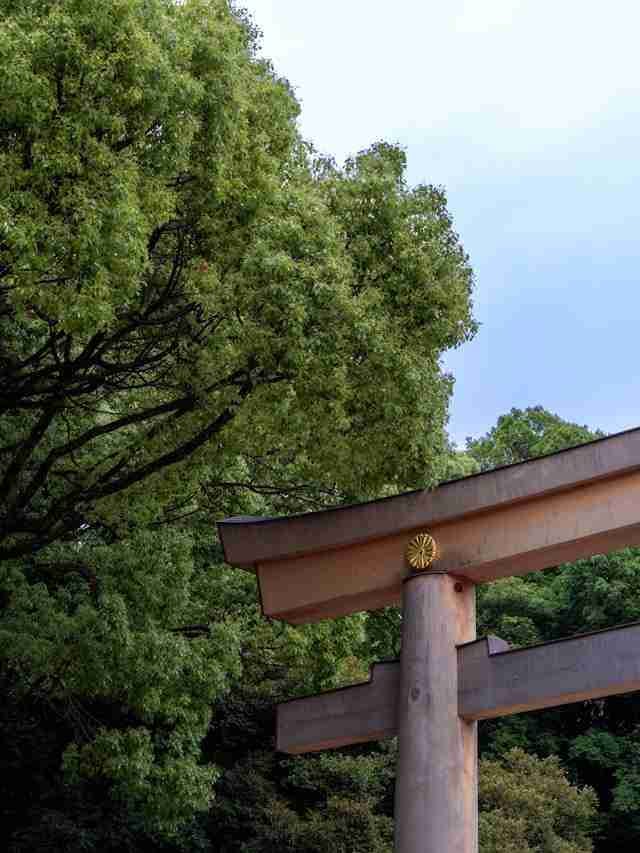
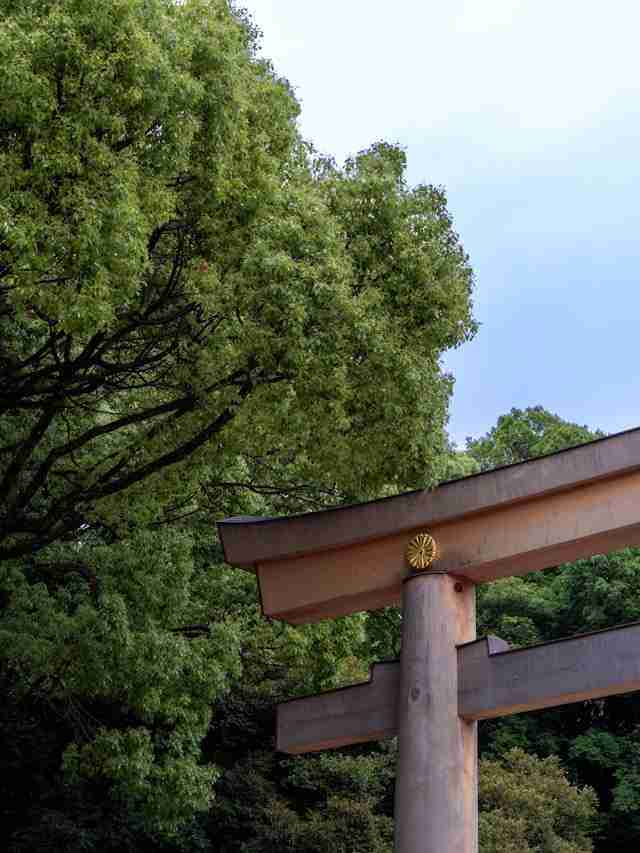
Deep within the bustling heart of Shibuya, Meiji Jingu Shrine offers photographers a world apart from the glass towers and neon lights that define central Tokyo. Entering its vast forested grounds is like walking into another dimension, one where filtered light, quiet rituals, and human scale create a different visual rhythm. Towering torii gates mark the passage from city to sanctuary, guiding visitors along wide gravel paths lined by towering cedars. The shrine grounds offer a refined balance of architectural detail, natural elements, and quiet human presence. For photographers, this is a location built on patience and attentiveness. The compositions here are subtle, framed by lines, shadows, and the unhurried movement of people within the space.
Best Photography Opportunities
• Grand Torii Gates and Human Scale
The first torii at the south entrance is among the largest wooden gates in Japan. Its sheer size creates a strong vertical element that anchors compositions, especially when you frame it with the path receding behind. Wait for a single person or a pair to walk beneath it for a sense of scale and story. Use a mid-range focal length around 50 to 85mm to compress the background and focus attention on the gate itself. Backlight in the early morning creates a warm glow through the trees and highlights the dust in the air as it is kicked up by footsteps.
• Sando Path Through the Forest
The wide gravel approach to the shrine buildings winds through dense forest, with light filtering through more than 100,000 trees planted to create this manmade woodland. Side light in the morning or afternoon creates shadows that ripple across the gravel, while misty or overcast days soften contrast and emphasize depth. Frame from a low angle to include the curve of the path and the symmetry of the trees. Include figures when possible to draw attention to the sense of scale and quiet presence that defines this space.
• Barrels of Sake and Wine Offerings
Along one section of the path, you will find colorful displays of sake barrels on one side and wine casks on the other. These offerings are symbolic tributes and make for striking compositional elements due to their repeating patterns and vibrant labels. Use a short telephoto lens to frame sections of the barrels tightly, or step back and use a person walking past as a visual anchor. This is an excellent spot for blending cultural context with pattern and texture.
• Shrine Courtyard and Architectural Detail
The inner courtyard of Meiji Jingu is a spacious plaza surrounded by hinoki-cypress buildings with sweeping roofs and wood grain that catches the light in subtle ways. Reflections in wet stone, clouds passing above the copper-tiled eaves, and soft side light along the walkways all offer visual nuance. Use a tilt screen or low angle to photograph the symmetry of the courtyard without obstructing visitors or interfering with ceremonial activity. Quiet moments happen often, such as people bowing, writing wishes on ema plaques, or waiting by the fountain to cleanse their hands.
• Seasonal Elements and Soft Focus Studies
Throughout the year, Meiji Jingu offers subtle seasonal changes. In spring, new leaves glow in translucent green above the paths. Summer brings dense shade and dappled light. Autumn transforms parts of the forest with red and gold leaves. Winter light is cool and directional, creating sharp contrast along the wooden beams and trees. These changes invite slower, more observational photography. Use a fast prime lens around 35mm or 50mm to isolate details like leaves in the breeze, shoes on gravel, or paper fortunes tied to branches.
Best Time to Visit
Early morning is essential for working in Meiji Jingu without crowds. The shrine opens at sunrise year-round, making it one of the few central Tokyo locations where you can work in clean light before the city fully wakes. Morning light enters from the east and slants across the forest paths and torii gates, ideal for layering shadows and drawing out texture in the gravel.
Spring and autumn are the most visually dynamic seasons. Cherry blossoms are not as abundant here as in other Tokyo parks, but new foliage in April creates a luminous green canopy. In late October and November, scattered maples and ginkgos bring rich seasonal contrast. Light tends to be softer and lower during these months, extending the usable shooting window into mid-morning and late afternoon.
Summer offers strong midday light but deep shade under the trees. High humidity can create light rays through dust or moisture, especially after rain. Winter brings sparse vegetation and clear skies, which accentuate the architecture and directional shadows. Snowfall is rare but transformative, creating one of the most peaceful photographic environments in the city.
Avoid weekends and holidays if possible, especially around New Year's when the shrine sees millions of visitors. Weekdays shortly after opening offer the best conditions for uninterrupted, slow-paced shooting.
How to Get There
Meiji Jingu Shrine is located in central Tokyo, nestled between the neighborhoods of Shibuya and Harajuku. The most convenient access point is Harajuku Station on the JR Yamanote Line, which leads directly to the south entrance near the large torii and forested path. Alternatively, you can arrive via Yoyogi Station or the Meiji-Jingumae stop on the Chiyoda and Fukutoshin subway lines.
From the station, follow the marked paths through the forest to reach the main shrine complex. The walk takes about 10 minutes and offers plenty of photographic opportunities along the way. There is no entrance fee to visit the shrine grounds, and photography is allowed throughout the outdoor areas. However, photography is discouraged inside buildings or during active ceremonies, so be respectful and observe posted signs.
The shrine is open from sunrise to sunset, and the grounds are well-maintained with gravel paths and stone paving that allow for easy walking. There are restrooms and vending machines along the way, but no commercial shops inside the forested area. Plan ahead if you intend to stay for an extended period, and be mindful of changing weather conditions in the forest.
Recommended Photography Gear
For Meiji Jingu, lightweight and quiet gear is best. A full-frame mirrorless or DSLR camera with a 35mm or 50mm prime lens allows for unobtrusive shooting with excellent low-light performance. If you prefer zooms, a 24 to 70mm lens covers the most useful range without drawing attention. A short telephoto around 85mm or 105mm is ideal for compressed compositions through the torii gates or isolating individuals on the path.
Tripods are not recommended here due to foot traffic and etiquette, but a small tabletop tripod or monopod can work for slower shutter shots in less crowded moments. A fast lens (f/2.8 or wider) is helpful in the shaded forest environment where light levels drop quickly, especially under overcast skies.
Bring extra batteries, as you will likely be shooting frequently with EVF or live view in low-light conditions. A lens cloth is essential for managing humidity or drizzle. Keep your setup minimal. The shrine's tone calls for quiet presence, and excess gear can make moving through the crowds more difficult.
A circular polarizer can help cut glare on wet stone and deepen the tones in the greenery, especially during spring and summer. A rain cover or weather-sealed bag is useful during shoulder seasons when showers move through quickly.
Nearby Photography Locations
Directly adjacent to Meiji Jingu, Yoyogi Park is an open and dynamic space with tree-lined paths, open lawns, and active weekend gatherings. It is ideal for candid street-style images, seasonal color, and layering people into large natural frames.
Just outside the shrine's southern entrance, Takeshita Street contrasts completely with Meiji Jingu's calm. Neon colors, tightly packed crowds, and eccentric fashion make this a high-energy location for fast-paced photography and visual storytelling.
A broad boulevard lined with modern architecture, Omotesando offers glass reflections, clean lines, and designer storefronts. It is particularly photogenic in the evening when streetlights interact with window displays and the last daylight fades.
A short train ride or even a longer walk from the shrine, Shibuya's famous scramble crossing offers a complete shift in scale and pace. Use a high vantage point or street-level angle to capture movement, light, and crowd dynamics.
Though further afield, this private garden in nearby Aoyama offers controlled, beautifully maintained paths and seasonal planting around traditional architecture. It is excellent for fine-tuned compositions and a continuation of the calm mood you will find at Meiji Jingu.
Meiji Jingu Shrine is not a place of bold spectacle or bright color. Instead, it rewards those who pay attention to detail, to light passing through trees, to feet moving on gravel, to the brief pause of someone bowing at the gate. It is a location that teaches patience in photography and reminds you that some of the most meaningful frames come quietly, in the spaces between motion.
Comments
Loading comments…