
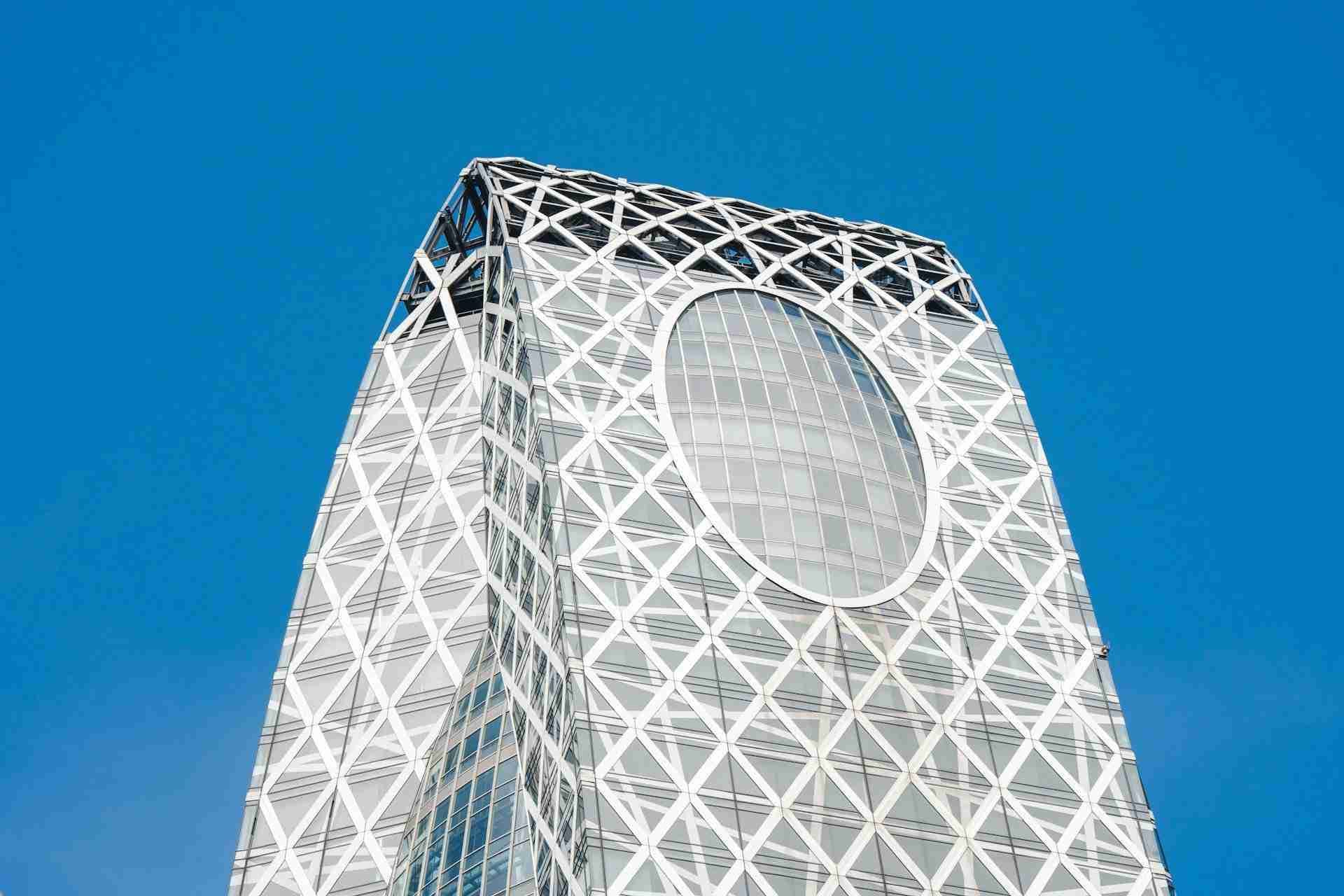
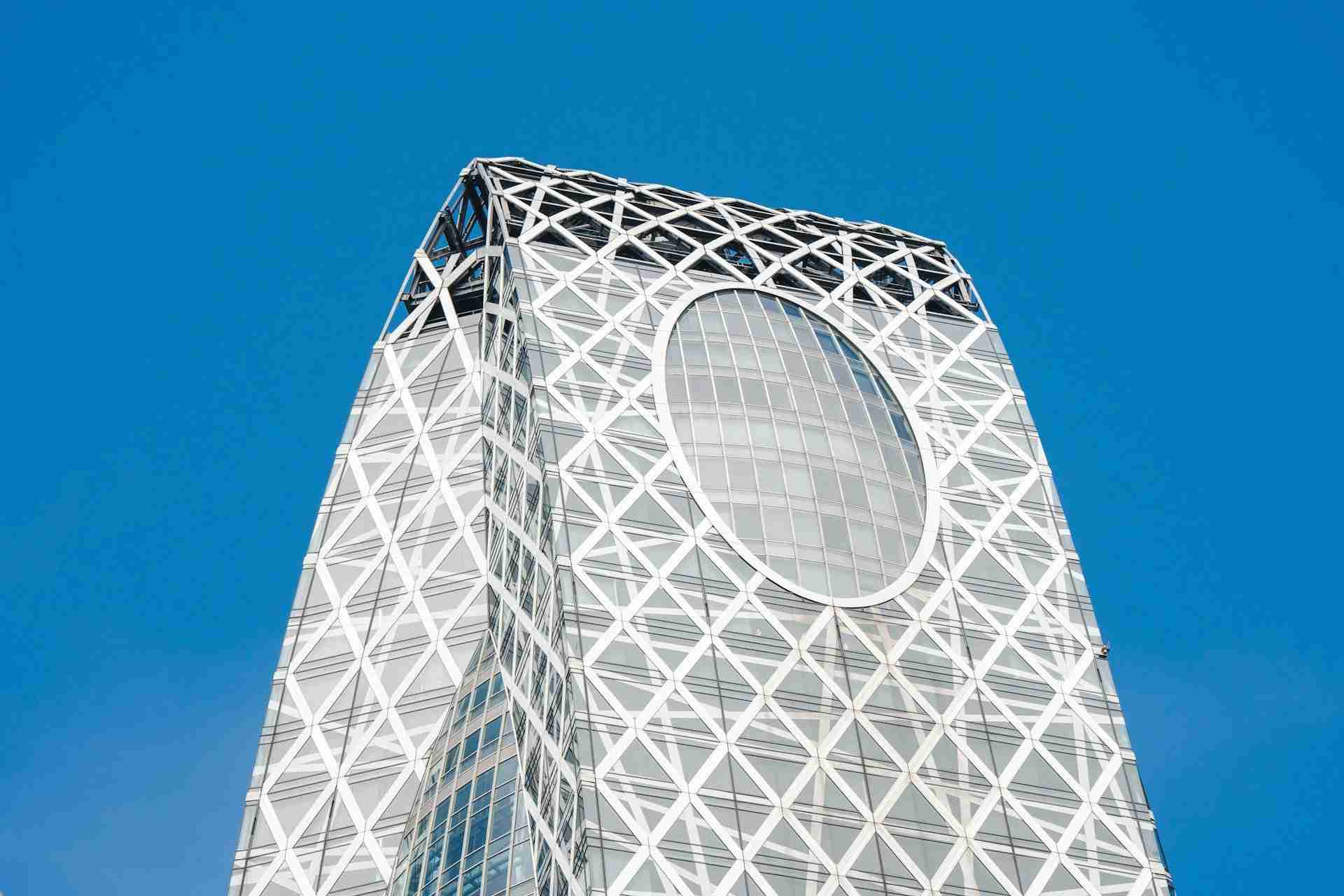
Rising like a futuristic chrysalis in the heart of Shinjuku's skyscraper district, the Mode Gakuen Cocoon Tower is one of Tokyo's most visually distinctive and conceptually bold buildings. Designed by Tange Associates and completed in 2008, the 204-meter-high structure houses three educational institutions and is known for its sleek, elliptical form wrapped in a crisscrossing white lattice. Unlike the rigid, angular towers surrounding it, the Cocoon Tower introduces organic curves and diagonal tension into Tokyo's vertical cityscape—making it a compelling subject for architectural, abstract, and urban photography. Whether you're shooting it head-on, from a distance, or at its base, this structure rewards experimentation with form, perspective, and light.
Best Photography Opportunities
• Symmetrical Full-Tower Shot from Ground Level
One of the best vantage points is from the plaza near Shinjuku Station's West Exit, where you can frame the tower rising cleanly against the sky. A wide-angle lens (24mm or wider) captures the full curvature and emphasizes the contrast between the tower and the rectilinear buildings around it. Wait for soft morning or evening light to avoid blown-out highlights on the white lattice.
• Framing the Cocoon with Foreground Urban Elements
Incorporate nearby pedestrian bridges, traffic lights, or reflective glass from adjacent buildings to frame the tower in a broader urban context. Using these foreground elements allows you to create layered compositions and adds a narrative of the structure's place within the city.
• Detail Studies of the Diagonal Mesh and Windows
The building's most iconic visual feature is the white exoskeletal grid that wraps around its elliptical glass body. Close-up compositions of this pattern—especially with zoom lenses—can be abstracted into modernist geometry. These shots work especially well in diffused light or on overcast days that prevent harsh shadows.
• Night Photography with Interior Glow
After dark, the Cocoon Tower becomes a glowing form, softly lit from within by its internal structure and classroom floors. Blue hour and nighttime shots from street level or across Yasukuni-dori highlight the tower's elegance, especially when paired with car trails and neon signage in the lower frame.
• Compressed Perspectives from Distant Viewpoints
From locations across Shinjuku or elevated pedestrian crossings, you can use longer lenses (85–200mm+) to compress the Cocoon Tower between other buildings. This is effective for creating dense urban frames where its curves stand out against the city's rigid skyline.
Best Time to Visit
The Mode Gakuen Cocoon Tower can be photographed at any time of year, but lighting conditions and time of day play a crucial role in revealing its form and texture. Morning light from the east casts soft, directional light across the façade, ideal for contrast-based compositions that emphasize the white mesh against the darker glass. Late afternoon brings side lighting that accentuates curvature and shadow depth.
Golden hour and blue hour are particularly photogenic, with warm tones catching on the tower's upper levels while the street-level scene shifts into color and shadow. At night, the interior illumination adds glow and dimensionality, and the reflective surfaces of surrounding skyscrapers amplify the city's ambient light.
Rainy or overcast days flatten contrast and bring out the architectural lines without distracting highlights—perfect for black-and-white or minimalist interpretations. Fog and light mist also create opportunities for atmosphere-rich compositions, especially when the top of the tower disappears into the clouds.
How to Get There
The Mode Gakuen Cocoon Tower is located directly across from Shinjuku Station's West Exit and is easily accessible on foot within minutes. The tower sits at the intersection of major commercial roads and is bordered by skyscrapers, department stores, and pedestrian crossings—making it both convenient and visually dynamic to shoot from multiple angles.
The surrounding sidewalks, pedestrian bridges, and plazas provide ample space to set up for both handheld and tripod-based photography. While the building itself is private and not open to the general public for observation, all exterior areas are publicly accessible. No special permission is required to photograph the structure from outside.
A small tripod can be useful for low-light or long-exposure compositions, particularly after dark when light trails and ambient glow create a cinematic setting. Just be mindful of foot traffic and business entrances during busy hours.
Exploring the Surrounding Area
The Cocoon Tower sits in the heart of Shinjuku's Nishi-Shinjuku district—Tokyo's core of high-rise development. Just steps away, you'll find other visually compelling buildings like the Tokyo Mode Gakuen's neighbor, the Shinjuku Center Building, and the angular Tokyo Opera City Tower. These modernist structures offer opportunities for clean verticals, architectural abstracts, and compositionally rich skyline work.
Pedestrian bridges across Yasukuni-dori and Koshu-Kaido avenues provide elevated perspectives, perfect for incorporating street-level energy with upper-level architectural forms. At twilight, office windows begin to glow, and traffic creates light trails that pair beautifully with the static elegance of the Cocoon Tower.
To the west lies Shinjuku Central Park, a quieter spot ideal for juxtaposing the organic shape of the Cocoon with natural elements like trees, blossoms, or foliage. During spring, cherry blossoms offer soft foreground framing, while in fall, golden ginkgo trees bring color contrast to the tower's cool tones.
Nearby Photography Locations
Just a 10-minute walk west, this iconic twin-tower structure offers free observation decks with sweeping views of Tokyo and Mount Fuji on clear days. Its clean geometry and plaza symmetry complement a Cocoon Tower photo session perfectly.
• Shinjuku Station East & Kabukicho District
For high-contrast, gritty street scenes, neon glow, and signage overload, head east toward Shinjuku's entertainment district. The dense urban textures here form a strong counterpoint to the clean curves of the Cocoon Tower.
Nestled between the high-rises, this park offers natural tranquility amid the architectural density. It's an excellent place to shoot the Cocoon Tower rising above the treetops or reflected in puddles after rain.
These narrow alleys are filled with lanterns, food stalls, and retro charm—ideal for low-light handheld street photography. They're especially photogenic in the evening after shooting the Cocoon at sunset.
For an elevated, southeast view over Shinjuku's skyline, this rooftop garden offers a relaxing alternative vantage point with occasional clear sightlines toward the Cocoon Tower and beyond.
The Mode Gakuen Cocoon Tower is a singular architectural presence in one of the world's busiest urban centers—a building that invites reflection, rewards careful framing, and offers photographers a sculptural subject that feels alive with motion and balance. Whether captured as part of Tokyo's layered skyline or isolated in a tight study of curve and grid, the Cocoon remains one of the most captivating architectural icons in modern Japan.
Comments
Loading comments…