
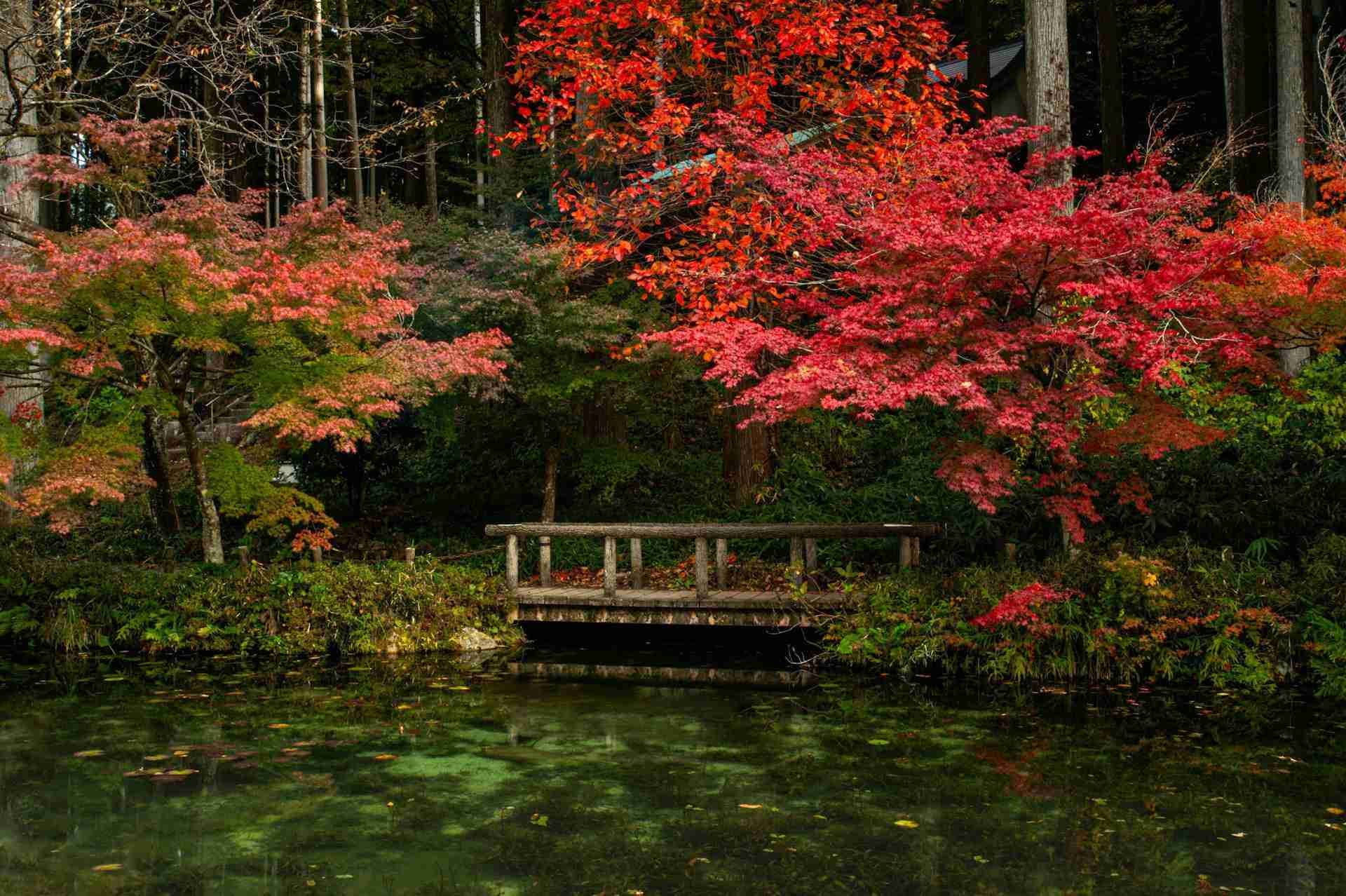
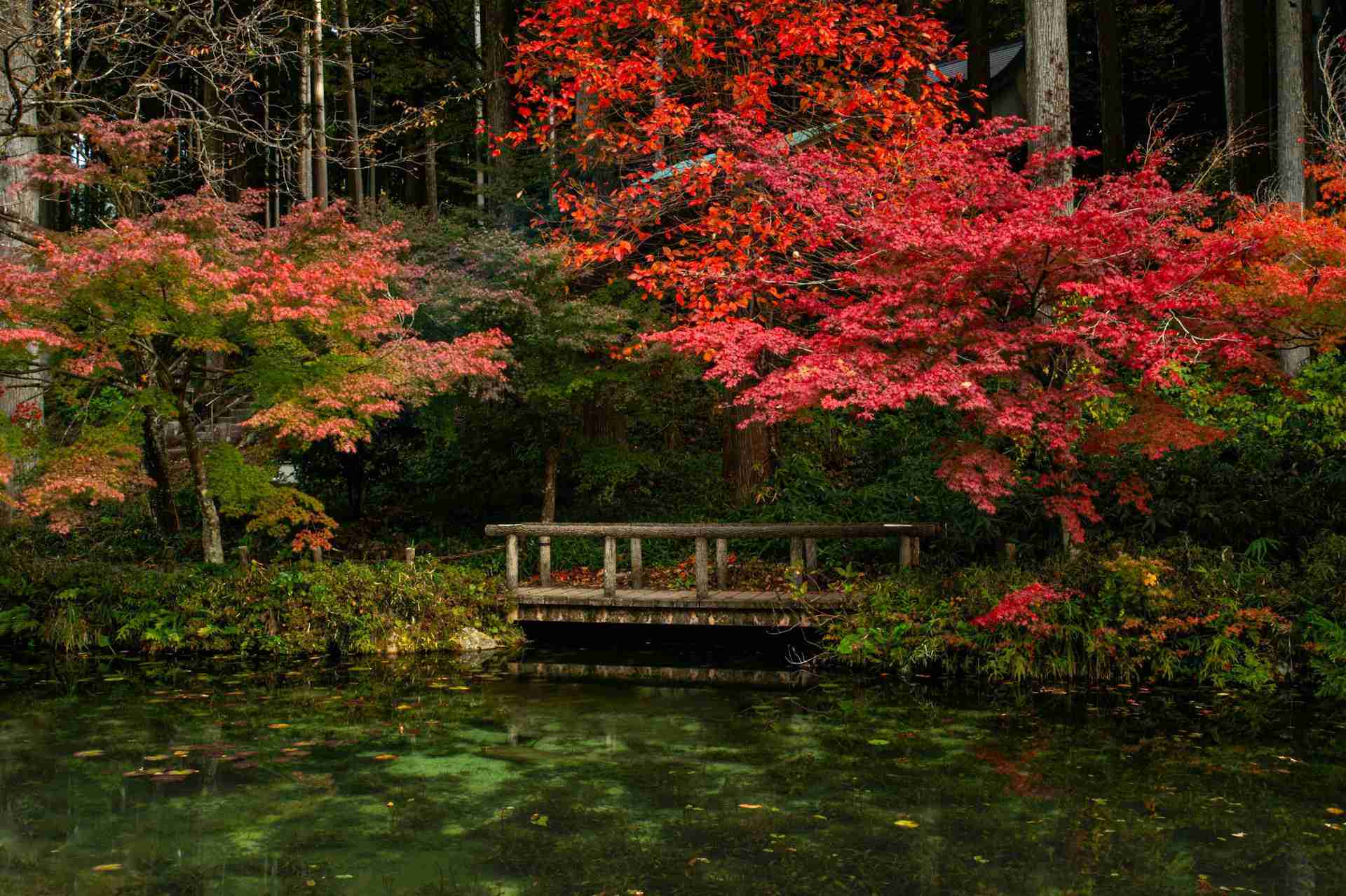
Hidden in the hills of Seki, Monet's Pond is a small spring fed body of water that looks almost unreal in its beauty. With crystal clear water, floating lilies, and ornamental koi moving slowly just beneath the surface, the scene closely resembles one of Monet's famous water lily paintings. The mix of bold color, gentle motion, and quiet setting gives the location a calm but visually rich character. Reflections from the surrounding trees and sky add another layer of depth, often blending with underwater elements in surprising ways. It is a place where photographers can work slowly, observing subtle changes in light and surface texture that reveal new compositions with each moment.
Best Photography Opportunities
Overhead Views of Koi and Lilies
The most popular and photogenic angle is looking straight down into the water, where the clarity reveals both the koi and the vegetation beneath the surface. The stillness of the water creates a layered effect, letting you capture the fish, the lily pads, and the roots in a single frame. A polarizing filter helps reduce glare and brings out the colors more clearly. These shots benefit from soft light and minimal wind, which keeps the surface calm and reflections manageable. A standard zoom or midrange lens lets you frame the scene precisely while remaining at a comfortable distance from the edge.
Reflections and Abstract Compositions
When the pond is still, it acts like a mirror, reflecting the trees, sky, and light in painterly ways. These reflections can either dominate the frame or blend gently with submerged details, depending on your angle and timing. Waiting for a moment when the surface is undisturbed allows you to capture crisp and symmetrical compositions. Slight movements in the water caused by koi swimming often create gentle distortions that add texture and mood. These types of images invite creative interpretation and reward patience and close observation.
Close up Studies of Lilies and Vegetation
The lilies are not just background elements but are strong photographic subjects in their own right. Isolating a single flower or a cluster of leaves with a shallow depth of field allows you to show fine textures and the way light rests on the surface. These compositions are best made early in the day when light is low and contrast is soft. A fast lens helps bring out these quiet moments, and shooting slightly above the water gives you control over how much of the background is included. These images pair well with wider views to build a complete story of the location.
Koi Movement and Color Contrast
The koi are the most dynamic part of the pond and offer bold color that stands out against the cool green and blue tones of the water. Framing a single koi or a small group as they move across the scene adds life and visual focus. A fast shutter speed allows you to freeze the movement, while a slightly slower one can blur the fish into graceful shapes if they are moving steadily. These images benefit from watching how the koi interact with the lilies and shadows. Using a slightly higher perspective gives you better control over composition while keeping the background clean.
Framing Through Natural Elements
Surrounding vegetation and simple wooden structures near the pond can be used to build natural frames around your subject. Shooting through leaves or branches softens the edges of your frame and adds depth. This approach is especially useful when you want to isolate the pond from distractions or add a sense of place to the image. Wide apertures help blur the foreground and keep the viewer's eye focused on the central subject. These frames also create a quiet mood that matches the setting of the shrine grounds.
Best Time to Visit
Late spring through early summer is the best time to visit Monet's Pond for photography. This is when the lilies are in bloom and the plant life around the pond is green and full. Early morning offers the calmest water and soft directional light that brings out detail and color without harsh reflections. Visiting on a weekday morning provides the quietest conditions, which makes a difference when photographing something so delicate. Midday sun tends to produce strong glare and can flatten the image, so it is best avoided unless you are shooting reflections directly.
Autumn is also a productive time for photographers. The trees surrounding the pond turn rich colors that reflect beautifully on the water's surface. The light is lower during this season, creating longer shadows and deeper tones that enhance mood. The koi remain active year round, so movement remains a strong subject in all seasons. Winter and early spring are more subdued but offer opportunities for more abstract and minimalist compositions, especially if the water is extra clear or if light frost appears on nearby vegetation.
How to Get There
Monet's Pond is located near Nemichi Shrine in Seki City, Gifu Prefecture. The site is best accessed by car, as there is no direct train line to the area. Free parking is available close to the shrine, and the walk from the lot to the pond is short and flat. There are clear signs in the area, and the route is easy to follow. Public transportation options are limited, so if you are traveling without a car, consider hiring a taxi from the nearest train station in Mino or Seki.
There is no fee to visit the pond, as it is part of the public shrine grounds. Photography is allowed throughout the area, but visitors are expected to be quiet and respectful, especially during times when the shrine is active. Tripods are allowed, though it is best to keep your setup compact and be mindful of foot traffic. The site is not large, but the space around the pond is narrow, so early visits are best for uninterrupted shooting. Restrooms and a small shop are nearby, but other services are limited.
Recommended Photography Gear
A light and flexible setup works best at Monet's Pond. A 24 to 70 millimeter zoom gives you the ability to shoot both wide scenes and close framing without swapping lenses. A polarizing filter is essential for cutting glare on the water and bringing out the full depth of submerged details. A macro or prime lens is helpful if you plan to isolate flowers or water surface texture. For capturing koi in motion, use a fast lens that can handle low contrast situations without losing sharpness.
Tripods are useful in the early morning when light is low and the area is quiet enough to set up without interruption. A small travel tripod or monopod is usually enough. Bring a lens cloth to wipe off moisture or condensation, especially on humid mornings. A compact shoulder bag or backpack will give you easy access to gear while keeping your profile low in the narrow shooting area.
Nearby Photography Locations
Located directly next to the pond, this small wooden shrine has traditional architecture, lanterns, and quiet forest paths. It adds cultural context to your visit and is a great place for clean, simple compositions.
About an hour away, this riverside town is full of canals, bridges, and narrow streets lined with old wooden houses. It is especially photogenic in the early morning or under soft cloudy skies.
Known for its historic paper making district, Mino offers well-preserved buildings, stone streets, and traditional signage. The town is ideal for detail studies and environmental portraits.
Nagara River
A wide and scenic river that flows through Gifu, it offers early morning mist, reflective water, and long riverbank trails that are ideal for landscape photography.
Accessible by ropeway or hiking trail, this location offers panoramic views of the region and strong compositions that combine natural and historic elements. Sunset and twilight from the summit provide strong light and atmosphere.
Monet's Pond is a rare location where clarity, movement, and reflection meet in a balanced and deeply peaceful setting. It is a place that rewards patience, slow observation, and subtle framing more than fast shooting. Whether you are drawn to soft color, gentle motion, or layered detail, the pond offers a thoughtful experience that lingers long after you leave.
Comments
Loading comments…