
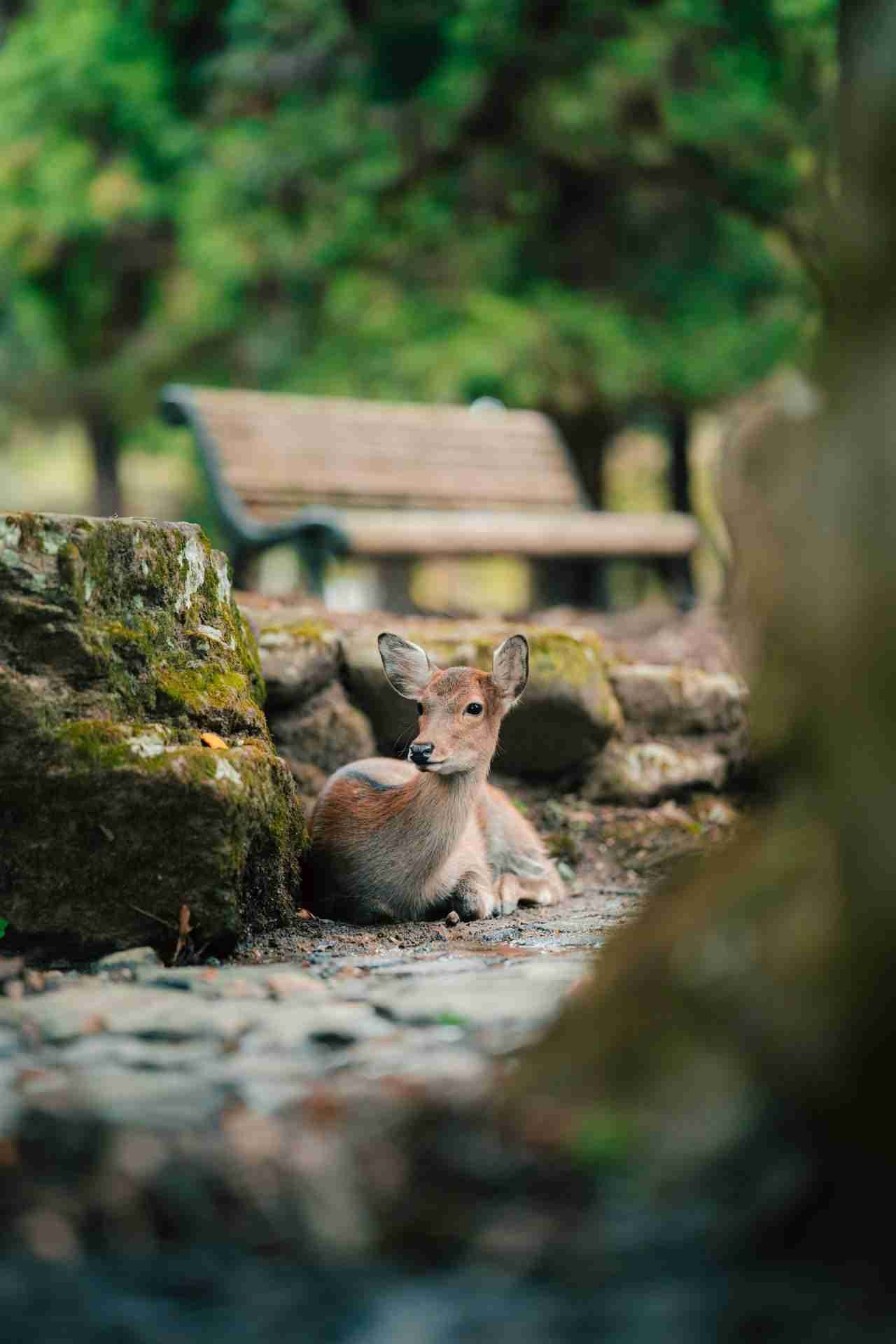
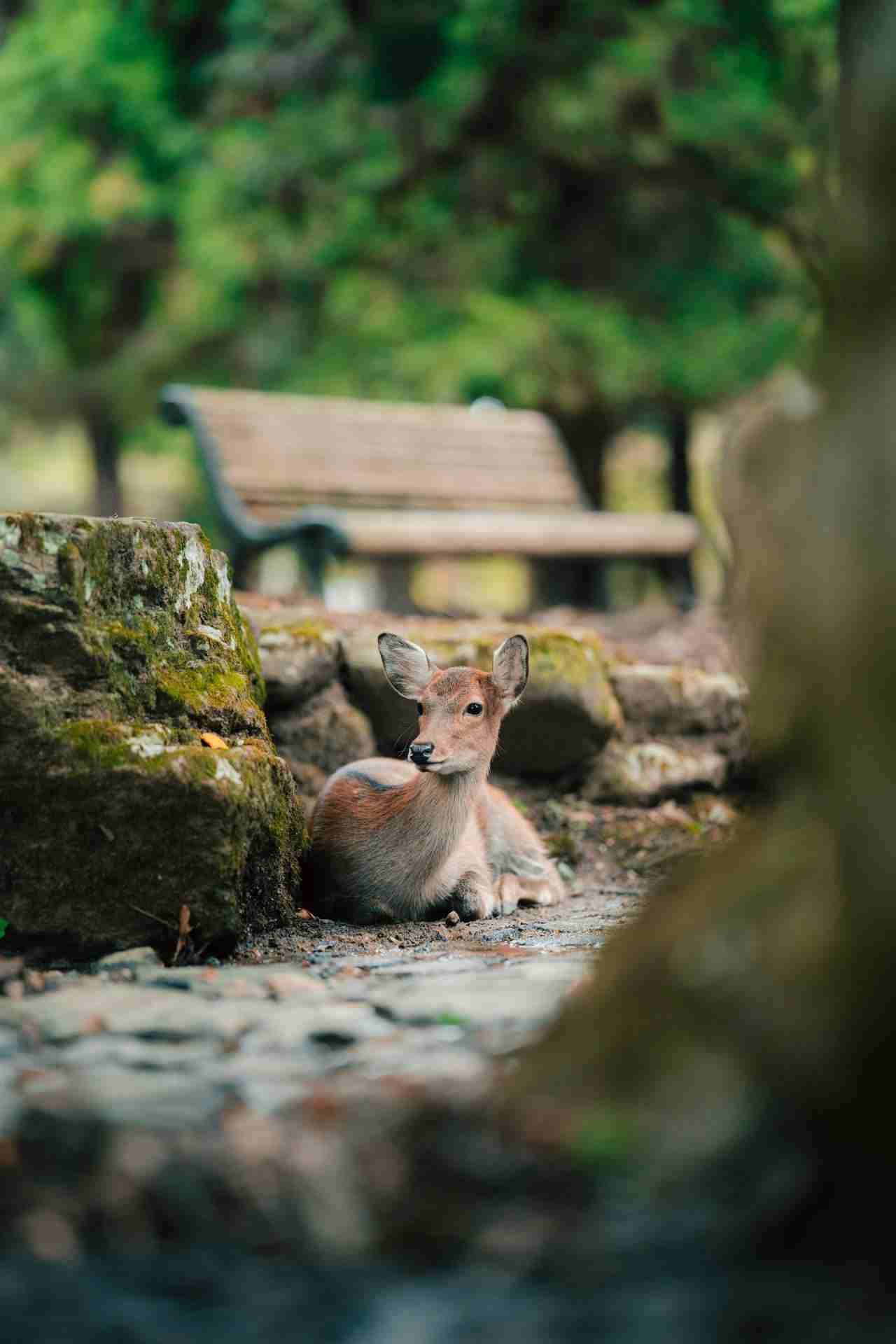
Nestled at the foot of the sacred Mount Wakakusa, Nara Park is one of Japan's most iconic cultural and natural photography destinations. Spanning over 500 hectares in the heart of the ancient capital, the park is best known for its freely roaming sika deer, its atmospheric temples and shrines, and the quiet beauty of seasonal change. Cherry blossoms, autumn maples, early morning mists, and centuries-old stone lanterns all combine to create a setting rich in texture and timelessness. For photographers, Nara Park is a deeply layered space where wildlife, architecture, and landscape come together in poetic harmony.
Best Photography Opportunities
• Deer in Morning Mist near Kasuga Taisha
Arrive just after dawn and walk the shaded trails near Kasuga Taisha Shrine, where sika deer move silently through the forest among moss-covered lanterns and filtered light. The low sun cuts shafts of light through the trees, creating a soft, ethereal atmosphere. Use a 70–200mm lens to capture gentle portraits or wider shots that frame the deer within the shrine's sacred context.
• Seasonal Tree Tunnels along Ukigumo Hill
In spring, cherry blossoms arch over the walking paths in luminous pink layers. In autumn, fiery maples blaze along the hillsides and ponds. Frame your composition low to the ground and use a wide aperture for a soft-focus foreground, or shoot during golden hour when the trees glow with side light. These natural tunnels create excellent leading lines for both candid and posed subjects.
• Architectural Grandeur of Todai-ji Temple
The Daibutsuden (Great Buddha Hall) is one of the largest wooden buildings in the world and an essential architectural subject. Photograph it from the outer gate to capture its symmetrical façade, or step back and use a wide-angle lens to emphasize its scale against the surrounding parkland. Early morning or late afternoon light highlights the warm tones of the wood and softens the heavy structure.
• Lantern-Lit Trails at Kasuga Taisha Shrine
The approach to the shrine is lined with thousands of stone lanterns, each aged with moss and shadow. These elements create moody, geometric frames for still-life and abstract compositions. On misty or overcast days, the diffused light enhances texture and depth. If visiting during the Lantern Festivals (February and August), candle-lit lanterns transform the entire trail into a luminous dreamscape.
• Deer and Pagoda Composition at Kōfuku-ji
The five-story pagoda of Kōfuku-ji stands tall above the treetops and often provides a dramatic backdrop for deer grazing in the open. Frame these scenes to juxtapose wildlife with religious structure—an image that distills the unique harmony of Nara Park. Shoot during the blue hour for silhouette effects, or use a moderate telephoto lens for intimate layering of deer and architecture.
Best Time to Visit
Nara Park is a year-round destination, but each season transforms its mood and color palette. Spring (late March to early April) is ideal for cherry blossom photography, with soft petals creating reflective surfaces on water and blanketing the ground beneath ancient trees. Autumn (late October to late November) brings some of the richest foliage in the Kansai region, turning the park's maples and ginkgo trees into vivid bursts of orange, red, and gold.
Winter, though quieter, offers crisp air, fewer tourists, and a subdued palette ideal for minimalist compositions. Snowfall, while rare, adds a gentle hush to the landscape. Summer (June to August) brings rich greens, energetic wildlife, and powerful contrast between light and shadow, though the midday heat and humidity can be intense.
The best light is found early in the morning, when the park is calm, the deer are active, and the soft side light creates a peaceful mood. Late afternoon also works well, especially near Todai-ji, where golden light slants through the trees and across temple roofs. Misty days are a bonus for atmospheric compositions, especially near Kasuga Taisha's forest paths.
How to Get There
Nara Park is located in the city of Nara, just under an hour from Kyoto or Osaka by train. From Nara Station or Kintetsu Nara Station, it's a 15- to 20-minute walk to the western edge of the park, with clear signage guiding you toward Todai-ji, Kōfuku-ji, and Kasuga Taisha.
Photographers should begin near the Kōfuku-ji area for early morning architecture and deer activity, then move east toward the wooded shrine trails and hillsides. The park is entirely walkable, with well-maintained paths and access to restrooms, vending machines, and shaded benches. While tripods are not prohibited, it's best to use them discreetly and avoid blocking walkways or temple entrances, especially during busy hours.
Most temple interiors have restricted photography rules, so be sure to check signage and respect cultural boundaries. A small, lightweight kit—such as a wide-angle, a fast prime, and a short telephoto—will cover the diversity of scenes across the park.
Exploring the Surrounding Area
Outside the main bounds of Nara Park, the hills to the east offer forest trails with elevated views over the city and quiet, wooded compositions of temples tucked into the slopes. Mount Wakakusa, just beyond the park, provides sweeping vistas over Nara at sunrise or sunset and is especially beautiful in autumn when the hill is painted in warm tones.
To the south, the Naramachi district offers narrow lanes, traditional wooden townhouses, and artisan storefronts that lend themselves well to street photography and environmental portraits. Visit in late afternoon for warm side light falling across tiled roofs and lantern-lit alleys.
Between the park's cultural core and its quiet periphery, you'll find lily ponds, open lawns, ancient tree groves, and lone deer grazing beneath the boughs—all of which offer poetic stillness and balance.
Nearby Photography Locations
A short walk from Todai-ji, this traditional Japanese garden blends borrowed scenery from Mount Wakakusa with carefully arranged ponds, stone bridges, and seasonal blooms. Excellent for soft, painterly compositions and detailed nature studies in morning light.
This historic merchant area is rich in Edo-period architecture, sliding doors, and wooden latticework. Great for street photography, architectural textures, and soft-lit interiors, especially in the late afternoon when the light is golden and directional.
Located just behind Todai-ji, this elevated wooden terrace offers panoramic views of Nara city. The columns and platform are especially photogenic at sunset, when warm light filters through the structure and deer occasionally wander across the steps.
This grassy hill provides one of the best high-angle views of Nara. Climb before sunrise or stay for the fiery Wakakusa Yamayaki event in January, when the hillside is set alight in a centuries-old ritual. Sunrise brings mist, golden rays, and peaceful foregrounds for wide compositions.
Adjacent to Isuien and often quieter, Yoshikien features moss gardens, tea pavilions, and flowing water—ideal for contemplative compositions and soft natural lighting. Visit in autumn or early spring for the best color contrast between foliage and architecture.
Nara Park is a place where history breathes softly through the forest, where sacred architecture rises gently above the deer-dotted paths, and where every turn reveals a new composition of light, form, and silence. Whether you're following a trail of lanterns in the mist or waiting for a deer to pause beneath a blooming cherry tree, Nara rewards patience, reverence, and a photographer's eye tuned to subtle beauty.
Comments
Loading comments…