
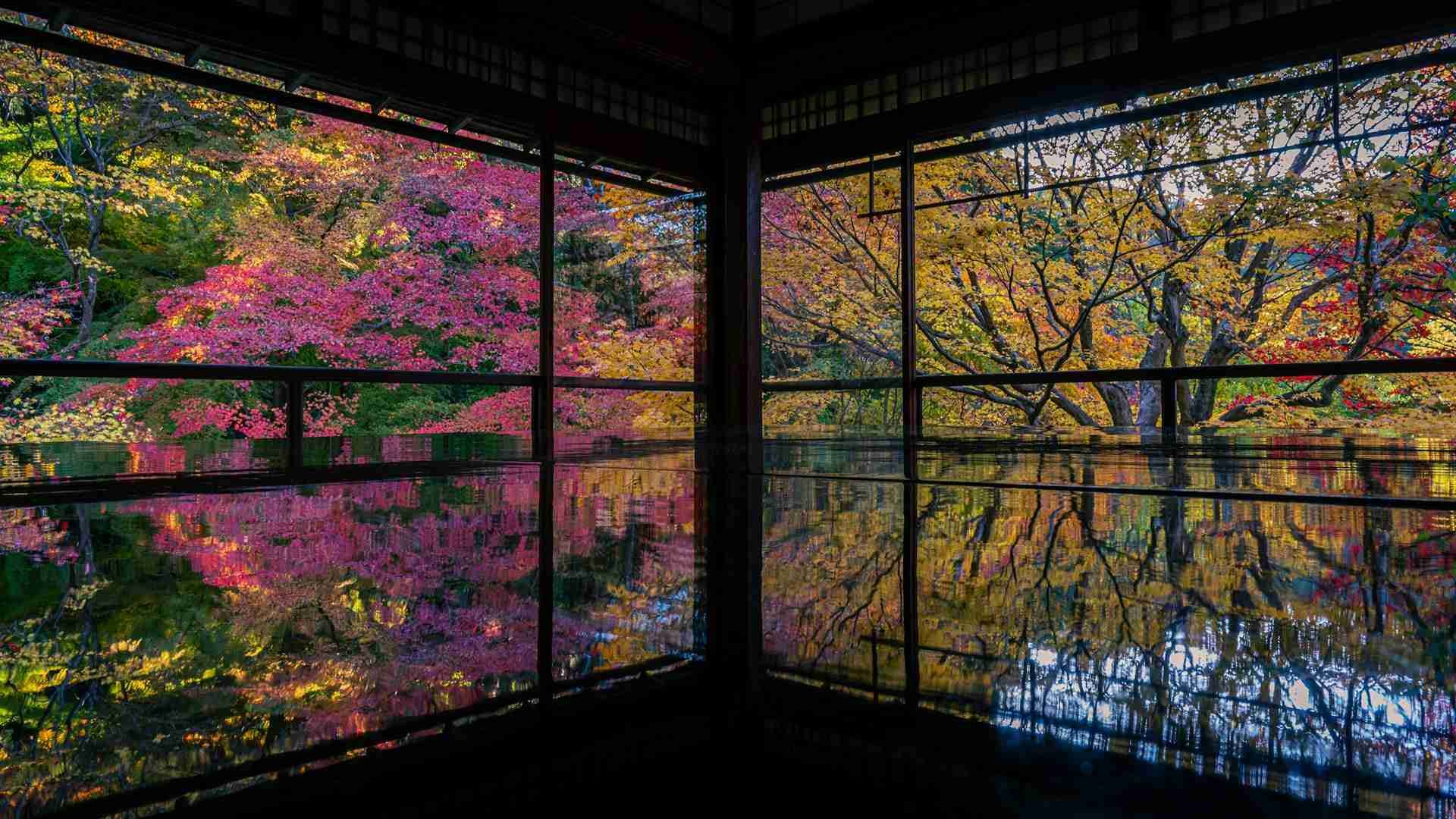
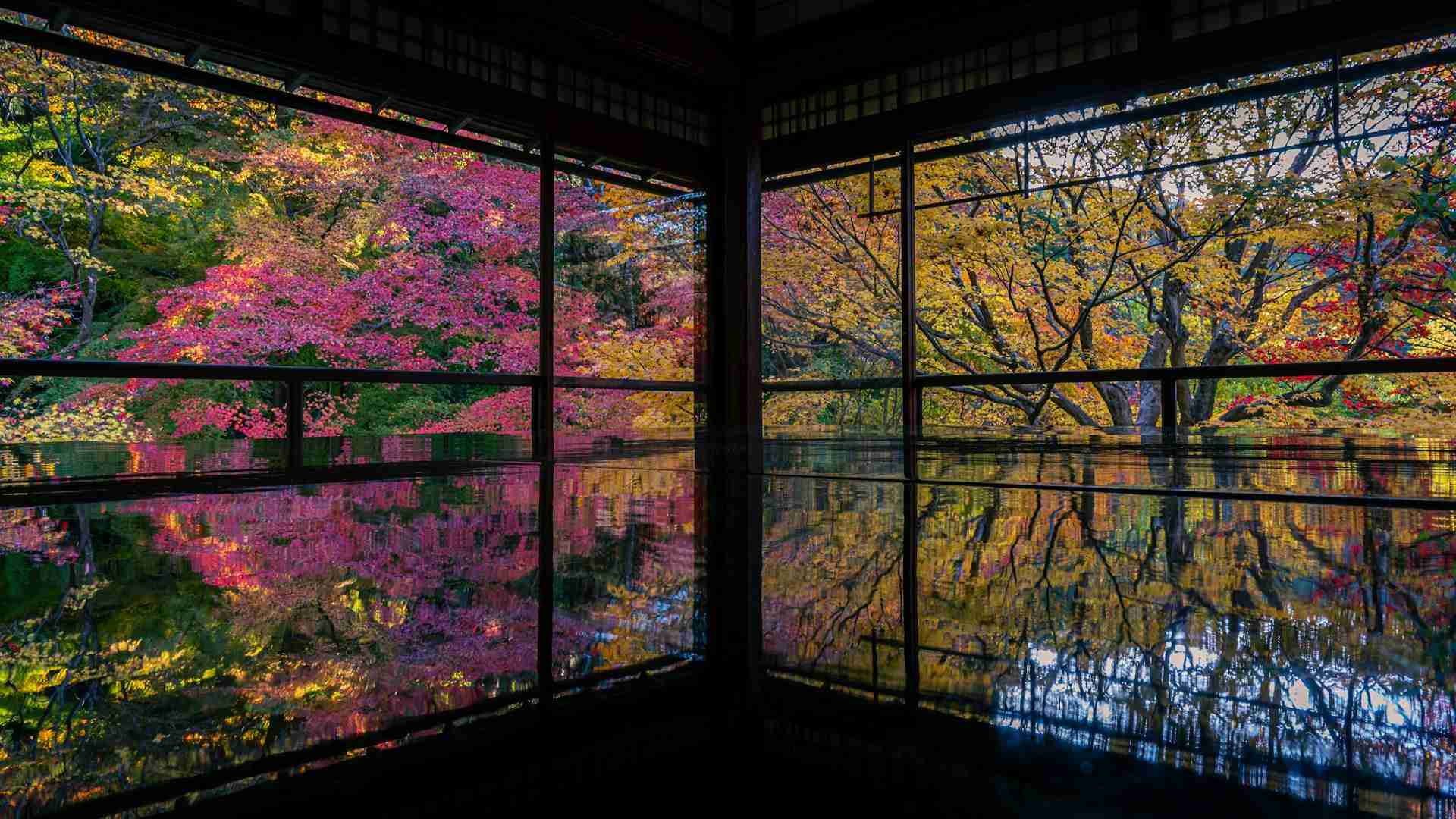
Hidden in the forested foothills of Kyoto's northern district, Rurikō-in Temple offers one of the most immersive and contemplative photography experiences in Japan. Tucked away in the quiet Yase area, the temple is known for its polished wooden floors that mirror the surrounding maple trees in perfect symmetry. Unlike the more frequented temples in central Kyoto, Rurikō-in invites slower observation and rewards photographers who notice small shifts in light, color, and reflection. Its serene atmosphere, minimal architecture, and seasonal transitions between soft greens and blazing reds give this location a strong emotional presence on camera. This is a place where less is more, and a single frame can carry layers of depth, balance, and stillness.
Best Photography Opportunities
• Second-Floor Reflection Room
The most photographed location in Rurikō-in is the second-floor tatami room, where floor-to-ceiling windows open to a canopy of maples. The polished wooden floor acts as a natural mirror, perfectly reflecting the trees in a symmetrical frame. Early in the day, when the light is diffuse, the reflection is clearest and the contrast between the warm wood and cool green is strongest. A standard lens around 50mm captures the balance of reflection and tree canopy without distortion. This is a setting that benefits from restraint. A minimal composition with careful attention to lines and symmetry can often say more than a wide, busy frame.
• Wooden Staircase and Entry Pathway
Just before entering the temple building, the ascending wooden staircase framed by moss and stone provides a strong leading line for vertical compositions. Light shifts constantly here as sun breaks through the forest canopy and filters across the steps. Try shooting low and looking upward to exaggerate the depth of the stairs and include the upper edge of the temple roof. The contrast between the rough natural textures and the refined lines of the architecture creates a rich tension. A 24–70mm lens works well for controlling how much of the forest you want to bring into the frame.
• Lower Garden and Stream with Maple Canopy
The lower garden includes a gentle stream, moss-covered rocks, and a thick canopy of maple branches overhead. During autumn, this becomes one of the most colorful and painterly scenes in Kyoto, with reds, oranges, and golds scattered across the water. Early morning and late afternoon are best for shooting here, when side lighting adds depth and breaks through the foliage. A polarizing filter helps cut glare on the water's surface and reveal submerged detail. Consider using a longer focal length to isolate color layers and abstract shapes within the canopy.
• Close-Up of Moss and Tree Roots
One of the more subtle opportunities at Rurikō-in lies in the moss garden, where gnarled roots and layers of soft green carpet the landscape. These quiet scenes reward photographers who enjoy detail and texture. Use a macro or short telephoto lens to isolate patterns in the moss or to emphasize the structure of roots wrapping over stone. Light in this area is usually soft and indirect, which means you can work handheld without harsh shadow or highlight. Be mindful of foot traffic and frame from the edges to avoid damaging the moss, which is carefully protected.
• Framed Views from Interior Windows
Several rooms inside the temple offer opportunities to use the rectangular wooden windows as natural frames. These shots benefit from deliberate composition and thoughtful timing. Look for moments when wind moves the branches slightly or when a single beam of light passes through the leaves. The framing is tight, so a standard or slightly wide prime lens is ideal. With no modern elements to disrupt the view, these scenes offer a timeless quality that matches the quiet of the space itself.
Best Time to Visit
Rurikō-in is open to the public only during select periods in spring and autumn, which correspond to the most visually dynamic seasons. Late April to early June brings fresh green maple leaves, which appear almost fluorescent in the soft Kyoto light. From late October to late November, the entire hillside transforms into shades of deep red, orange, and gold. These windows of access fill up quickly, so advance reservations are strongly recommended. Morning is the best time to visit, both for natural lighting and to avoid crowds. Cloudy conditions are excellent here, as they reduce glare on the reflective floors and enhance the saturation of foliage colors. Windless days are also ideal to maintain crisp reflections and undisturbed surfaces. Summer and winter are not part of the public opening calendar, although private access may be available through special arrangements or photography events.
How to Get There
Rurikō-in Temple is located in the Yase area of Kyoto, just east of Mount Hiei. The easiest way to reach it is by taking the Eizan Electric Railway from Demachiyanagi Station to Yase-Hieizan-guchi Station. From there, it is a short five-minute walk through a quiet residential area to the temple entrance. If you are arriving by car, limited parking is available nearby, but public transport is more convenient, especially during the busy autumn season. Entry requires a timed ticket, and there is a fee to enter the temple grounds. Tripods are not permitted, and photography is allowed only in designated areas to preserve the tranquil environment. Shoes must be removed before entering the main building, so bring socks and be prepared to carry your gear carefully indoors.
Recommended Photography Gear
For most of the temple's shooting locations, a minimal kit is more effective than a bulky setup. A standard zoom such as a 24–70mm covers nearly all needs, from interior frames to garden details. A fast 50mm or 35mm prime is ideal for working in low light or for scenes that require a shallower depth of field. A circular polarizer is essential for controlling glare on the reflective floor and enhancing the color of the foliage, especially when shooting through glass. Tripods are not allowed, so choose a camera body with strong image stabilization or bring a small beanbag to steady your camera on a wooden ledge. A microfiber cloth is useful for cleaning lenses in the humid forest environment, and a spare battery is helpful for longer sessions. Avoid large backpacks, as space inside the temple is limited and quiet movement is part of the experience.
Nearby Photography Locations
The journey to Rurikō-in itself is part of the photographic experience. The Eizan line winds through forests and crosses small bridges, especially beautiful in spring and autumn. Photographing from the train or at stations along the route offers strong visual context and seasonal variation.
From Yase, you can take a cable car or hike up to Mount Hiei, where Enryaku-ji Temple offers expansive views over Kyoto and Lake Biwa. The mountain setting allows for panoramic shots, as well as atmospheric forest scenes under tall cedars. Early morning fog often lingers here.
Located a short distance south of Rurikō-in, this imperial garden features long sightlines, reflective ponds, and carefully placed architecture. With advanced reservation, photographers can explore a different but equally refined visual environment with seasonal plantings and excellent symmetry.
North of Yase and reachable by train or foot, Kurama-dera is a temple complex set along a mountain trail. The forested ascent and elevated views offer opportunities for both nature and spiritual-themed compositions. Light changes quickly along the route, making it a good location for shooting in variable weather.
Not far from the Eizan rail line, this public park surrounds a peaceful lake with views of low mountains. It is an excellent spot for quiet sunset shots or for capturing Kyoto locals in daily life, often with maple trees and reflections during the autumn season.
Rurikō-in is more than just a seasonal destination. It is a place where photography becomes as much about seeing as it is about capturing. Its combination of light, symmetry, reflection, and silence makes it an ideal environment for photographers who thrive on subtlety and precision. Whether you are working on a long-term project or just passing through with a few hours to spare, this quiet hillside temple offers scenes that stay with you long after the shutter clicks.
Comments
Loading comments…