
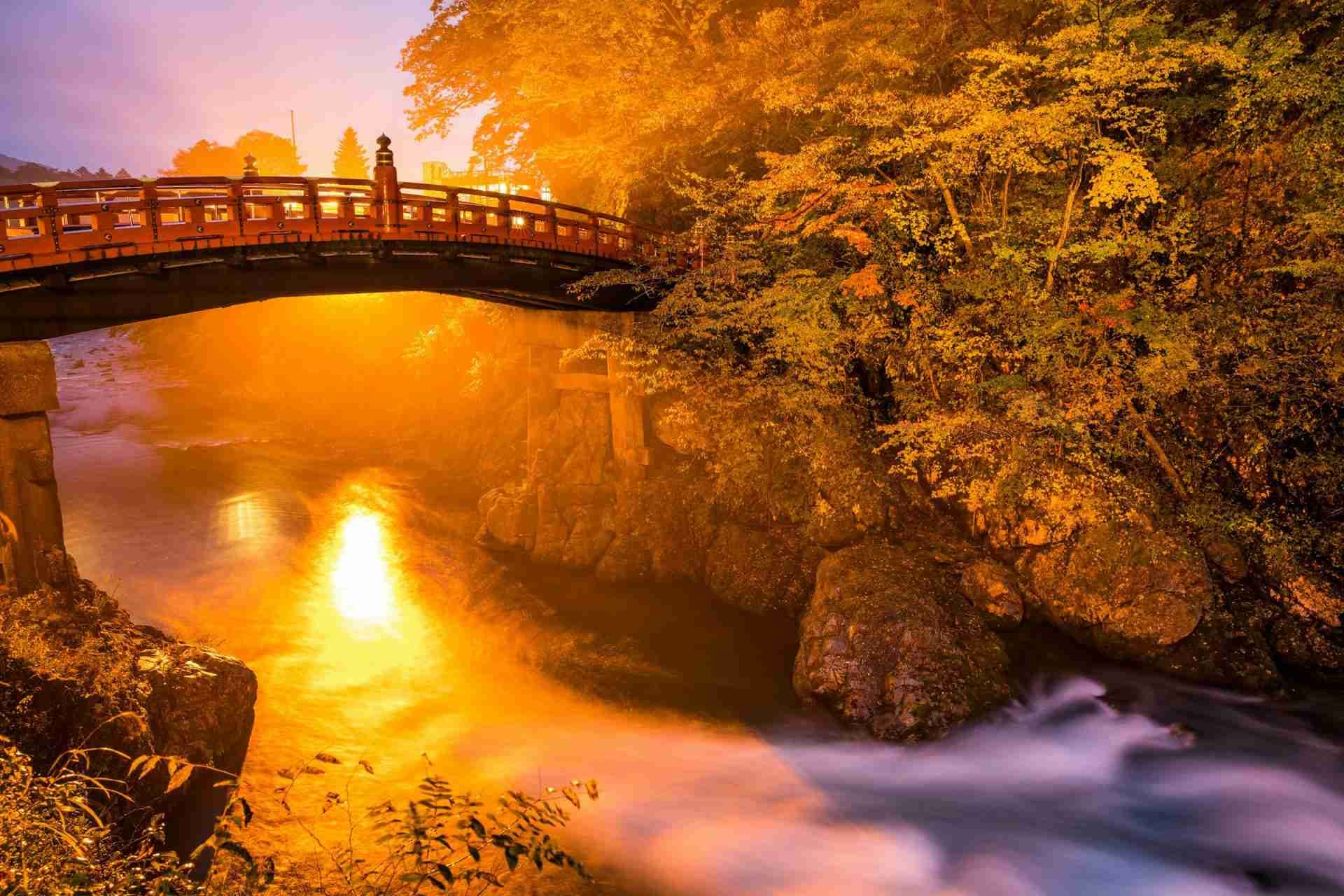
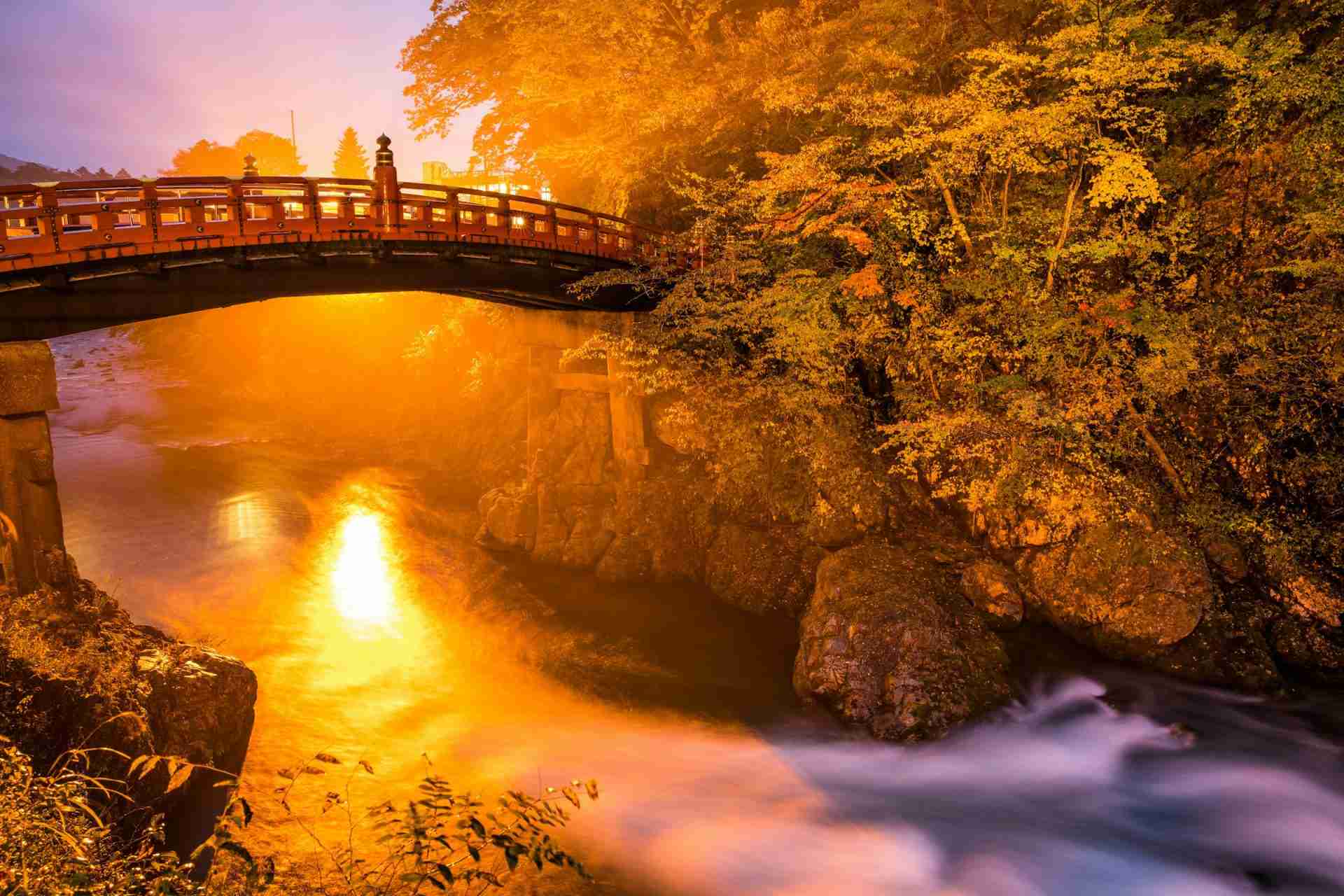
Shinkyō Bridge stands gracefully over the Daiya River at the entrance to Nikko's sacred mountain precinct. Painted in vivid red, the arched wooden structure contrasts sharply with the deep greens of surrounding forest and the cool tones of mountain water flowing beneath it. The bridge marks the symbolic threshold to the shrine and temple complex that includes Nikkō Tōshō-gū, and its placement at the base of the ascent gives it both visual and cultural weight. Unlike many modern river crossings, Shinkyō is compact and carefully proportioned, with a gentle curve and decorative railings that read cleanly from a distance. For photographers, the appeal lies in its color, symmetry, and seasonal transformation. It is a structure that changes dramatically with foliage, snow, and shifting mountain light.
Best Photography Opportunities
• Classic Side Profile
The most recognizable composition frames the bridge in full profile from one side of the river. From this angle, the curvature becomes the dominant visual element, rising cleanly above the textured surface of the Daiya River. Positioning slightly downstream often provides better separation between the arch and the darker hillside behind it. A moderate focal length keeps proportions natural while allowing the entire structure to sit comfortably within the frame. Paying attention to river flow is important, as stronger current adds energy while calmer water produces smoother texture.
• Elevated Roadside Perspective
Because the bridge sits just below the main road leading toward the shrine complex, slightly elevated viewpoints allow you to capture more depth in the river channel. This angle emphasizes the height of the arch and the layered forest backdrop. Careful framing is needed to avoid modern elements entering the scene. When autumn foliage fills the background, this perspective becomes especially dynamic, with the red bridge standing out against warm seasonal tones.
• Seasonal Colours
Autumn is particularly strong here. Framing the bridge through branches of red and gold leaves adds depth and visual layering. A slightly longer focal length compresses foliage and structure into a cohesive image. Overcast conditions often enhance color saturation while reducing glare on the lacquered surface. In spring and summer, surrounding greenery creates a softer setting that emphasizes the bridge's bold color.
• Winter Snow Contrast
Snow transforms the scene into something more graphic and minimal. The red structure stands out sharply against white railings and frosted trees. Even light preserves detail in both snow and wood without losing subtle texture. Shooting during light snowfall can add atmosphere while maintaining clarity. Winter also tends to be quieter, allowing cleaner compositions.
• Long Exposure With River Motion
Using a tripod to smooth the flow of the Daiya River introduces contrast between moving water and the still arch above. Neutral density filters allow slower shutter speeds even in brighter conditions. Exposure balance is important to prevent highlights on the lacquer finish from clipping. This approach works particularly well in overcast light when contrast is naturally reduced.
Best Time to Visit
Early morning is often the most productive time to photograph Shinkyō Bridge. The valley setting means light enters gradually, creating softer contrast and reducing glare on the red lacquer surface. Arriving shortly after sunrise allows you to work with quieter surroundings and fewer visitors. Morning sessions are particularly effective in autumn, when angled light defines the texture of foliage and adds depth behind the bridge.
Late afternoon can also produce strong results, though the surrounding hills may cast deeper shadow depending on season. In autumn, late day warmth can enhance the surrounding forest tones without overpowering the structure itself. During summer, midday light can be harsh and create strong contrast between bright red paint and shaded hillsides. Overcast conditions are often ideal for preserving even exposure and maintaining rich color saturation. Winter offers a different atmosphere entirely, with snow simplifying the scene and adding visual contrast, though colder temperatures and lower light require preparation.
How to Get There
Shinkyō Bridge is located in central Nikko along the main road connecting the town with the shrine and temple district. It is easily reached on foot from central Nikko and is clearly signposted. Nikko is accessible by train from Tokyo, followed by a short walk or local bus ride to the bridge area.
There is no fee to photograph the bridge from public viewpoints along the riverbanks and roadside. Visitors can pay an entrance fee to walk across the bridge itself during designated hours. Because the bridge sits adjacent to a main road and near major shrine attractions, arriving early helps minimize pedestrian and vehicle interference in compositions.
Recommended Photography Gear
A versatile standard zoom lens is ideal for working along the riverbanks, allowing you to move between wider environmental compositions and tighter framing of the arch. A short telephoto lens is especially useful for compressing autumn foliage behind the bridge and isolating details such as railings and support beams. Longer focal lengths can also help eliminate modern roadside elements by narrowing the field of view.
A sturdy tripod is strongly recommended, particularly for long exposure river shots and low light sessions in the valley. Because light levels can drop quickly as the sun moves behind surrounding hills, stable support ensures flexibility in shutter speed and composition. A polarizer can reduce glare on the water and deepen greens during summer months, while also helping manage reflections on wet surfaces. Neutral density filters are valuable for smoothing river motion in brighter conditions. Since the bridge sits close to a busy road and uneven riverbank terrain, keeping your kit organized and compact improves mobility and safety.
Nearby Photography Locations
This richly decorated shrine complex is known for intricate carvings, layered gates, and ornate detailing. It offers strong opportunities for architectural close ups and symmetrical compositions that contrast with the simpler arc of Shinkyō Bridge.
• Rinnō-ji
Rinnō-ji provides larger temple halls and quieter courtyard spaces. The grounds offer layered compositions framed by trees, particularly appealing in autumn and spring.
Located close to the bridge, this shrine sits within forested surroundings that feel more subdued and intimate. It offers opportunities for environmental architecture images with softer light filtering through trees.
One of Japan's most dramatic waterfalls, Kegon Falls provides powerful vertical compositions and seasonal variation. It pairs well with Shinkyō Bridge for a mix of architectural and natural subjects within the same region.
Located higher in the mountains, the lake offers expansive water views and strong autumn reflections. It expands a Nikko photography trip beyond the shrine district and into broader alpine scenery.
Comments
Loading comments…