
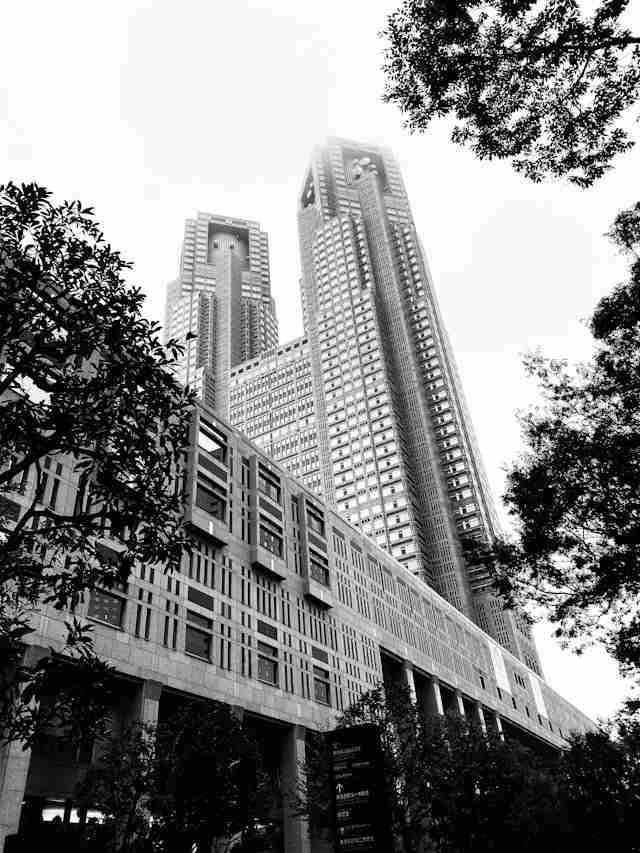
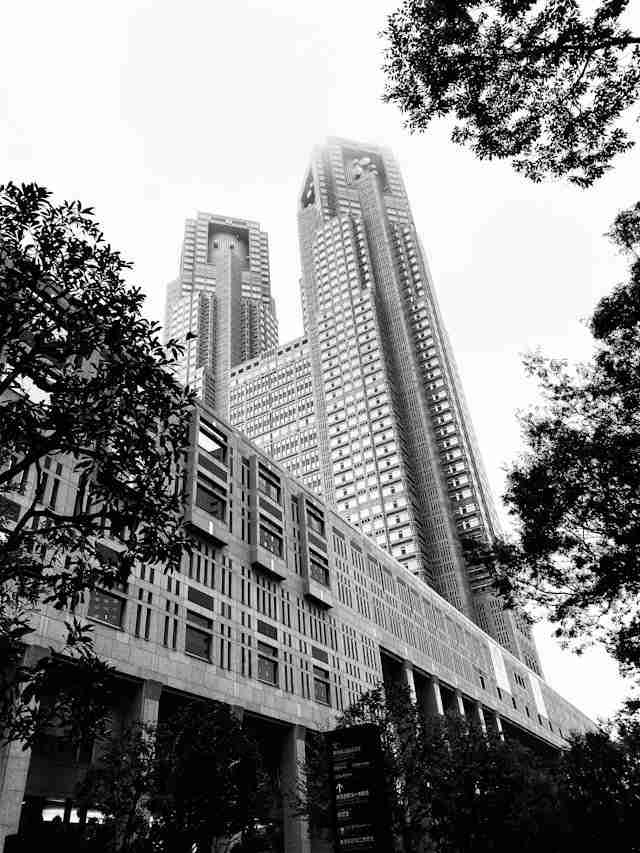
Rising like twin towers of futurist concrete over the west side of Shinjuku, the Tokyo Metropolitan Government Building—often simply called "Tocho"—is both an architectural icon and one of Tokyo's most accessible vantage points. Designed by renowned architect Kenzo Tange and completed in 1991, the structure is a masterpiece of modernist design fused with gothic and sci-fi influences. With its layered forms, sharp lines, and symmetrical towers, Tocho is as photogenic from ground level as it is from its sweeping observation decks, which provide panoramic views over the Tokyo skyline. For photographers, it's a location that delivers bold geometry, evolving light, and a dynamic interplay between the city and sky—day or night, inside and out.
Best Photography Opportunities
• Symmetrical Front Facade from Street Level
From the large public plaza in front of the building, you can frame a full-on symmetrical composition of the dual towers rising above the angular base. Use a wide-angle lens to exaggerate the verticality and architectural layering. Shooting just after sunset or at blue hour adds color contrast and softens the shadows across the concrete.
• Interior Observation Deck Views
The building features free observation decks on the 45th floor of both towers. From these, you can photograph Tokyo sprawling in every direction—Mount Fuji to the west, Shinjuku's skyscrapers to the south, and Tokyo Tower or Skytree on clear days. Sunrise and sunset offer the best light, but nighttime shots of Tokyo's glowing grid are just as rewarding. A small tabletop tripod or fast lens is recommended, as full-size tripods are not permitted.
• Framing the Towers Between Urban Foreground
Step back into nearby parks or across Shinjuku's pedestrian bridges to frame the towers between trees, railings, or other buildings. These natural or constructed frames provide scale and narrative. Look for reflective surfaces—such as glass buildings or puddles—to capture inverted views or abstract interpretations.
• Detail Studies of Concrete Texture and Structure
Kenzo Tange's design features clean, fluted concrete panels and deep-set windows that create bold shadows under directional light. Early morning or late afternoon is ideal for emphasizing texture and relief. Use a telephoto or 50mm lens to isolate repeating patterns or create architectural abstracts from corner angles or below the overhangs.
• Wide Shots with Leading Lines from the Plaza
The plaza's paving stones and geometric structures lead the eye naturally toward the towers. Incorporate these lines into foreground compositions for a sense of depth and architectural flow. Golden hour brings out the warmer tones in the concrete and often produces long shadows that add visual rhythm.
Best Time to Visit
The Tokyo Metropolitan Government Building is photogenic year-round, but light and weather play a key role in maximizing its visual impact. Clear days offer expansive observation deck views, especially in winter, when visibility is highest and Mount Fuji appears clearly on the western horizon. Summer provides longer golden hours and dramatic evening skies, but humidity may reduce visibility from the upper floors.
For exterior shots, morning light from the east casts sharp shadows across the building's fluted surfaces, while late afternoon light from the west adds warmth and depth. Blue hour and nightfall are particularly strong times for shooting both the building itself and the city below from the observation decks, when Tokyo's vast urban sprawl lights up.
Rainy days or overcast skies flatten the contrast but highlight the building's monumental form and moody texture—perfect for minimalist or black-and-white interpretations. In these conditions, the plaza becomes quieter, and puddles can be used creatively for reflection shots.
How to Get There
The Tokyo Metropolitan Government Building is located in Shinjuku's Nishi-Shinjuku business district and is easily accessible by subway and foot. The closest station is Tochomae Station on the Toei Oedo Line, which connects directly to the basement level of the building. Alternatively, it's about a 10-minute walk from Shinjuku Station's west exit.
There is no cost to enter the building or visit the observation decks, which are open daily, though hours vary slightly between the North and South Towers. The decks may occasionally close for maintenance or weather-related reasons, so it's worth checking the schedule in advance.
The surrounding area is spacious and designed with photography in mind—tripods are permitted outdoors but not inside the observation areas. Street photography in the nearby business district can also be rewarding, with reflections, pedestrian movement, and elevated walkways creating dynamic visual layers.
Exploring the Surrounding Area
Beyond Tocho itself, the Shinjuku Skyscraper District offers a diverse array of architectural styles, elevated views, and hidden pockets of light and shadow. Just across the plaza lies Shinjuku Central Park—a quiet green space that offers shaded paths, water features, and unique angles of the government building through trees and foliage. This is a great place for shooting Tocho in context, especially during cherry blossom or autumn foliage season.
The elevated pedestrian bridges surrounding the district offer elevated views and strong perspective lines for capturing urban geometry. At dusk, office lights begin to flicker on, and the reflections in glass curtain walls create a kaleidoscopic effect, especially on rainy evenings.
To the southeast, the hustle of Shinjuku Station and its neon-lit shopping streets provide a vibrant contrast to the clean lines of Tocho. If you're building a series on Tokyo's verticality or architectural contrasts, combining shots from both areas offers narrative richness and visual variety.
Nearby Photography Locations
A short walk away, this twisting skyscraper features an organic design that contrasts sharply with Tocho's angularity. Great for framing with pedestrian bridges or isolating against the sky with a long lens.
Offers a quiet, green backdrop to the building with seasonal foliage, fountains, and architectural sightlines. It's a peaceful spot to shoot long exposures or find low-angle compositions.
Another architectural landmark in Nishi-Shinjuku, Opera City is a clean, angular structure perfect for minimalist exterior work. The adjacent pedestrian plaza often hosts public art or shadow-rich light plays.
• Shinjuku Station East and Kabukicho
Head east for a completely different vibe—neon lights, signage overload, and gritty textures ideal for street photography, especially at night.
For a distant view of the Tokyo Metropolitan Government Building in the skyline, visit this lesser-known observation deck across town. On clear evenings, you can frame Fuji, Shinjuku, and Tokyo Tower in one wide panorama.
The Tokyo Metropolitan Government Building is more than a civic structure—it's a sculptural expression of late 20th-century vision, standing quietly over a city in constant motion. For photographers, it offers both literal and symbolic elevation: the chance to observe Tokyo from above, and to frame it from below with clarity, contrast, and curiosity. Whether you're seeking sweeping vistas or tightly composed studies in light and form, Tocho remains one of Tokyo's most visually rewarding landmarks.
Comments
Loading comments…