
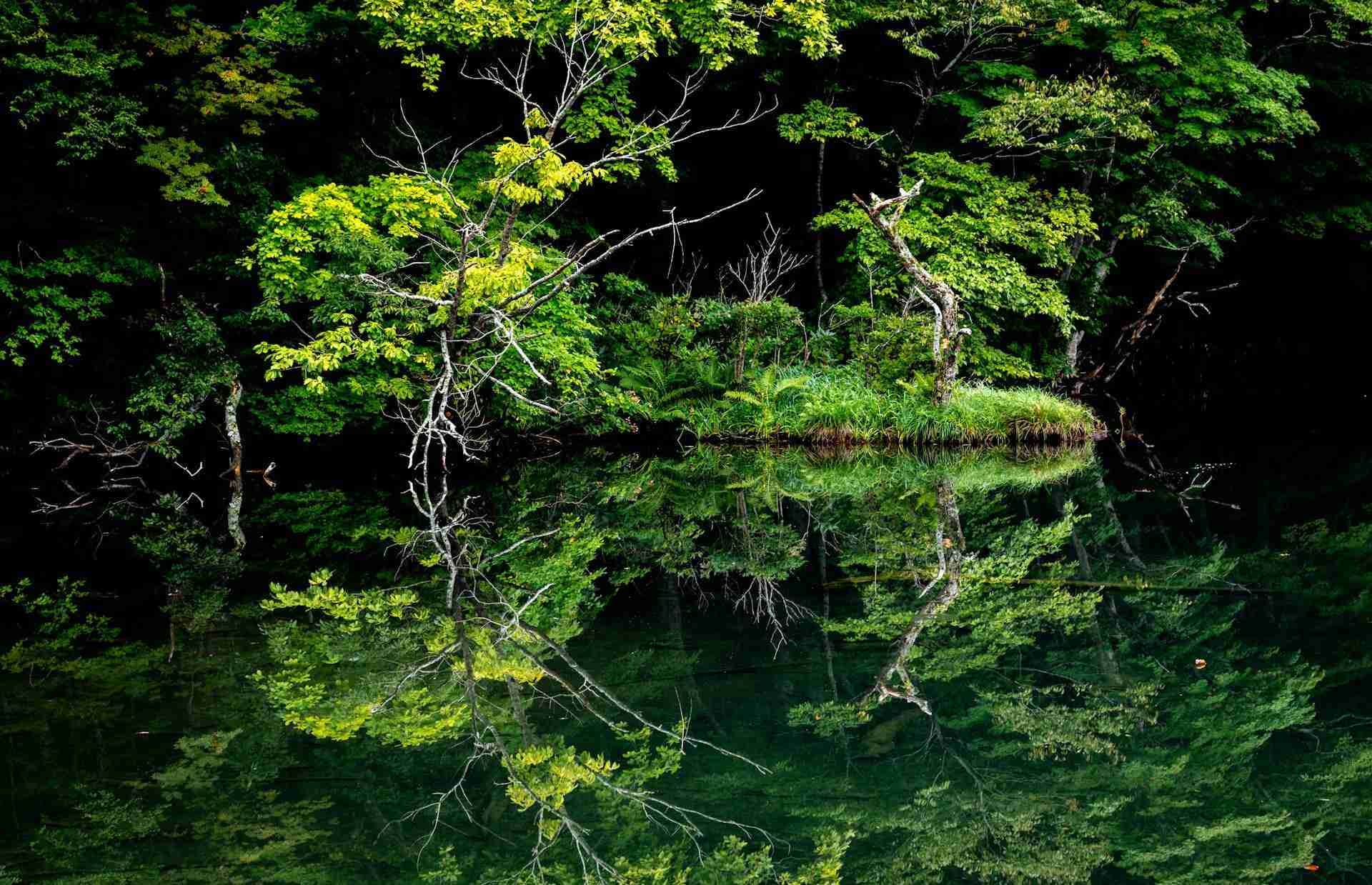
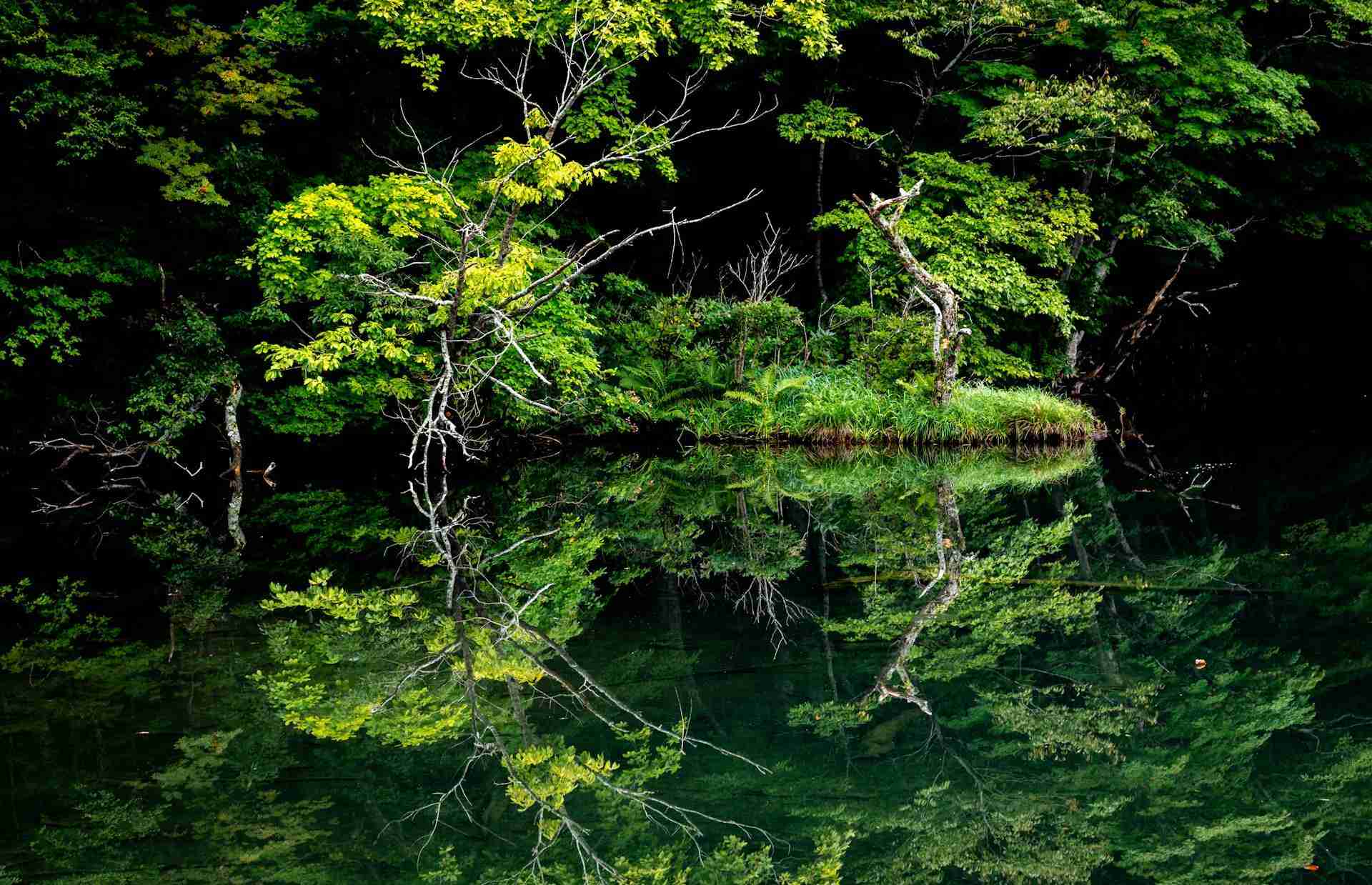
Tucked into the forested highlands of Aomori Prefecture, Tsutanuma Pond is one of the most visually compelling locations within the Towada-Hachimantai National Park. This small, quiet pond is encircled by a dense hardwood forest, and its glassy surface often reflects every branch and color with near-perfect clarity. Throughout the year, it offers a study in symmetry, subtle light, and seasonal drama, making it especially appealing to landscape photographers with a sensitivity to timing and tonal nuance. The pond's intimacy and manageable scale allow for slow, deliberate composition, whether you are isolating mirrored trees, chasing morning mist, or framing the explosive colors of autumn. It is not a place for sweeping panoramas or dramatic elevation, but rather a location that rewards attention to texture, balance, and light.
Best Photography Opportunities
• Autumn Reflection Compositions
The pond reaches peak photographic potential in late October, when the surrounding forest bursts into reds, oranges, and yellows. Early in the morning, the water is still and mirror-like, making it possible to frame perfectly symmetrical reflections of the hillside. Wide-angle lenses allow for balanced images with strong horizontal layers: forest, pond edge, water reflection, and sky. The soft natural light at dawn enhances color saturation without creating harsh contrast. These compositions benefit from thoughtful framing and a level horizon to maintain visual harmony.
• Morning Mist and Seasonal Atmosphere
On cool mornings, especially in spring and autumn, Tsutanuma often lies beneath a light veil of mist. This softens the reflections and reduces contrast, allowing for subtle, mood-driven images. Telephoto lenses work well here to isolate details in the trees or compress depth within the mist. Focus on layered compositions where the fog adds separation between foreground and background. A tripod and low ISO help maintain clarity in these soft-light conditions, and exposures should be carefully adjusted to avoid losing midtone detail.
• Edge-of-Water Intimate Landscapes
The quiet shoreline is ideal for finding small scenes and patterns—fallen leaves on still water, tree roots against smooth stones, or overlapping branches reflected at odd angles. These types of compositions benefit from mid-range zoom lenses and a lower camera position. Avoid crowding the frame with too many elements; instead, look for clean, graphic arrangements. These images are especially strong in early morning light when the pond's surface is undisturbed. Using a polarizing filter can help manage glare and deepen color, depending on your angle to the water.
• Backlit Foliage and Light Play
When shooting later in the morning, once the sun rises above the treeline, you can work with backlit foliage around the pond's perimeter. Leaves illuminated from behind glow with rich, saturated color and contrast beautifully with shaded areas below. Isolating branches against darker forest backgrounds with a telephoto lens creates luminous compositions. The contrast between lit and shadowed leaves should be managed carefully to preserve dynamic range. Bracketing exposures may be helpful in high-contrast conditions.
• Seasonal Changes in Color and Light
Tsutanuma is one of the few places where each season feels distinct and photographable in its own way. In spring, new leaves cast a bright green glow over the pond. Summer brings deep shade, rich greens, and high water levels, which make the reflections more expansive. Winter transforms the entire setting into a monochrome study in contrast and form, though access may be limited. Returning to the same composition across seasons offers a way to build a cohesive portfolio or visual study of place.
Best Time to Visit
Late October is the most popular and productive window for photographing Tsutanuma Pond. During this short period, the forest transitions into vibrant autumn color, and the morning conditions are often cool enough to produce fog or mist. Photographers arrive early to secure a good position along the path before the light hits the trees. Sunrise is particularly valuable here, not for golden light, but for still air and calm water, which maximize reflection quality.
Spring, particularly in May, brings fresh growth and softer tones, while mornings often remain misty and quiet. Summer is less popular due to denser green foliage and occasional haze, though it can still yield moody, overcast scenes with layered greens. Winter visits are possible only if access roads are clear, but snowy conditions can offer quiet, minimalist compositions and high contrast between trees and white ground.
The best shooting light is from just before sunrise to about one hour afterward, when the pond is calm and light grazes the tops of the trees. Later in the morning, wind often begins to stir the surface, breaking reflections and flattening color. Visiting during weekdays and outside peak foliage weekends will reduce crowds and give you more freedom to move along the path.
How to Get There
Tsutanuma Pond is located within the Tsuta Onsen area of Towada-Hachimantai National Park, in Aomori Prefecture. The closest city with broader access is Aomori, from which you can drive or take public transportation toward Lake Towada and the Oirase Gorge. The pond is about a one-hour drive from Aomori City via Route 103.
If traveling by public transport, the JR Bus Tohoku line runs between Aomori and Lake Towada, stopping at Tsuta Onsen. From the bus stop, it is a short walk to the trailhead. A maintained footpath loops around the pond and offers several unobstructed shooting positions, especially along the southern edge.
There is no entrance fee, and the area is open year-round, though access may be restricted after heavy snowfall. A small parking area is available near the Tsuta Onsen ryokan, but it fills quickly during the fall foliage season, particularly at sunrise. It is advisable to arrive well before first light if driving.
The trail is well marked and suitable for tripods. The terrain is mostly level, with occasional roots and stones, so stable footwear is recommended. There are no facilities directly at the pond, but food and restrooms are available nearby at the onsen and visitor center.
Recommended Photography Gear
A wide-angle lens in the 16 to 35 millimeter range is useful for capturing full pond reflections and broad forest scenes. A mid-range zoom, such as 24 to 70 millimeters, allows for more intimate framings and control over edge-of-water compositions. Telephoto lenses between 70 and 200 millimeters are essential for isolating foliage details, shooting through mist, and creating visual compression in backlit scenes.
A tripod is highly recommended, particularly for early morning low-light conditions and long exposures when shooting reflections or fog. A circular polarizer can enhance foliage color and reduce glare on the pond surface, though it should be used carefully to avoid disrupting reflection intensity. Neutral density filters are generally not necessary unless you plan to smooth ripples in the water under stronger light.
Weather protection for gear is advised in spring and autumn, when conditions can shift rapidly. A lightweight backpack with side access will help when moving between viewpoints along the path. Bring a microfiber cloth to manage lens fog during humid or misty mornings. In winter, insulated gloves and additional lens hoods may be helpful for working in freezing temperatures.
Nearby Photography Locations
Located downstream from Lake Towada, this gorge is one of Japan's most scenic river valleys, filled with moss-covered rocks, waterfalls, and overhanging trees. It offers a more dynamic counterpoint to the stillness of Tsutanuma, especially in autumn when leaves carpet the ground.
The large caldera lake nearby provides wide lake views, cloud reflections, and layered hills. Early morning fog often drifts across the lake surface, and wooded coves allow for quieter compositions away from busier viewpoints.
This network of walking paths connects several small ponds, each with its own mood and lighting characteristics. These include ponds like Kagaminuma and Akanuma, which are less visited but equally photogenic, especially in the right light.
For photographers interested in elevational views, the Hakkoda ropeway offers access to highland ridges with expansive views toward the bay and mountains. In autumn, the mountain turns bright with color, and in winter it is known for dramatic, snow-covered trees.
A short drive from Tsutanuma, this hot spring region is surrounded by mature forest, ridge trails, and weathered buildings that create rustic, textured subjects. Steam rising from the baths on cold mornings adds motion and atmosphere to quiet compositions.
Tsutanuma Pond remains one of the most serene and photographically rich places in northern Japan. It requires little hiking or gear to access but rewards photographers who arrive early, observe patiently, and work with the subtle rhythm of light and reflection across the seasons.
Comments
Loading comments…