
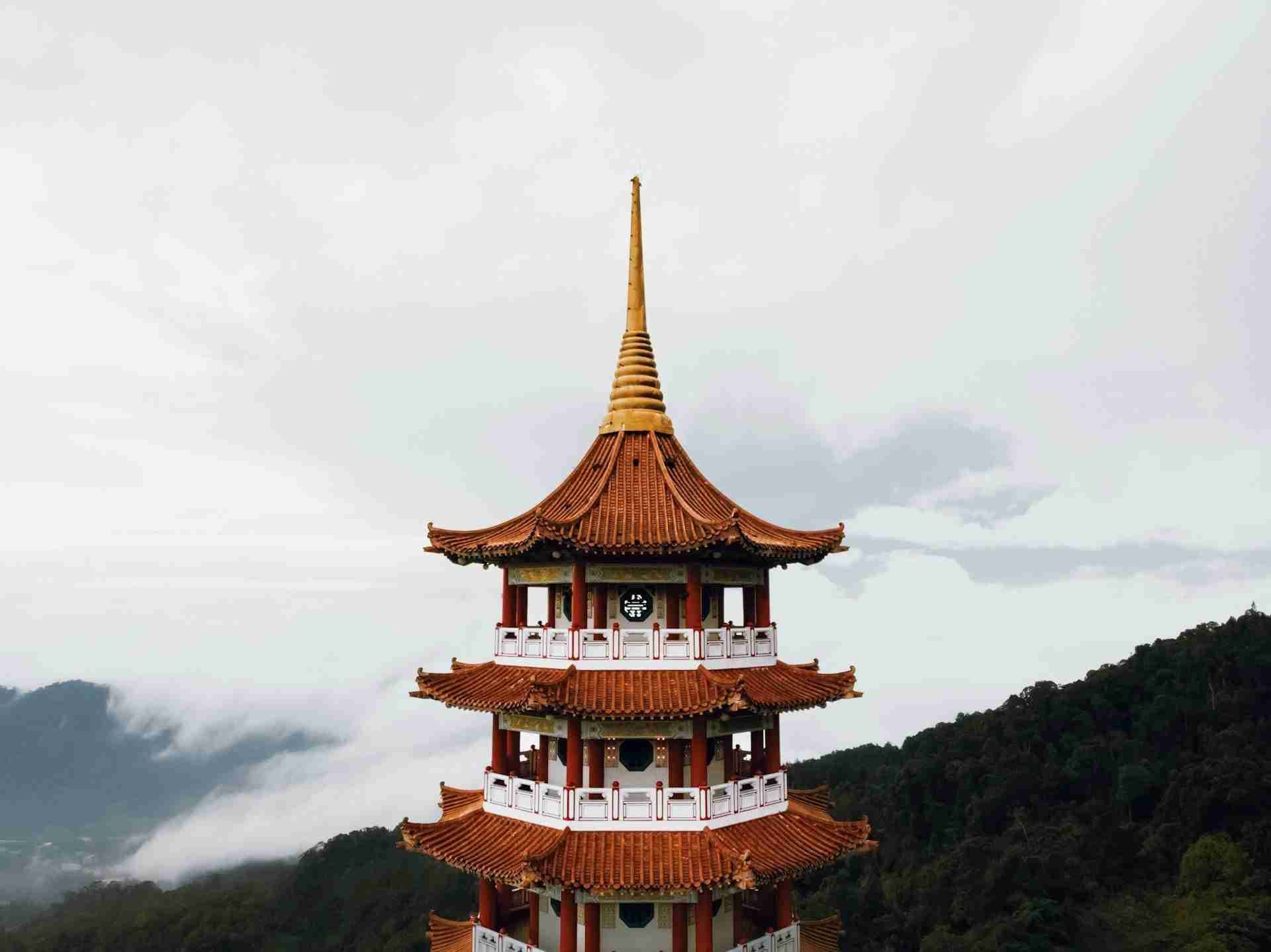
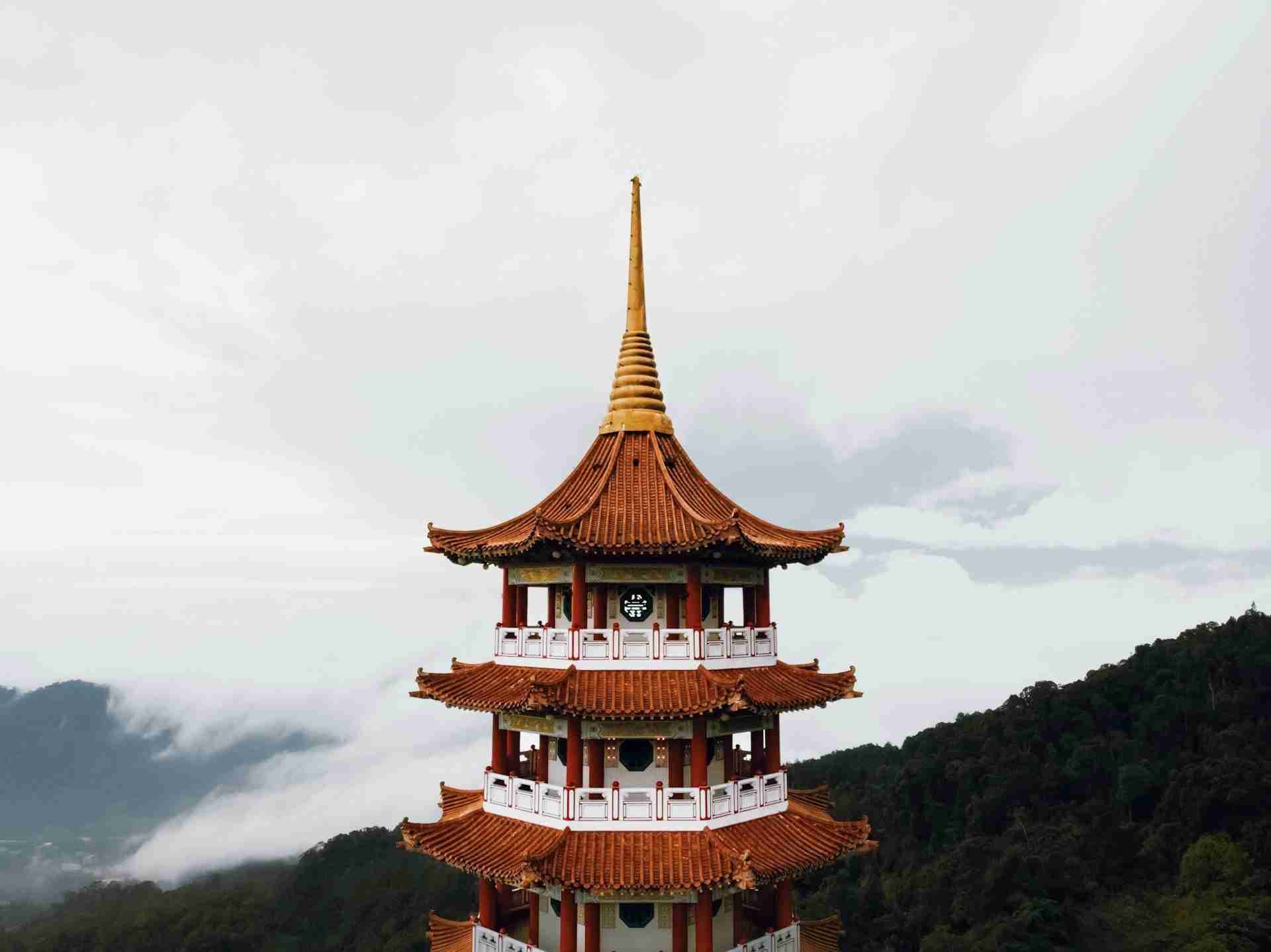
Perched dramatically on a forested ridge of the Genting Highlands, Chin Swee Caves Temple is one of Malaysia's most visually striking religious sites. Known for its vibrant red pagoda, detailed statues, and mist-laced mountain vistas, the temple complex sits 4,600 feet above sea level, surrounded by lush tropical rainforest. With sweeping views over the valleys below and ever-changing light patterns from passing clouds, Chin Swee Temple is a dream location for photographers seeking cultural, architectural, and atmospheric compositions in a single destination.
Best Photography Opportunities
• Seven-Storey Pagoda Against the Mountain Sky
The temple's iconic pagoda is best photographed from a low angle with a wide lens to capture its full height framed by swirling clouds or blue skies. Early morning or late afternoon light adds warmth and shadow to its vibrant red and gold tiers. Include the forested slopes in the background to emphasize its lofty placement.
• Atmospheric Mist Shots from the Viewing Platforms
The temple often sits above or within cloud cover, offering soft, moody conditions ideal for capturing a sense of place. Use the mist to veil distant hills or temple structures, adding depth and layering to your compositions. These conditions are excellent for wide landscapes or minimalist temple shots with softened light.
• Detailed Portraits of Statues and Carvings
Throughout the complex, intricate Taoist and Buddhist statues—such as the smiling Buddha, guardian deities, and the 10 Chambers of Hell diorama—offer rich opportunities for close-up and storytelling photography. Overcast days help control contrast on reflective surfaces like painted stone and gold leaf.
• Leading Lines Along the Temple Walkways
The red-tiled walkways, stone staircases, and arched corridors provide strong leading lines and symmetry for architectural compositions. Use these paths to frame the pagoda, distant mountains, or passing visitors for balanced and immersive images.
• Night and Blue Hour with Temple Lighting
When lit after dusk, the pagoda and surrounding structures glow against the mountain backdrop. Capture long exposures from the base or from across the complex with a tripod, balancing ambient sky colour with the golden temple lights. This is especially striking on clear nights when stars are visible behind the clouds.
Best Time to Visit
The temple is photogenic throughout the year, but the most compelling visuals often come during early morning or late afternoon when the angle of the light softens architectural lines and reveals atmospheric mist. Visiting just after rainfall increases the chance of low clouds and dramatic fog, adding mood and texture to wide compositions.
The rainy season (typically October to March) brings more frequent cloud formations, which, while unpredictable, often enhance the mountain atmosphere. The dry season (May to September) offers clearer skies and more predictable golden hour lighting for vibrant architectural work.
Blue hour, both before sunrise and after sunset, is ideal for blending ambient light with artificial illumination from the pagoda and walkways. Arrive early to scout compositions and wait for shifting conditions.
How to Get There
Chin Swee Caves Temple is located along the winding Genting Highlands access road, about 10 minutes below the summit resort area. From Kuala Lumpur, it's roughly a one-hour drive via the Karak Highway and Genting Sempah.
The temple is also accessible via the Genting Skyway cable car. Disembark at Chin Swee Station and take the elevator or escalator down to the temple complex. This route offers aerial views and adds a scenic element to your trip.
There is no entrance fee to visit the temple. Parking is available on-site if traveling by car, and the area is walkable, with paved paths and stairs connecting the main structures. Tripods are allowed and useful for low-light or long-exposure work, particularly in mist or at night.
Exploring the Surrounding Area
Beyond the main pagoda and temple courtyard, the Chin Swee complex includes forested paths, lookout points, and religious sculptures nestled into the hillsides. A winding path leads through the 10 Chambers of Hell and other detailed dioramas, allowing for creative storytelling compositions and macro studies.
The surrounding rainforest and cliffs create excellent backdrops for environmental portraits or wide-angle landscape shots with spiritual symbolism. Look for birds and butterflies, which often add movement and life to misty frames.
Because of the altitude, weather changes quickly—so plan to stay a while and let the light evolve. Some of the most dramatic shots come just as the clouds begin to part, revealing layers of mountain and temple in one fluid motion.
Nearby Photography Locations
The gondola ride to the summit provides stunning aerial views of the rainforest canopy and ridgelines. Capture shots looking back toward the Chin Swee pagoda, or down through the jungle valleys below—especially beautiful at sunrise with mist rising from the forest.
• Genting Highlands Summit
Though known for its resorts and casinos, the summit area offers modern urban photography mixed with high-elevation panoramas. Look for contrasts between contemporary architecture and distant cloud-wrapped peaks.
• Bukit Tinggi and Colmar Tropicale
About 45 minutes away, this French-themed village and surrounding Berjaya Hills provide colourful, whimsical architecture surrounded by forest. Best photographed in soft light or during early evening when the buildings are illuminated.
• Awana Horse Ranch and Forest Trails
Nearby trails and open fields offer rural highland scenes with horses, traditional farmhouses, and undisturbed forest. Ideal for environmental portraiture and natural light compositions during golden hour.
Located just below the temple, this small township has traditional eateries, colourful street scenes, and local temples—excellent for candid street photography and capturing the daily rhythm of the Genting foothills.
Chin Swee Caves Temple is more than just a visual landmark—it's a place where architecture, altitude, and atmosphere converge in an ever-shifting play of light and shadow. Whether you're capturing its iconic pagoda bathed in mist, isolating fine carvings in soft light, or watching clouds wrap around the mountains at twilight, every visit invites a new composition. For photographers seeking spiritual serenity and dramatic scenery in one frame, this mountain temple delivers both in full measure.
Comments
Loading comments…