
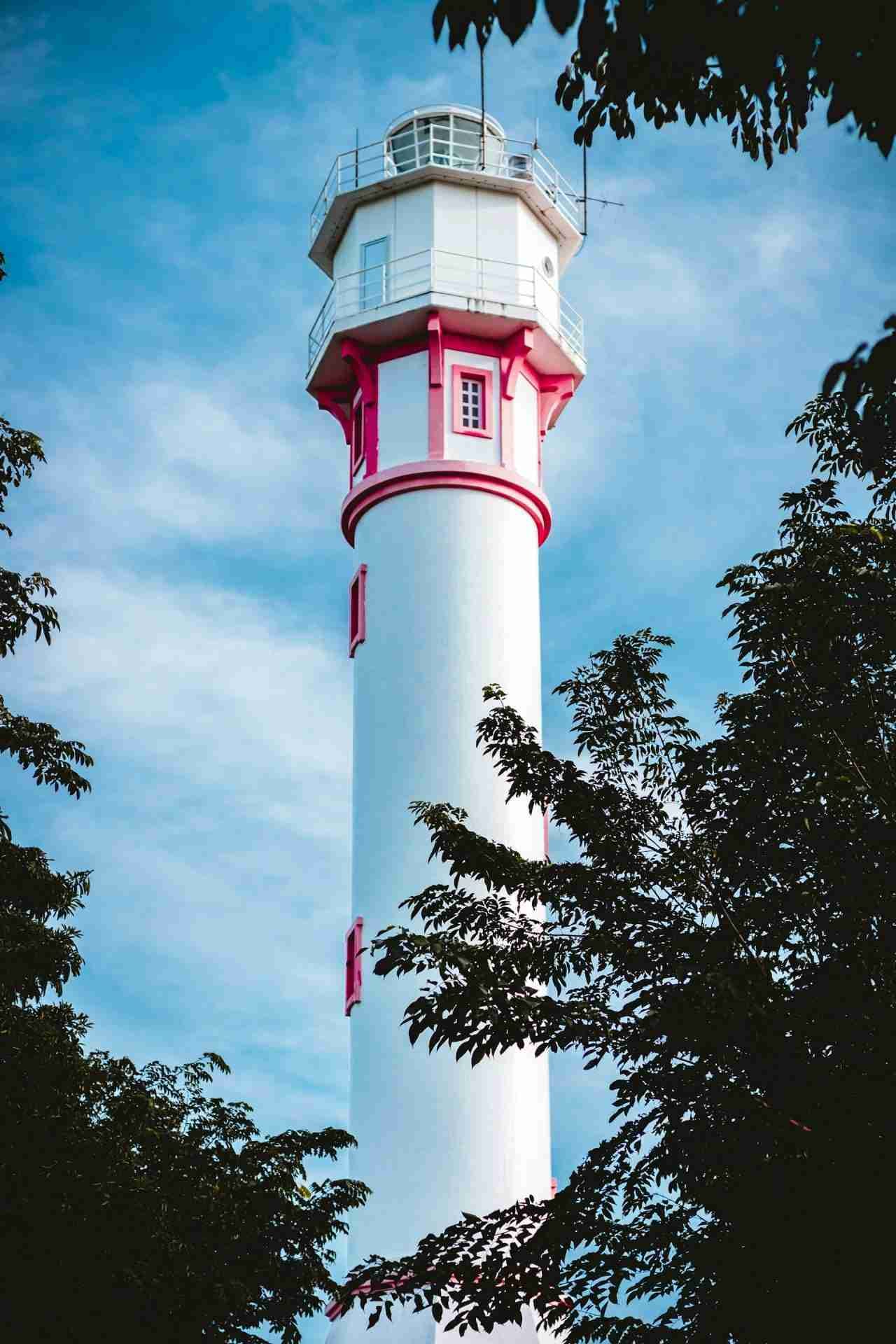
Cape Bolinao Lighthouse is a peaceful spot on the northwestern coast of Luzon that offers big views, open skies, and the kind of stillness that lets you slow down and focus on your photography. Located in the town of Bolinao in Pangasinan, this old lighthouse sits on top of a limestone hill with sweeping views of the West Philippine Sea. The tower has been standing since 1905 and still looks out over the coastline with its weathered frame and faded paint. It is a great place to work on everything from wide scenic shots to close-up textures. Whether you are shooting sunsets, ocean views, or details in rust and stone, Cape Bolinao Lighthouse offers a setting that feels both open and inviting without the pressure of big crowds or complicated access.
Best Photography Opportunities
• Sunset Light on the Lighthouse
The best time to photograph the lighthouse itself is in the late afternoon when the sun starts to lower over the ocean. The soft golden light wraps around the tower and brings out the rough texture of the walls, rust on the railings, and cracks in the paint. You can shoot wide to include the landscape around the tower or move in closer to capture its details against the warm sky. Shadows stretch across the grassy hilltop, giving your compositions more depth and interest. A cloudy sky can add even more texture and make the light feel more dramatic, especially when shooting from a low angle.
• Drone Views of the Coastline
Using a drone at Cape Bolinao opens up a whole new way to see the area. From above, you can follow the jagged coastline as it meets the sea, with waves hitting the rocks and colors shifting from deep blue to clear green. The lighthouse stands out clearly against the background, and its position on the hill makes it easy to frame. Sunrise and sunset flights are best for softer shadows and richer color. It is also easier to see texture in the land and water when the sun is low. Be aware of wind near the cliffs and keep your drone in sight at all times.
• Silhouettes and Sky Color at Sunset
Because the lighthouse faces west, you get a full view of the sunset with nothing blocking the horizon. This makes it a perfect spot to shoot silhouettes, whether of the lighthouse itself or trees and fences along the edge of the hill. You can use a narrow aperture to get a crisp sun star or open up your lens for a softer look. The sky often fills with orange and pink tones that shift quickly as the sun drops. It is worth setting up a tripod and shooting a series as the light changes. Silhouette shots here work well even without dramatic clouds.
• Star Photography and Night Skies
Cape Bolinao is far from city lights, which makes it a solid choice for night photography during clear weather. If you are staying nearby, return after sunset and bring a wide lens with a fast aperture to capture the stars. The lighthouse itself makes a great foreground, especially if you light it gently with a handheld LED or allow moonlight to do the work. On moonless nights, the Milky Way becomes visible during the dry season, especially from February to May. A tripod and remote shutter release are essential for long exposures, and scouting your composition during the day will help you line up your shot when it is dark.
• Cliffside Views and Ocean Patterns
The area around the lighthouse includes rocky cliffs and open views down to the water below. From the edge, you can shoot the patterns of waves rolling in or pull back and show the curve of the coastline. Bring a neutral density filter if you want to do long exposures and smooth out the motion of the water. The rocks along the shore catch side light in the late afternoon and create nice contrast with the water. These scenes work well with either wide or zoom lenses, depending on how much of the coast you want to include.
Best Time to Visit
The dry season, which runs from November through early May, is the best time to visit Cape Bolinao Lighthouse. During these months, the weather is more stable, and the skies are often clear or partly cloudy, giving you a good chance at catching strong light and bold sunsets. December to February is cooler and often hazy, which can help soften distant views and add a gentle tone to your images. March and April tend to have the clearest skies with brighter colors, though the light in the middle of the day can get harsh, so early morning and late afternoon are the best times to shoot.
Sunset is the highlight here. With the lighthouse facing west, you can watch the sun drop straight into the sea. Arrive at least an hour early so you can explore the area, set up your gear, and adjust as the light shifts. The best colors usually appear about fifteen to twenty minutes after the sun goes down. Mornings can also work well, especially if you want side light and softer shadows. During the rainy season, from June through October, the area is harder to access, and weather can change quickly. If you are shooting during this time, keep an eye on the forecast and be ready to protect your gear.
How to Get There
Cape Bolinao Lighthouse is located in Barangay Patar, about 13 kilometers from the town center of Bolinao, Pangasinan. From Metro Manila, the drive takes around six to seven hours. Take the North Luzon Expressway and the Tarlac–Pangasinan–La Union Expressway to Alaminos, then head west toward Bolinao town. From there, follow Patar Road, which winds past beaches and small villages before leading uphill to the lighthouse. The final stretch of road is paved but gets narrower and rougher as you get closer, so drive slowly and stay alert.
There is a small parking area near the lighthouse where you can leave your car, and the main shooting spots are just a short walk from there. You do not need to hike or carry your gear far, which makes it easy to use tripods or switch lenses. Access to the tower itself is sometimes restricted, depending on maintenance or local rules, but the surrounding area is open during daylight hours. There is no set entrance fee, but it is a good idea to support local vendors or caretakers if they are present. The site can get a little busy on weekends and holidays, but it is usually quiet enough to set up and shoot without trouble.
Recommended Photography Gear
A basic but flexible setup works best for Cape Bolinao. A wide-angle lens, something between 16 and 35 millimeters, is great for capturing the full height of the lighthouse and the open sky around it. A telephoto zoom in the 70 to 200 millimeter range will help you frame distant views, zoom in on the coastline, or pick out smaller details without moving around too much. A sturdy tripod is important, especially for sunset, long exposures, or bracketing shots when light is changing fast.
Neutral density filters will help you shoot longer exposures, especially near the cliffs where the ocean moves quickly. A six-stop or ten-stop filter is useful in daylight if you want to blur water motion. A circular polarizer can also help bring out sky color and reduce glare on the sea, but be careful using it with wide lenses so you do not get uneven tones. For night shooting, pack a fast wide lens and remote shutter. A flashlight or small LED panel is useful for setting up in the dark or adding gentle light to the foreground. If you are flying a drone, check local rules first and fly with care. The wind near the edge can be strong and unpredictable.
Bring lens wipes or a cloth to clean off sea spray or dust, especially if you are working close to the cliffs. Extra batteries and memory cards are also a good idea, since the area does not have nearby stores or charging points. Even in the dry season, it is smart to pack rain covers and something to protect your camera in case the weather shifts.
Nearby Photography Locations
Just below the lighthouse, Patar Beach offers golden sand and wide open skies, perfect for sunset photography. Tide pools and rock formations near the water add interest to foregrounds, especially during low tide. The beach faces west and has plenty of space to set up without distractions.
A little north of Patar Beach, this stretch of coastline features sharp limestone rocks and natural pools carved by the sea. These formations look great in side light, and you can frame them against the ocean or sky for strong, simple compositions. The area is also good for long exposures with blurred water motion.
• Balingasay River
This peaceful river winds through mangroves and quiet banks inland from Bolinao. It is a good place for drone photography or reflective water shots in the early morning. The calm water and gentle curves create a softer contrast to the ocean scenes at the cape.
Not far from the main road to Patar, this small cave features a natural freshwater pool and fossil-lined stone walls. It is a tight space but offers interesting light and color. A fast lens and tripod help here, especially for shooting inside the cave where light levels are low.
• Cape Bolinao Viewpoints
The area around the lighthouse includes small trails and side paths that lead to other natural lookout spots. These give you different angles on the cliffs and sea, especially if you want a new take on the coastline. Bring a telephoto lens to crop in from a distance or a drone to fly above and capture the full shape of the headland.
Cape Bolinao Lighthouse is the kind of location that rewards simple, focused photography. You do not need to rush or chase complicated setups. The light, textures, and natural lines of the place give you plenty to work with, whether you are shooting big scenes or quiet details. With the right gear and a little time, this peaceful point on the coast can give you photos that feel both personal and powerful.
Comments
Loading comments…