
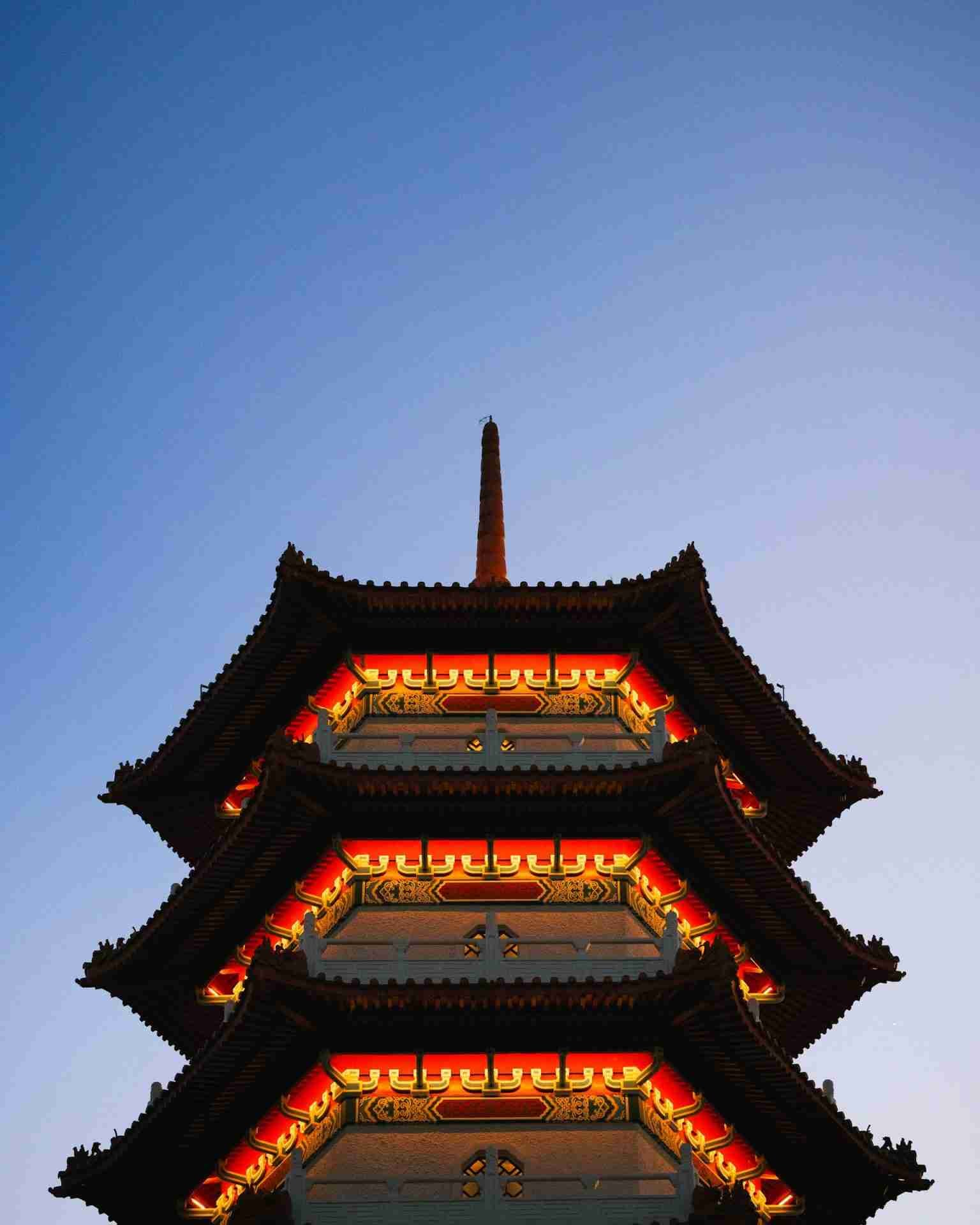
Tucked inside the Chinese Garden in Singapore, the Cloud Pagoda offers a quiet photographic subject shaped by symmetry, water, and careful placement rather than scale. The structure rises from a landscaped setting where pathways, bridges, and plantings are deliberately composed, giving photographers clear visual order in every direction. Unlike open landscapes, this location rewards precision and restraint, as small shifts in position dramatically affect balance and alignment. Light reflects off surrounding water and pale stone surfaces, subtly changing contrast throughout the day. The pagoda feels calm and intentional, making it well suited to photographers who enjoy working slowly and refining composition.
Best Photography Opportunities
• Centered View From the Main Pathway
The straight approach toward the pagoda creates a clean, centered composition that emphasizes symmetry and proportion. From this position, roof layers align naturally, reinforcing the structure's vertical rhythm without visual noise. Minor adjustments in camera height can improve separation between roof tiers and reduce overlap. Early morning light is particularly effective here, as softer contrast preserves detail across the frame. This viewpoint suits photographers who enjoy precise framing and controlled composition.
• Reflections in the Surrounding Water
The water around the pagoda provides opportunities to incorporate reflections that reinforce balance and structure. Lower shooting angles allow the reflection to occupy more of the frame, creating a strong visual relationship between subject and surface. Calm conditions produce cleaner reflections, but even slight movement in the water can add texture without distraction. Managing glare is important, especially as the sun rises higher. This approach benefits from patience and careful timing rather than rapid shooting.
• Roof Geometry
Photographing the pagoda from a slight angle introduces depth while highlighting the layered construction of the roof. This perspective reveals repeating lines and overlapping forms that are less obvious from straight on views. Side light helps define edges and surfaces without producing harsh shadows. Longer focal lengths can reduce background clutter and keep attention on structure. This angle works well when symmetry feels too rigid and a more dynamic interpretation is desired.
• Garden Elements
Railings, bridges, and nearby trees can be used to frame the pagoda while adding context to the scene. Careful positioning is essential, as the garden is tightly designed and visual clutter can appear quickly. Mid range focal lengths usually provide the best balance between subject and surroundings. This approach creates a sense of place without overwhelming the main structure. It is especially effective when light is even and contrast remains controlled.
• Architectural Features
Closer studies of roof edges, support columns, and decorative elements offer a quieter way to interpret the pagoda. These images rely on repetition, texture, and form rather than overall scale. Flat or lightly overcast light works well, allowing details to stand on their own without strong shadow contrast. Detail work provides variety when wider compositions feel complete. It is also a productive option during busier visiting hours.
Best Time to Visit
Early morning is consistently the best time to photograph the Cloud Pagoda, particularly for photographers who value calm conditions and controlled light. During these hours, visitor numbers are lower, making it easier to work centered compositions without interruptions. Light is softer and more directional, which helps preserve detail in the roof structure and reduces glare from surrounding water and stone. As the day progresses, overhead sun flattens surfaces and increases contrast, making careful exposure more challenging. Late afternoon can still be workable when cloud cover softens the light, but foot traffic tends to increase. Seasonal variation in Singapore is subtle, though periods following rainfall often result in cleaner air and slightly richer tones. Overcast days are especially useful here, as even light supports architectural photography and minimizes harsh reflections.
How to Get There
The Chinese Garden is located in western Singapore and is easily reached by public transport, with the nearest MRT station within walking distance. Well marked paths lead through the garden to the Cloud Pagoda, allowing straightforward access for photographers carrying equipment. The walkways are paved and mostly level, making tripod use manageable throughout the area. Visiting early in the day improves flexibility when setting up compositions and reduces interference from crowds.
Recommended Photography Gear
A standard zoom lens is well suited to this location, covering both wider compositions and moderate detail work without frequent lens changes. A short telephoto lens is useful for isolating roof layers, repeating forms, and decorative details while minimizing background distractions. A lightweight tripod is strongly recommended, as precise framing plays a major role in successful images and light levels are lower in the morning. A polarizing filter can help manage reflections on water and reduce glare from stone surfaces, though it should be adjusted carefully to avoid uneven results. Carrying minimal gear is practical, as the garden encourages slow movement and repeated refinement rather than extensive relocation.
Nearby Photography Locations
The arched bridges throughout the garden offer strong curves and repeating patterns that contrast with the pagoda's vertical form. They work well as standalone subjects or as foreground elements leading into wider scenes.
Located nearby, this area presents a more restrained layout with open space and simpler lines. It provides a useful contrast to the structured density of the Chinese Garden.
This section supports close studies of form and shape at a smaller scale. It is well suited to detail focused photography and slower observation.
The lake introduces broader views and open water that differ from the enclosed garden environment. It works well for wider compositions under soft light.
• Garden Pathways and Pavilions
Smaller structures and winding paths throughout the complex offer transitional subjects between major features. These locations help build a cohesive visual series rather than a single subject study.
Comments
Loading comments…