
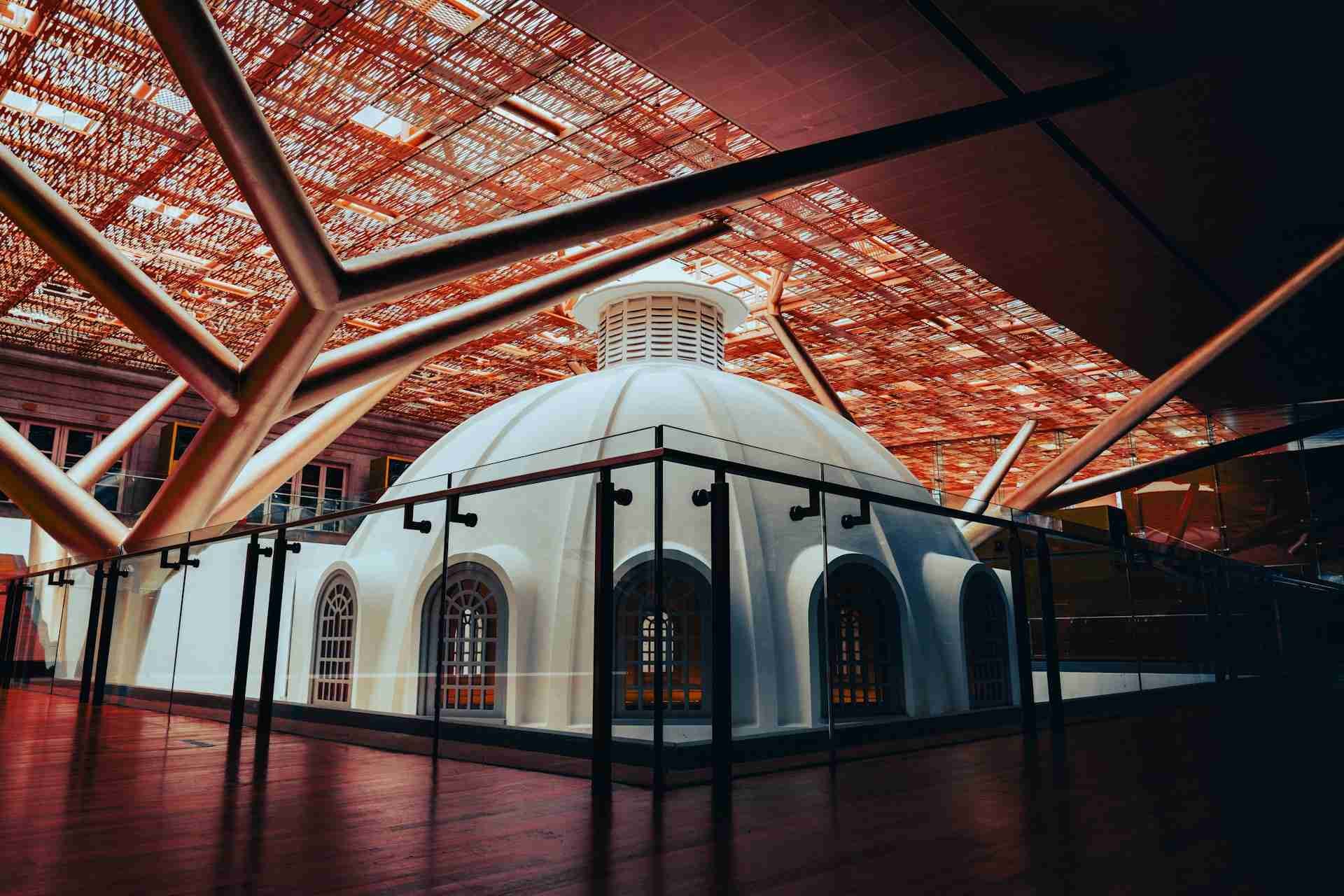
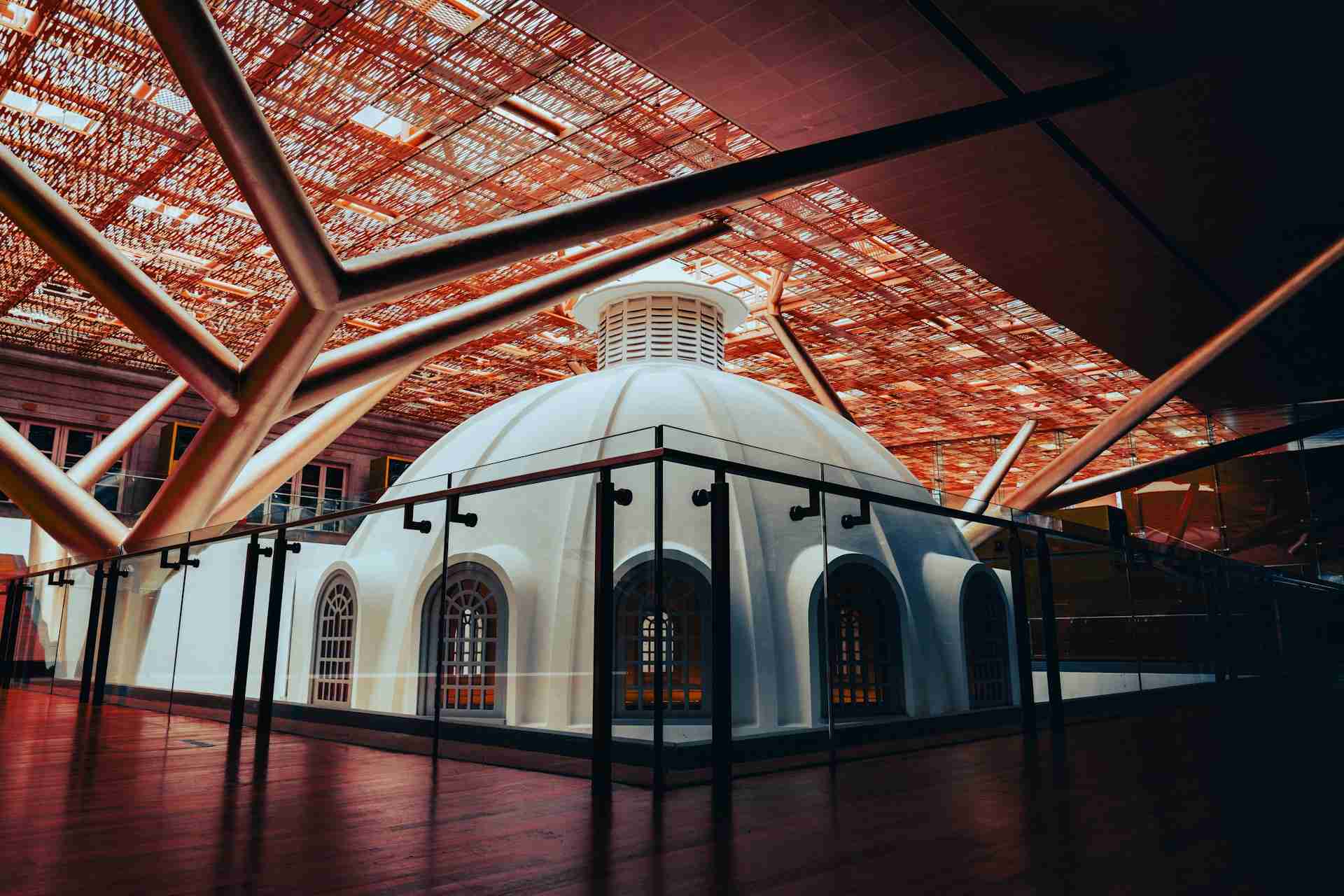
Sitting in the heart of Singapore, the National Gallery Singapore offers photographers an environment shaped by scale, structure, and controlled light. The space blends historic architecture with modern interventions, creating layers of visual rhythm that reward careful framing. Long corridors, open courtyards, and filtered daylight produce scenes that feel ordered without being rigid. Unlike outdoor locations, this is a place where light behaves predictably but changes subtly as you move through the building. It suits photographers who enjoy working with geometry, repetition, and spatial relationships rather than dramatic conditions.
Best Photography Opportunities
• Central Courtyard
The courtyards act as visual anchors within the building, drawing light down into the interior spaces. From above, they create strong geometric compositions that emphasize symmetry and negative space. From ground level, they provide upward looking perspectives where lines converge cleanly. Light here shifts gradually throughout the day, allowing repeated attempts at similar compositions with small refinements. These spaces reward patience and precise alignment.
• Grand Staircases
Staircases within the gallery offer layered compositions built from repeating steps, railings, and shadows. They work especially well when photographed from slightly elevated positions that reveal depth and rhythm. People moving through the frame can be used deliberately to introduce scale without dominating the scene. These transitional spaces feel dynamic while remaining visually ordered. They are ideal for photographers interested in movement within structured environments.
• Long Corridors and Framed Sightlines
The gallery's corridors create strong linear compositions that guide the viewer's eye through the frame. Doorways, columns, and arches naturally segment the space, making alignment especially important. Even small shifts left or right can dramatically change balance, which encourages careful positioning. Light is often softer here, helping preserve detail across walls and floors. These areas are well suited to minimalist interpretations.
• Upper Level Walkways and Overlooks
From the upper levels, photographers can look down into courtyards and across interior spaces, revealing how the building fits together. These views emphasize scale and layout rather than individual details. Railings and floor patterns can be used as leading lines that guide attention inward. This perspective works well with longer focal lengths to control visual clutter. It is especially effective when visitor movement is minimal.
• Architectural Details
Beyond wide views, the gallery offers abundant opportunities for close studies of columns, windows, and surface textures. These images rely on repetition and subtle contrast rather than strong light. Flat or evenly lit conditions are ideal, allowing details to stand on their own. Detail work provides variety when larger compositions feel complete. It also allows productive shooting during busier hours.
Best Time to Visit
Weekday mornings are generally the most productive time to photograph inside the gallery. Visitor numbers are lower, which makes it easier to work clean compositions without constant interruptions. Early hours also tend to offer more stable interior light before the building fills with activity. Midday can become challenging as foot traffic increases and popular areas become crowded. Late afternoons may work if visitor flow slows, though light levels inside remain relatively consistent throughout the day. Seasonal changes have little effect indoors, but overcast days outside often result in softer interior light near windows and courtyards. Planning visits around quieter hours matters more here than chasing specific lighting conditions.
How to Get There
The National Gallery Singapore is centrally located and easily reached by public transport, with several MRT stations within walking distance. Entry to the gallery requires an admission ticket. Security screening is standard, and some areas may have restrictions on tripod use, so checking current guidelines before visiting is recommended. The building is fully accessible, with elevators connecting all levels. Arriving early helps maximize flexibility when choosing viewpoints and setting up compositions.
Recommended Photography Gear
A standard zoom lens is ideal for working in the gallery, allowing photographers to move between wide interior views and tighter architectural studies without changing lenses frequently. A short telephoto lens can be useful for isolating details and compressing repeating elements. A tripod may be helpful for low light areas, but its use may be restricted in certain spaces, so a camera with good low light performance is valuable. Neutral colored clothing and a compact camera bag help maintain a low profile in busy areas. Carrying minimal gear makes it easier to move smoothly through the building and respond quickly to changing conditions.
Nearby Photography Locations
Just across the street, the cathedral offers tall lines, open interiors, and a quieter visual rhythm. It provides a useful contrast to the gallery's layered complexity.
This open green space allows for wider compositions that place surrounding civic buildings in context. It works well for scale studies and transitional images.
• Civic District Streetscapes
The surrounding streets feature historic facades, colonnades, and open plazas that complement the gallery's architectural language. They are useful for building a cohesive visual series.
• Singapore River Walkways
A short walk away, the river introduces reflections and horizontal lines that differ from the gallery's vertical emphasis. It suits calmer compositions under soft light.
This nearby area offers contemporary forms and open sight lines that contrast with the gallery's historic structure. It allows photographers to shift visual tone without travelling far.
Comments
Loading comments…