
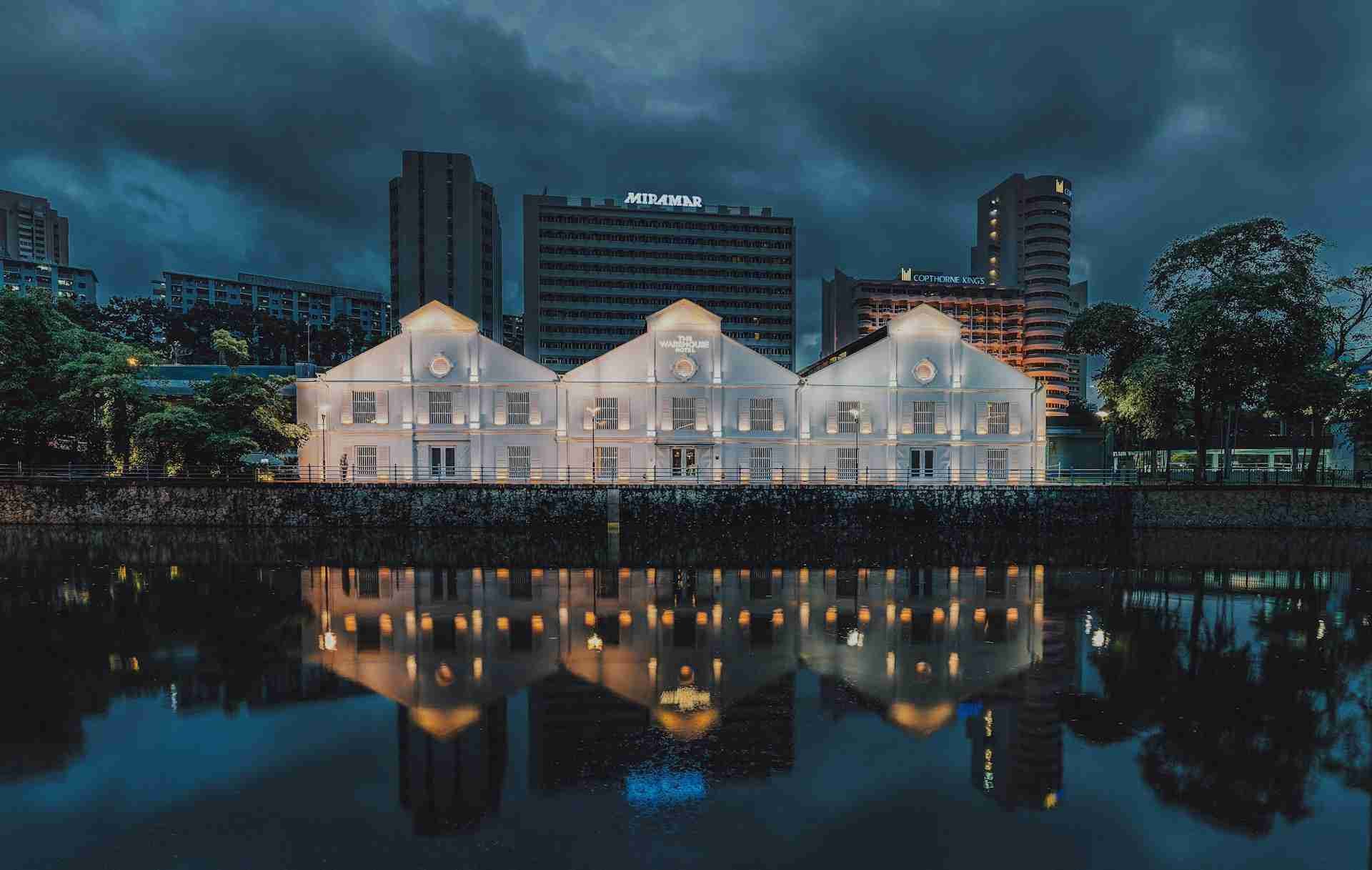
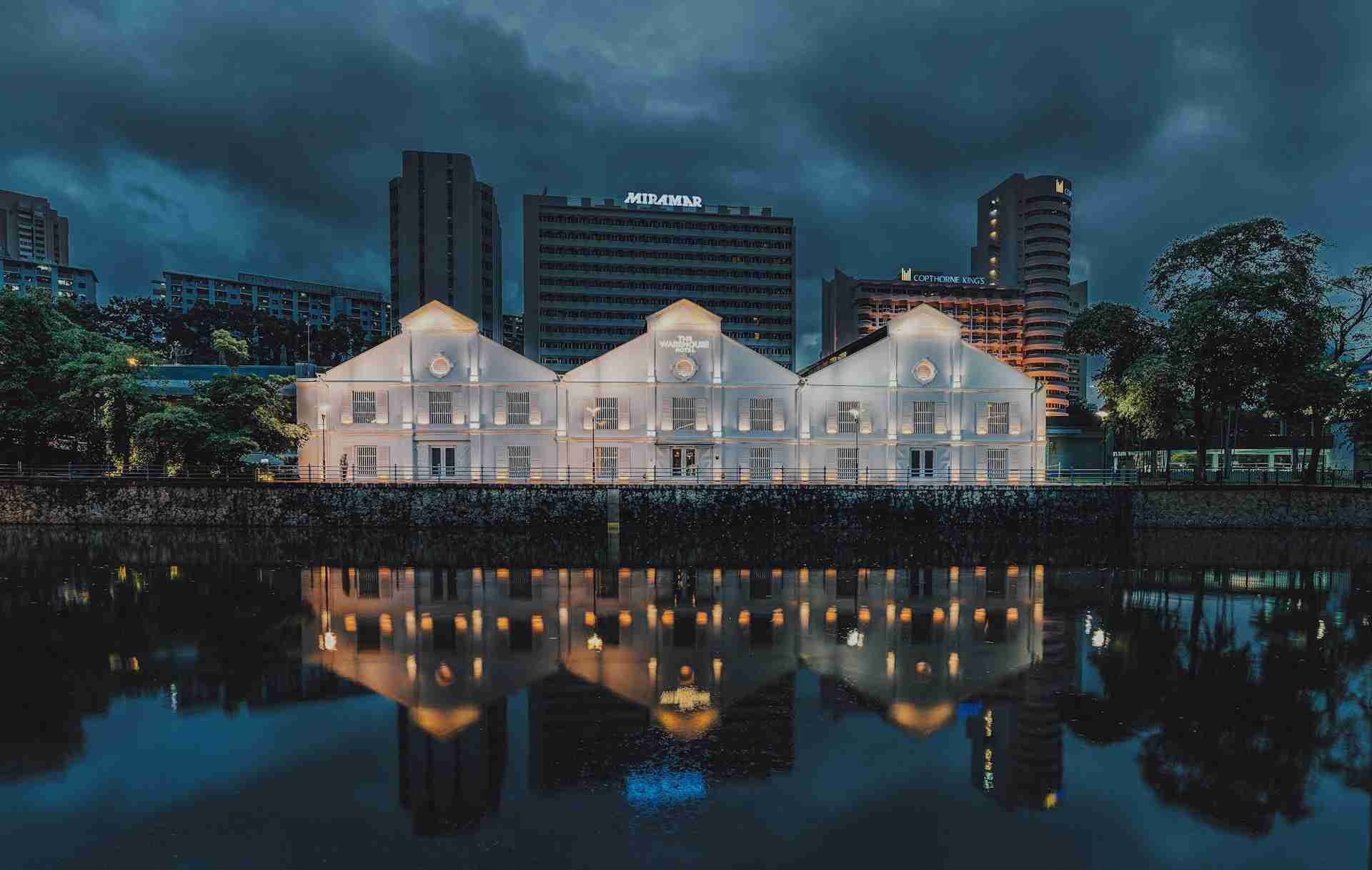
The Warehouse Hotel sits along a calm stretch of the Singapore River in Robertson Quay, offering a clean architectural profile with thoughtful details and natural rhythm. Once a spice warehouse in the late 19th century and later a nightclub in the 1980s, the structure now functions as a boutique hotel while retaining its industrial character. The whitewashed façade, symmetrical rooflines, and evenly spaced windows create a frame that reads clearly through the lens. What makes it especially compelling is the way light interacts with its form. Reflections from the river shift throughout the day, shadows fall in soft angles across the surface, and interior lighting creates a warm glow as the sky darkens. Whether you are interested in architectural structure, reflection, or the blend of natural and built elements, this spot along the quay offers strong images in nearly every condition.
Best Photography Opportunities
• Façade Across the River
Standing directly opposite the hotel across the river gives you a full, balanced view of its symmetrical face. The river acts as a natural mirror, and reflections are particularly smooth in the morning when the surface is still. A wide to mid range lens allows you to include palm trees, boats, and sections of the quay to frame the structure with added context. The hotel sits low against the skyline, so it pairs well with a clean sky or early clouds for balanced composition. Long exposures are especially effective in this position, softening the river and allowing for subtle light shifts across the surface.
• Textural and Material Details
The hotel's restrained material palette includes smooth white render, black metal accents, and wooden door elements that show best when lit from the side. Close up shots of doors, signage, and metal railings offer excellent opportunities for photographers who prefer to work in shape and form. These details hold tone well in both color and monochrome. Use a mid range zoom lens to isolate repeating patterns or to flatten perspective for graphic balance. Early or late in the day offers the strongest directional light, revealing fine surface texture without overexposing bright walls.
• Reflections and Water Movement
The river acts as a changing foreground throughout the day. Morning light is clean and direct, giving crisp mirror images of the hotel's geometry. By late afternoon, color warms and light skims across the water's surface, creating broken reflections and soft motion trails. You can use a polarizing filter to cut surface glare or lean into the movement with longer shutter speeds. The addition of passing boats, walkers along the quay, or shifting cloud light brings a live element to an otherwise static subject. Overcast conditions allow for even contrast and let the structure carry more of the frame.
• Interior and Lobby Area
The hotel's interior maintains its industrial past through exposed trusses and high ceilings, contrasted by warm wood tones and soft artificial lighting. The bar and lobby areas are open, minimal, and strong in form, especially during mid morning when the space is quieter. These interiors benefit from wide aperture lenses and careful white balance control. Because the tones are neutral and dark, shadow detail becomes important. A small tripod or handheld support can help maintain sharpness at lower shutter speeds without adding much to your gear weight.
• Blue Hour and Night from the Walkway
As night falls, the hotel's internal lights create a soft amber contrast against the blue of the evening sky and the river. Tripod shots from the footpath in front of the hotel or across the river allow you to work with long exposures that pull in trail light from passing river taxis or cars on the adjacent road. Light posts along the quay add layers of brightness, which can be used to frame or divide the scene. Blue hour is particularly good for blending warm interior light with the cool ambient tones that reflect off the water.
Best Time to Visit
Mornings are ideal for shooting the façade with clean natural light and strong reflections in the river. The air is clearer and the footpaths are less busy, making it easier to set up without interruption. From a technical standpoint, this is the best time for balanced contrast and low ISO work. By late afternoon, the sunlight warms and shadows lengthen, creating deeper texture along the building's surface. Golden hour adds color to the sky and reflections, especially when clouds begin to catch light above the skyline.
Evenings offer the most dramatic shift in tone. As the hotel's lights turn on, a warm interior glow forms clear contrast with the deepening blue of the sky and water. This is a good window for long exposure work that captures both ambient and artificial light. On overcast days, the scene remains usable throughout, with softer transitions and better control over highlight detail. Rain can also be useful here, adding reflective sheen to the walkways and amplifying river texture.
Singapore's consistent climate means there is no off season for photographing this location, though it is worth checking for scheduled events or construction that may affect access to the walkway or the river's edge.
How to Get There
The Warehouse Hotel is located at 320 Havelock Road in the Robertson Quay district of central Singapore. It is easy to reach on foot from nearby neighborhoods like Clarke Quay and Tiong Bahru, and well connected by public transport. The closest MRT stations are Fort Canning and Clarke Quay, both of which are within a ten to fifteen minute walk. Buses serve Havelock Road frequently, and ride hailing services can drop you off directly in front of the hotel.
There is limited on site parking available for guests, but public parking lots can be found nearby. The riverside footpath in front of the hotel is open to the public and offers uninterrupted views of the structure and surrounding landscape. There are no permits or fees required to photograph the exterior, and tripods are permitted in public areas as long as pedestrian access is not blocked. For interior photography, seek permission from the hotel's management, especially if using professional equipment.
Recommended Photography Gear
A wide angle lens in the 16 to 24 millimeter range works well for full façade views across the river or close range compositions that include the hotel's surroundings. A 24 to 70 millimeter lens is ideal for architectural detail, reflections, and framing through foreground elements. For night photography or blue hour, a lens with good light transmission and sharp corners will help make the most of longer exposures.
A solid tripod is essential for riverfront work and low light interiors. A polarizing filter helps reduce water glare during daylight, while a neutral density filter allows for longer shutter speeds when shooting in bright conditions. A microfiber cloth is useful for wiping down equipment in humid or wet weather. If you plan to shoot at night, bring extra batteries, as extended exposure times and live view previews can drain power quickly.
A compact light stand or support may be useful for interior work, and a rain sleeve or cover is a good idea given the frequent light rain showers in Singapore. Keep your gear light and portable, especially if moving between locations on foot or using public transport.
Nearby Photography Locations
The riverwalk surrounding the hotel continues for several blocks in either direction, offering river views, footbridges, and a mix of old warehouses and modern residential buildings. This stretch is great for photographing human interaction with the space and working with layered reflections in the water.
A short uphill walk from the river, this park combines heritage gates, quiet trails, and elevated views across parts of central Singapore. Early morning light is particularly good for creating mood and natural depth in wide frames.
Located downstream from Robertson Quay, this vibrant riverside district offers bright color, architectural variation, and strong reflections at night. It is especially well suited for handheld or tripod work in low light.
• Kim Seng Bridge
This bridge provides a raised perspective over the Singapore River and is a good place to capture leading lines or river scenes stretching into the distance. Light is consistent throughout the day, and the vantage point allows for layered city views.
Just inland from the river, Tiong Bahru offers a completely different pace and subject matter. Curved 1930s buildings, stairwells, and quiet lanes make it a strong setting for architectural detail and street photography.
The Warehouse Hotel rewards photographers who appreciate structure, texture, and the subtle shifts that occur in urban light. With easy access, consistent conditions, and a well designed subject that sits comfortably in its riverside environment, it offers the chance to build a thoughtful and varied portfolio without needing to travel far or work in extreme conditions.
Comments
Loading comments…