
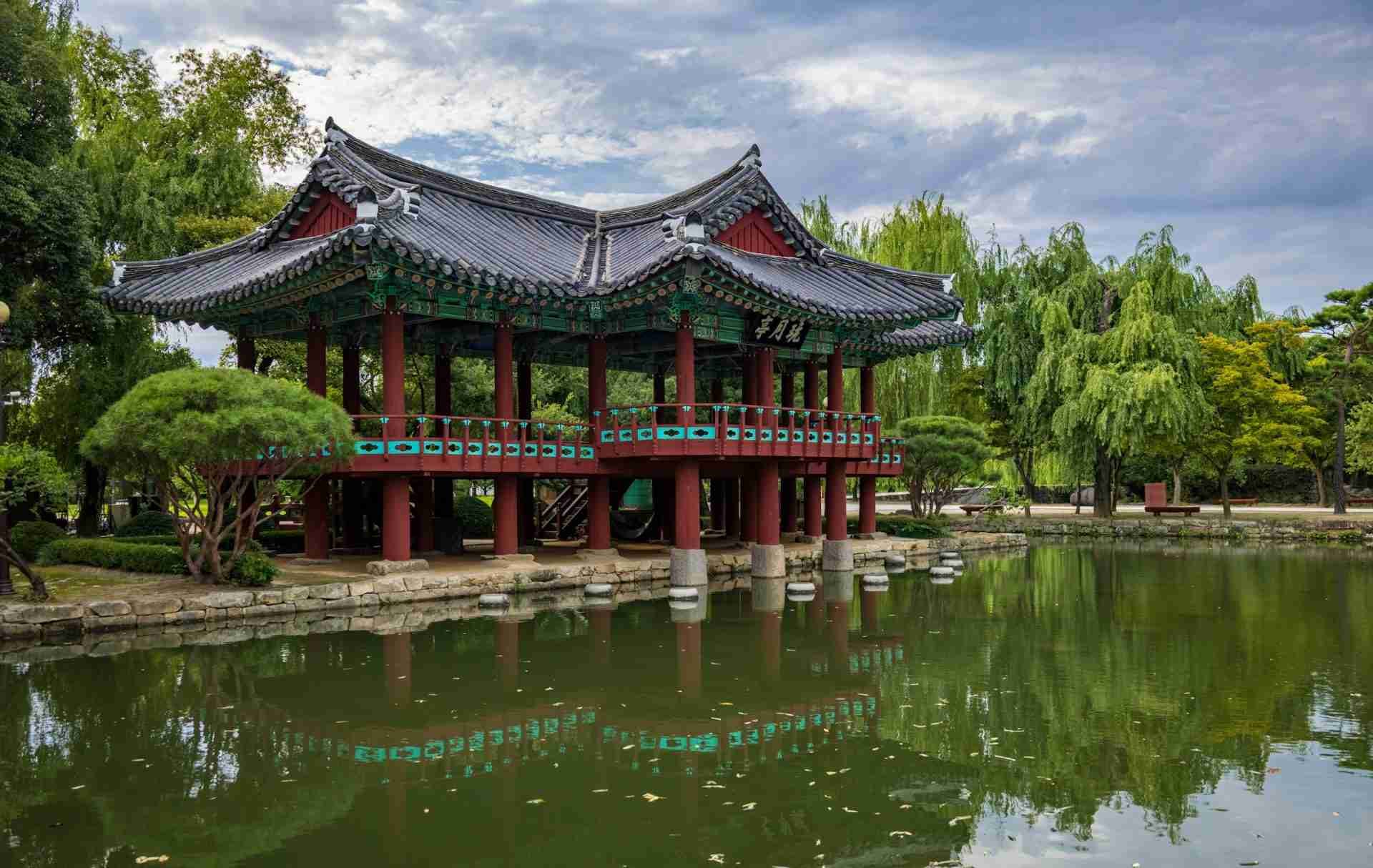
Gwanghanruwon Garden is a traditional Korean garden centered around a large pond and the elegant Gwanghallu Pavilion. Located in Namwon, the garden blends water, wooden architecture, stone bridges, and carefully arranged trees into a balanced and deliberate landscape. The pavilion appears to float above the pond when viewed from the right angle, and its dark timber structure contrasts beautifully with the lighter tones of water and sky. Unlike mountain temples or cliff side shrines, this location is calm and structured, built around symmetry and reflection rather than dramatic elevation. It's a place where composition depends on careful positioning and patience with light. For photographers, the reward comes from working the pond edges and understanding how the architecture interacts with its mirrored surface.
Best Photography Opportunities
• Gwanghallu Pavilion Reflections
The most recognizable composition is the reflection of Gwanghallu Pavilion in the pond. Shooting from the opposite bank allows you to frame the entire structure along with its mirrored image below. Calm conditions are essential, as even small ripples can disrupt symmetry. Positioning slightly off center can make the reflection feel more natural rather than rigidly balanced. Early morning often provides the stillest water and fewer visitors along the shoreline. This composition works best when you take time to fine tune alignment and horizon level.
• Stone Bridges and Layered Framing
Several stone bridges cross portions of the pond and create strong leading lines toward the pavilion. By aligning a bridge in the foreground, you can guide the viewer's eye directly to the main structure. A moderate focal length keeps the perspective realistic while maintaining depth. These bridges add structure to what might otherwise be a simple water scene. They are particularly effective when light highlights their texture against darker water. Including people crossing at a distance can add scale without overwhelming the frame.
• Seasonal Blooms and Autumn Color
In spring, blossoms around the pond introduce soft color that contrasts with the dark wood of the pavilion. Framing branches in the foreground adds depth and seasonal context. In autumn, surrounding trees shift to warmer tones that reflect vividly in the pond. Overcast days can enhance these colors without harsh contrast. Timing your visit for peak seasonal change significantly alters the mood of the garden. These conditions create layered compositions built around both architecture and foliage.
• Night Illumination
After dark, the pavilion is often illuminated, and the reflections become more pronounced against the darker water surface. A tripod allows for longer exposures that smooth subtle ripples. The warm glow of interior lighting contrasts nicely with cooler night tones. Careful exposure control prevents highlights from overpowering the wooden details. Night sessions can produce cleaner frames with fewer visitors in view.
• Elevated or Slightly Higher Perspective
While most compositions are taken from pond level, slightly elevated viewpoints within the garden allow you to show more of the surrounding layout. From these angles, you can include additional buildings and pathways beyond the main pavilion. This adds context and gives a fuller sense of the garden's design. A moderate focal length works well to balance structure and open water. These compositions feel less symmetrical and more environmental.
Best Time to Visit
Early morning is often the most productive time at Gwanghanruwon Garden. Light is softer, reflections are cleaner, and foot traffic is minimal. Morning sessions also reduce the likelihood of wind disturbing the pond surface. Late afternoon can work well as angled light adds subtle warmth to the pavilion's wooden surfaces.
Midday light can be harsh, especially in summer when the sun is high and shadows become strong. Overcast conditions are often beneficial, as they maintain detail in both wood and stone without extreme contrast. Spring and autumn are particularly rewarding due to blossoms and fall color. Winter offers a quieter atmosphere and, occasionally, frost or snow that changes the tone of the garden entirely.
How to Get There
Gwanghanruwon Garden is located in Namwon-si and is easily accessible by road or public transportation. Namwon can be reached by train or bus from larger cities such as Jeonju or Seoul. From central Namwon, the garden is a short taxi ride or walk depending on your starting point.
An entrance fee is required to access the garden grounds, and pricing may vary over time. The pathways inside are well maintained and flat, making it easy to move around with photography gear. Because this is a popular cultural site, arriving early helps avoid crowds, especially during festival periods or peak blossom season.
Recommended Photography Gear
A standard zoom lens covers most compositions, from full pavilion reflections to moderate framing of bridges and surrounding trees. A wide lens can help include more of the pond and foreground elements, but careful levelling is important to avoid distortion. A short telephoto is useful for isolating architectural details and layered seasonal foliage.
A tripod is strongly recommended for low light or night photography and for precise reflection compositions. A polarizer can reduce glare on the water, though removing it may strengthen reflections depending on angle. Since access is easy and the terrain is flat, carrying a slightly broader kit is manageable without difficulty.
Nearby Photography Locations
• Chunhyang Theme Park
Located adjacent to Gwanghanruwon, this park features traditional style structures and open grounds. It provides additional architectural subjects within walking distance.
• Jirisan National Park
A short drive from Namwon, this park offers mountainous landscapes, forest trails, and seasonal color. It contrasts with the structured design of the garden by providing rugged natural scenery.
• Jeonju Hanok Village
Known for its traditional Korean houses and tiled rooftops, this village offers street and architectural photography opportunities. It complements the pavilion setting with broader cultural context.
• Seomjingang River
Flowing near the region, the river provides calmer landscape scenes with open water and rural surroundings. It offers a quieter alternative to the structured pond compositions.
• Baekdudaegan National Arboretum
A large arboretum with themed gardens and forest paths. It expands seasonal and botanical photography options beyond Gwanghanruwon.
Comments
Loading comments…