
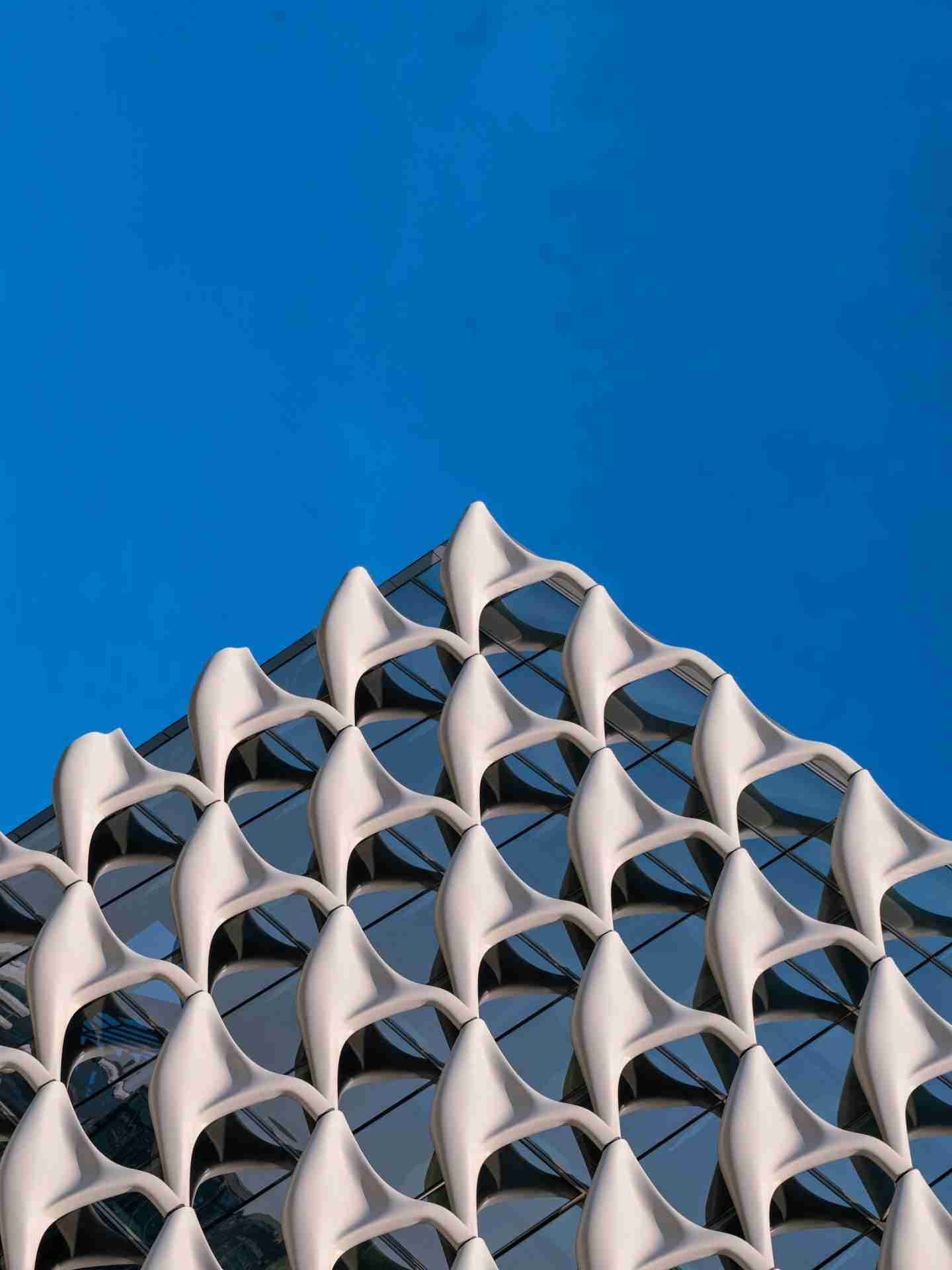
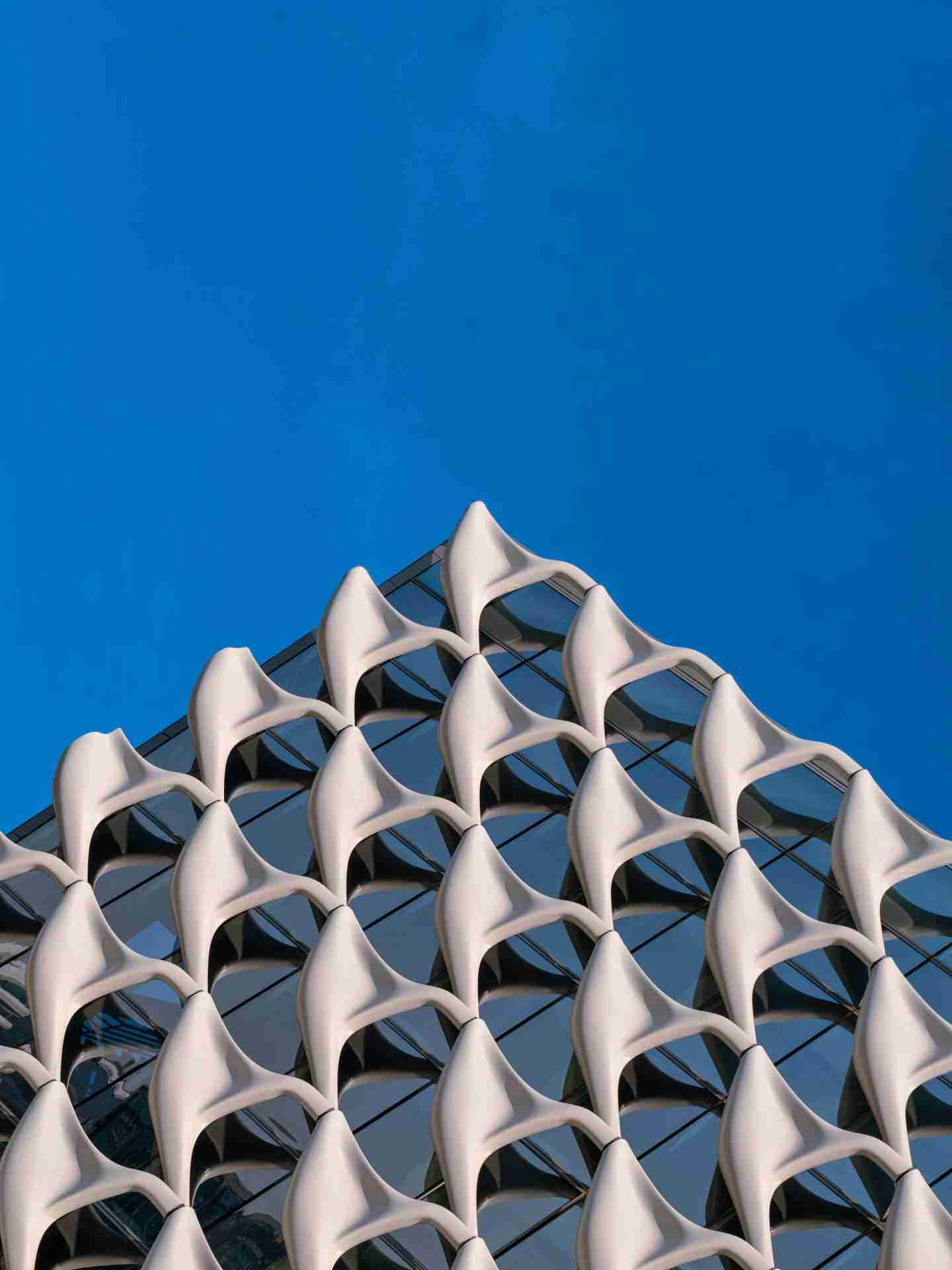
Rising from the Techno Valley of Seoul's Gwacheon district, the Kolon One & Only Tower is a modern architectural landmark that fuses innovation, sustainability, and sculptural elegance. Designed by Morphosis Architects and completed in 2018, the tower serves as the headquarters of Kolon Group, a South Korean conglomerate rooted in textiles and materials science. Its defining feature is a bold, exoskeletal lattice structure that wraps around a shimmering glass core—an external frame that references the company's roots in industrial fibers while delivering a highly photogenic, visually complex form.
For photographers interested in contemporary architecture, abstract geometry, and urban design, the Kolon One & Only Tower is a rewarding subject. It stands apart in a district known for technology and education, offering a clean visual statement amid more conventional office and residential blocks. With its reflective surfaces, sharp lines, and ever-shifting light play, the tower responds dynamically to the time of day and weather—making it a structure worth returning to in varying conditions.
Best Photography Opportunities
• Symmetry and Elevation from the Base Plaza
The tower rises from a generously scaled open plaza, providing ideal conditions for low-angle architectural compositions that exaggerate scale and precision. Standing near the main entrance and looking directly up, you can align the intersecting steel exoskeleton to form powerful leading lines that draw the eye skyward toward the tower's peak. A wide-angle lens in the 14–24mm range helps stretch the vertical elements and preserve perspective while capturing the open space surrounding the base. The minimalism of the plaza—free of clutter and visual noise—makes it easy to isolate the tower in compositions that emphasize its imposing stature. Shoot in early morning or just before sunset to catch the long, directional shadows that add depth to the steel grid and glass façades.
• Architectural Abstraction and Lattice Patterns
The hallmark of the Kolon Tower is its exoskeletal framework: an angular weave of steel that envelops the entire building like a high-tech fabric. This design isn't just decorative—it's deeply photogenic. Use a telephoto lens from mid-distance or across the plaza to compress the overlapping planes of the frame, creating a sense of density and rhythm. These compositions lend themselves to abstraction, especially when light and shadow cut across the surface. On clear days, the strong contrast between lit and shaded segments of the façade produces graphic compositions with high tonal range. On cloudy days, the uniformity of the light enhances the texture and detail in the steel itself. For photographers interested in architectural detail studies, this façade offers hundreds of isolated micro-compositions with unique shapes, patterns, and reflections.
• Reflective Surface Studies with Sky and Movement
The tower's glass skin reflects its environment—sky, cloud, trees, and nearby structures—in fragmented shards that change minute by minute. On breezy, partly cloudy days, the reflections shift constantly, especially on the upper levels where the curvature of the building slightly distorts the image. These reflections create tension between the clean modernist lines of the structure and the ephemeral softness of its mirrored surroundings. Stand back with a standard zoom to include both sky and passing foot traffic, or frame tighter with a 50mm lens to isolate complex overlays of interior and exterior. For dynamic compositions, look for moments when pedestrians or cyclists pass by, their movement caught as blur in long exposures or as small figures to anchor your frame.
• Nighttime Photography with Internal Glow
As evening falls, the Kolon One & Only Tower reveals another identity: its glass core illuminates from within, with warm internal lights flickering across floors while the steel frame glows with exterior spot lighting. Blue hour is the ideal time to shoot the building against a cobalt sky, while the transition into night allows for longer exposures and deeper contrast. Position your tripod across the road or on the edge of the plaza to create symmetrical compositions, or shift to a side angle to capture depth and perspective between lit and unlit sections. Use f/8 to f/11 for sharpness across the frame and a shutter speed of 10–30 seconds to soften movement and emphasize ambient glow. If clouds roll in during nightfall, their reflection on the tower can produce a painterly, almost surreal effect—especially in long exposures.
• Environmental Framing with Trees and Sky
Although the tower stands in an urban innovation district, its surroundings include landscaped walkways, planted trees, and views toward the nearby ridgelines of Gwacheon's forested hills. This offers photographers the opportunity to soften the composition by introducing organic elements into the foreground—blossoms in spring, fiery leaves in autumn, or bare limbs in winter that frame the glass tower in crisp contrast. A wide-angle lens is best here for environmental portraits of the building, while a telephoto lens from farther back along walking trails can compress the greenery and the tower into a layered composition. Shooting in golden hour introduces warmth and detail to the steel frame, while shooting under soft cloud cover highlights the tower's reflective character and spatial clarity.
Best Time to Visit
The Kolon One & Only Tower reveals different qualities at different times of day, and choosing your timing depends on the visual story you want to tell. Mornings provide even light across the façade and softer sky reflections, particularly useful for detail work and base-level shooting. Afternoon light from the west enhances texture in the steel framework and casts dramatic shadows on the plaza and surrounding walls. Sunset and golden hour are ideal for wide compositions with long shadows and a warm tone that counterbalances the cool steel and glass palette.
The tower is particularly beautiful during blue hour and into the night, when the internal lighting animates the lattice and creates glowing rhythms within the façade. Long exposures during this time produce luminous compositions with a cinematic atmosphere. Overcast days work well for abstract compositions and shadowless texture work, allowing photographers to focus on line and form rather than contrast.
Seasonally, spring brings blooming trees into the plaza, ideal for adding color and soft foregrounds to sharp compositions. Summer offers long daylight shooting windows but comes with haze and stronger highlights. Autumn produces bold, contrasting tones with yellow and orange foliage around the plaza walkways. Winter, especially after snowfall, offers minimalist opportunities with snow clinging to the steel frame and reflecting in the glass for a completely different visual character.
How to Get There
Located in Gwacheon's Science and Technology Complex just south of Seoul proper, the Kolon One & Only Tower is well connected by both public and private transportation. The most direct route is via Seoul Metro Line 4 to Government Complex Gwacheon Station. From there, a 10 to 15-minute walk leads through a clean, well-organized campus of innovation buildings, with clear signage pointing toward the Kolon Tower. For those coming by taxi or car, the tower sits directly along Wirye-daero, a main thoroughfare that provides clear visibility and multiple pedestrian access points.
The surrounding area is open and walkable, with low-rise landscaping, bicycle lanes, and pedestrian trails that make navigation easy and unobstructed. Street-level signage and wide sidewalks guide you toward optimal shooting locations. There is no fee to photograph from public spaces around the building, and the plaza is open throughout the day. Interior access is limited and typically restricted to business visitors, but all key photographic opportunities exist from exterior locations.
Parking is available in the immediate area, though it may fill during weekday business hours. Early morning or late afternoon visits offer the best light and easiest access to vantage points without foot traffic or vehicular obstruction.
Recommended Photography Gear
A well-rounded kit is essential to capture the architectural nuances and environmental interplay of the Kolon One & Only Tower. A wide-angle lens (16–35mm) is key for dramatic perspectives from the base and for shooting the full structure from short distances. A standard zoom (24–70mm) offers flexibility when composing tighter environmental scenes or including human elements for scale. A fast prime lens (50mm or 85mm) is perfect for capturing abstract reflections and for handheld low-light work when interiors or night scenes are in play.
For architectural detail and compression, a telephoto lens (70–200mm) is critical. Use it to isolate lattice geometry, align reflected shapes, or compress the tower with its surrounding context. A sturdy tripod is essential for long exposures, especially for twilight and night shooting. ND filters allow for extended daytime shutter speeds if you want to smooth clouds or movement, while a polarizer helps cut glare and deepen sky contrast during midday work.
Rain covers and lens wipes are advisable in summer or transitional seasons when condensation or drizzle may affect glass surfaces. A microfiber cloth is a must when working near fountains, planters, or humid weather conditions.
Nearby Photography Locations
This expansive museum complex is just a short walk away and provides its own array of futuristic architectural forms. The juxtaposition of its sweeping curves, planetarium dome, and open plazas with the angularity of the Kolon Tower offers great opportunities for layered compositions or architectural pairings. The museum's outdoor exhibits and sculpture garden make excellent foreground elements for more complex environmental frames.
Located slightly west of the tower, Seoul Grand Park offers vast natural spaces, wooded trails, and a tranquil lake surrounded by footpaths and seasonal flowers. This area is ideal for longer lens compositions that incorporate the tower into a broader skyline or for minimalist contrasts between architecture and nature. Early morning fog across the lake can add an ethereal layer to your compositions, especially in cooler months.
Visible from elevated paths and hilltops nearby, this amusement park offers a completely different aesthetic—colorful, kinetic, and lively. Shooting from the perimeter or from above, you can incorporate elements of Seoul Land's rides and structures into wider cityscape images that feature the Kolon Tower as a visual anchor on the horizon. Ideal for photographers seeking to contrast the whimsical with the orderly.
• Gwacheon Equestrian Park and Trails
South of the building, these facilities offer open pastures, rustic fencing, and low-angle views that allow the tower to rise cleanly behind natural elements. The paths around the park are rarely crowded and provide quiet locations for composing more contemplative images with a rural-urban blend.
Running through the region, this streamside trail system offers repeating bridges, sleek railings, and clean modern infrastructure that mirrors the Kolon Tower's design sensibility. Long straightaways and minimalist urban landscaping make it a useful extension for photographers pursuing linear compositions, silhouettes, or long-exposure studies of movement.
Whether you're seeking architectural precision, abstract geometry, or the visual tension between technology and nature, the Kolon One & Only Tower offers a rewarding canvas. This building doesn't just reflect the sky—it reflects the future, wrapped in steel and glass, waiting to be reframed through your lens from every angle and in every light.
Comments
Loading comments…