
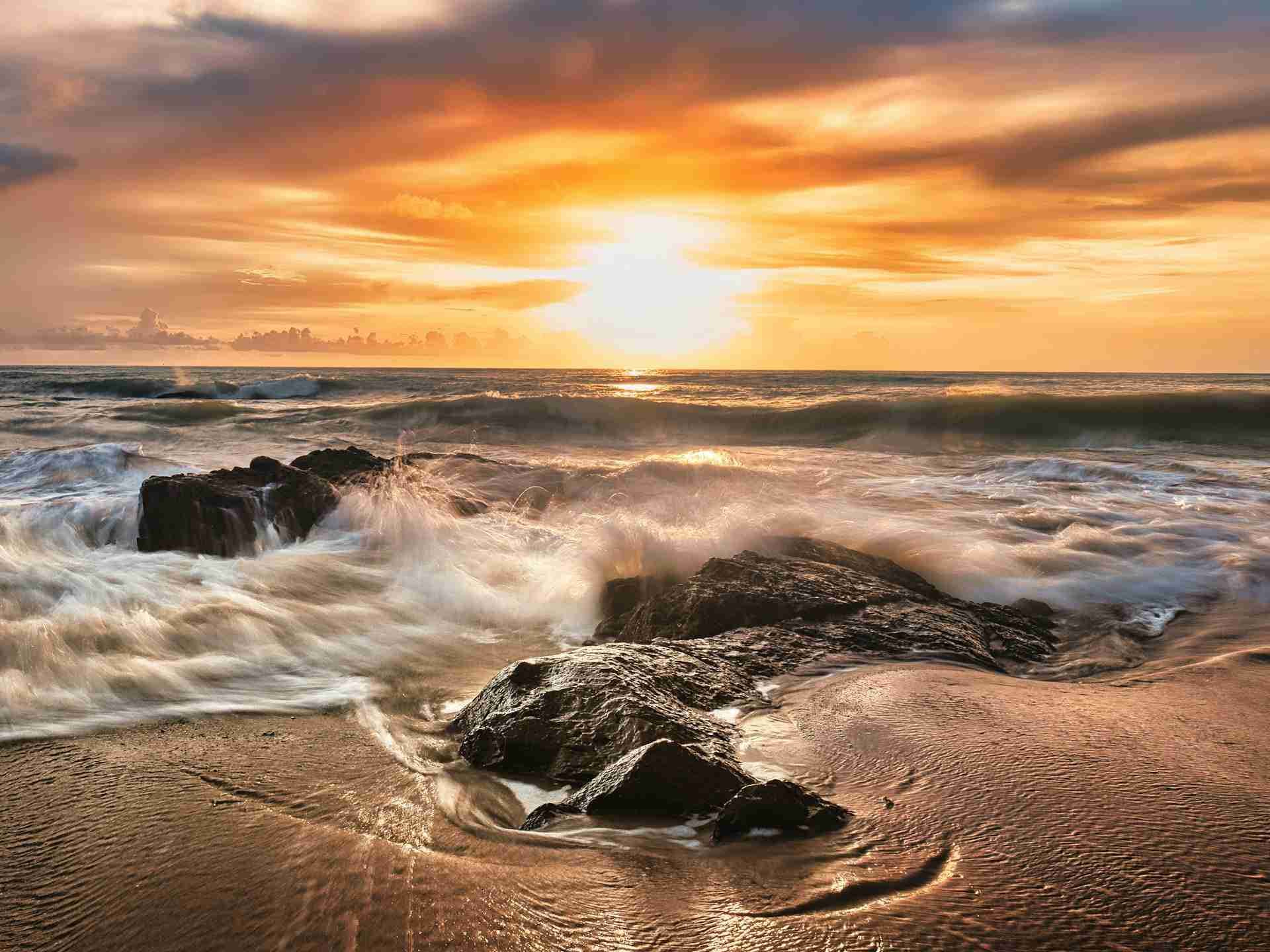
Bang Sak Beach stretches for several kilometers along the Andaman Sea, offering an unspoiled and peaceful alternative to the busier beaches further south. Backed by casuarina trees and dotted with small local eateries, the shoreline is wide, gently sloping, and often nearly empty even during peak tourist months. The fine golden sand, calm turquoise water, and soft evening light make it an excellent location for seascape photography. Subtle variations in tide, weather, and sky color give photographers fresh scenes to work with every day. The beach's open, uncluttered expanse is especially well suited to minimalistic compositions that focus on light, texture, and atmosphere.
Best Photography Opportunities
• Sunset Reflections on Wet Sand
: The long, flat expanse of Bang Sak Beach creates broad reflective surfaces when the tide is receding. In the last hour before sunset, these wet areas mirror the sky, producing images with double layers of color and cloud. Shooting low to the ground enhances the reflective effect, while including footprints or driftwood adds points of interest without disrupting the calm feel of the scene. A wide-angle lens works well to emphasize the sense of space, though a telephoto can compress the scene and highlight subtle gradations in light. On days with scattered clouds, the sunset light can turn the sand into a mosaic of warm golds and cool blues.
• Morning Calm and Fishing Boats
: Early mornings at Bang Sak Beach are quiet, with gentle light and cooler tones. Local fishing boats often rest just offshore or pulled up onto the sand, providing both cultural context and strong focal points for compositions. This is a good time to use a mid-range zoom to balance the boats with the distant horizon. If the tide is high, boats may be reflected in the shallow water near shore, creating symmetrical compositions. Overcast mornings are particularly good for evenly lit shots that highlight the texture of the sand and the weathered surfaces of the boats.
• Casuarina Tree Silhouettes
: The line of tall casuarina trees behind the beach provides striking vertical forms that contrast with the flat openness of the sea. Shooting at sunset or sunrise allows these trees to appear as silhouettes against the glowing sky. Positioning yourself to frame the trees against the brighter part of the horizon creates strong graphic shapes. A polarizing filter can help deepen the colors of the sky when shooting during the day. Using the tree line as a compositional element can also help anchor wide shots of the beach and give a sense of place.
• Storm Light and Monsoon Clouds
: During the monsoon season, Bang Sak Beach can produce some of the most dramatic lighting conditions of the year. Dark, towering storm clouds often form offshore while bands of light break through near the horizon. Capturing this contrast works best with a wide lens to show the full scale of the sky, or with a telephoto to compress the drama of the clouds against the sea. Fast-changing conditions mean it is worth staying ready to capture sudden bursts of sunlight through the clouds, which can create intense beams of light over the water. The interplay between light and shadow adds depth and drama to seascapes here.
• Minimalist Long Exposures
: With its open horizon and gently rolling waves, Bang Sak Beach is perfect for minimalist long-exposure work. Using a neutral density filter and a tripod, you can smooth the sea into a glass-like surface and soften the movement of clouds. This technique works well both at sunrise and sunset, and on overcast days when the tones are muted. A simple composition with a single boat, piece of driftwood, or even a person walking in the distance can create images with a sense of scale and tranquility. Experimenting with exposure times between 10 seconds and several minutes can yield different moods, from soft blur to ethereal stillness.
Best Time to Visit
Bang Sak Beach offers photographic opportunities throughout the year, but the character of the light and conditions changes with the seasons. The dry season, from November to April, brings the clearest skies, calmest seas, and most reliable sunsets. This period is ideal for golden-hour seascapes and reflection shots, with the water often turning a vivid turquoise under midday sun. The transitional months of late April and early May can also offer interesting conditions, with a mix of sunny days and early storm clouds creating varied skies.
From May to October, the monsoon season brings more dramatic skies and powerful wave action. While heavy rain can limit shooting time, the shifting light and fast-moving weather patterns often produce striking images. Late afternoon storms followed by breaks in the clouds can result in spectacular sunsets. Morning photography is also rewarding during the monsoon, with softer light and a higher chance of finding the beach entirely empty.
Sunrise and sunset both work well here, but the southwest-facing beach favors sunset for the most dramatic colors. Early mornings are best for capturing the fishing boats and calmer conditions, while midday is an opportunity for high-contrast shots that emphasize the clarity of the water and the brightness of the sand. Even on cloudy days, the open expanse of the beach allows for moody compositions that highlight texture and form.
How to Get There
Bang Sak Beach is located about 12 kilometers north of Khao Lak in Thailand's Phang-nga Province. The beach is easily reached by car or motorbike via Highway 4, with clearly marked turn-offs leading to small parking areas near the sand. The drive from Phuket International Airport takes around 90 minutes, making it possible to visit as part of a day trip.
There are no entrance fees, and the beach is open year-round. Facilities are minimal, with a few small restaurants and drink stalls scattered along the shore. Photographers should plan to bring any necessary supplies, including water and sun protection, especially for longer shooting sessions. The flat beach and sparse crowds make it easy to work with tripods and multiple lenses without interruption.
Recommended Photography Gear
A wide-angle lens in the 16 to 35 millimeter range is essential for capturing the beach's open horizons and reflective surfaces. A 24 to 70 millimeter zoom is useful for mid-range shots, especially when including fishing boats or tree lines in the frame. For isolating distant boats, cloud formations, or silhouetted trees, a 70 to 200 millimeter lens works well.
A sturdy tripod is important for long-exposure work, particularly during sunrise, sunset, or overcast conditions. A neutral density filter allows for extended shutter speeds, while a polarizing filter reduces glare from wet sand and enhances sky color. Sand can be fine and cling to equipment, so a lens cloth and protective covers are helpful. Lightweight footwear or bare feet make it easier to move along the shoreline without leaving distracting footprints in your composition.
If visiting during the monsoon season, waterproof protection for your gear is strongly recommended. Extra batteries and memory cards are also important, as the ever-changing conditions may keep you shooting for longer than planned.
Nearby Photography Locations
: Just south of Bang Sak, Khao Lak Beach offers a livelier scene with more human activity, including long-tail boats and beachfront resorts. The mix of natural and developed elements provides a different style of coastal photography.
: A quieter beach located just north of Bang Sak, Pak Weep is known for its calm waters and leaning palm trees. This location works well for framing tropical silhouettes against vibrant skies.
: About 15 minutes north, White Sand Beach has a gently curving shoreline and fewer visitors, making it excellent for minimalist seascapes and panoramic shots.
: Located inland from Pak Weep Beach, this small waterfall offers a change of pace from coastal scenes. Soft, even light under the forest canopy makes it a good spot for slow-shutter shots of flowing water.
: Reachable by boat from Khao Lak, the Similan Islands offer clear turquoise water, dramatic granite boulders, and vibrant coral reefs for both above- and below-water photography.
Bang Sak Beach rewards patient observation, with subtle shifts in light, tide, and weather creating new compositions throughout the day. Whether you are drawn to wide reflective vistas, close-up textures, or dramatic seasonal skies, it is a location that offers both simplicity and depth for photographers willing to take their time.
Comments
Loading comments…