
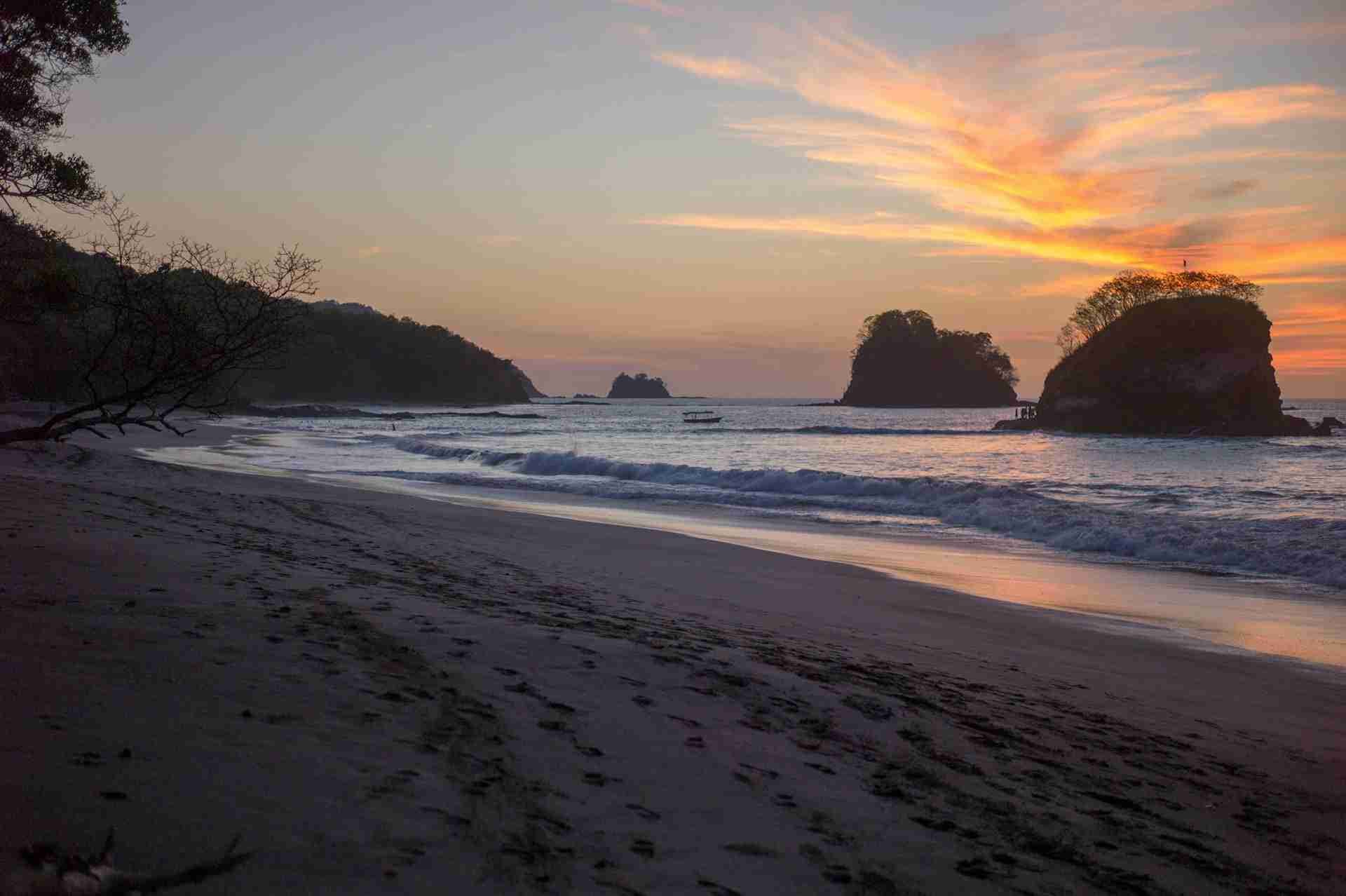
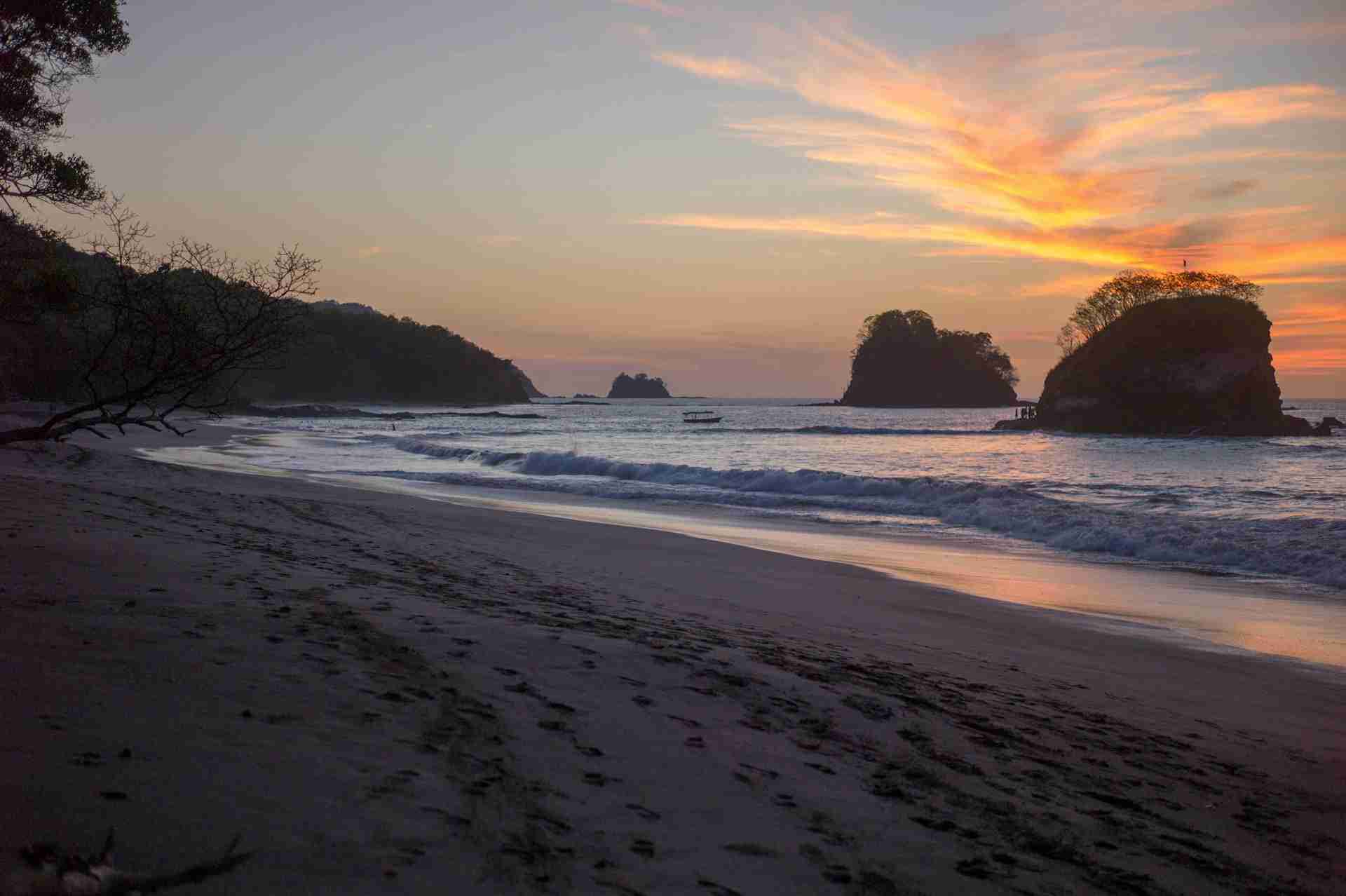
Ocotal Beach, nestled along Costa Rica's northwestern Pacific coast near Playas del Coco, offers a rare blend of serenity and natural complexity that makes it an outstanding location for photographers. The beach itself is framed by lush jungle hills, volcanic black sand, and gentle aquamarine waves that lap against tide-worn granite boulders. Known for its calm waters, high underwater visibility, and quiet charm, Ocotal is as photogenic beneath the surface as it is above. It is the kind of location where you can shoot the morning mist over palm shadows, follow the quiet rhythm of waves in long exposure, or dive beneath the surface to capture coral life at dawn. For photographers seeking a location that combines accessibility with visual richness across multiple styles and disciplines, Ocotal Beach delivers an exceptional range of material in a surprisingly compact footprint.
Best Photography Opportunities
• Sunset Reflections and Shoreline Symmetry
As the sun begins to set along the horizon, the wet volcanic sand of Ocotal becomes a living mirror. The incoming tide leaves behind a thin reflective surface that perfectly captures the colors of the sky. Position your camera close to the sand, using a wide-angle lens to exaggerate the foreground reflections and build symmetry between sky and earth. Silhouetted boats and palm trees make excellent compositional anchors, while mid-frame boulders give depth to your scene. On days with scattered clouds, the mirrored sky becomes an abstract canvas of golds, purples, and soft blues. This is also the moment when long exposures can transform gentle wave action into painterly streaks of motion that underscore the tranquility of the location.
• Underwater Life and Reef Structures
Ocotal's sheltered bay provides a unique opportunity for underwater photography without the need for scuba gear. The shallows are populated with schools of colorful reef fish, rays, and corals. Using an underwater housing with a wide-angle or fisheye lens, you can move slowly through the water capturing fish darting between rocks or floating against shafts of light. The clarity is best in early morning when the sea is undisturbed and the sun's rays penetrate the water at sharp angles. Look for opportunities to compose split shots—half above and half below the surface—to connect the marine life below with the coastal jungle above. Gentle natural light and low current conditions allow for natural compositions with minimal disturbance to the environment.
• Granite Outcrops and Coastal Rock Formations
The granite boulders at either end of the beach are textured, multi-toned, and shaped by centuries of tide and weather. These formations serve as dynamic foreground subjects that respond to changing light. During golden hour, the warm sun side-lights the stone, creating shadows in the crevices and defining the organic lines. Compose from a low angle using midrange focal lengths to frame the boulders against jungle slopes or an open sky. You can also use them as leading elements, drawing the eye toward the open ocean. After rain, the rocks darken and become even more texturally interesting, making them perfect for contrast-rich monochrome studies or abstract detail work.
• Wildlife Along the Edge of Forest and Sand
Just steps from the shoreline, dense vegetation harbors a surprising variety of wildlife. Iguanas bask on fallen driftwood, herons hunt in tidal shallows, and crabs skitter over rock faces. These creatures become compelling subjects when framed with care and patience. A telephoto lens in the 200 to 400 millimeter range allows for non-intrusive capture of their natural behavior. Early morning is best for light and activity. Look for herons reflected in still water or iguanas rim-lit by the rising sun. Use shallow depth of field to separate subjects from their environment, or shoot with stopped-down apertures to include textural context like sand trails or shell debris.
• Long Exposure Studies of Surf and Sky
Ocotal's steady, predictable surf creates ideal conditions for long exposure seascapes. Mount your camera on a sturdy tripod and use neutral density filters to reduce shutter speeds between one and ten seconds. Capture wave motion as it flows over rocks or around driftwood to create velvety textures and sense of movement. Golden hour light enhances these compositions with rich color, while blue hour introduces a quiet softness. Compose with strong elements like a half-submerged boulder or a silhouette of trees on the hill in the background. Long exposures also allow for multiple attempts with shifting wave shapes, giving you creative control over both mood and flow.
Best Time to Visit
Ocotal Beach offers distinct photographic moods depending on the time of day and season. Early mornings bring calm water, soft diffuse light, and vibrant marine life. This is the optimal window for underwater photography, wildlife portraits, and establishing mood with mist or dew still hanging in the vegetation. The soft direction of morning sun also produces excellent front lighting for subjects along the shore and behind the waterline.
By midday, the sun is higher and the contrast sharper, though still manageable due to Costa Rica's variable cloud cover. Use this time for boulder detail, rock formations, and high-key compositions. Underwater visibility remains good, though ambient light becomes more directional, which may cast deeper shadows in reef areas.
Late afternoon transitions into golden hour, the premier period for beach photography. The water reflects rich warm hues, silhouettes lengthen, and textures in sand and rock become more pronounced. After sunset, blue hour begins almost immediately. This time is especially productive for long exposure seascapes or low-light wildlife still moving at dusk.
Seasonally, December to April brings reliable dry weather with clear skies and vibrant sunsets. The water tends to be calmer, and the beach less obscured by clouds or mist. From May through November, rainy season clouds add drama to compositions, with more dynamic skies and the occasional thunderstorm. October often delivers moody, painterly skies just after tropical rains. Light conditions are more variable but also more expressive.
How to Get There
Ocotal Beach is located about ten kilometers northwest of Playas del Coco in Costa Rica's Guanacaste province. The most convenient access is by car via Route 151, a well-paved coastal road. From Playas del Coco, the drive takes roughly twenty minutes. From Liberia's Daniel Oduber International Airport, expect about one hour depending on traffic and stops.
Public transportation options include local minibuses and colectivos that run between Coco and surrounding villages. Taxis and tuk-tuks are also widely available and familiar with the route. For those staying in Playas del Coco, it is feasible to bike or hike, though the terrain includes moderate hills and the midday sun can be intense.
Parking is available right behind the beach, adjacent to local restaurants and dive centers. Arriving before ten in the morning offers the best choice of space and light. Ocotal Beach does not require an entry fee. Basic amenities such as public restrooms and food stands are available. Swimming is generally safe due to the gentle slope and clear water, though caution is advised near rocks and during heavy tide changes. Always observe local safety flags and tide charts.
Essential Gear Recommendations
Photographers visiting Ocotal Beach will benefit from a flexible and robust gear setup designed to handle landscape, underwater, wildlife, and low-light shooting. Begin with a wide-angle zoom lens from 16 to 35 millimeters to cover beachscapes, underwater scenes, and close-up foreground detail. A mid-range zoom like a 24 to 70 millimeter lens is excellent for capturing layered compositions of shoreline and rock or small groups of wildlife in context.
A telephoto lens from 200 to 400 millimeters is essential for wildlife, allowing for close observation of birds and reptiles without disturbing their behavior. Bring a waterproof housing for your camera body if you plan to snorkel; pair it with a dome port and consider an underwater strobe or diffused light if you are shooting below five feet of depth.
For long exposure seascapes, carry a lightweight but stable tripod with sand grips or spiked feet. A set of neutral density filters, including three, six, and ten-stop options, gives control over shutter speed across varying light conditions. A circular polarizer will help cut glare from the water surface and deepen sky contrast during midday.
Accessories should include multiple batteries and memory cards, microfiber cloths for cleaning lenses affected by mist and salt, and a dry bag or rain cover for your backpack. A compact LED panel or foldable reflector is useful for balancing light in shaded beach areas. Do not forget reef-safe sunscreen, insect repellent, and quick-drying footwear that provides good grip on slippery rocks and wet sand.
Nearby Photography Locations
Just south of Ocotal, this vibrant beach town offers a livelier scene with anchored boats, street vendors, and colorful buildings against a beach backdrop. In the early morning, fishing boats head out through golden mist, creating great silhouettes. The beach is wider and livelier than Ocotal, offering environmental portraits and action shots with a coastal character.
A short drive to the north, Playa Penca is more secluded and lined with soft white sand and scattered palms. It is a great location for sunrise compositions with symmetrical tree reflections and gentle surf. The contrast between Penca's light sand and Ocotal's darker beach provides a complementary variation in coastal textures.
These small offshore islets visible from Ocotal are reachable via boat and are a haven for divers and snorkelers. From Ocotal's beach, you can shoot them with a long lens against pastel sunset skies. They are excellent subjects for distant landscape compression and sunrise silhouettes framed by the bay.
• Monkey Park Wildlife Refuge
About twenty minutes inland, Monkey Park offers a mix of rescued tropical species in forested surroundings. Photographers can capture portraits of monkeys, toucans, and sloths under soft canopy light. This location complements Ocotal's coastal themes with dense foliage and tighter environmental framing.
• Las Catalinas Pathways
Further south near Playa Danta, Las Catalinas offers stone walkways and staircases through manicured coastal forest with views over cliffs and surf. From these elevated paths, you can shoot wide coastal views framed by foliage, or focus on abstract compositions involving patterned tiles, stair shadows, and architectural textures that contrast with natural elements.
Ocotal Beach blends elemental stillness with layered complexity. Whether you are drawn to reflection-rich sunsets, subtle wildlife gestures in the sand, or the hidden colors beneath the waves, this tranquil stretch of coastline offers a complete photographic environment. Its calm atmosphere allows you to slow down, observe more closely, and engage deeply with the textures, movements, and light that define this piece of Costa Rica's Pacific shore.
Comments
Loading comments…