
Photographing Bernhardkapelle am Hahnenkamm
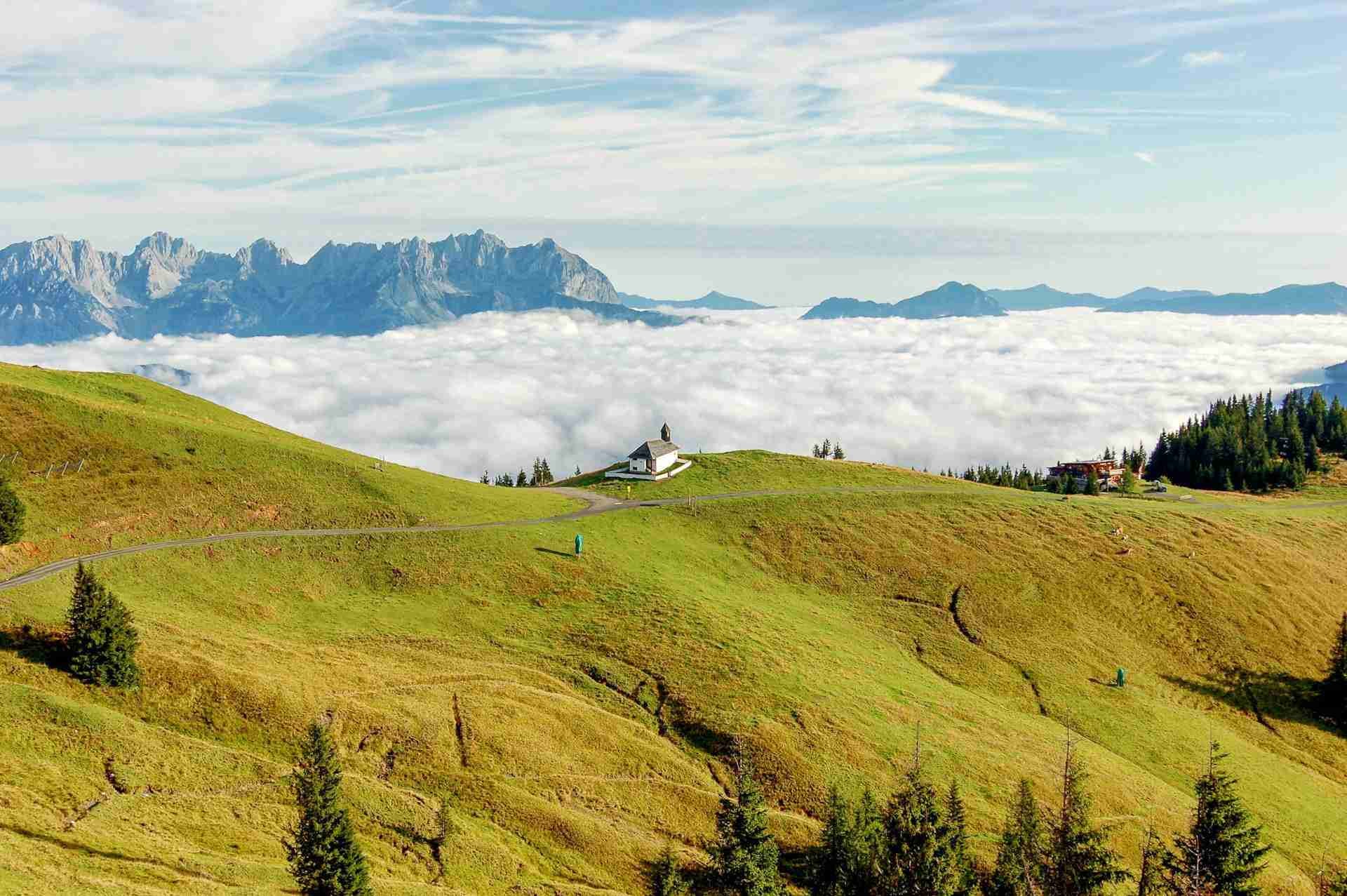
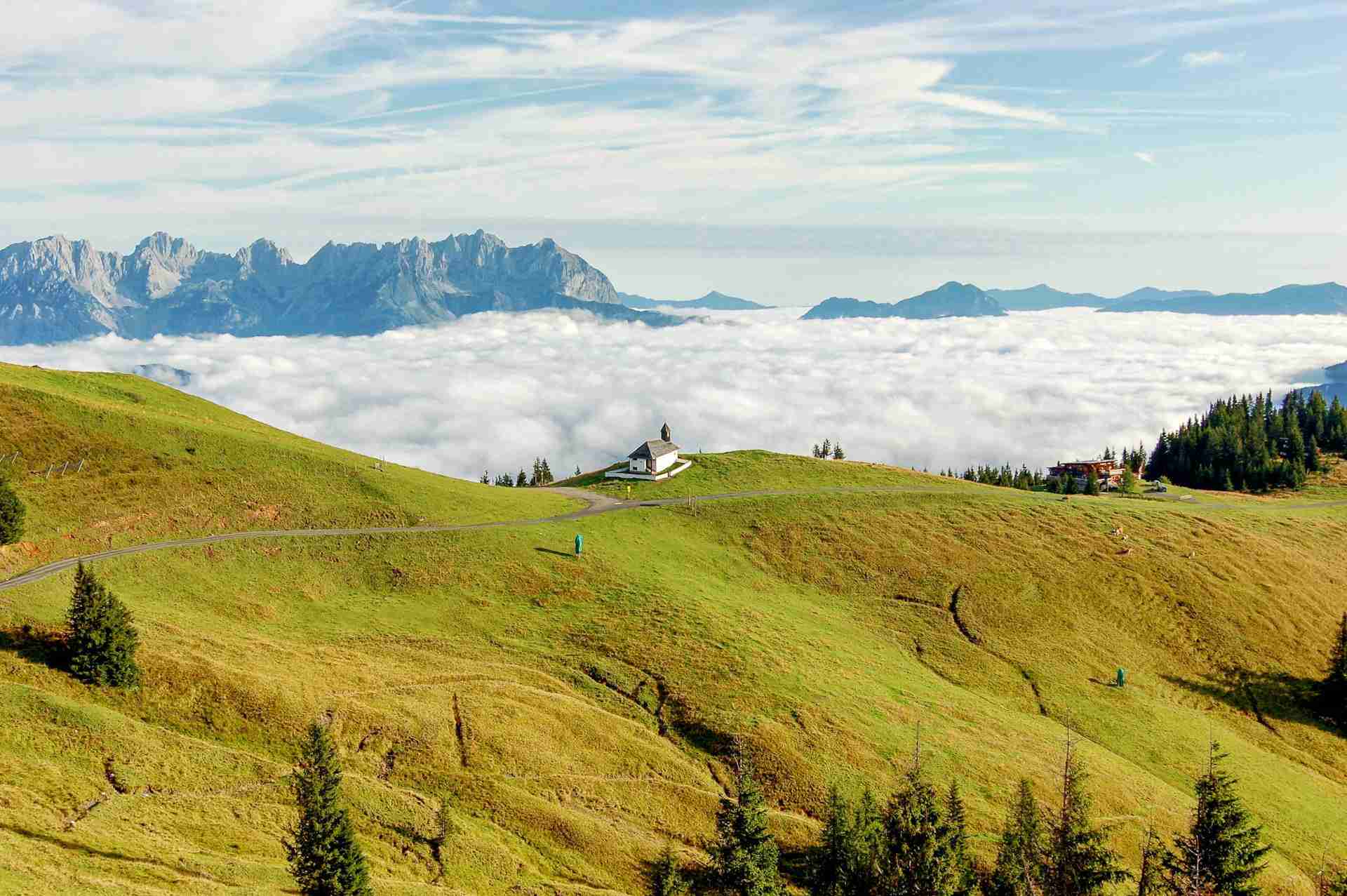
Bernhardkapelle am Hahnenkamm sits all alone offering photographers an alpine setting rich with contrast, scale, and seasonal change. This small mountain chapel, with its simple structure and wooden spire, stands quietly in the shadow of ski slopes and rugged ridgelines. Its modest design is offset by the grandeur of the surrounding peaks, making it a powerful focal point in wide compositions or a serene subject for more intimate scenes. Whether dusted in snow or bathed in summer light, the chapel creates a strong visual anchor in a landscape that feels both open and elevated.
Best Photography Opportunities
Wide Compositions Framing the Chapel Against the Wilder Kaiser
One of the most compelling views at the summit involves placing Bernhardkapelle in the foreground with the jagged range of the Wilder Kaiser mountains rising beyond. Use a wide-angle lens to pull in the expansive sky and layered ridges in the distance. Position the chapel slightly off-center to give breathing room to the horizon and allow weather conditions to add mood. This composition works particularly well in the early morning when side light adds structure to the ridgelines, or during golden hour when warm tones build across the stone and wood.
Minimalist Frames in Fresh Snow
In winter, when the Hahnenkamm is blanketed in snow, the chapel becomes a simple form surrounded by white. These conditions strip the scene down to line and shape, making it ideal for minimalist compositions. Position yourself slightly above or to the side to avoid footprints and create a sense of isolation. Overcast skies help reduce contrast and soften detail, while low sun can add texture to the snow. A tripod and careful exposure are essential for preserving both shadow detail and highlight tone in bright conditions.
Midday Contrast with Passing Clouds and Skiers
While many mountain scenes suffer from harsh midday light, the elevation and activity around Bernhardkapelle create opportunities for photographing motion and contrast. Skiers passing nearby add scale and movement to an otherwise still frame. Fast shutter speeds capture the dynamic energy of the slopes, while slower speeds can blur motion for a more artistic interpretation. Wait for moments when cloud shadows sweep across the chapel to add changing tones. A standard zoom lens is ideal for adapting quickly as light and activity shift.
Architectural Studies and Textural Details
Up close, the chapel offers excellent subjects for architectural and material detail. The weathered wood, alpine stone, and cross-topped steeple hold character that comes through clearly in soft light. Use a short telephoto or macro lens to isolate textures and patterns, such as the grain of the doors or the iron hinges set against stone. Early morning frost or drifting snow adds an ephemeral layer to these subjects. These images are strongest when the light is diffused or during golden hour when subtle shadows reveal form.
Sunset and Alpenglow Over the Ridge
On clear evenings, the sky above Kitzbühel transforms with bands of pink and orange that touch the peaks and roll gently across the horizon. Position yourself behind the chapel to use its silhouette as a framing device against the sky. Longer exposures can smooth out ski tracks and soften the foreground, while retaining structure in the chapel and distant mountains. In winter, the snow reflects ambient color, adding a glowing base to the scene. A wide or standard lens is best here to balance the foreground with the sky's fading tones.
Best Time to Visit
Bernhardkapelle am Hahnenkamm offers strong photographic potential year-round, but each season presents different challenges and rewards. Winter delivers high-contrast scenes with fresh snow and active skies, while summer provides longer shooting hours and clear visibility across the valleys and peaks. Spring and autumn are more subdued but offer quiet light, softer color, and fewer visitors.
For winter conditions, plan to shoot early in the morning when ski traffic is minimal and the snow remains clean. The low angle of the sun creates long shadows and crisp definition in the snowpack. Summer sunrises offer clear light from the east and a wide window of golden hour before the trails and lift stations become active. Cloudy days in any season can work well for detail shots or minimalist compositions. Avoid shooting at noon on clear days unless you are focusing on action or high-contrast studies.
How to Get There
Bernhardkapelle is located just below the summit of the Hahnenkamm mountain above Kitzbühel, in Austria's Tyrol region. The most efficient access is via the Hahnenkammbahn cable car, which departs from the base station in Kitzbühel and arrives near the summit in under ten minutes. From the upper station, the chapel is a short and well-marked walk along wide alpine paths. In winter, it lies close to several ski runs and may require navigating active slopes. During summer, hiking trails offer more flexibility for photographers to explore alternative vantage points.
There is no fee to visit the chapel, though lift tickets are required to use the cable car. The area around the chapel is open and unobstructed, with plenty of space to set up a tripod. In winter, watch for signage and ski area boundaries to avoid interfering with active runs. In all seasons, weather can shift rapidly at elevation, so check forecasts in advance and pack accordingly.
Recommended Photography Gear
A wide-angle lens is critical for capturing the chapel within its sweeping alpine setting. A 24 to 70 millimeter lens provides flexibility for mid-range compositions and portraits of the structure against the ridgelines. A 70 to 200 millimeter telephoto is helpful for compressing mountain layers, isolating the chapel against a distant background, or capturing light changes across the terrain. For detail shots, a macro or short telephoto lens reveals texture in wood, stone, and surrounding alpine vegetation.
A tripod is essential for low light, long exposures, and shooting during golden hour or in snow-heavy scenes. Use a circular polarizer to manage glare from snow or wet surfaces and to add contrast in skies with scattered cloud. In winter, a lens hood and cloth are useful for managing condensation and snowflakes. Waterproof protection for your gear and boots is recommended, particularly during transitional weather. A remote shutter release or delay timer will help reduce vibration during slower exposures.
Nearby Photography Locations
Across the valley from Hahnenkamm, the summit of Kitzbüheler Horn offers full views back toward Bernhardkapelle and the Wilder Kaiser range. From the top, shoot wide alpine scenes, telephoto ridge lines, or weather systems sweeping the valley. It is especially effective at sunrise and early morning when directional light cuts through low cloud.
Just outside Kitzbühel, this small alpine lake offers morning reflections of the surrounding peaks. During calm conditions, the water mirrors the forest and sky, creating simple compositions with soft color. It is best visited in early summer or autumn when light fog and golden tones build over the surface.
The trail system around the summit provides multiple outlooks beyond the main chapel area. Some paths lead to elevated spots that place the chapel below the horizon, perfect for telephoto compression or framing the chapel against larger mountain forms. These trails are well maintained and open in summer and autumn.
At the base of the mountain, Kitzbühel's medieval town center includes cobbled streets, traditional facades, and small alleyways that offer contrasting textures and warm tones after a day of mountain photography. Visit in the evening when lanterns light the streets and soft twilight fills the sky.
Hahnenkamm Start Gate and Ski World Cup Route
For a different visual story, explore the upper section of the Hahnenkamm downhill racecourse. The Start Gate provides a high-altitude perspective and sweeping views across the track and valley. This area is especially photogenic during off-season months when the track is quiet and the slopes show natural contours.
Bernhardkapelle am Hahnenkamm is a rare blend of human structure and alpine presence. It does not dominate the landscape, but rather inhabits it with quiet clarity. For photographers, it becomes a fixed point to anchor compositions or a solitary form to explore in relation to weather, light, and the vast sky above. Whether wrapped in clouds or standing in perfect morning stillness, the chapel remains a place where careful framing and thoughtful timing are met with deep visual reward.
Comments
Loading comments…