
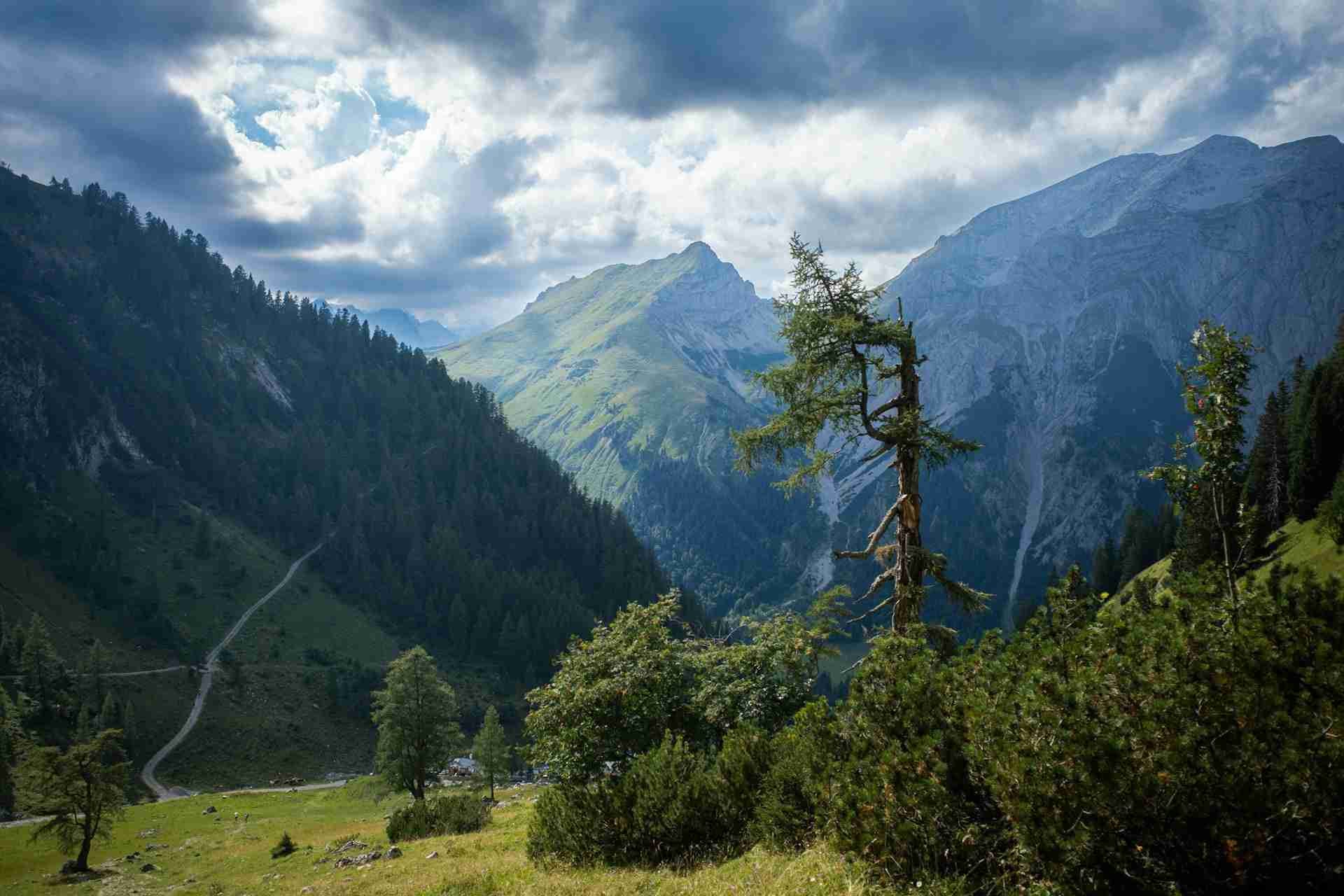
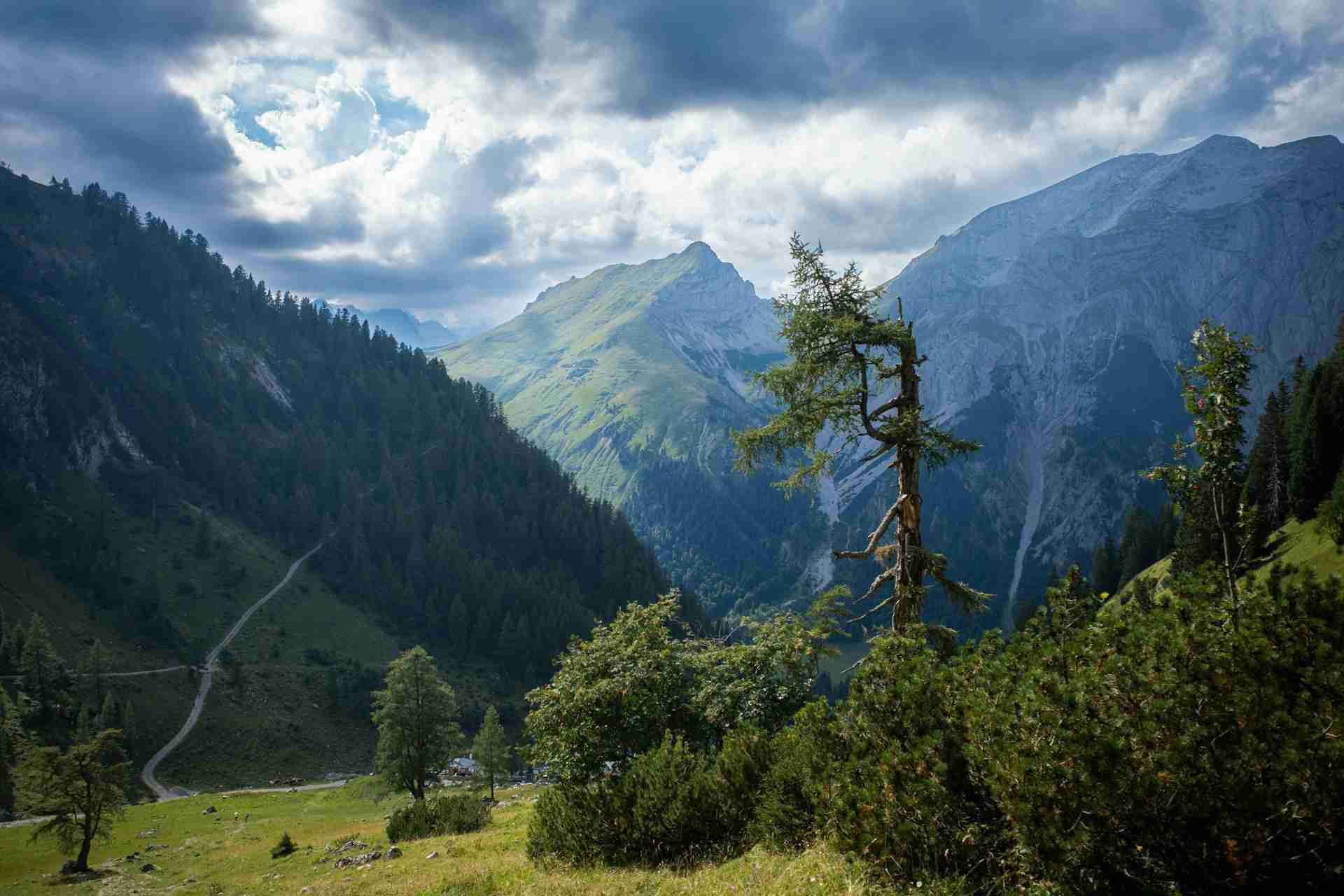
Tucked high in the heart of the Karwendel Alps, Binsalm is an alpine pasture and guesthouse nestled above the scenic Eng Valley near Hinterriß. Surrounded by jagged limestone peaks, open meadows, and winding hiking trails, it offers photographers a serene, elevated setting that balances pastoral life with dramatic mountain backdrops. The views in every direction are framed by sharp ridgelines, rustic wooden huts, and alpine flora, making Binsalm an ideal subject for those interested in capturing high-altitude landscapes that retain an authentic, unpolished character. Whether approached on foot from the Alpengasthof Eng or as part of a larger Karwendel circuit, Binsalm rewards slow, deliberate photography with changing light, seasonal variation, and textural depth.
Best Photography Opportunities
• Golden hour meadow views with the Laliderer Walls
The meadows surrounding Binsalm open toward the northeast, offering unobstructed views of the towering Laliderer Walls. During golden hour—especially in the evening—the limestone cliffs catch warm side light while the foreground glows with the golden hues of late sun. Use a wide-angle lens to frame low-growing wildflowers, grazing cattle, or rustic fence lines in the foreground, guiding the viewer's eye toward the illuminated peaks. These compositions benefit from low camera angles and soft shadows that define texture across grass and rock.
• Morning mist and side lighting near the hut
In the early morning, especially in late spring or autumn, cool air descending into the valley often brings fog or mist that clings to the slopes around Binsalm. As the sun rises above the western ridges, side lighting begins to pierce the haze, producing streaks of light that drift across the hillsides. Photographing from just above the hut or along the trail leading south offers elevated vantage points to catch these shifting layers. A mid-range zoom allows you to adjust framing as the light moves, and backlit compositions often work best to reveal the moisture in the air.
• Rustic details and textures around the Binsalm hut
The Binsalm guesthouse and its outbuildings feature weathered wood, hand-hewn beams, and traditional alpine construction that is rich in photographic texture. On overcast days or in open shade, these details are beautifully lit for contrast-rich compositions. Get close to focus on wood grain, flower boxes, stone steps, or carved features—ideal subjects for a standard prime lens. These studies of form and detail are perfect complements to the grand mountain vistas, telling the quieter story of life at elevation.
• Backlit hiking figures on the trail to Lamsenjochhütte
The route from Binsalm to Lamsenjochhütte gains altitude quickly and provides excellent views back toward the hut and the valley below. During late afternoon, the sun dips behind the mountains to the west, creating opportunities for backlit silhouettes of hikers or wildlife on the trail. Use a telephoto lens to compress the background and emphasize the scale of humans in the vast terrain. Dust kicked up on dry paths or early snow patches adds texture to these compositions, and keeping the aperture slightly stopped down creates strong starbursts from low sun.
• Panoramic alpine compositions from the trail above
Continuing past Binsalm toward Lamsenjoch Saddle, the landscape opens dramatically. From this higher vantage, you can photograph sweeping vistas that include multiple peaks, deep glacial valleys, and layered alpine textures. These panoramic scenes are best captured with a wide-angle lens or stitched multi-frame shots for high resolution. Early evening light adds contrast and side-shadowing across the ridgelines, while cloud build-up in the late day can introduce dynamic skies. These locations are quieter and offer ample time for tripod setup and bracketing.
Best Time to Visit
Binsalm is typically open from mid-May through early October, depending on snow conditions. The landscape transforms significantly throughout the open season, with each period offering its own strengths. Late spring, from mid-May to early June, brings fresh grass, blooming alpine flowers, and dramatic contrasts between green slopes and lingering snow on the higher peaks. The meadows are at their most vibrant, and light tends to be clear and low-angled in the early morning.
Summer, particularly from late June through August, offers stable trail access and long daylight hours. Sunrise and sunset become more important during this period, as midday light can be harsh at elevation. Early morning is ideal for side lighting on the eastern ridges and fog formation in the valleys below, while sunset brings color to the western sky and highlights the high walls of the Karwendel.
Autumn, from September into early October, is one of the best times for mood and color. Trees lower in the valley turn gold and orange, while the grasses around Binsalm take on copper and ochre tones. Early frost may coat the ground, and cooler temperatures often lead to mist and clearer skies. Light during this season is softer and lower throughout the day, creating long shadow play across the alpine terrain. Binsalm typically closes for winter, but if snow arrives early, the landscape shifts quickly into minimalism—snow-capped peaks, bare meadows, and dramatic atmospheres suited to black-and-white compositions.
How to Get There
The most direct route to Binsalm begins at Alpengasthof Eng in the Eng Valley, which is accessible by car via the toll road from Hinterriß. From the Eng parking area, a clearly marked hiking trail leads uphill through forest and open meadows toward the Binsalm hut. The hike takes approximately 45 to 60 minutes on a steady incline, making it suitable for carrying camera gear without technical difficulty. Elevation gain is modest but noticeable.
Public transportation is limited in this area, particularly early or late in the season, so having a car is strongly recommended. The nearest train station is in Lenggries (Germany), from which buses can connect to Hinterriß during peak months, though schedules vary. Parking at the trailhead is ample, but arriving early ensures a better hiking window and access to clean morning light.
The trail is well-maintained and passes through photogenic terrain even before reaching the hut. Photographers may wish to stop frequently en route to capture transitional light and varying views. The Binsalm guesthouse is open during the summer season for food and overnight stays, and serves as a strong base for dawn or dusk shoots without the need to descend immediately.
Recommended Photography Gear
Binsalm's alpine setting and varied scale of subject matter—from wide ridgelines to intricate textures—requires a flexible kit. A wide-angle zoom (16–35mm) is essential for landscape compositions from the meadows or higher trails, particularly when working with reflections, flowers, or dramatic skies. A mid-range zoom (24–70mm) allows you to capture both wide and semi-tight views, including hut scenes and layered forest shots on the hike.
A telephoto lens (70–200mm) is ideal for compressing mountain ridges, isolating hikers on trails, or highlighting distant rock faces catching light. For details around the hut—wood grain, signage, or alpine flora—a fast prime lens (35mm or 50mm) excels in low light and brings subject isolation to tight frames.
A tripod is important for sunrise, sunset, or blue hour compositions, especially if staying overnight. A circular polarizer helps control glare on wet grass and intensifies sky contrast on clear days. A 3- or 6-stop neutral density filter enables long exposure work when clouds build or mist drifts through. Lens cloths and weather-resistant covers are essential, particularly in autumn when conditions shift quickly.
Because access requires hiking, gear should be packed in a well-balanced, weather-resistant backpack with chest and hip support. Trekking poles and proper hiking boots will help with elevation changes and uneven paths. Bring layers—mornings and evenings can be cold even in summer, and gloves are useful for early-season frost shoots.
Nearby Photography Locations
Just below Binsalm lies the famous maple tree plateau of Großer Ahornboden, known for its old-growth sycamore maples set against towering cliffs. Best visited in autumn for peak color and dramatic side lighting through the trees.
Continuing past Binsalm, the trail leads to this higher mountain hut at the base of the Lamsenspitze. Rock walls, scree slopes, and panoramic views make it a dramatic contrast to the meadows below. Early morning and late light bring out rugged texture.
• Falkenhütte and Laliderer Wand
To the northeast, Falkenhütte offers access to the sheer limestone wall of Laliderer Wand. The path there offers layered perspectives of the Karwendel range and solitude for extended compositions.
• Hinterriß Village and Rißbach Valley
Down in the valley, the village of Hinterriß and the turquoise Rißbach stream provide riverbank landscapes, wildflowers, and forest compositions. Excellent for mid-day shooting under tree cover or during overcast spells.
• Plumsjoch Ridge and Bärenlahnersattel
A more remote area west of Binsalm accessible via connecting trails. Offers high-alpine grasslands, long views across the Karwendel, and dramatic clouds rolling over isolated saddles.
Binsalm is the kind of place that invites you to linger—not just for its mountain views, but for the rhythm of alpine light, the quiet of the pastures, and the way the landscape evolves hour by hour. It rewards photographers who walk slowly, observe intently, and return with frames that carry the stillness and strength of the high Alps.
Comments
Loading comments…