
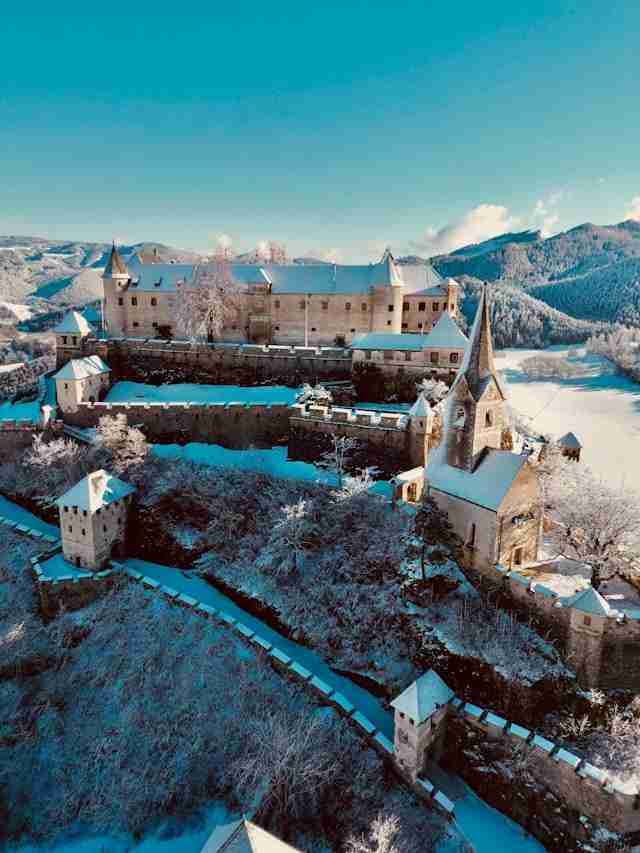
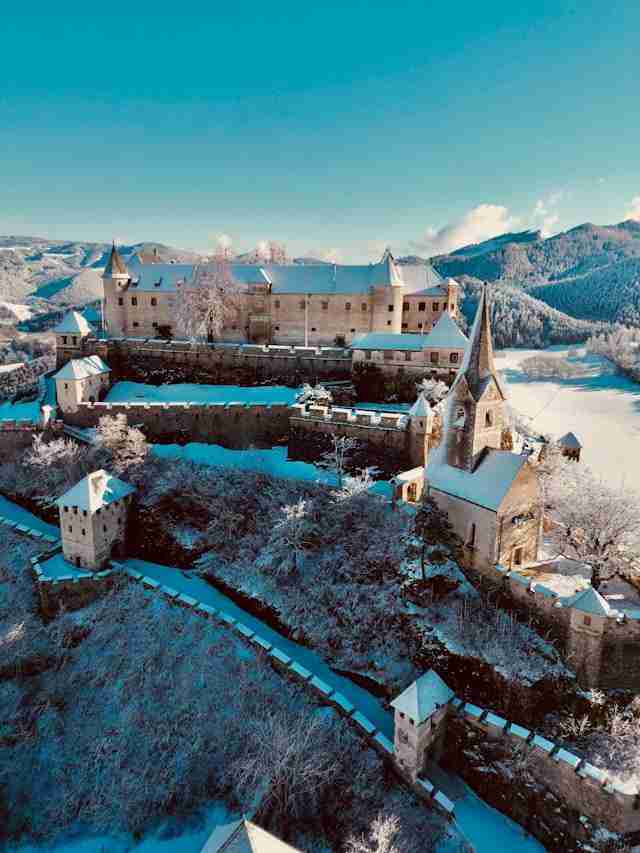
Rising steeply from a limestone hilltop in southern Austria, Burg Hochosterwitz is one of the country's most iconic medieval fortresses, perched high above the Carinthian countryside. With its turreted walls, cascading battlements, and a spiral approach marked by 14 fortified gates, the castle is a natural focal point for photographers drawn to dramatic architectural silhouettes and sweeping alpine landscapes. The structure appears to grow from the rock itself, commanding attention whether viewed from across the valley or while walking its timeworn path toward the summit.
The surrounding fields, woodlands, and gently rolling hills offer a scenic contrast to the stone complexity of the castle. Atmospheric weather and seasonal variation only deepen the photographic potential, transforming the fortress from a sunlit monument to a shadowy figure suspended in morning mist. It's a subject that lends itself to both narrative framing and bold, graphic compositions—one that continues to reward photographers returning at different times of day and year.
Best Photography Opportunities
• Distant Approach from the Längsee Valley
One of the strongest compositions comes from afar, where the castle rises like a mirage above the green expanse of Carinthian farmland. Shooting from roadside fields near Launsdorf or the Längsee offers a clean view of the entire hilltop complex. A telephoto lens allows you to compress the scale, flattening the layers of valley, forest, and rock into a singular monumental presence. In spring and autumn, low clouds often sit in the valley, creating moments where the fortress appears to float above the mist—an image both surreal and symbolic.
• Ascending the Fortress Trail and 14 Gates
The walk up the zigzagging trail is a continuous lesson in medieval design and an excellent source of strong visual geometry. Each of the 14 gates offers new angles, with options to shoot upward into narrowing passageways or turn back for layered views of the winding ascent. Side light at either end of the day enhances the texture of the stonework and throws long shadows across the path. A mid-range zoom lets you quickly reframe from gate architecture to contextual views, capturing the relationship between the fortified trail and the valley far below.
• Courtyard Vistas and Elevated Views from the Keep
Once you reach the top, the central courtyard provides a shift in scale. The outer drama gives way to intimate medieval details: a chapel, arched passageways, sunlit balconies, and turreted parapets. From the walls of the keep, panoramic views unfold in all directions. To the south, the landscape rolls toward the Drau River; to the north, it opens up to the Gurktal Alps. Using the castle itself as a framing device—archways, arrow slits, battlements—you can lead the viewer's eye outward toward the wider Carinthian landscape.
• Detail Work on Medieval Stone and Ironwork
For photographers who enjoy rich surface texture and historical storytelling, the gates and towers of Burg Hochosterwitz are filled with close-up subjects. Rusted iron hinges, centuries-worn wood, rough limestone blocks, and creeping ivy all present opportunities for tight, evocative shots. Overcast days work best for these images, removing harsh shadows and allowing subtle contrast to emerge. A fast prime lens or macro setup is ideal here, isolating the texture and craftsmanship that reflect centuries of defensive utility and quiet decay.
• Evening Light and Silhouettes from Surrounding Hills
In the golden hour and through sunset, the castle becomes a silhouette of itself. The best locations for these compositions are from country roads to the west, where the hill stands in clean relief against the sky. On partly cloudy days, the light pools behind the hill and adds luminous detail to the clouds while leaving the castle in crisp profile. With a tripod and long lens, you can shoot a sequence as the light fades, adjusting your exposure to balance the vivid sky with the darkened outline of the fortress—creating timeless, graphic images with high visual impact.
Best Time to Visit
The prime photography season at Burg Hochosterwitz spans from late April through mid-October, which aligns with the public opening of the interior and trail system. During this period, the surrounding fields are lush, and the days are long enough to explore the site under varied lighting conditions. May and June are ideal for catching blooming wildflowers and dramatic morning fog in the valley, while September and early October offer deeper contrast, golden light, and the first signs of autumn color across the hills.
Sunrise and sunset each offer unique rewards. Mornings are best for mist-filled valleys and soft side light on the eastern gates and walls. Late afternoon into golden hour brings warm, directional light across the western façade and helps sculpt the trail's ascending geometry. Overcast weather is particularly well-suited for interior courtyard shots and detail studies, where even light helps reveal stone and wood grain without harsh highlights.
While the castle itself closes during the off-season, typically November through April, the views from surrounding hills remain accessible. Winter snowfall adds a dramatic element to exterior compositions, especially when paired with long shadows and pale skies. Roads can remain icy or closed depending on conditions, so always check for access updates if planning a winter shoot.
How to Get There
Burg Hochosterwitz is located in southern Carinthia, just outside the village of Launsdorf and roughly 25 kilometers northeast of Klagenfurt. The most direct route is via the S37 expressway, which connects to local roads clearly signposted with directions to the castle. Visitors arrive at a well-maintained parking area at the base of the hill, where both foot and elevator access to the castle begin.
The walk to the summit is an integral part of the photographic experience. The trail ascends steadily through all 14 defensive gates, each designed to slow invaders and now offering distinct visual breaks in the climb. The full walk takes approximately 30 minutes at a leisurely pace, and the paved path is accessible for most visitors, though good footwear is essential. For those unable or unwilling to hike, a modern inclined elevator runs seasonally to the top and returns throughout the day.
An entrance fee is required to access the castle's interior, courtyard, and museum areas, which includes access to the elevated viewpoints and upper walls. Exterior photography from the trail or public paths around the base is free year-round. Tripods are allowed along the trail and in outdoor areas, but their use may be limited indoors or during peak visiting hours. For serious photographers, early morning arrivals provide the best combination of soft light and fewer people.
Recommended Photography Gear
To make the most of the variety offered by Burg Hochosterwitz and its surroundings, pack a versatile landscape and architecture-focused kit. A wide-angle lens (16–35mm) is essential for full hilltop views from the valley floor and for capturing the compressed interiors of gates, courtyards, and towers. For greater flexibility while walking the ascent, a mid-range zoom (24–70mm) allows quick adjustment from architectural framing to environmental portraits of the landscape beyond.
A telephoto lens (70–200mm or longer) is critical for compressing views from a distance, isolating details on the hilltop from across the valley, or working atmospheric elements like fog and silhouette from afar. If you plan to shoot sunrise or sunset from surrounding meadows, this lens is key to drawing the castle into the foreground of a broad Carinthian sky.
For stability and low-light control, a travel tripod is recommended. This is especially useful for long exposures, bracketing HDR sequences at twilight, or shooting moody black-and-white compositions. ND filters can help when shooting clouds or during long exposures from distant hillsides, while a circular polarizer will improve clarity in midday shots and help control reflective glare on stone surfaces. Spare batteries, a weatherproof pack, and a microfiber cloth are must-haves, particularly if you plan to shoot in early morning mist or changing alpine weather.
Nearby Photography Locations
Located just a few minutes west of the castle, this quiet lakeside village offers open views of Hochosterwitz across flat water, particularly at sunrise when the castle reflects in the still surface of the Längsee. The Benedictine monastery and gently sloping farmland create soft, balanced compositions that contrast nicely with the fortress's vertical power.
• Magdalensberg Plateau
This historic hilltop site features Roman ruins, hiking trails, and panoramic outlooks over the entire Carinthian basin. On clear days, you can spot Burg Hochosterwitz in the far distance and frame it alongside more distant peaks. The site is ideal for wide scenic shots or compressed telephoto studies of the larger terrain.
• Hemmaberg and the Jauntal Valley
South of the Drau River, this ridge offers quieter trails with elevated views across a pastoral landscape. It's well suited for minimalist alpine compositions and more contemplative images of open sky and gentle ridgelines. Fog and low light in this area often create soft, tonal gradients for long-lens studies.
For those looking to blend architectural and street photography, the capital city offers baroque buildings, historic fountains, and public squares that create a distinct contrast to the fortress. Shooting here before or after a castle session adds urban narrative to your portfolio and expands the visual story of the region.
• Burg Taggenbrunn and Surrounding Vineyards
This smaller castle near St. Veit an der Glan is perched atop a vineyard hill, offering excellent light in the late afternoon. It's far less visited than Hochosterwitz but offers an appealing mix of restored walls, scenic walking paths, and broad views toward the south. Photographers can capture elevated views of grape terraces and long sunset shadows.
Burg Hochosterwitz is a site that invites slow exploration and detailed observation. With every shift in light or turn of the trail, it reveals a new face—whether casting a long shadow over the valley or catching the first rays of dawn on its ramparts. For photographers who appreciate historical architecture set against a changing natural canvas, few places offer this level of richness, scale, and timeless Alpine drama.
Comments
Loading comments…