
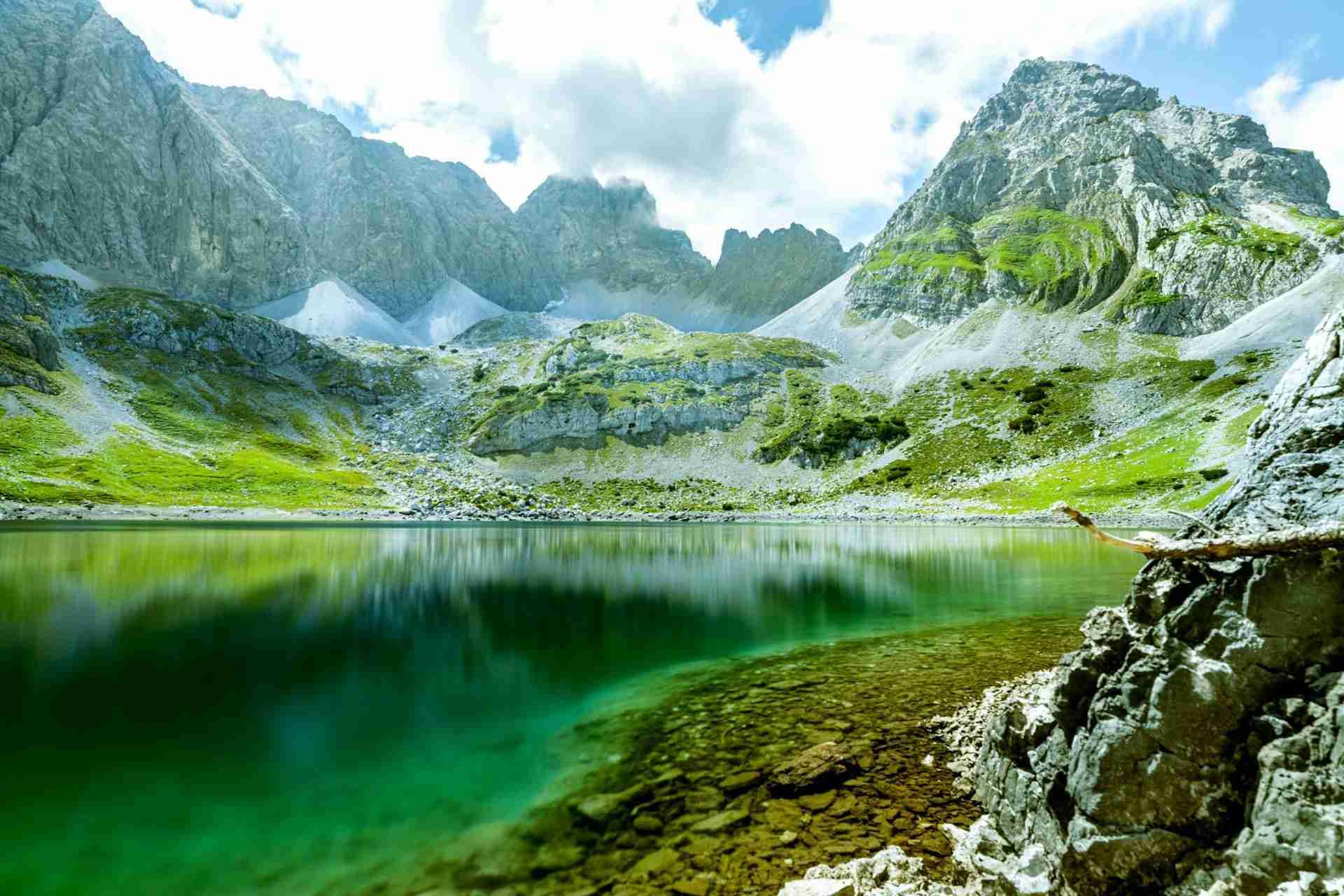
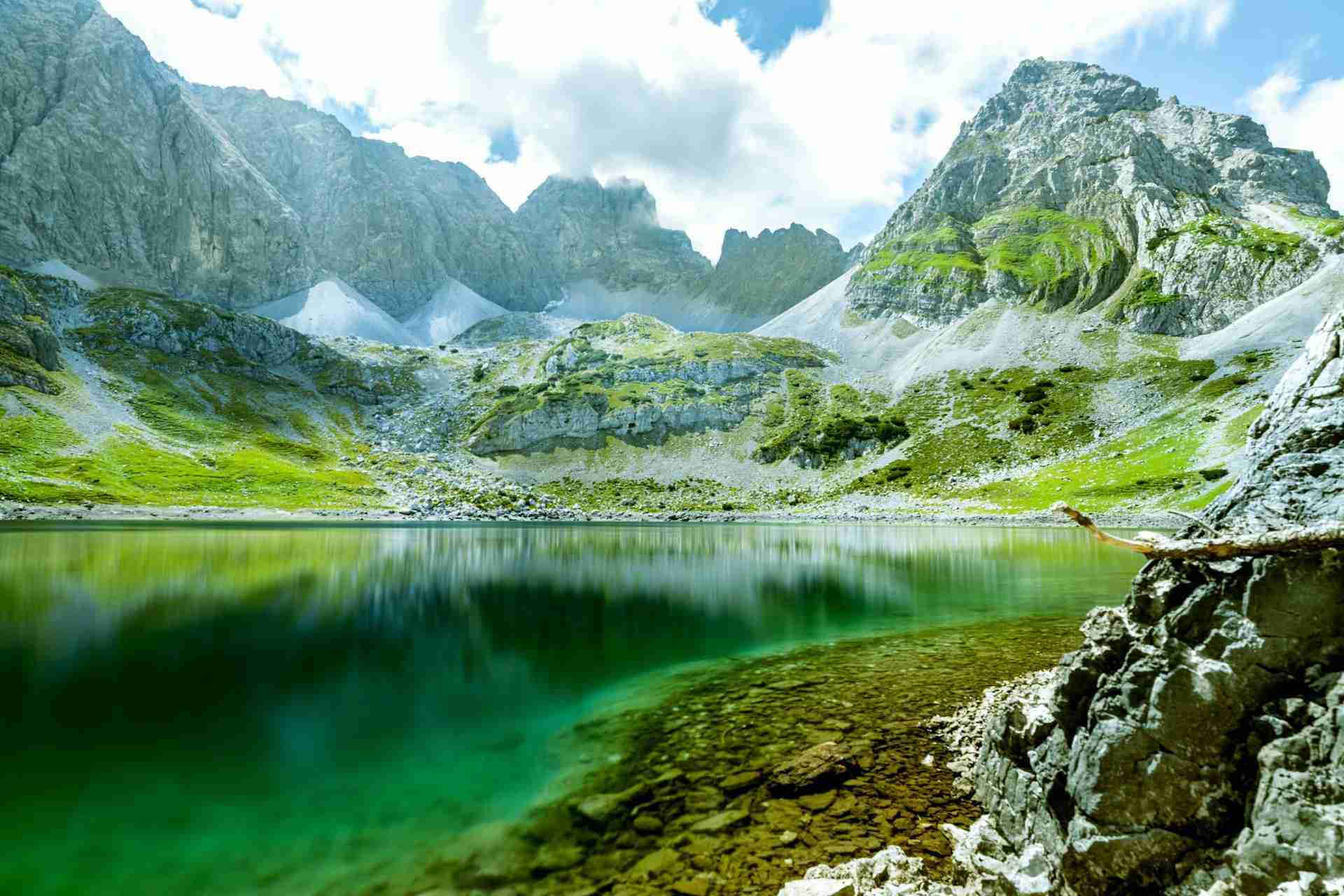
High above Ehrwalder Alm in Tyrol, the Drachensee rests like a hidden jewel surrounded by the rugged limestone cliffs of the Mieminger Chain. Smaller and more remote than its neighbor Seebensee, the lake rewards those willing to climb a little higher with a scene of striking intimacy and grandeur. Its waters are crystal clear, often reflecting the jagged peaks above with remarkable precision, while its basin feels enclosed and protected by the towering ridges. This is a location where the effort of the hike pays off in quiet solitude, still reflections, and an alpine atmosphere that changes constantly with light and weather. For photographers, Drachensee is a natural amphitheater where water, rock, and sky create compositions that feel timeless and complete.
Best Photography Opportunities
• Full Lake Reflections of the Mieminger Chain
The most striking perspective is found at the shoreline, where the calm waters mirror the limestone peaks above. Arriving early in the morning before the wind stirs the surface provides the clearest reflections, with the sharp rock ridges appearing perfectly in the water. A wide-angle lens captures both the foreground and the sweep of peaks, while low camera positions add stones or alpine grasses to anchor the composition. Long exposures in soft light enhance the symmetry, smoothing the water into an unbroken mirror. This view is among the most rewarding in the region, especially for those who arrive early enough to enjoy it in silence.
• High Vantage Points from the Coburger Hütte Trail
Above the lake sits the Coburger Hütte, and the trail leading toward it provides elevated views down onto the Drachensee. From these angles, the lake appears like a turquoise gem set within the limestone basin. Shooting from above allows for panoramic compositions that show both the lake and the dramatic cliffs surrounding it. A mid-range zoom works well here to balance scale and clarity, while panoramic stitches can capture the full curve of the basin. Side light in the late afternoon creates long shadows that bring depth to the scene.
• Foreground Studies Along the Shoreline
Walking around the edge of Drachensee reveals small inlets, rocky outcrops, and tufts of alpine grass that make excellent foregrounds for intimate compositions. Placing these elements close to the lens with the peaks in the background adds depth and context to wide shots. Reflections can still be included, but at oblique angles they take on a more painterly quality. This approach works best during golden hour, when warm light catches both rock and grass, tying the scene together with consistent tones. Neutral density filters can extend shutter speed for smoothing the water's surface in these tighter frames.
• Changing Weather Over the Limestone Peaks
The Mieminger Chain often generates its own clouds, and conditions at Drachensee can shift quickly. Passing fog and cloud banks create dramatic contrasts as peaks appear and disappear from view. These conditions are perfect for moody photography, isolating parts of the ridgeline and softening the reflection into abstract shapes. A telephoto lens can frame individual peaks or compress layers of cloud and stone, while wide shots emphasize the enveloping atmosphere. Waiting for light to break through the cloud can create unforgettable moments of contrast between illuminated cliffs and shadowed basin.
• Twilight and Night Photography by the Lake
For photographers who stay overnight at the Coburger Hütte, Drachensee offers a superb location for twilight and night photography. At blue hour, the last light lingers on the limestone peaks, reflected faintly in the darkening water. On clear nights, the absence of light pollution allows the Milky Way to stretch over the lake, with the jagged ridgeline providing a dramatic silhouette. A tripod, wide fast lens, and remote shutter are essential here, as temperatures drop and long exposures become necessary. Shooting at night adds a completely different character to the location, transforming it from reflective calm to celestial theater.
Best Time to Visit
The best season to photograph Drachensee runs from late June through early October, when the trails are clear of snow and the lake is accessible without technical equipment. In early summer, snow patches may linger around the shoreline, adding contrast to the turquoise water and grey cliffs. July and August provide the most stable conditions and the best chance for calm reflections, though afternoons can bring storms and harsh midday light. September is a particularly rewarding month, with fewer hikers, crisp air, and warm golden light that stretches longer across the basin. Daily timing is critical—sunrise offers calm water and gentle light, while late afternoon and sunset bring dramatic side lighting across the peaks. Overcast days should not be dismissed, as soft light suits reflection photography and detail studies. Winter and early spring access is limited, and conditions are often unsafe without mountaineering gear.
How to Get There
The journey to Drachensee begins at the Ehrwalder Alm, accessible by cable car from the town of Ehrwald. From the top station, the hike to Seebensee takes about an hour and a half on a well-marked trail. From Seebensee, a steep ascent of roughly 45 minutes to an hour brings you to Drachensee, with switchbacks leading up to the basin. The trail is demanding but straightforward, and hikers are rewarded with views of both lakes along the way. At the lake itself, the Coburger Hütte sits just above, offering meals, lodging, and a perfect base for extended photography sessions. There is no fee to access the trail or the lake, but comfortable hiking boots, water, and weather-appropriate clothing are essential. Photographers planning sunrise or night work should consider staying overnight at the hut to avoid hiking steep terrain in darkness.
Recommended Photography Gear
Photographing Drachensee requires a balance between lightweight gear for the hike and versatile tools for capturing its varied scenes. A wide-angle lens between 14 and 24 millimeters is essential for reflections, shoreline compositions, and night photography. A mid-range zoom such as a 24 to 70 millimeter lens is useful for flexible framing, while a telephoto lens up to 200 millimeters helps compress peaks, clouds, and lake into tight compositions. A sturdy but lightweight tripod is important for long exposures, twilight, and astrophotography. Neutral density filters, including six-stop and ten-stop, allow for smoothing water surfaces, while a circular polarizer reduces glare and deepens sky and water tones. For night photography, a fast wide lens, remote shutter release, and extra batteries are critical, as cold alpine nights shorten power life. Weather protection is a must, as sudden storms are common, and microfiber cloths will keep lenses clear of moisture. Sturdy hiking boots, layered clothing, and a headlamp for early or late approaches make the experience safer and more comfortable.
Nearby Photography Locations
Just below Drachensee, Seebensee is one of the most famous alpine lakes in Austria, with emerald waters framed by the Zugspitze and surrounding peaks. It is ideal for sunrise reflection shots and offers easier access, making it a natural stop on the way up.
Sitting above Drachensee, the hut itself is photogenic, often surrounded by light, mist, or alpine glow on nearby cliffs. The terrace provides elevated views over both Seebensee and Drachensee, perfect for wide panoramas or compressed telephoto layers.
Visible from the trails around Ehrwald, Germany's highest mountain dominates the skyline. Shooting from the Mieminger side allows for unique angles of its massive face, particularly dramatic in evening light.
• Ehrwalder Alm Plateau
The meadows and pastures around the Alm provide softer, pastoral scenes, with traditional huts, grazing animals, and flower-filled fields. These work well for environmental images that contrast with the rugged alpine peaks above.
Stretching west from the Ehrwalder Alm, the Gaistal offers long, open views flanked by mountains and dotted with alpine huts. Early morning light here often brings fog layers and golden illumination across meadows, making it a rewarding addition to a Drachensee trip.
Drachensee is more than just a high mountain lake—it is a destination where effort and reward align perfectly. Its reflections, dramatic setting, and shifting alpine light make it one of the most inspiring places to photograph in the Tyrolean Alps. For those who climb the last stretch above Seebensee, the view at Drachensee is not only worth the effort but unforgettable in its quiet power.
Comments
Loading comments…