
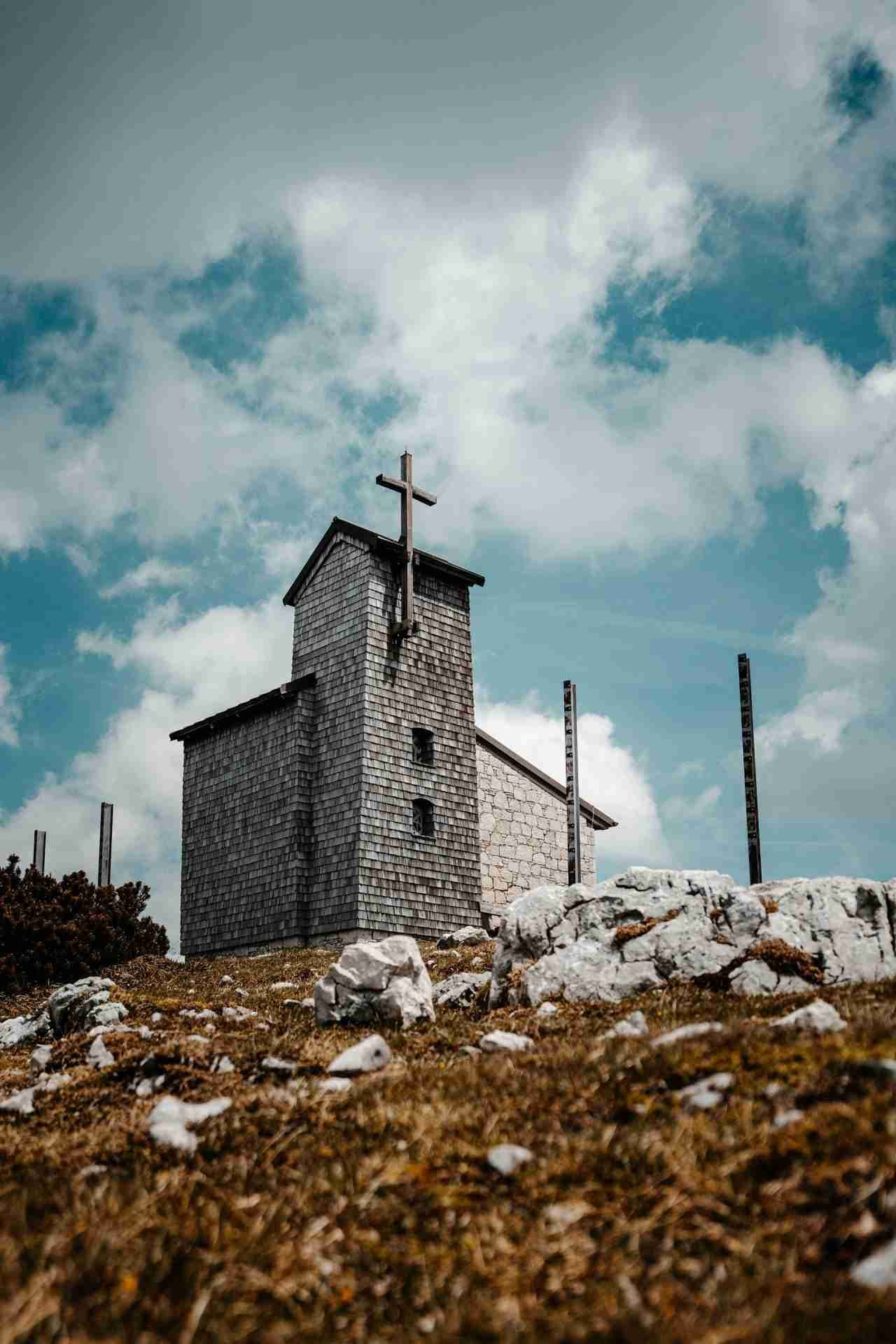
Perched at 2,200 meters above sea level, Heilbronner Kapelle stands solitary and solemn atop the Krippenstein plateau in the Dachstein Mountains of Austria. This small alpine chapel, constructed from raw stone and aged timber, is dedicated to mountaineers who lost their lives in the region. Surrounded by a sea of fractured karst rock and set against the jagged peaks of the Dachstein massif, the chapel provides a striking focal point in a wide-open, high-altitude setting. Its simple structure and exposed position offer photographers a rare blend of emotional weight and compositional purity. Whether under blazing summer skies or wrapped in winter mist, the Heilbronner Kapelle offers a deeply expressive subject within a vast and unforgiving landscape.
Best Photography Opportunities
• First Light Over the Karst Plateau
Sunrise at Krippenstein is a dramatic and rewarding time for photography, especially when shooting toward the east where the light first hits the broken limestone surface. From slightly elevated positions behind the chapel, you can frame the rising sun casting golden light across the barren terrain while backlighting the cross that crowns the roof. The harshness of the karst landscape catches shadows with precision, revealing texture and subtle undulations in the stone. Including the chapel in silhouette with the first light just grazing the ridges behind it creates a strong contrast between man-made form and mountain scale. Use a wide-angle lens to maximize depth and lead the viewer through foreground rock toward the horizon.
• Side Light and Mountain Backdrop
By mid-morning, the sun shifts to the south, bathing the Heilbronner Kapelle in warm side light. This is the best time to shoot from below or beside the structure, using the craggy Dachstein peaks as a powerful visual backdrop. The angle of light at this time brings out the texture in the stone walls and gives depth to the shape of the chapel, especially when clouds drift through the scene and cause momentary shifts in shadow. A 35mm or 50mm lens is ideal for this setup, allowing you to maintain proportion between the foreground and background without distortion. Including trail markers, cairns, or hikers in the distance helps convey the remoteness and scale of the location.
• Twilight and Long Exposure Atmosphere
As the sun dips behind the ridges to the west, the chapel becomes framed against a gradually cooling sky that fades from violet to deep blue. Blue hour is especially effective here due to the absence of artificial light and the clarity of the air at altitude. A long exposure smooths cloud movement and intensifies the stillness of the scene. Shooting at this time requires a tripod and careful balancing of exposure settings, but the results can highlight the stark presence of the chapel against the vastness of the open plateau. Reflected color in the sky and the contrast between rock and rooflines make this one of the most meditative times to shoot.
• Storm Fronts and Shifting Weather
Krippenstein is known for its quickly changing weather, and storm fronts often move in with little warning. When clouds build over the Dachstein range and move across the plateau, they offer dramatic lighting and atmospheric layering. Photographing the chapel beneath a turbulent sky enhances its sense of isolation and creates tension between subject and setting. Use a mid-telephoto lens to compress the foreground rock and the swirling sky, or shoot wide to include more of the threatening weather moving across the horizon. These moments are especially powerful in monochrome, emphasizing texture and structure over color.
• Details and Memorial Elements
Close-up work around the chapel reveals thoughtful details that often go unnoticed. The structure's cross, wood beams, and memorial plaques offer material contrasts with the surrounding rock, while frost, lichen, and mountain grasses add natural texture. Shooting these details with a fast prime lens allows you to isolate small visual elements against blurred backgrounds of stone or sky. These images work well as part of a broader narrative, giving emotional weight to the location and connecting the viewer to the people it honors. In diffused light or slight overcast, these details become soft and tactile, making for subtle but meaningful compositions.
Best Time to Visit
Late spring through early autumn is the most accessible and photographically productive time to visit Heilbronner Kapelle. From June to October, the Krippenstein plateau is generally snow-free and the trails are open, allowing clear access to the chapel and its surrounding viewpoints. During this period, the sun rises early over the eastern horizon, casting side light across the high karst terrain that brings out surface detail and three-dimensional form. Morning sessions tend to be calm, with clear visibility across the entire Dachstein range, while afternoons can bring dramatic cloud build-up and sharp contrasts.
Autumn, especially from late September into October, offers clearer skies, longer shadows, and quieter trails. The mountain grasses around the chapel turn golden, and the lower sun enhances surface texture without producing harsh glare. Summer can bring hazier skies and more midday visitors, but it also offers the longest twilight periods and often the most stable light conditions in the evening.
Winter transforms the plateau into a snow-covered expanse, and while the chapel remains photographable, access becomes more difficult and conditions can be harsh. For experienced mountaineers or those visiting via snowshoe or guided route, winter offers minimalist compositions and soft light all day. Cloud inversions are also possible during this season, leaving the chapel in brilliant sun while lower valleys remain cloaked in fog.
Light conditions are highly dependent on weather, so it is wise to monitor forecasts closely. Partly cloudy days provide the best balance of shadow and contrast, especially when shooting the wider landscape. Blue hour and sunrise offer the cleanest exposures, while late afternoon provides long sidelight across the plateau.
How to Get There
Heilbronner Kapelle is located near the summit area of Krippenstein, accessible via the Dachstein Krippenstein cable car from the village of Obertraun in Upper Austria. From the top station, the chapel is a short 10 to 15-minute walk along a well-marked alpine trail. The route is mostly flat, with stone and gravel underfoot, but weather conditions and wind exposure should be considered at this altitude.
There is no road access or vehicle transport beyond the cable car, and opening times are seasonal depending on snow and wind conditions. The site is free to access, and there are no barriers or restrictions for photographers. Facilities such as a café and restrooms are available near the cable car station, but none exist near the chapel itself. Proper hiking shoes and layered clothing are essential, especially for early morning or late evening shoots when temperatures can drop quickly. It's also advisable to carry water, a headlamp for twilight sessions, and backup navigation in case of fog.
Recommended Photography Gear
Photographing the Heilbronner Kapelle requires gear that performs well in high-altitude conditions and can adapt quickly to shifting light. A wide-angle lens in the 16–35mm range is essential for placing the chapel within the wider karst landscape and incorporating foreground rock lines and sky. A standard zoom lens, such as a 24–70mm, gives flexibility to move between broader context and tighter framing of the structure or surrounding mountain peaks. For isolating the chapel against a distant storm or capturing the layering of ridges, a 70–200mm telephoto is highly effective.
Bring a solid tripod for long exposures during twilight, cloud movement, or detailed compositions in low light. A remote shutter release or in-camera timer helps avoid vibration during longer shutter speeds. Neutral density filters are useful for extending exposures when the clouds are in motion, and a polarizer can help darken skies or cut glare off wet rock surfaces.
Due to the exposure at altitude, weatherproofing is critical. Use a sealed backpack and keep lens cloths handy to remove condensation or wind-blown dust. Extra batteries are necessary, as cold and wind can drain power quickly. Fast prime lenses in the 35mm or 50mm range are helpful for shooting architectural details or hand-held scenes when conditions make tripod use impractical. A protective camera cover or wrap will also be useful if clouds roll in and conditions become damp. With a minimalist but reliable kit, you'll be well-prepared to photograph both the structure and the story of the high alpine plateau.
Nearby Photography Locations
Just a short hike from the chapel, this cantilevered viewing deck juts out dramatically over the edge of the Dachstein plateau. From here, you can photograph vast mountain panoramas and vertical drops into the valley below. Early morning offers crisp visibility, while sunset silhouettes the platform against layered hills.
Located on a nearby summit, this spiral-shaped observation deck provides a higher vantage point over the plateau and the Dachstein range beyond. It's an excellent spot for wide panoramic shots and time-lapses, especially on days with fast-moving clouds and deep atmospheric perspective.
An unusual photo subject, this steel sculpture of a shark emerging from the alpine rock contrasts sharply with the natural environment. It can be incorporated into playful or surreal compositions that juxtapose form and place, particularly in fog or snowfall.
• Gjaidalm and Mountain Huts
Descending further across the plateau brings you to alpine huts and traditional shelters that provide rustic charm and strong leading lines. These are excellent subjects for golden hour photography or during snowfall, when chimney smoke and wood textures bring life to the remote setting.
• Dachstein Ice Cave and Cave Entrances
Near the middle cable car station, the entrances to the Dachstein ice caves provide opportunities for photographing dramatic rock textures and the transition between mountain and subterranean elements. When open, guided tours can also offer unique lighting scenarios inside the caves themselves.
The Heilbronner Kapelle is a subject that rewards patience, sensitivity to light, and an understanding of space. It is not simply a building on a hill, but a marker of human presence in one of Austria's most dramatic alpine settings. With thoughtful preparation and the right timing, it offers photographers a profound intersection between silence, memory, and raw natural form.
Comments
Loading comments…