
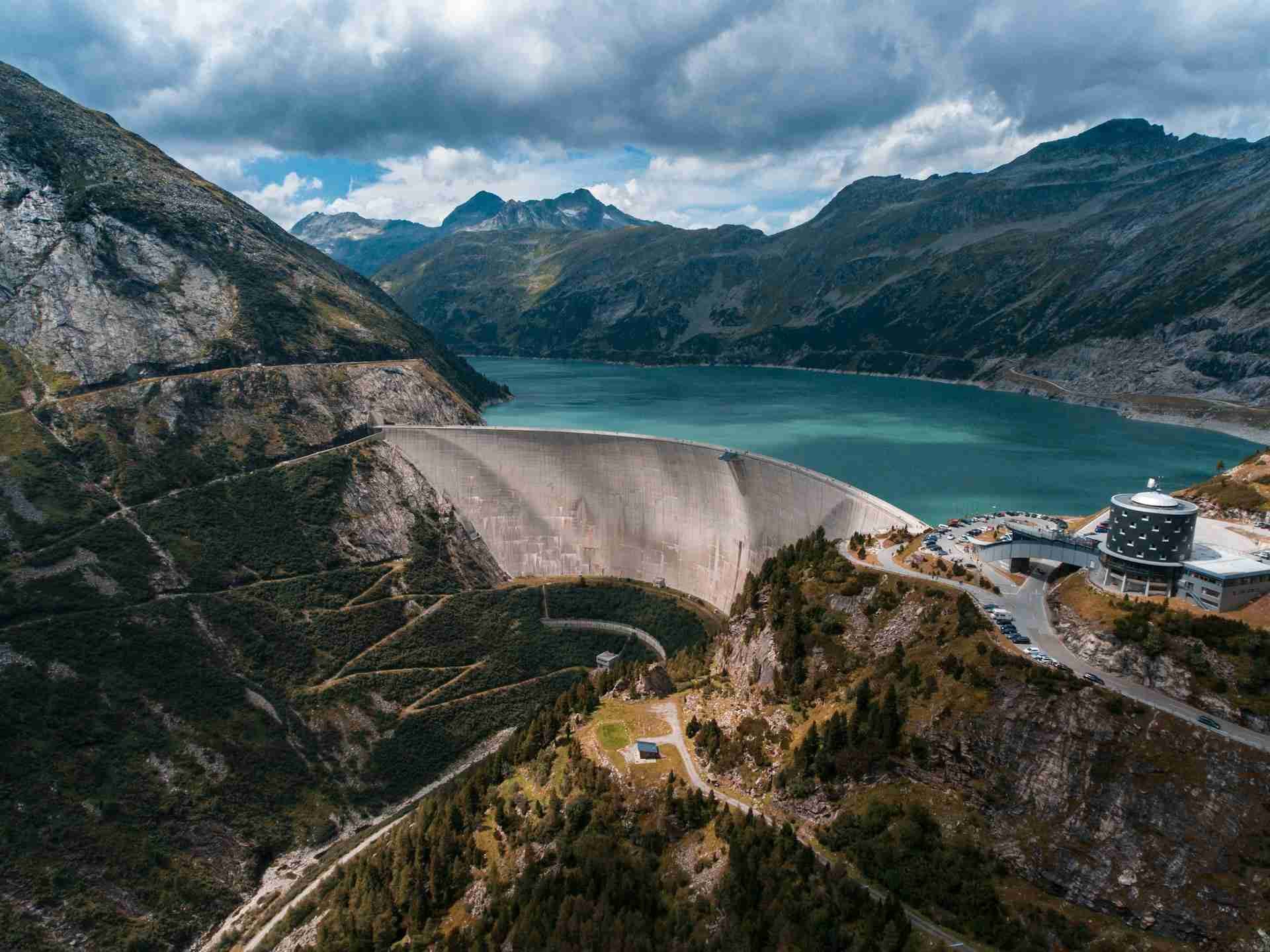
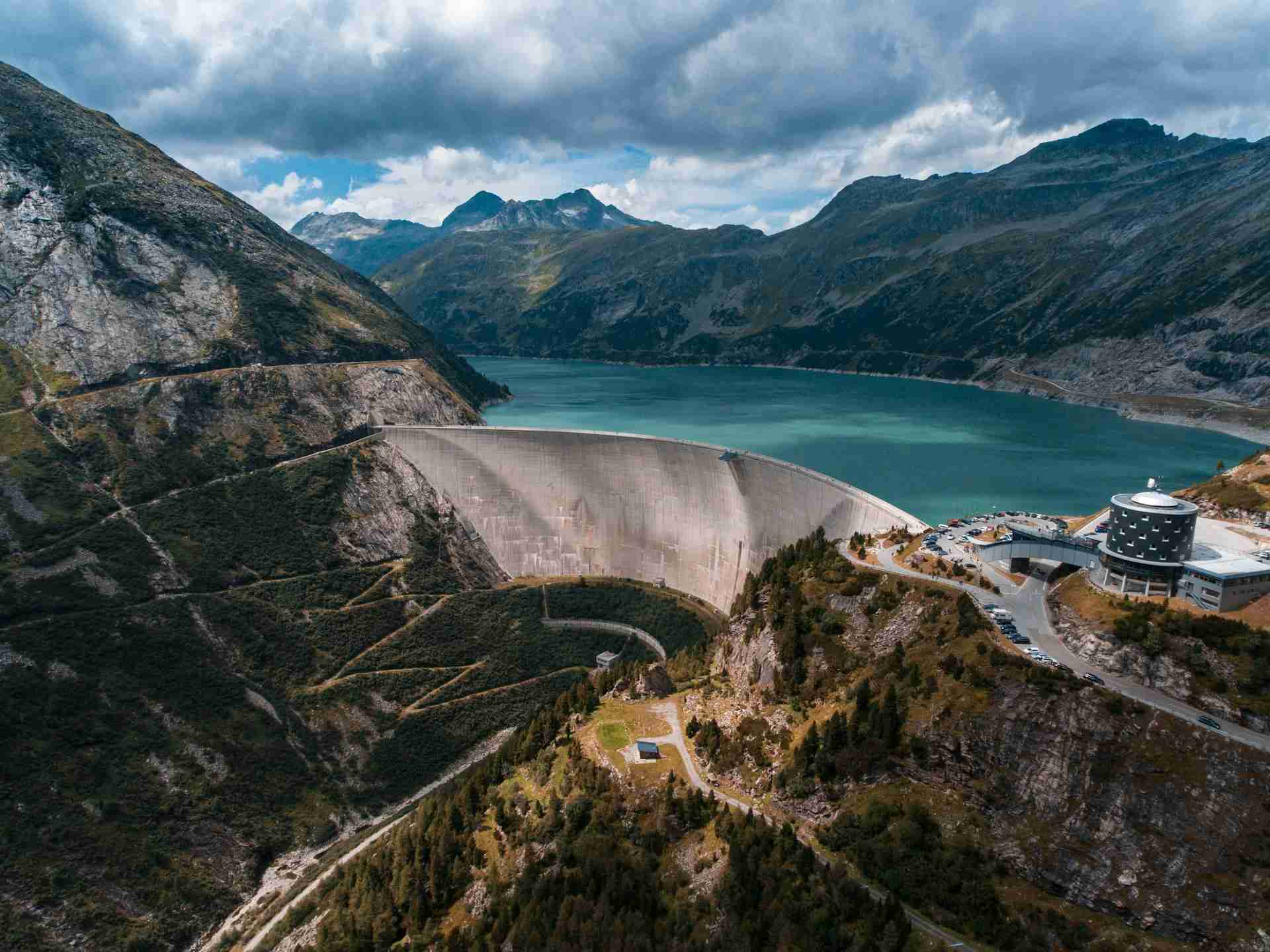
Kölnbrein Dam and the Kölnbreinspeicher Reservoir sit high above the Maltatal Valley in Hohe Tauern National Park, forming Austria's tallest dam and one of the most visually striking alpine locations in the country. The massive curved wall rises in a clean arc against rugged peaks, while the deep blue reservoir stretches back toward the Ankogel Group. The contrast between engineered concrete and raw mountain terrain gives photographers the perfect chance to combine architectural and landscape elements in a single frame. On calm days, the reservoir reflects the surrounding peaks with surprising clarity, while shifting mountain weather adds mood and texture. The scale of the structure is difficult to grasp until you stand near it, which is why thoughtful composition and the inclusion of human elements can make such a difference. Whether you are drawn to wide alpine vistas or strong geometric lines, Kölnbrein delivers a range of creative options in one accessible high mountain setting.
Best Photography Opportunities
• Dam Perspective from the Crest-
Standing on top of the dam allows you to appreciate the full curve of the concrete wall as it arcs across the valley. From this vantage point, you can frame the structure against the reservoir on one side and the steep drop into the Maltatal Valley on the other. Early or late light enhances surface texture in the concrete and prevents the wall from appearing flat and featureless. Including small figures walking along the crest helps communicate the true scale of the dam. Slight shifts in position along the top dramatically change how the curve reads in your frame, so it is worth walking the length of the crest to explore different alignments.
• Reservoir Reflections –
On calm mornings, the Kölnbreinspeicher Reservoir can turn into a near perfect mirror. The peaks of the Ankogel Group reflect clearly in the deep blue water, creating balanced compositions that feel clean and structured. Shooting from lower angles near the water's edge strengthens the symmetry between mountain and reflection. A wide lens works well here, but careful attention to horizon placement is critical to avoid awkward splits in the frame. Even subtle ripples can soften reflections, so arriving early when wind is minimal increases your chances of capturing glassy conditions.
• Drone and Aerial Perspectives –
Aerial photography reveals the full geometry of Kölnbrein Dam in a way that ground based shooting cannot. From above, the sweeping arc of the wall becomes the dominant visual element, with the reservoir on one side and the valley drop on the other. This perspective clearly shows the relationship between structure and terrain, emphasizing how the dam fits within the broader alpine landscape. Flying during early morning or late afternoon adds directional light that defines texture and reduces harsh shadows. Always check local drone regulations within Hohe Tauern National Park before flying, as restrictions may apply.
• The Airwalk Viewing Platform –
The Airwalk extends out over the dam's edge and offers a dramatic downward view into the valley. Shooting from this platform allows you to incorporate the structure itself as a foreground element while capturing the vertical drop below. Including people standing at the edge adds a strong sense of scale and height. A wide lens helps exaggerate perspective and emphasize the drop, but be mindful of distortion when working close to the railing. Clear days provide sharp detail into the valley, while light cloud cover can add depth without obscuring the scene.
• Late Day Light –
As the sun lowers, light begins to skim across the dam wall and surrounding mountains. This side lighting enhances texture in the concrete and reveals subtle contour in the rocky slopes beyond. Compositions that combine part of the dam with distant peaks create a balanced mix of structure and nature. A mid range zoom is useful here for adjusting framing as the light shifts. Staying through the last phase of golden hour often results in warmer tones that soften the industrial feel of the dam and tie it more naturally into the alpine setting.
Best Time to Visit
Kölnbrein Dam is only accessible from late spring through autumn when the Malta High Alpine Road is open. Summer provides the easiest access and generally stable conditions, though afternoon clouds and storms can develop quickly in the mountains. Early morning is often the calmest period, which is ideal for reflection photography on the reservoir.
Autumn can bring clearer air and stronger contrast in the surrounding peaks. Spring conditions vary depending on snow levels, and some higher trails may still be affected. Winter access is typically limited due to road closures. Regardless of season, sunrise and late afternoon offer the best light for enhancing both the concrete structure and the rugged mountain backdrop.
How to Get There
Kölnbrein Dam is located above the town of Malta in Carinthia, Austria, within Hohe Tauern National Park. Access is via the Malta High Alpine Road, a scenic mountain road that climbs through the Maltatal Valley. This road is a toll road, and fees apply for vehicles, though exact prices vary by season and vehicle type.
The drive itself includes multiple viewpoints and tunnels before reaching the reservoir area. Parking is available near the dam crest, making it relatively easy to access main shooting locations without long hikes. Because the road is seasonal and weather dependent, always confirm opening dates and current conditions before planning your visit.
Recommended Photography Gear
A wide lens is essential for capturing the full curve of the dam and expansive mountain views. A mid range zoom offers flexibility when combining architectural elements with distant peaks. A telephoto lens is useful for isolating mountain details or compressing layered ridgelines across the reservoir.
A sturdy tripod is recommended for sunrise, sunset, and reflection work, especially when light levels drop. A polarizer can help manage glare on the water and deepen blue tones in the sky. Neutral density filters are helpful if you want to smooth minor surface movement in the reservoir during brighter conditions. If flying a drone, bring extra batteries and plan flights carefully around wind conditions, which can change quickly at this elevation.
Nearby Photography Locations
leading to the dam includes several designated viewpoints overlooking waterfalls and deep valley sections. These stops provide strong compositions of cascading water framed by steep rock walls. Morning light works particularly well when it reaches into the valley.
• Ankogel
is one of the prominent peaks visible from the reservoir. Hiking or taking lift access in the Mallnitz area offers elevated perspectives back toward the surrounding alpine landscape. Clear days provide sweeping views that complement dam side photography.
offers dramatic mountain scenery and glacier views. Multiple pullouts and viewpoints make it easy to build a varied mountain portfolio. Sunrise and late afternoon light bring strong definition to the surrounding peaks.
• Gmünd
offers architectural and street photography opportunities that contrast with high alpine scenes. Colorful buildings and narrow streets provide more intimate compositions. It is a good stop when transitioning between mountain locations.
features wooden walkways through a narrow canyon carved by rushing water. Long exposures work well here to capture motion in the stream while maintaining detail in rock walls. It adds a different type of landscape subject to an alpine focused trip.
Comments
Loading comments…