
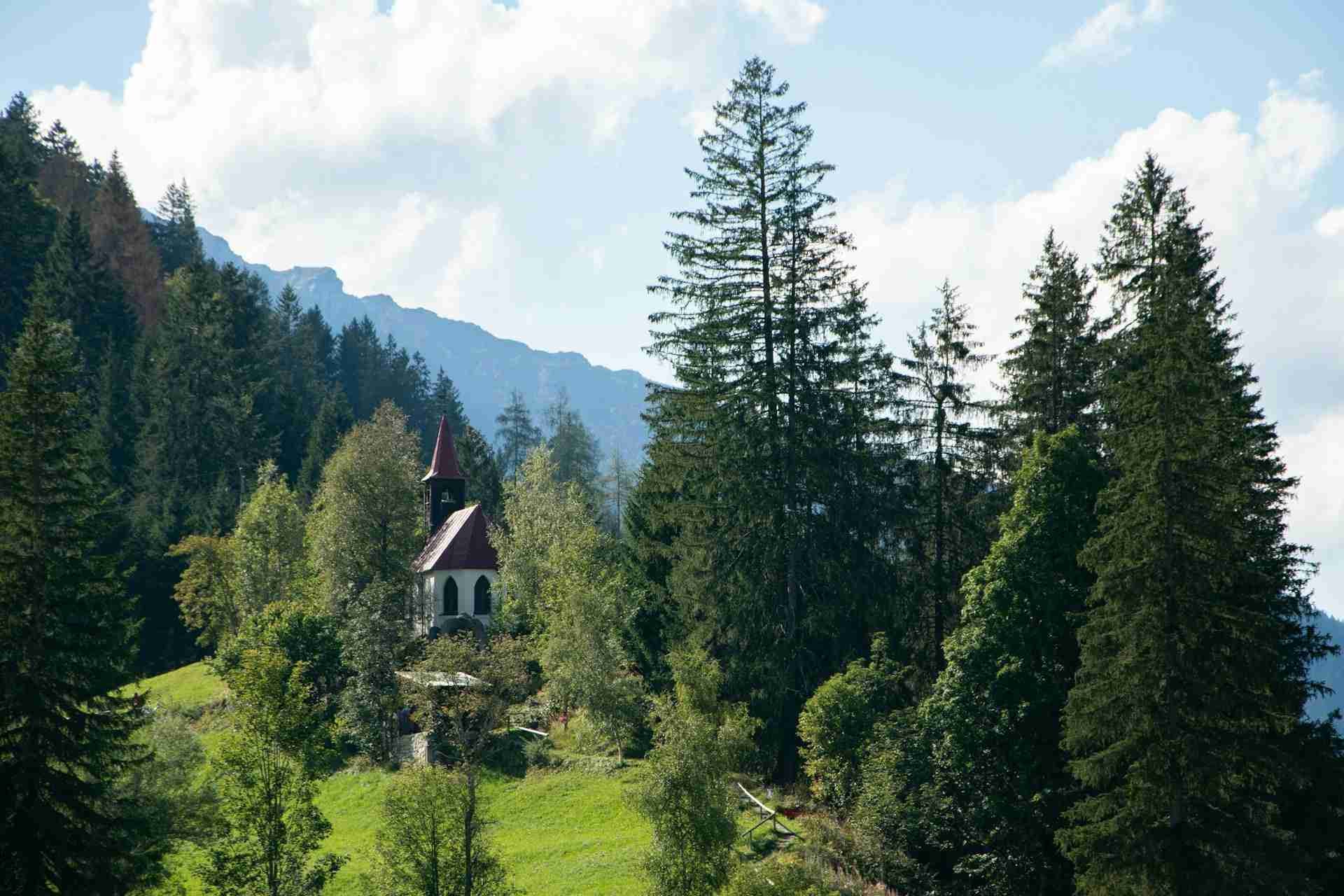
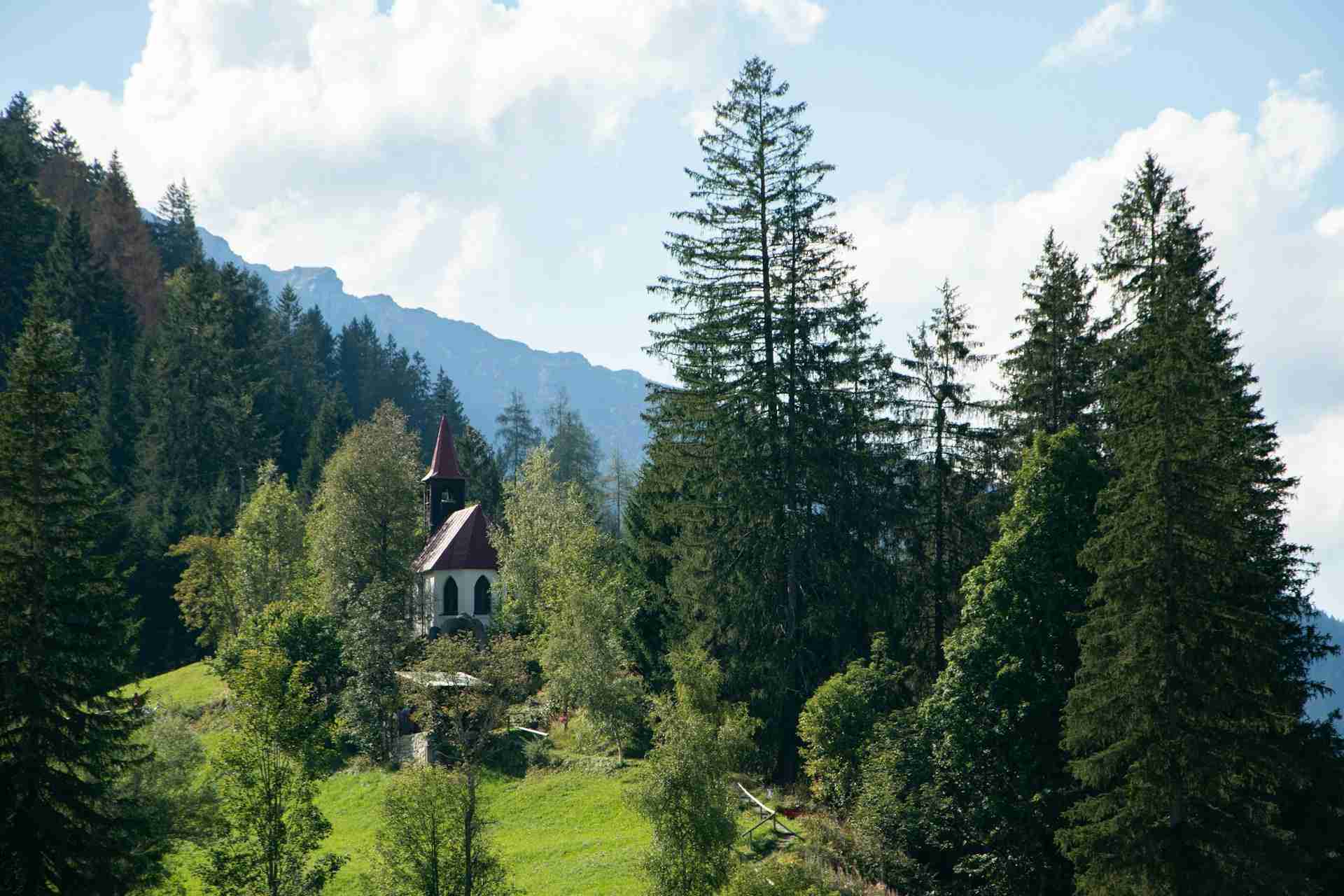
Lourdeskapelle sits quietly on a gentle slope in the Tannheimer Tal, where the vast alpine meadow gives way to the rugged verticals of the Allgäu Alps. This small white chapel, framed by the towering Gimpel and Rote Flüh, presents a naturally balanced composition that landscape photographers are drawn to for its simplicity and visual clarity. It is not a dramatic or grand structure, but precisely because of that, it resonates so well with the landscape. The clean lines of the chapel mirror the geometric slopes of the mountains behind it, while the open field introduces a soft foreground that changes character through the seasons. This is a place where early light, quiet snow, or low valley fog can transform a simple scene into something deeply memorable.
Best Photography Opportunities
• Morning compositions from the southern approach
allow you to capture the chapel with the full backdrop of the Gimpelmassiv rising sharply behind. During sunrise, the cliffs behind the chapel catch the first golden light while the meadow and the chapel remain in softer tones, giving you a natural gradient of exposure to work with. Shooting from a slightly elevated angle allows you to compress the chapel and the mountains without losing the open feel of the valley floor. If you're using a wide angle lens, include the path or meadow in the foreground to lead the eye toward the structure. Patience is often rewarded here with shifting light on the rock face and soft mist lifting off the fields.
• Side-lit compositions in the late afternoon
from the western edge of the meadow offer a different mood entirely. Here, the sun hits the chapel and the slope at an angle, casting long shadows across the grass and emphasizing the contours of the landscape. This is an ideal time for isolating the chapel with a mid-telephoto lens, especially if clouds form behind the cliffs and provide a neutral backdrop. The contrast between the warm light on the building and the cool tones in the sky gives the image a dynamic range without needing high contrast processing. This direction also allows for cleaner backgrounds without visual clutter, which makes the simple form of the chapel stand out even more.
• Winter scenes with fresh snow
are among the most photogenic conditions for this location. The white of the chapel blends seamlessly with the surrounding landscape, while the dark vertical cliffs behind add weight and contrast to the composition. After a snowfall, the chapel roof and the field are often completely undisturbed in the early morning, making it possible to capture untouched, minimalistic scenes. Use a narrow aperture and low ISO to preserve detail in the snow and maintain clarity in the mountain backdrop. If valley fog begins to lift, it can introduce an ethereal quality to the scene that softens the visual weight of the mountains and draws more attention to the chapel itself.
• Seasonal meadow scenes in late spring and early summer
provide rich foreground texture and color. During this time, the field comes alive with grasses and wildflowers that shift with the wind and change hue under different light. Position the chapel slightly off-center in your composition to allow the meadow to dominate the lower half of the frame. Early morning dew on the grasses catches the low light and introduces subtle highlights that work well with both wide and narrow depth of field approaches. This is also a good time to experiment with low vantage points to place emphasis on the meadow as a subject in its own right.
• Telephoto studies of the chapel against the cliff walls
are an excellent way to explore compression and form. From a greater distance to the north or northeast, use a long lens to flatten the perspective and bring the mountains visually closer to the chapel. These compositions reduce foreground distraction and highlight the contrast between human structure and natural stone. Subtle cloud cover can help diffuse the light and give even exposure across the scene, allowing you to retain detail in both highlights and shadows. These tighter frames are particularly effective on overcast days when soft tones dominate the landscape.
Best Time to Visit
Lourdeskapelle can be photographed year-round, but the quality and style of the images vary dramatically with the seasons. Spring and early summer bring the most color to the foreground, with green meadows and bursts of wildflowers creating a layered visual narrative from ground to sky. Mornings during this time are cool, often with mist forming in the valley that begins to lift as the sun warms the slope. The chapel remains lit in soft side light, while the mountains behind may already be glowing in direct sun.
Autumn offers lower sun angles and crisp air, which brings clarity to the distant peaks and longer shadows across the field. Although the trees are sparse, the overall light quality is more directional and controlled, especially for photographers who prefer subtle gradations rather than intense contrast. Winter transforms the location entirely. Snowfall blankets the meadow, removes distractions from the frame, and creates a natural high key palette that simplifies the scene. Sunlight during winter is softer throughout the day, allowing for a wider shooting window.
The best light typically comes from the east or southeast in the morning, making sunrise the ideal time for most compositions. Late afternoon light is more lateral and creates longer shadows, which can add depth to the foreground and emphasize form. Midday light is flat and best avoided unless cloud cover helps manage the exposure. Valley fog is most common between October and March, and while it may obscure the peaks, it often produces the most atmospheric conditions for minimalist compositions.
How to Get There
Lourdeskapelle is located on the outskirts of Tannheim, in the Austrian Tyrol near the German border. The nearest larger towns are Reutte to the west and Füssen to the north, both of which provide road access into the Tannheimer Tal. From the center of Tannheim village, it is a short drive or a ten to fifteen minute walk to the chapel. There is public parking available near the start of the trail, and no permits or entry fees are required to access the location. The walk is straightforward and gently sloping, suitable for carrying a full photography kit.
The chapel sits slightly above the valley floor, positioned just far enough from the main road to feel removed but still easily reachable. The paths are clear year-round, though snow in winter may require appropriate footwear. Early arrival is recommended if you plan to shoot sunrise, especially in the colder months when the light arrives quickly and the atmosphere changes rapidly. The area is popular with hikers and walkers during the day, but sunrise and early morning remain quiet and uninterrupted.
Recommended Photography Gear
Lourdeskapelle is best approached with a flexible kit that allows you to switch quickly between wide and compressed perspectives. A wide angle lens in the 16 to 35 millimeter range is essential for capturing the full chapel with the mountain backdrop, particularly during sunrise when you want to include foreground texture in the field. This lens also works well for positioning the chapel against a sky with movement or light color gradations.
A mid-range zoom such as a 24 to 70 millimeter lens is excellent for scenes where the chapel is the dominant subject and you want to keep both foreground and background elements in balance. This lens is especially effective in spring and summer when meadow textures fill the frame. A 70 to 200 millimeter lens is key for tighter compositions that isolate the chapel against the cliffs or compress the scene during foggy conditions. It allows you to work with shape and light rather than full landscapes, which is useful on days with less dramatic skies.
Bring a tripod for morning shooting, especially if you plan to work before sunrise or in low winter light. A polarizing filter can help cut glare on frosty grass or deepen the blues in a clear morning sky. Graduated neutral density filters are helpful when balancing the bright peaks against the darker foreground. In winter, a lens cloth is essential for managing condensation, and in summer, bring a lens hood to control flare during low angled light. Weather protection is recommended for both your gear and yourself, as the location is exposed and subject to rapid changes in mountain weather.
Nearby Photography Locations
, located just south of Tannheim, is a pristine alpine lake surrounded by dramatic cliffs and dense forest. Sunrise light reflects cleanly off the still surface in the early morning, and the far shore offers excellent telephoto compositions of waterfalls and steep rock walls. The trail around the lake provides varied angles with minimal effort, making it a strong companion location to Lourdeskapelle.
, which begins near Nesselwängle, leads into higher terrain with sweeping views across the Tannheimer Tal. As you gain elevation, the valley opens up and allows for layered compositions that combine cliffs, meadows, and distant peaks. The trail is especially rewarding in late afternoon when golden light cuts across the landscape and highlights the contours of the terrain.
, east of Tannheim, offers a larger water scene with excellent conditions for sunrise reflections and long exposures. On calm mornings, the lake mirrors the surrounding peaks, while the western shore offers access to reeds, inlets, and shallow foreground interest. It is a quieter spot with strong potential for both broad and intimate landscape work.
, accessible via cable car and short hike, gives you a high alpine perspective looking back toward the valley and Lourdeskapelle itself. From this height, you can capture grand scenes of the surrounding mountains and study the layout of the lower terrain from above. The cliffs drop sharply on one side, offering dramatic edge-of-the-world views in soft morning light.
, just over the German border, requires more effort to reach but rewards with one of the most photogenic high mountain lakes in the region. The lake sits in a bowl surrounded by sharp peaks, and the compositions are strongest in late spring and early autumn when color contrast is at its best. It is a longer hike but complements the quieter simplicity of Lourdeskapelle with more dramatic alpine content.
Lourdeskapelle is not a destination that demands attention, but one that earns it through quiet composition and changing light. The surrounding meadow, the steep rise of the cliffs, and the seasonal transformations offer photographers a setting that is deeply responsive to patient observation. It is a place where simplicity becomes strength, and where even the smallest change in weather or light can completely reshape the frame.
Comments
Loading comments…