
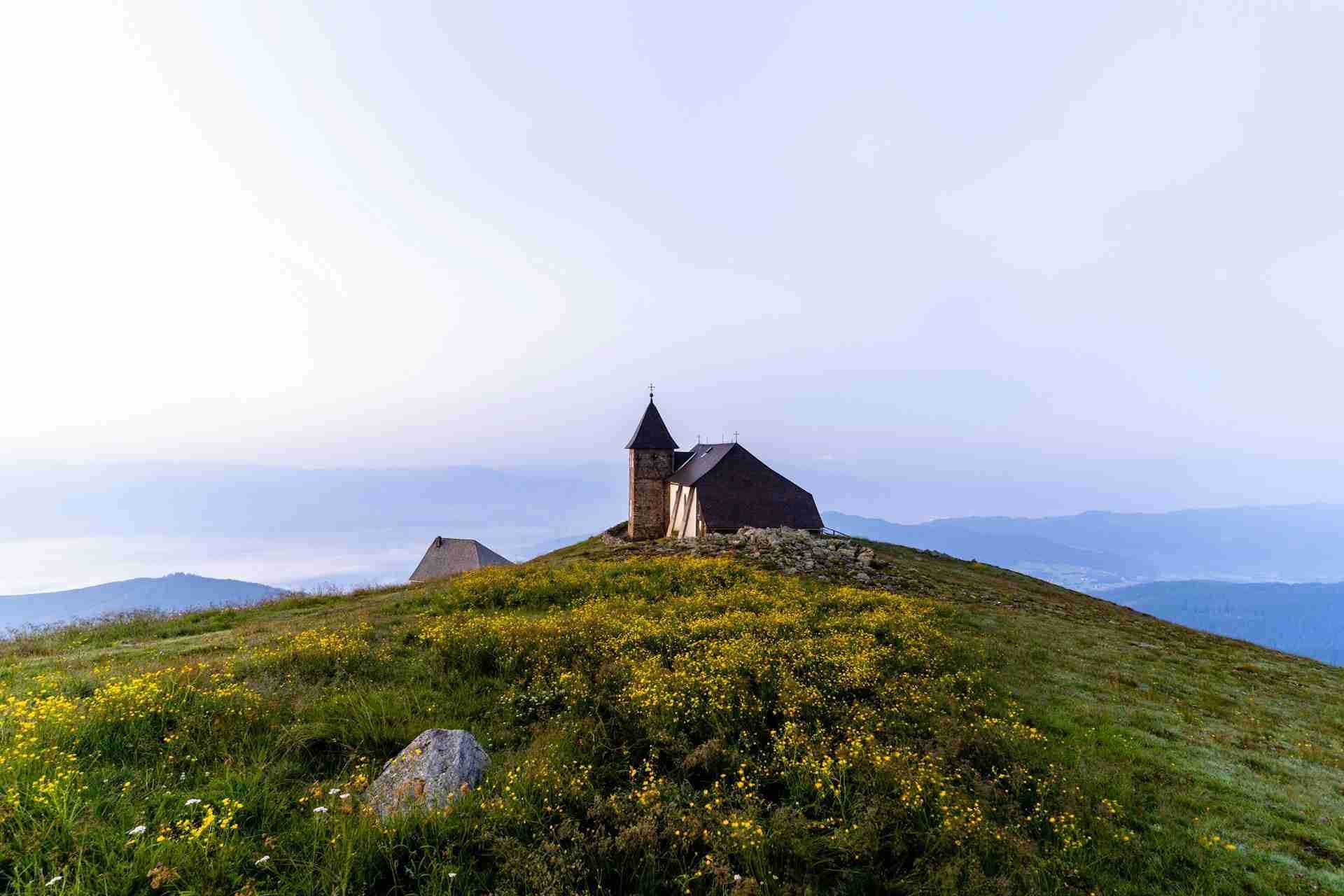
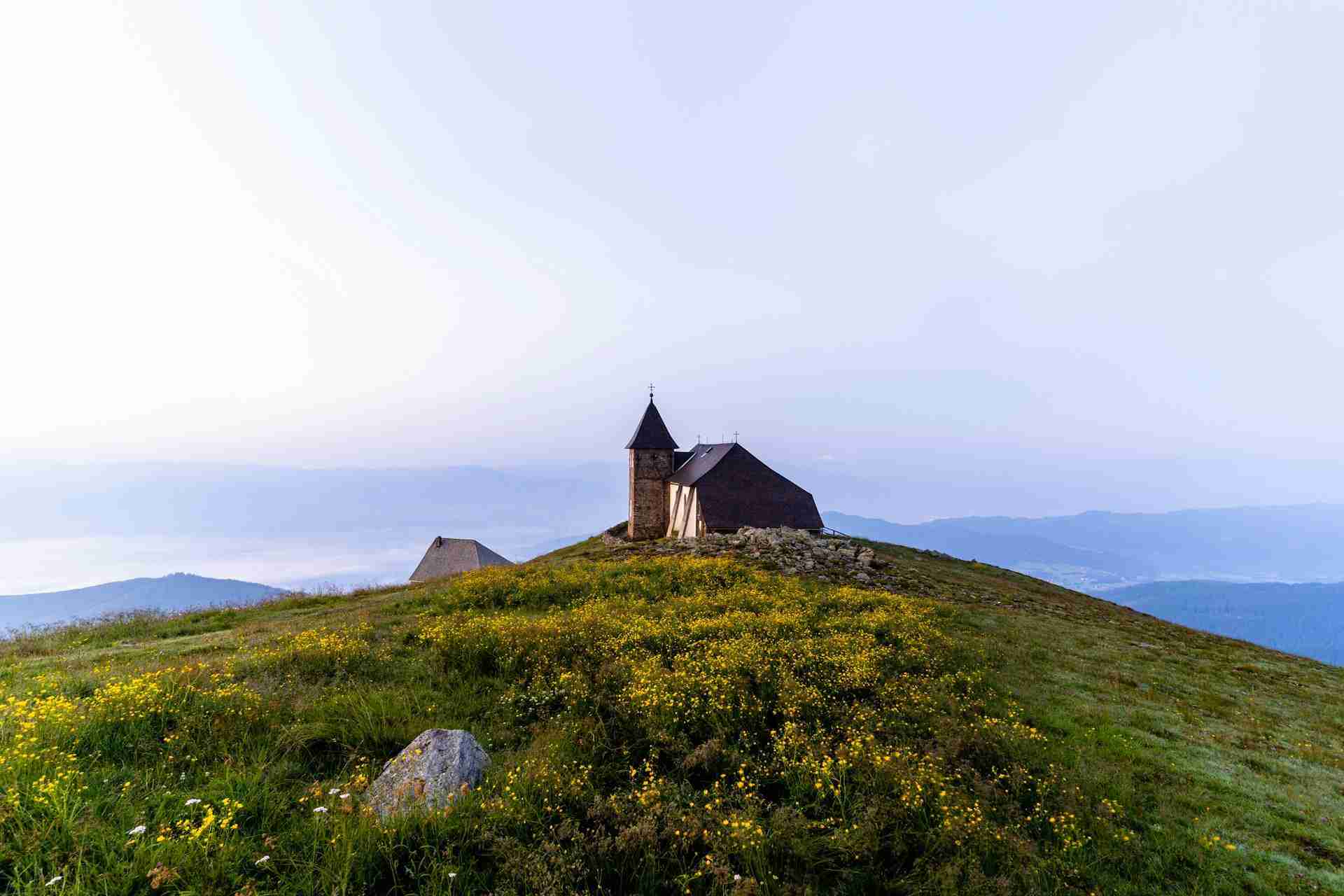
Sitting high on a mountain plateau in Austria's Seckauer Alps, the Maria Schnee Church (Wallfahrtskirche Maria Schnee) stands as a quiet sentinel in the landscape, isolated and commanding. At 1,820 meters above sea level, it is one of the most remote pilgrimage churches in Styria, accessible only on foot through winding alpine trails. Surrounded by larch forests, sweeping meadows, and distant peaks, the chapel's simple silhouette and weathered stone walls offer a powerful contrast to the rugged natural environment. For photographers, Maria Schnee is more than a destination. It is a rare subject where architecture, altitude, and atmosphere meet, offering solitude, clean lines, and changing alpine light.
Best Photography Opportunities
• Wide Landscapes at Sunrise
The church sits just below several surrounding ridgelines, making it ideal for sunrise photography. From nearby slopes or the trail above the chapel, you can frame the church against the glowing eastern horizon, with long shadows stretching across the plateau. The morning light brings out subtle color in the grass and heather, especially during late summer and autumn when the alpine vegetation turns red and gold. Using a wide-angle lens lets you include foreground rock formations, winding paths, or lone trees to add depth. The exposed setting also makes this one of the few places where you can compose with both sky and ground free of visual clutter.
• Side Profiles in Afternoon Light
Later in the day, side light from the southwest falls across the chapel's walls, emphasizing texture in the stone and the metal of the roof. This is a good time to shoot from eye level with the structure, capturing the building's clean geometric form in relation to the rolling alpine landscape behind it. A 35mm or 50mm lens works well here, helping to isolate the church within its natural setting without exaggerating perspective. Clouds often drift through at this time, casting dynamic light across the scene and allowing for moody variations even within a short session.
• Cloud Inversions and Misty Weather
Because of its elevation, Maria Schnee Church often sits above or within the cloud line. On days when valley fog rises, you may experience cloud inversions that leave the chapel bathed in light while mist swirls below. These conditions produce some of the most striking images possible at the site. Photographing from a slightly higher vantage point allows you to emphasize the feeling of isolation, with the church emerging from the clouds like an island in the sky. Use a mid-telephoto lens to compress layers of mist, rock, and building, and adjust exposure carefully to retain detail in both the whites and the shadows.
• Winter Snow Cover and Blue Hour
During winter months or early spring, the church may be blanketed in snow, transforming the scene into a minimalist composition of line and tone. Blue hour in these conditions is especially powerful, with the cool ambient light creating a subdued, peaceful atmosphere. Long exposures can help even out the contrast and render the sky as a smooth gradient. Including tracks in the snow or fence lines in the frame can add a sense of direction and scale. A tripod and remote shutter release are key here to maintain sharpness in lower light without sacrificing depth of field.
• Details and Foreground Composition
The church itself is modest in design, but its stone walls, carved doors, and occasional alpine shrines or crosses nearby provide opportunities for close-up compositions. These details become even more engaging when paired with wide open backgrounds or rapidly changing weather. Use a fast prime lens to isolate a window frame or doorway against a blurred mountain ridge or approaching fog bank. Morning frost or dew often clings to wooden structures, adding texture and subtle highlights.
Best Time to Visit
The optimal seasons for photographing Maria Schnee Church are late spring through early autumn, when the alpine trails are accessible and weather conditions are favorable. From late June to September, the plateau is generally snow-free, and the surrounding meadows bloom with alpine grasses and seasonal wildflowers. Early mornings during this period offer stable air and the clearest light, while late afternoons bring shifting cloud cover and warm directional light that moves quickly across the landscape.
Autumn is particularly rewarding for photographers. In September and early October, the larch trees turn golden, and low fog in the valleys begins to form more frequently, increasing the chances of atmospheric layering and inversion effects. The lower sun angle also produces long shadows and softer contrast, making it easier to shoot throughout the day.
Winter access is more limited due to snow and the potential for difficult trail conditions, but the site remains accessible for experienced hikers or snowshoers. During this season, the church becomes an entirely different subject—muted, monochromatic, and often under dramatic sky conditions. Light remains low throughout the day, which is helpful for extended golden hour effects and controlled exposure.
Always check local weather conditions before making the trip. Rapid changes in light, fog, or wind can transform the scene within minutes. Cloudy days with light breaks can be just as rewarding as clear skies, especially for mood-driven compositions or longer exposures. Sunrise and blue hour are the most consistent times for well-balanced light and isolation from daytime hikers.
How to Get There
Maria Schnee Church is located on the Seckauer Hochalm, east of the town of Seckau in Styria, Austria. The hike begins near the Seckau Abbey, where there is space to park and signage for the trail. From the trailhead, the hike to the church takes roughly two to three hours depending on pace and conditions. The route is well-marked but includes steady elevation gain and should be approached with proper footwear and weather awareness.
The trail winds through forested areas, alpine clearings, and eventually opens to the high plateau where the church stands alone. There are no roads or public transport that reach the site directly. If visiting during winter, snowshoes or touring skis may be necessary, and you should consult local guides or forestry services for current trail conditions. There are no facilities at the church, so carry all water, food, and gear with you. Cell service is limited, so navigation apps or downloaded trail maps are recommended.
Recommended Photography Gear
A lightweight but versatile gear setup is essential when photographing Maria Schnee Church, especially given the hike required to reach it. A wide-angle lens such as a 16–35mm is ideal for capturing the church within its sweeping mountain environment. It allows you to emphasize leading lines from nearby trails or rocks and include dramatic sky elements above the structure. A standard zoom lens, like a 24–70mm, provides flexibility for both wider contextual frames and tighter shots of the building and its surroundings.
A mid-telephoto lens, around 70–200mm, is especially useful for compressing the chapel against distant ridgelines or isolating it within cloud or fog. This focal length is also helpful for detail shots of stone textures, rooflines, or layering background peaks. If you're visiting in winter or planning to shoot in low light, a fast prime such as a 50mm f/1.8 offers sharp handheld performance and allows you to work without raising ISO too high.
Bring a sturdy but packable tripod for long exposures, especially at blue hour or during low-contrast lighting. A remote shutter release or built-in timer will help prevent camera shake during longer exposures. Polarizing filters are effective for deepening blue skies or cutting glare off wet rock and grass, while neutral density filters are useful for creative long exposures of moving cloud or drifting mist.
Weather in the Alps can be unpredictable, so protect your gear with a weather-sealed backpack and rain cover. Wear durable hiking boots, and layer clothing to prepare for wind, cold, or sudden sun exposure. Always carry spare batteries, as colder air at higher elevations can reduce battery life more quickly. With the right gear and timing, this high-mountain chapel offers a mix of spiritual solitude and natural drama rarely found in such an accessible alpine setting.
Nearby Photography Locations
At the foot of the mountains, this Benedictine monastery offers Romanesque architecture, cloisters, and atmospheric interiors with soft light filtering through narrow windows. It's best photographed in the early morning before visitors arrive or in late afternoon when golden light warms the stone courtyard.
A demanding but rewarding hike beyond the church leads to the Hochreichart summit, one of the region's higher peaks. From here, the views stretch across the Seckauer Tauern and deep into northern Styria. This location is ideal for wide panoramic landscapes and sunrise shots that highlight the entire Hochalm plateau.
• Zinkenkogel Ridge Trails
West of the church, a network of less-traveled ridge trails provides elevated views looking back toward Maria Schnee. These paths are ideal for sunset or golden hour compositions where the chapel sits nestled in a wash of warm light, framed by soft alpine ridgelines.
• Alpine Huts and Meadows Along the Trail
Throughout the route to the church, several small alpine huts and seasonal grazing meadows offer authentic scenes of rural mountain life. These make for compelling foreground elements in broader compositions or standalone subjects in softer side light.
• Larch Forests near the Trailhead
In autumn, the lower portions of the trail wind through dense larch forests that turn vivid gold. These areas are best photographed in diffused light or early morning, with opportunities for vertical compositions looking upward through the trees or wide shots using fallen needles and winding paths for natural leading lines.
Maria Schnee Church on the Seckauer Hochalm is a rare combination of isolation, simplicity, and visual power. For photographers willing to make the climb, it offers a subject that changes with the light, weather, and season.
Comments
Loading comments…